Immersive technology on stage is about the story, not the hardware
Immersive technology on stage is not defined by hardware. It is defined by how the audience feels inside the experience. Holograms, 3D visuals and light only matter when they pull people closer to the message. If the audience remembers the gadget but not the message, the technology was used wrong.
Immersion is having a moment. It is in headlines, on stages and at the top of every planner’s wish list. But let’s be honest: for many, it is still more concept than concrete experience. A buzzword more than a blueprint.
So what does it look like when it is done right? Not in theory, but in the spotlight. The answer lies in how it shows up, and how it turns an audience from viewers into participants.
KEY TAKEAWAYS
- Immersive tools should serve the message, never distract from it.
- Real immersion combines storytelling, technology and emotional resonance.
- Done right, it creates participation, not just attention.
- Immersive experiences depend on careful choreography, not gimmicks.
- It sends a signal: this event values innovation and the audience experience.
- The best moments do more than inform. They change how people think and act.
What is immersive technology, really?
Let’s start here: it is not a projector, a screen, a headset, a hologram or a lighting rig. It is defined by how the audience feels inside the experience.
It is what happens when an environment surrounds people in a way that sharpens focus, stirs emotion and makes learning stick. It is sensory, spatial and intentional. The edges of the room disappear and the audience moves closer to the core message. Sometimes that takes high-end tech. Sometimes it takes a brilliant moment of silence and the right visual at the right second.
The technology is the tool. Immersion is the result.
Here is where it gets more interesting: immersion is personal. One audience is pulled in by cinematic visuals. Another is captivated by emotionally charged storytelling or interactive moments that make them feel seen. It depends on who is in the room and what they bring with them: curiosity, resistance, fatigue, hope. As speakers, we have a responsibility to design for those realities, not only the ones we rehearsed.
At its best, immersion is an emotional bridge. It moves people from consuming to experiencing and turns a room full of strangers into a shared moment of clarity. That has very little to do with how expensive your equipment is, and everything to do with how intentionally you use it.
If the audience remembers the gadget but not the message, you used it wrong.
Why is the impact human, even when the tech is not?
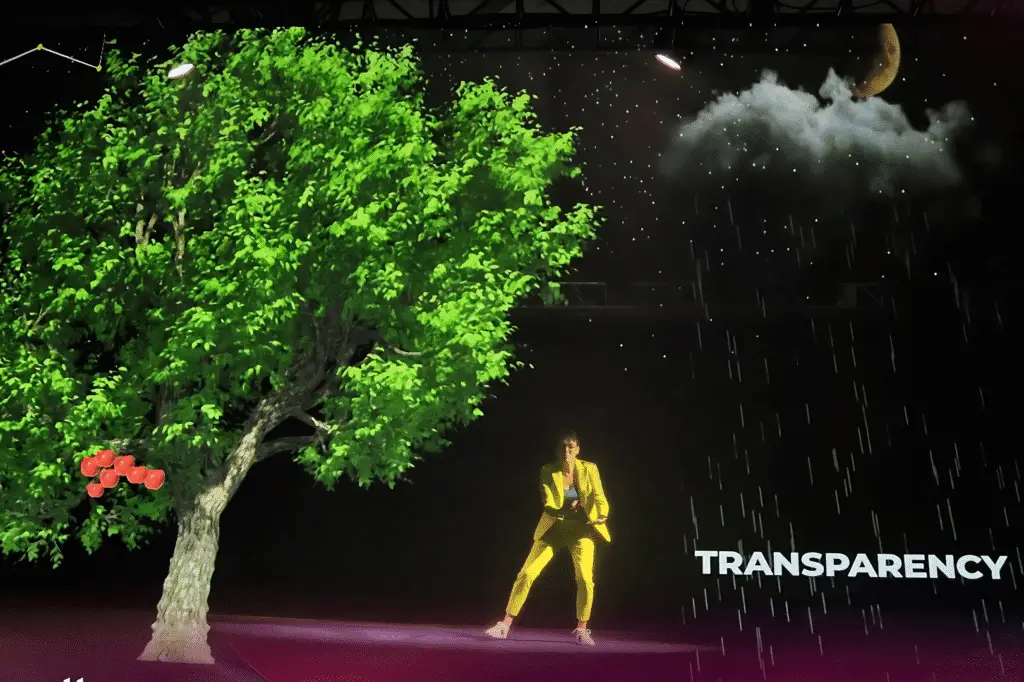
When people talk about immersive tech, they often focus on the mechanics: 3D visuals, holograms, AR overlays, synced animation. What makes it powerful on stage is what the tech enables. Connection.
It allows a speaker like me to bring ideas to life in three dimensions. More importantly, it lets audiences see themselves in those ideas, feel the story and interact with insight in real time.
Connection does not happen through cables and code, though. It happens when the technology fades into the background and the human takes center stage. It becomes powerful when it supports authenticity, helping a speaker convey vulnerability, clarity and vision in ways bullet points never could. The goal is not to wow people with gear. It is to move them.
What happens when the stage stops being flat?
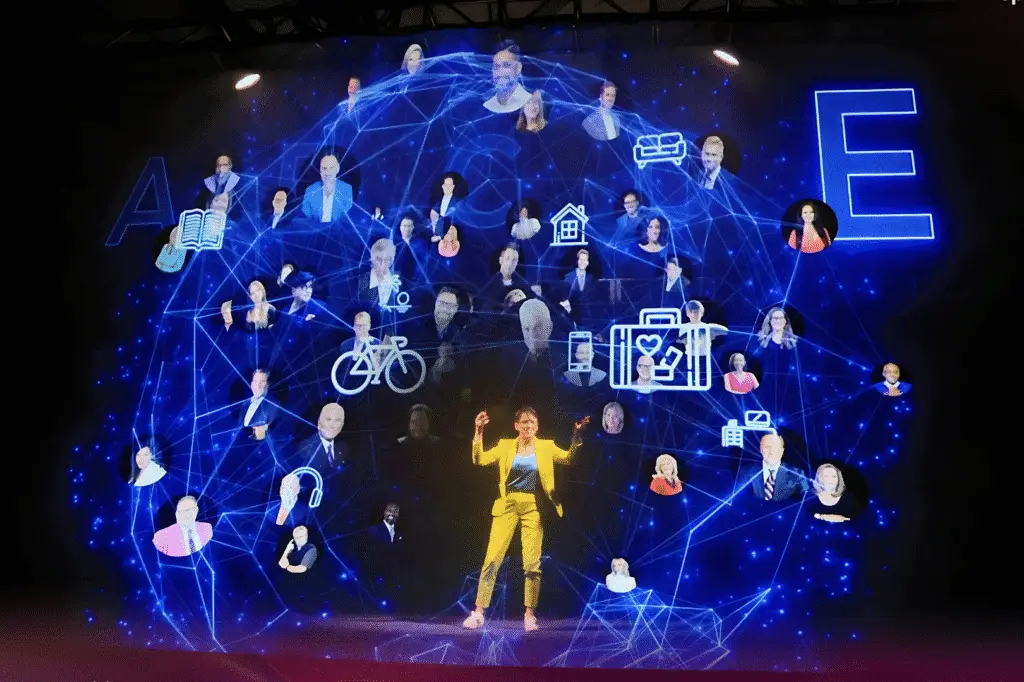
Traditional stages are one-directional. The speaker talks, the audience listens. Immersion breaks that boundary. It surrounds, it surprises, and it turns the stage from a presentation surface into a storytelling space.
In my keynotes, I use light, shadow, motion and metaphor to create a full-sensory environment. It is not just a speech. It is a space, and inside that space, attendees feel like part of the moment instead of observers of it.
That changes the entire audience experience. People become co-creators of meaning, with a sense of being inside the idea rather than adjacent to it. And that can dramatically improve how much of the message they retain and recall after the event.
Do you need a huge venue or budget for an immersive keynote?
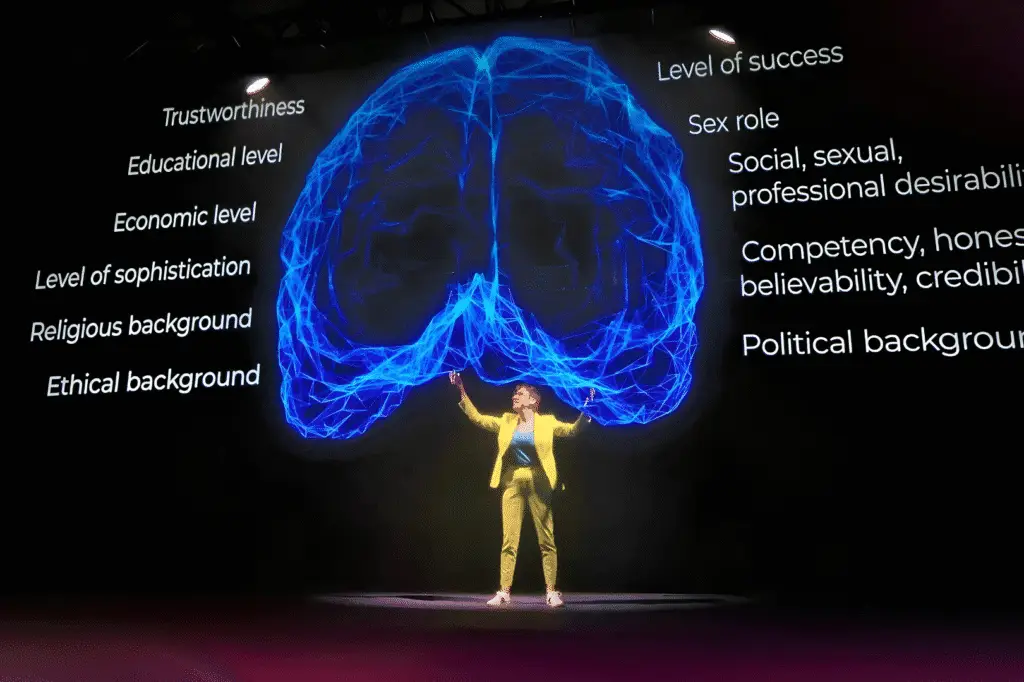
No. Scale does not limit immersion. Strategy does. Some of the most powerful applications happen in thoughtfully produced settings. It is less about size and more about sequence.
My immersive experience is carefully choreographed. Every beat, gesture and transition is tied to the message. Whether it is a massive convention hall or a hotel ballroom, the setup adapts to the space.
Immersive impact is not a byproduct of budget. It is the result of smart design. A well-timed visual, a surprising lighting cue or a synchronized movement can spark more engagement than an expensive LED wall. What matters is the alignment between what the audience sees, hears and feels, and that comes from creative vision, not an equipment list. Immersion is not about excess. It is about intent.
How does a message become a memory?
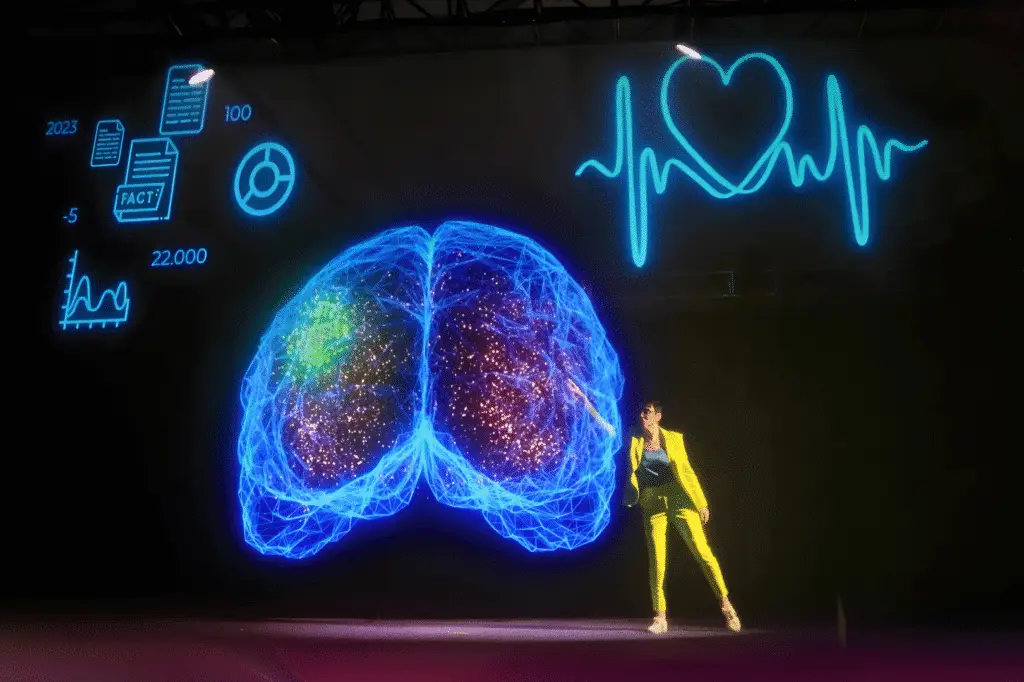
When you pair these tools with a speaker who knows how to use it, the keynote becomes momentum. The kind attendees talk about later, reference in meetings and remember in their behavior.
What lingers after the event is not the tech. It is the change. Attendees leave with stories they can retell and emotions they cannot shake. The visuals become shortcuts to recall, the sensory moments become conversation starters, and the impact becomes part of the culture your event was meant to influence. Done right, the technology does not only help audiences hear something new. It helps them become someone new.
Is experience the new expectation?
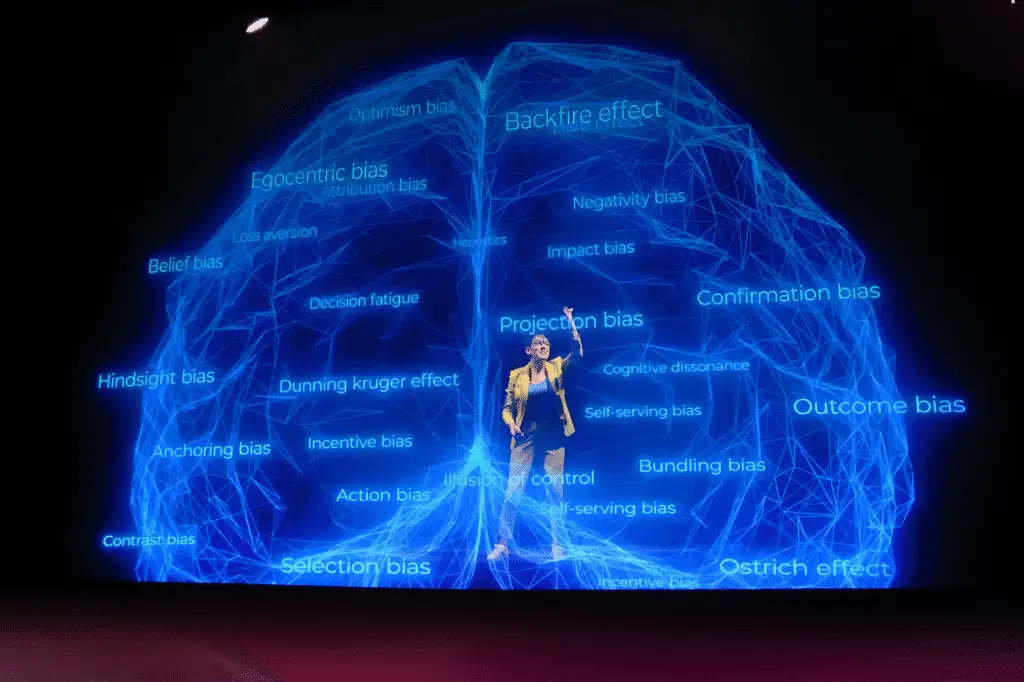
Yes. Immersive formats have changed what audiences expect. They no longer want to sit back and consume. They want to step into something, and they want to feel changed by it.
That is the opportunity. For speakers like me, it is not a tech trend. It is a storytelling strategy, one that honors the audience and turns events from memorable into meaningful. The best stage is not bigger. It is deeper.
Want to go further? Read what to know before you put a hologram on stage and what an immersive keynote experience is, or see my 3D immersive experience in action.
Frequently asked questions
What is immersive technology in events?
It is any technology that surrounds the audience and pulls them inside the content instead of in front of it: 3D and holographic visuals, synchronized light and sound, AR overlays or interactive elements. What makes it immersive is not the hardware but the effect: people feel part of the moment, pay closer attention and remember more.


Can an immersive keynote work in a venue that is not high-tech?
Often, yes. Immersion depends more on smart integration than on flashy gear. Speakers who specialize in immersive experiences usually bring their own setup or work closely with your AV team to adapt to the room. For my 3D keynote, the room needs to go fully dark and have enough height. Everything else, we can work out.
How do I know if an immersive format is right for my event?
If your event aims to spark emotion, change behavior or stand out in a crowded calendar, it is a strong candidate. Product launches, sales meetings and leadership conferences all benefit. If you want attendees to feel something rather than simply attend something, and to talk about it long after, immersion is a strong asset.
Can immersive elements be used in virtual or hybrid events?
Yes. Immersive elements can be adapted for virtual and hybrid formats through visual environments, overlays and interactive content. My keynotes are available in person, hybrid and virtual, and I tailor the immersive elements to each format so the remote audience feels as connected as the people in the room.