What makes Mark the best motivational speaker I know?
Not one brilliant moment. A thousand deliberate ones. Here they are, as ten lessons.
1. Preparation is a sign of respect, and it gives you permission to improvise
Mark’s keynotes do not look rehearsed. They look effortless. Fluid, natural. But I have seen the effort, and only the tip of the iceberg: the pacing backstage, the practiced lines, the notes, the run-throughs. If a master at his level still rehearses until the last moment before he walks on, imagine the hours, days and weeks that went in beforehand. Scripting every nuance, visualizing movement, refining every transition. The unseen labor is staggering.
That is when I understood it. First, it is respect for each audience, each client, each stage. Second, real preparation does not make him rigid. It makes him free. He can respond to the room, add spontaneous moments and shift the energy precisely because his structure is so solid. He is not guessing or winging it. The only way to play at that level is to put in the reps beforehand.
Confession time: back then, I did not rehearse anymore. “I’ve got this,” I thought. I had memorized most of my script. Mark made me see the disrespect I was showing the stage (which was never mine in the first place) and myself, because I was limiting what I could do. Ever since, I rehearse not to memorize, but to liberate. E.v.e.r.y single time, whether there are five people in the room or five thousand.
The more grounded I am in my material, the more present I can be with the people in front of me.
2. Customization is a love letter, and you get an unexpected gift back
When Mark steps on stage, it never feels like he is delivering his keynote. It feels like he is delivering yours. He does not just add a company name or mention the CEO. He immerses himself in the audience’s world, their language, their stories, their values, and it feels as if he built something just for them. Because he did. That is not personalization. It is devotion.
Watching him customize is like watching someone write a love letter: with care, respect, reverence. The audience always feels it. They do not just hear his message. They feel seen by it.
That is why I stopped “tweaking” my slides before events. Yes, I was one of those speakers who used the flight from the East Coast to the West Coast to rearrange slides, add a few logos, sprinkle in a few names and terms, and call it customization. Now I reimagine the entire experience. Because when you love your audience, you build something beautiful for them.
And it came with an unexpected gift. One day I learn how medication reaches pharmacies within hours, even in the most remote areas. The next, I discover the inner workings of global luxury hospitality. One day it is how AI is transforming insurance companies, the next the psychology of real estate decisions. As speakers, we get a backstage pass into industries and processes few people ever see up close. I do not know another profession with that kind of privileged access, and it all starts with true customization.
Customization is not a courtesy. It is the foundation of trust every keynote must be built on.
3. Every single word must earn its place
Mark does not waste words. Every sentence has a purpose. No filler, no fluff, and when you listen closely, even his transitions and pauses do heavy lifting. Listening to him is like listening to a finely tuned instrument: sharp word choices, impeccable timing, nothing thrown in for effect. His keynotes are sculpted. Every line has to justify its presence.
I struggled with this. Still do. If Mark had written this post, it would be concise, intentional and on point. Meanwhile, I am about to send a few thousand words your way. Same in my keynotes: I often feel the need to say everything, repeatedly, and then once more in a different way.
Watching Mark reminds me that mastery is not about volume. It is about precision, purpose and restraint. He taught me to be ruthless with my own scripts and to question every sentence. Does this serve the audience? Does it move the story forward? Does it deepen the message? That kind of clarity takes discipline, and a belief that the audience deserves your most thoughtful communication.
Every word in your keynote is a contract with your audience’s attention.
4. The unspoken artistry of stagecraft
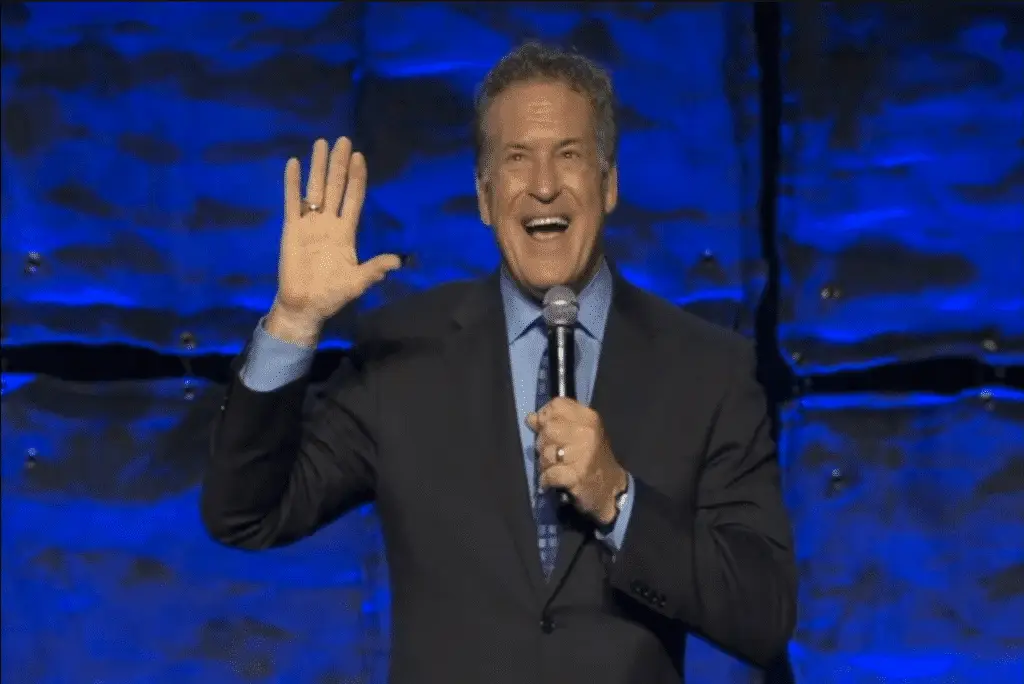
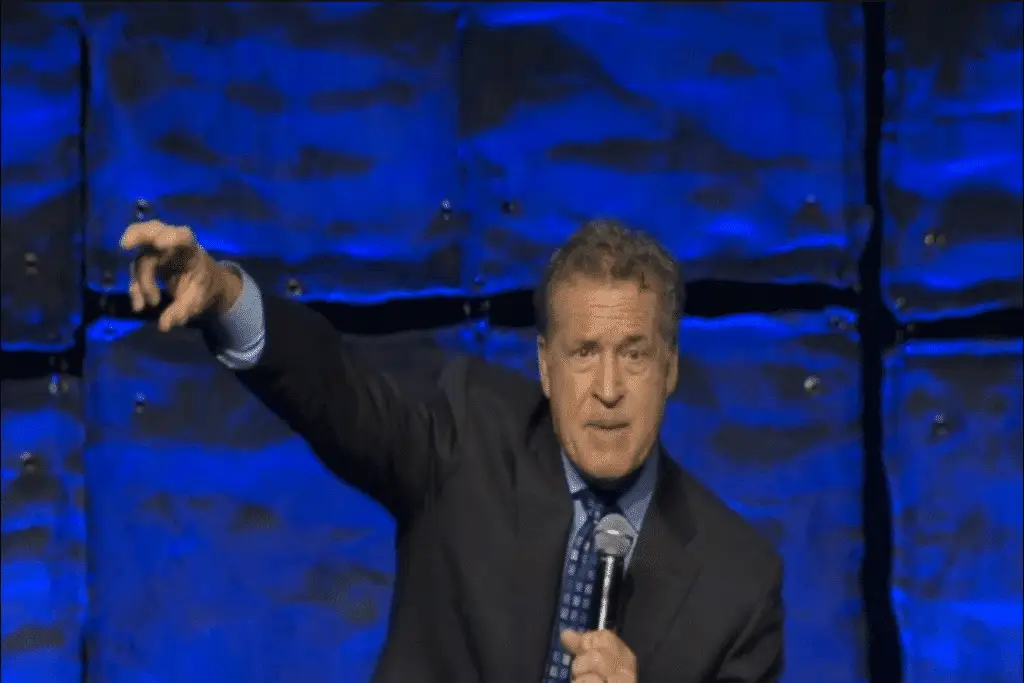
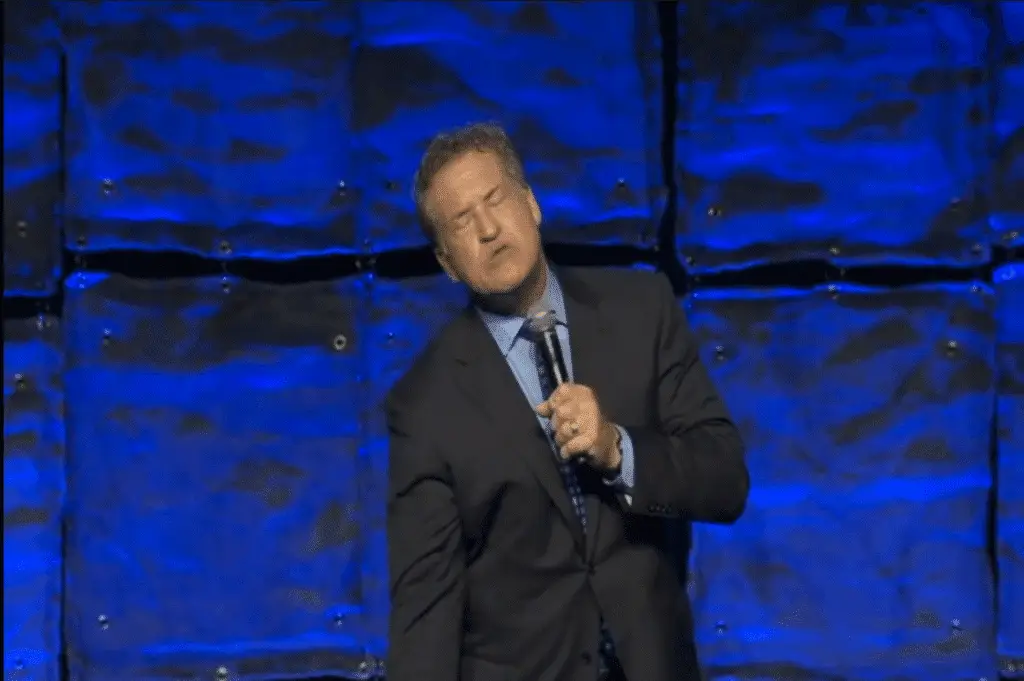
Mark does not just perform. He constructs. He builds moments, layers them with intention and reveals them like an artist stepping back from the canvas. Every gesture has a purpose, every step adds tension, every movement lands exactly where it should. He uses a handheld microphone, subtle props, and he understands framing, angles and lighting. His presence is architectural, which is why it is unforgettable.
For a while now, I have watched “Nice Bike” twice every New Year’s Day: once with sound, once without. Without sound, I still know exactly what is happening. His gestures, facial expressions and movements are choreographed with that much precision.
We speakers love to talk about “owning the stage.” Mark taught me it is more than ownership. It is curation. You are building an environment for emotional resonance, engineering an experience. So now I think beyond what I want to say and focus on how the environment can help the message land. My movements, my gestures, my smile all have to be part of what I build on purpose, not habits I repeat on autopilot.
If your gestures and movements are not intentional, they are accidental. And if they are accidental, they are probably distracting.
5. Pauses are never empty
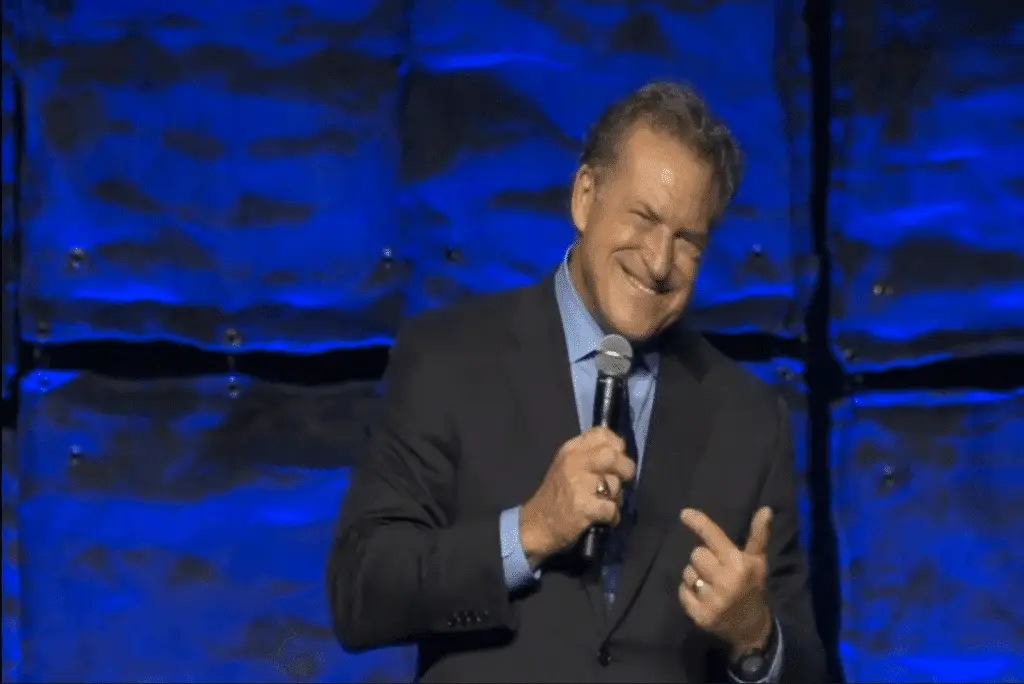
We have all heard about the pause. It is Toastmasters 101. What nobody teaches is how to use it so it works for you and lifts the message. Watching Mark again and again showed me how meticulously he uses even the space between words. Every pause is deliberate, and none of them is empty.
When Mark pauses, something happens. He does not freeze. He steps, shifts, gestures. A raised eyebrow. A smirk. A deliberate clearing of the throat. A slight lift of the chin. He scans the room, shifts his weight, raises a hand slowly and lets it hover, pivots as if setting up the next moment. His eyes find someone in the second row. He searches the air for the right word, adjusts the mic cord, touches his temple as if weighing the next thought. His whole body is engaged, even in stillness. It is a dance between silence and movement.
It taught me something profound: pauses are not breaks. They are beats. Yes, they let the audience catch up, lean in and feel the message land. They also let me breathe more life into the story. They are scripted moments of engagement, even if they appear on no slide and in no manuscript.
If you are not using your pauses intentionally, you are missing half the conversation.
6. Humor should lift people up, never put them down
Mark uses humor as a bridge, not a weapon and not a crutch. His jokes never come at anyone’s expense: not the audience, not other speakers, not entire groups of people. His humor is gentle, self-deprecating and universally relatable. He plays with stereotypes in a way that makes you feel seen, never targeted, as if he is laughing with you, not at you. Comedy can be courageous without being cruel, and it takes real finesse and emotional intelligence to make it unite rather than divide.
He also places it with surgical precision. He has a skill I call “changing the temperature.” One moment you are tearing up over a story, angry or heartbroken. And just as you sink into it, he lifts you with a perfectly timed burst of humor. A masterful release. The contrast amplifies the emotion and gives people permission to breathe, reset and reflect.
We are taught that humor is a powerful tool. Mark reminds me it is also a responsibility: the what, the how and the when. When you hold a microphone, your words matter more than you realize. So never punch down. Leave people lighter, not heavier. Humor does not need a target. It needs a mirror, and the more honestly we hold it up, the more people laugh with us instead of at someone else.
If your audience is laughing, make sure it is never because someone else is hurting.
7. Feedback requires trust, grace and boundaries
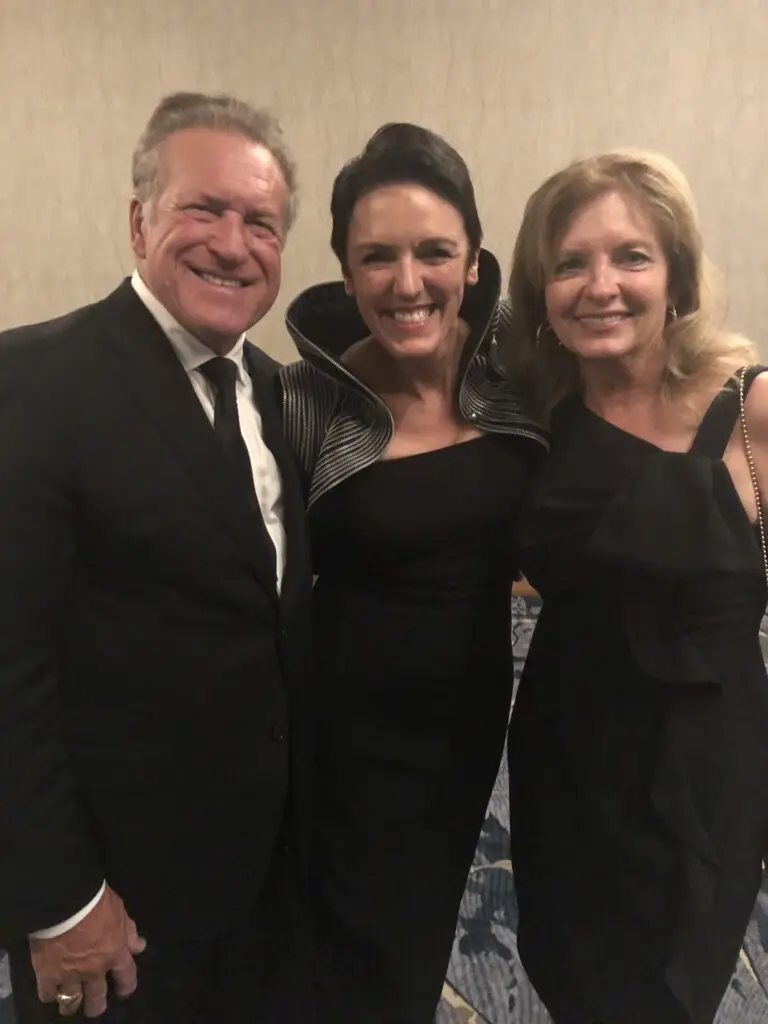
Mark takes feedback seriously, from respected peers, clients and mentors, and first and foremost from his wife, Sue. I have watched her watch him, in rehearsals, in the audience, on and off stage, with a presence and care that make you realize feedback is not an act of critique. It is an act of love. Her guidance is gentle and firm, their conversations private, intentional and safe, never performed in public. The most meaningful feedback happens where honesty can meet vulnerability, with respect and without judgment.
It taught me to be intentional about whom I ask. Not the crowd, not everyone with an opinion, but a select few who understand my essence, my voice and my values. People I respect and trust, who care enough to help me grow rather than just criticize. And I learned to receive their insights without getting defensive, and to ignore the noise of the unsolicited.
The way Mark gives feedback is just as masterful. He does it with so much grace and generosity that I do not feel corrected. I feel honored. He never tries to mold me into a version of himself. He steps into my style and helps me see what I missed, so I become more myself.
In a group of a thousand speakers, he is my “Sue.” He does not just watch from the outside. He listens from the inside. He does not speak to impress, he speaks to lift, and he offers feedback to help me see what is already there, waiting to shine. That is rare, and it changed how I both receive and give feedback.
The right feedback does not make you someone else. It makes you more of who you already are.
8. Ethics are non-negotiable
Mark is respected for what he does on stage and for what he refuses to do off it. Never involved in drama. Never part of industry gossip. Never chasing the limelight at the cost of integrity. Where visibility so often outpaces virtue, his quiet, consistent integrity is a beacon. It taught me that how you do business matters as much as what you deliver.
He leads with values, privately and without compromise. Not with public statements, but with small choices on stage and behind the scenes. He treats everyone well: backstage crew, fellow speakers, clients, volunteers. He does not just nod and smile. He engages, asks names, says thank you, and treats everyone as a partner in the experience.
He honors intellectual property and never uses stories, jokes or insights that are not his without attribution, and he is meticulous about crediting the people who shaped him. He addresses sensitive topics without weaponizing the stage: no shaming, no divisive language, empathy instead of ego. He proves you can be impactful without being polarizing. And confidentiality is sacred to him. If you are vulnerable with Mark, you never have to worry about becoming anecdote material in his next keynote.
I could go on with hundreds of micro-moments. Ethics are not grand gestures or dramatic declarations. They are a thousand invisible choices made when nobody is clapping and nobody is watching. That is what separates good humans from great ones, and great ones from the truly unforgettable.
Your reputation will outlive your keynote. Build it with care. Protect it with principle.
9. Legacy is built one keynote at a time
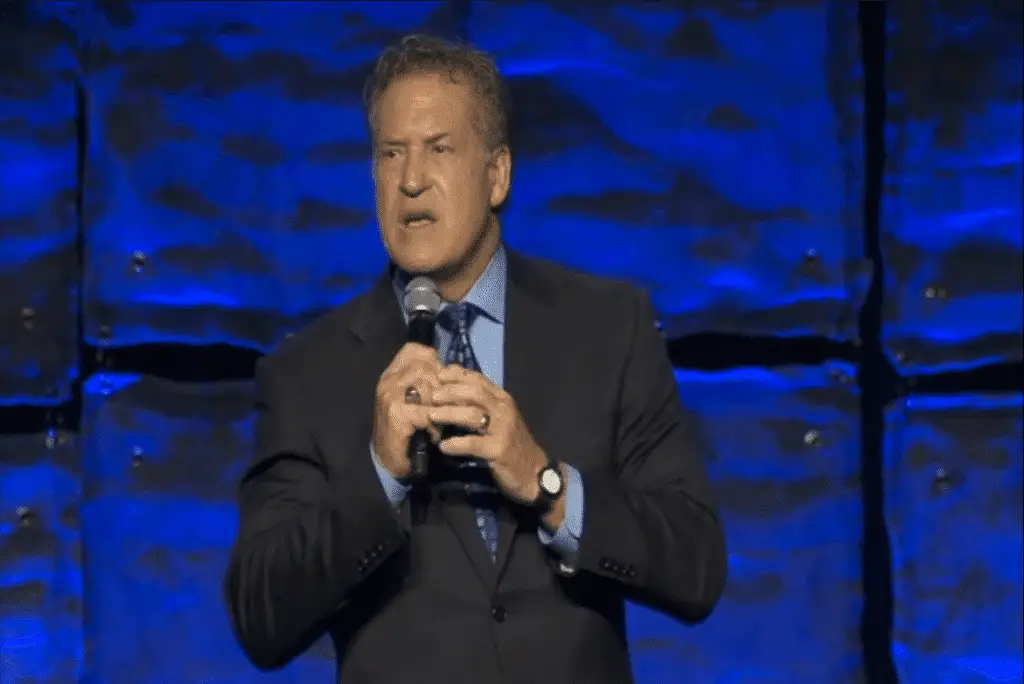
Mark’s impact is not defined by one talk. It is defined by every talk. He does not rely on a viral moment or one big event. He shows up every time as if it matters, because it does.
His legacy is not a brand. It is a body of work, and the way people feel after meeting him: inspired, seen, better. Not once, but again and again, because consistency breeds credibility. His presence leaves an emotional residue that lingers long after the applause.
The trust audiences, planners and peers place in him does not come from hype. It comes from decades of delivering, growing and serving. He does not reinvent himself for applause. He refines himself for impact, because every keynote is not a performance but a promise. Legacy is not something you chase. You build it keynote by keynote, conversation by conversation, day by day, and mostly in the dark, with discipline, humility and the daily decision to be excellent again.
Do not focus on being remembered. Focus on being revered.
10. Family over everything
Mark’s identity is not wrapped up in being the best motivational speaker in the world. It is rooted first in being a husband, a father, a son. His family is not a footnote to his success. It is the foundation, and it shows on stage and off.
He does not just talk about family values. He lives them. He speaks about his wife and children with such warmth, humor and reverence that you feel you know them, and you want to. The stories he tells and the lens through which he sees the world are shaped by love, loyalty and legacy.
None of it is performed or strategic. You feel it in how he plans his travel, how he carves out time for his family, how he beams when he introduces his wife from the stage. When he mentions his father in a story, you feel the generations behind his words. When he talks about the early years with his wife, you glimpse a deep partnership that shaped his path. And when he talks about his grandchildren, he lights up as if each one were the world’s greatest gift.
He reminds me that success is not only measured in standing ovations, but in the love you return to when the lights go down. His priorities are aligned, and it shows in how he serves, leads and speaks.
If the foundation at home is fractured, the performance in the spotlight will always wobble.
The greatest gift: being seen by the one who inspired you