In the event industry, the human side wins the rebook
In the event industry, technical skill gets a production team hired. Emotional intelligence, trust and calm under pressure make it unforgettable. Working with Troy Peters and SEAS Productions showed me what that looks like: a crew trusted to decide on site, prepared for the worst and fluent in both technology and storytelling.
In live events, the production team can make or break the experience. And not all production teams are created equal.
I have worked with many crews on my 3D immersive keynote. Few have left the impression that Troy Peters, Chief Experience Officer at SEAS Productions, and his team have. So I sat down with Troy to talk about what sets them apart, and what the rest of the industry can learn from it.
KEY TAKEAWAYS
- Emotional intelligence matters as much as technical skill in creating exceptional live events.
- Trusting the crew to make decisions and handle surprises on site is crucial for success.
- The best productions sit where modern technology meets timeless storytelling.
- Preparing for the worst makes the small problems easy.
- An event is not a moment. It starts at registration and ends long after the applause.
- Technology can dazzle. People make it stick.
Why does emotional intelligence matter as much as tech skills in the event industry?
Technical skill is non-negotiable in live events. Production teams manage complex audiovisual setups and integrate new technologies, and they need a deep command of their craft. But what truly sets the SEAS team apart is their emotional intelligence.
“It’s one thing to have that skill and that knowledge, but it’s another thing to have that humanity, that understanding of why we’re here together,” Troy explains. “We’re here to share stories, and to have even behind the scenes the guys that know how to share stories with each other and build off of last experiences, it’s amazing.”
I have never experienced the level of care and professionalism this team shows, consistently. As I told Troy: “An event is such a stressful window in time, for the client, the event director, the event professionals, everyone backstage. There’s always this level of pressure, and some of it is healthy, but very easily it can tip into something less constructive. Yet I never experienced that with your team.”
That combination of EQ and technical know-how is redefining what high performance looks like backstage, and it signals a shift in what event professionals value most.
Technology can dazzle. People make it stick.
How does trust help a production team make better decisions?
Troy credits the team’s performance to how he leads and builds it. “It’s about putting the right people in that space and knowing that they can click together and rely on each other. They know they’re supported.”
He trusts his crew to make decisions on site, even ones that affect cost or logistics. The result is a responsive team that thrives under pressure. That kind of readiness and trust-based leadership is quickly becoming best practice for successful productions.
The preparation covers every eventuality. “We have all those conversations so that when we get into it, if you’re anticipating the worst, like a hurricane, then the smallest little thing, like a pop in a microphone, is easy. We’re ready for it.”
Where do technology and storytelling meet?
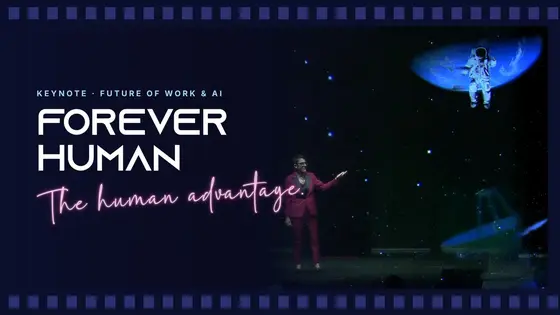
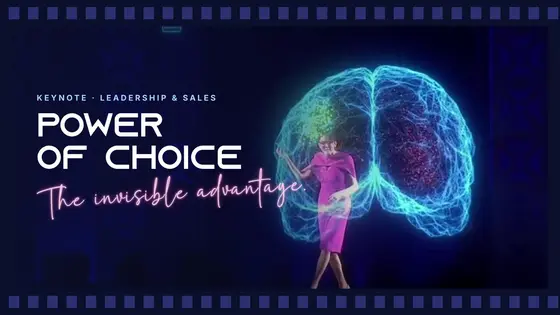
My 3D immersive keynote lives exactly at that intersection, and the SEAS team is remarkably good at it.
“We talk about technology and storytelling,” Troy shares, “and they don’t always intersect beautifully. But you embrace this so well, and I think our team helps you to do that. You’re the conduit, like back in caveman days when people sat around a campfire. That fire was the technology. And someone told the story.”
He also described what it is like to walk into the immersive experience as an audience member: “You walk in and know it’s different right out of the gate. There’s anticipation. So often, we enter general session ballrooms with predetermined notions. But with this, those go away instantly. The audience walks in and thinks, ‘What am I in for?'”
How do great crews handle the unpredictable?
Live events are unpredictable by nature. Technical failures, literal storms, anything can happen. That is why a culture of readiness matters so much. Avoiding risk is the plan. Resilience is what saves you when risk shows up anyway.
I will never forget the day water poured through the roof during a sudden thunderstorm. Everybody was freaking out, but Troy’s team kept us calm. Even in the darkness of my immersive world, I knew: I’m safe. They’ve got this.
Troy says that calm is no accident: “We talk through the uncomfortable stuff. What if the power goes out? What if we lose projection? What if the audience panics? When something small happens, we already know the move.” That calm in the chaos is what makes them leaders in the industry.

What does the future of live events look like?
Immersive experiences are no longer nice to have. They are becoming the new standard. One of the boldest shifts is transforming the whole venue, using projection, light and sound to surround the audience with content and story.
Troy describes how SEAS brought that to life: “We projected on every surface of the ballroom. Forward, backward, left, right, people felt like they were sitting inside a lab as we took them through a 360-degree walkthrough.”
It is about timing and intention as much as technology. For Troy, the event begins long before guests walk into the room. “From the moment you register, we want to build anticipation, through marketing content, digital signage at the airport, the lobby vibe, and then that final ballroom reveal. It’s all part of the same immersive experience.”


That idea, that an event is not a moment but a curated journey, is one of the changes audiences value most.
Why do people, not gadgets, make events unforgettable?

The event world is full of gadgets, effects and tech fads. What endures, what truly moves audiences, is the trust they feel, the calm backstage, the smooth flow from start to finish and a story that resonates.
The innovations that will matter most will not be driven by novelty alone. They will be driven by integration: heart and hardware, crew and creator, story and spectacle. That is what SEAS Productions gets right, and it is why working with Troy’s team has stayed with me.
Curious what a fully immersive keynote looks like from the planner’s side? Explore the 3D immersive keynote experience, or start with how to find a keynote speaker.
Frequently asked questions
What makes a great event production team?
Technical excellence is the baseline. The best teams add emotional intelligence, clear trust to make decisions on site, thorough preparation for worst-case scenarios and a shared understanding that they are there to help tell a story. That combination keeps clients, speakers and crews calm when pressure rises.
How do production teams prepare for things going wrong at live events?
The strongest teams talk through uncomfortable scenarios in advance: power outages, lost projection, audience panic, even severe weather. When the worst case has already been discussed, small problems such as a microphone pop become easy. Preparation is what makes calm in the chaos possible.


What is an immersive event experience?
An immersive event surrounds the audience with content and story through projection, light and sound, sometimes on every surface of the room. The experience starts long before the general session, with anticipation built through registration, marketing, signage and the venue itself, so the whole event feels like one continuous story.