The inspiration trap: why feel-good does not always stick

An inspirational keynote speech comes with a certain adrenaline rush. The music swells. The ovation comes. Everyone feels moved. And then they check their phones and go back to their day. Within 24 hours, whatever was inspired has often expired.
That is the inspiration trap: mistaking emotional impact for lasting impact, believing that because something feels powerful in the moment, it is powerful in the long run. So ask yourself what changed after your last keynote. Did people do anything differently? Did their thinking or behavior shift? Or did they clap and carry on?
Inspiration has its place. But unless it is tied to insight and action, it is theater, and your audience deserves more than a one-act play.
If your keynote speech leaves people standing, but not stepping forward, was it really worth the standing ovation?
What should your keynote speech actually do?
A radical idea: before you choose a speaker, get brutally clear on what the speech must achieve. Not how it should feel or sound, not what the speaker is famous for, but what it should do for your audience.
Do you need to align a fractured team? Launch a new strategy? Heal after a tough year? Spark creativity, reignite ownership, re-center your values? Every audience walks in with its own internal narrative, and the keynote should interrupt it, intentionally and meaningfully.
Too often we confuse performance with purpose. Your keynote is not the highlight reel. It is the reset button, the pattern interrupt, the north star. The best ones do not just make people feel better. They make them think and act differently.
The five functions of a high-impact keynote
Once you move past the inspiration-only model, you see that a keynote can serve several functions. Knowing which one you need changes everything about whom you hire.
1. Alignment: when teams need to get on the same page
It recalibrates the collective compass and creates shared direction. An alignment keynote clears up confusion, reframes priorities and unites different departments. Especially in times of transition, it is the glue between vision and execution.
2. Activation: when people should act after they leave
Here the keynote moves from awareness to behavior. It introduces frameworks, plants ideas and creates urgency around tangible next steps, the spark for momentum after the event.
3. Relevance: when the event must connect to real challenges and trends
Audiences want to know the keynote was designed for them, not recycled from last month’s event. A relevance-driven keynote acknowledges what is happening right now and shows people how to handle it. They feel seen, and prepared.
4. Challenge: when it is time to question the status quo
Sometimes the most respectful thing a keynote can do is create discomfort. Not confrontation for its own sake, but helping people confront what holds them back. It moves them off autopilot and into possibility.
5. Celebration: when you recognize achievements and milestones
This keynote validates effort and energizes culture. It closes a chapter with pride or opens a new one with confidence, and done right, it strengthens emotional connection and loyalty across the room.
A great speaker knows which function to step into. A brilliant one weaves two or three together without the audience ever noticing. “Make them smile” is rarely the only line in the job description.
Audiences are evolving, and they want more than inspiration
Today’s audiences are sharper and more skeptical. They have lived through a pandemic, layoffs, transformation fatigue and a flood of empty platitudes, and they can smell canned storytelling from the back row. They want something real, useful and respectful of their intelligence:
- insights they can apply
- context that feels relevant
- candor over clichés
- interaction over passive listening
- proof over platitudes
The keynote that wowed a crowd in 2015 might get polite applause and an Instagram scroll today. If it could be delivered word for word to any other audience, it is probably not the one yours needs.
Stop treating the keynote like a pep rally
One of the costliest mistakes is the wrong tone for the context. A high-energy pep talk feels like the safe choice, but in the wrong room it is tone-deaf, dismissive, even alienating.
Imagine a workforce fresh out of major layoffs. Tension is high, trust is low, and the speaker talks about “crushing it” and “pushing harder.” Ouch. Or a leadership retreat about strategic innovation, opened by a vague motivational story with zero business application.
The keynote sets the emotional tone of your event, and when it hits the wrong note, recovery is tough. Energy alone may spark applause. A keynote rooted in emotional intelligence sparks trust, relevance and change.
What your audience might need instead
Instead of asking, “How do we inspire them?” ask:
- What do they need to hear right now?
- What conversations are they avoiding?
- What would help them feel seen, challenged or reconnected?
Sometimes they need a truth-teller. Sometimes a strategist. Sometimes a mirror. And yes, sometimes a little fire. Rarely do they need a one-size-fits-all dose of rah-rah. Your keynote could be the moment people realize they are not alone, that it is time to lead differently, that their ideas are worth pursuing, or that it is okay to slow down. Whatever it is, make it count.
How to match the speaker to the moment
Rewrite your criteria. Look for:
Relevance to your audience’s current reality
A great keynote is focused on what your audience is dealing with right now. The best keynote speakers understand current industry challenges, cultural shifts and organizational pain points. Relevance builds trust fast, and people who feel seen stay engaged and act afterwards.
Expertise that fits your goals
Not every expert is right for your message. The speaker should know the subject and connect it meaningfully to your theme or strategy. Depth plus applicability is what turns informative into transformative.
Adaptability in content, tone and delivery
Cookie-cutter keynotes are a red flag. A speaker who asks insightful questions beforehand and adjusts accordingly respects your audience. Adaptability shows in tone, examples, cultural references and even humor, personalization that feels authentic, not performed.
Proof of impact beyond applause
Clapping is nice. Change is better. Ask what happened after the speech: did a leadership team change direction? Did attendees report specific takeaways they implemented? Testimonials are good. Evidence of follow-through is better. Ask how they approach your audience’s pain points, and how they measure success.
And when in doubt, do not default to the speaker who “crushes it every time.” Choose the one who gets it this time. The keynote is not just about the speaker you hire. It is about the moment you create.
What if you did not try to inspire them?
What if your keynote sparked clarity, shifted culture, challenged thinking or built trust? What if it gave people permission to do something differently, and the tools to actually do it? Inspiration is easy to find. Transformation is not. So stop aiming for applause and start aiming for impact. The right keynote speech does not just move your audience. It moves your organization.
And that, ironically, might be the most inspiring move of all.
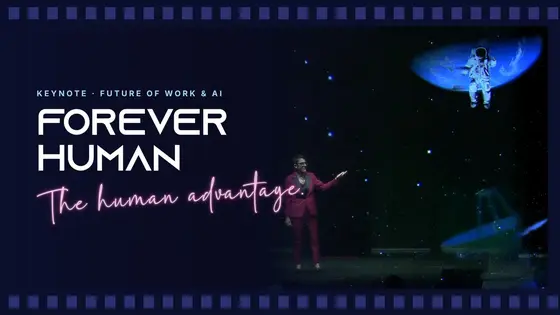
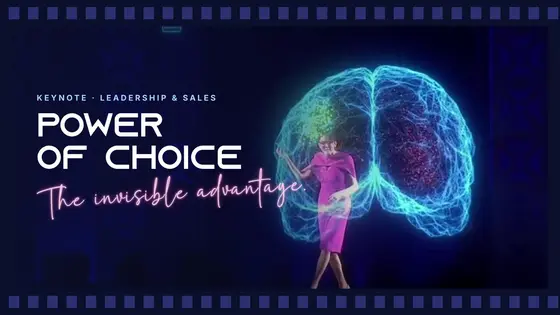
If your people need to see AI as a reason to become more human, not less, that is the job of my keynote Forever Human. If they need to be chosen by clients, talent and the room, it is The Power of Choice. And for the difference between the two speaker types, read motivational vs. business keynote speakers.