What happens when AI customer service makes the first impression?
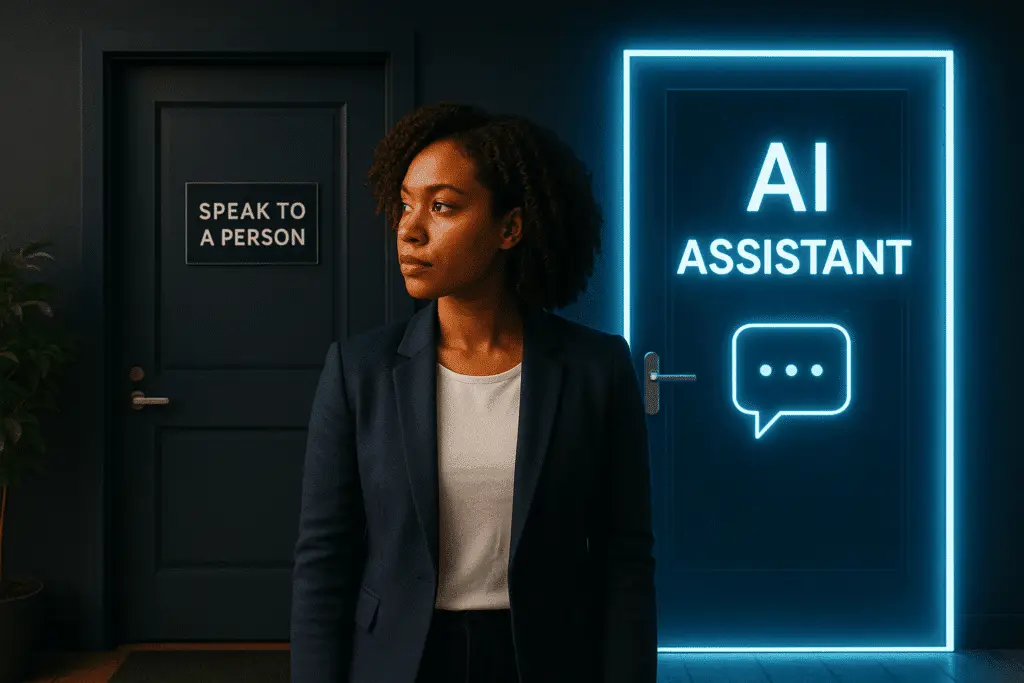
AI no longer handles only the simple requests. It greets your customers before your people do. In many industries, it is the first voice, the first reply and the first attempt at a solution.
Convenient, yes. It also changes the customer’s emotional path. By the time they reach a human, they are either relieved or already irritated.
The psychology is subtle and real. When a chatbot works, customers trust the brand more. When it fails, they question the business along with the bot. First impressions have always mattered, but now they are made in milliseconds, by software, and in that compressed moment the customer decides: Am I respected or dismissed? Am I a ticket number or a valued relationship?
So tone, timing and trust have to be designed into the very first second of service. The irony is sharp. Businesses once spent millions training frontline staff to open conversations well. Now those openings are shaped by prompts, language models and response delays. The warmth of your welcome is no longer in a handshake. It is in the algorithm. If your AI is not aligned with your service philosophy, that is not just bad UX. It is bad branding, and worse, a broken promise.
Warmth used to come from a smile. Now it comes from syntax.
Why are informed customers also exhausted customers?
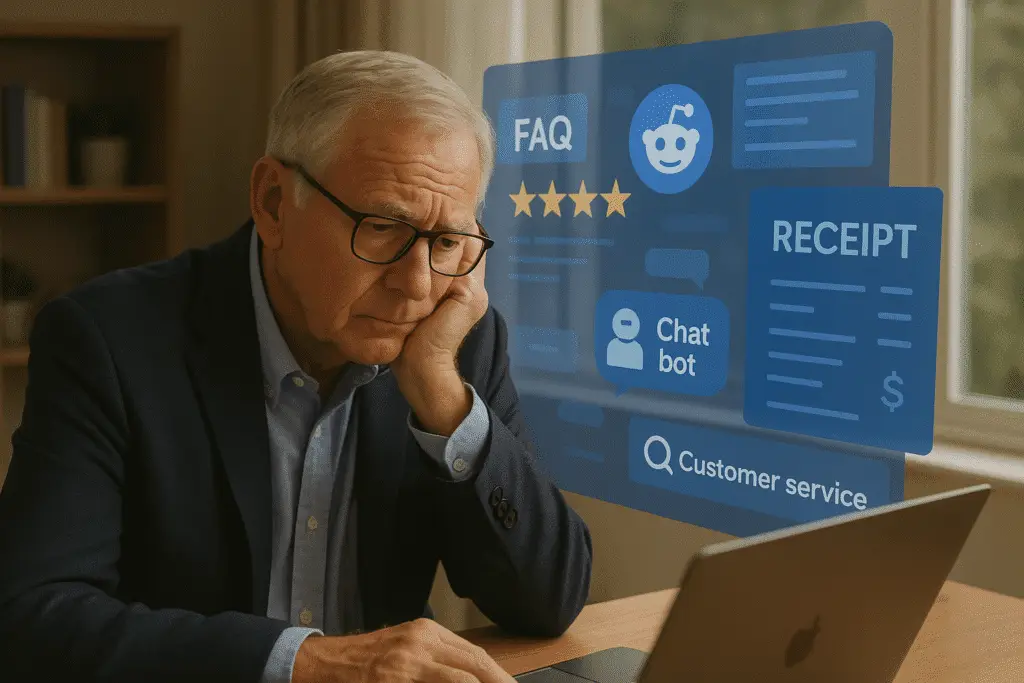
Customers now show up armed with information, reviews, receipts and sometimes screenshots from Reddit. They have searched, sorted, compared and judged before they ever contact you. They are not looking for help. They are looking for confirmation that their research was right, or for a convincing reason to change course.
Sounds ideal. It comes with fatigue. These are smart customers, and digitally overwhelmed ones. They do not want to re-explain their issue or fight through another maze of menus. They want to skip to the part where they feel understood.
That is where AI can shine or sabotage. If it does not surface the relevant context, forces repetition or ignores history, it turns fatigue into frustration, and the brand pays for it.
AI has raised expectations, not lowered them. Customers expect interactions to be frictionless, predictive and maybe a little magical. Tailored, not templated. Proactive support before they even hit “submit.” The more your tools promise, the more dangerous it is to underdeliver. Customers do not care how advanced your systems are. They care whether you remembered them. They do not want to feel processed. They want to feel prioritized. Customers do not need more answers. They need less exhaustion. More on that shift in AI and customer expectations.
How is AI changing the role of customer service reps?

Let us not forget the humans behind the service desk. As AI takes over routine tasks, their role is quietly transforming. They are no longer expected to handle volume. They are expected to handle volatility.
That means emotional escalations, edge cases and every situation where the machine failed. Script readers become improv artists. They defuse tension, interpret AI logs, override automation errors and do it all without sounding like they resent the robot sitting next to them.
The soft skills just became the hard skills, and that brings a new kind of pressure. Agents are now the fail-safe, the escalation point, the emotional buffer between a frustrated customer and an unforgiving algorithm. It is no longer about how fast they pick up the phone. It is about how well they rescue a situation that went sideways.
So service is no longer only about fixing problems. It is about interpreting meaning: reading between the AI-generated lines, catching what the customer did not say and restoring some humanity to a process that feels increasingly robotic. The future belongs to service professionals who are emotionally intelligent, technically literate and perceptive enough to bridge the gap between algorithm and anxiety, and to companies that treat that emotional labor as a strategic advantage, not an optional skill. Script readers are out. Emotional translators are in.
Can AI deliver empathy in customer service?
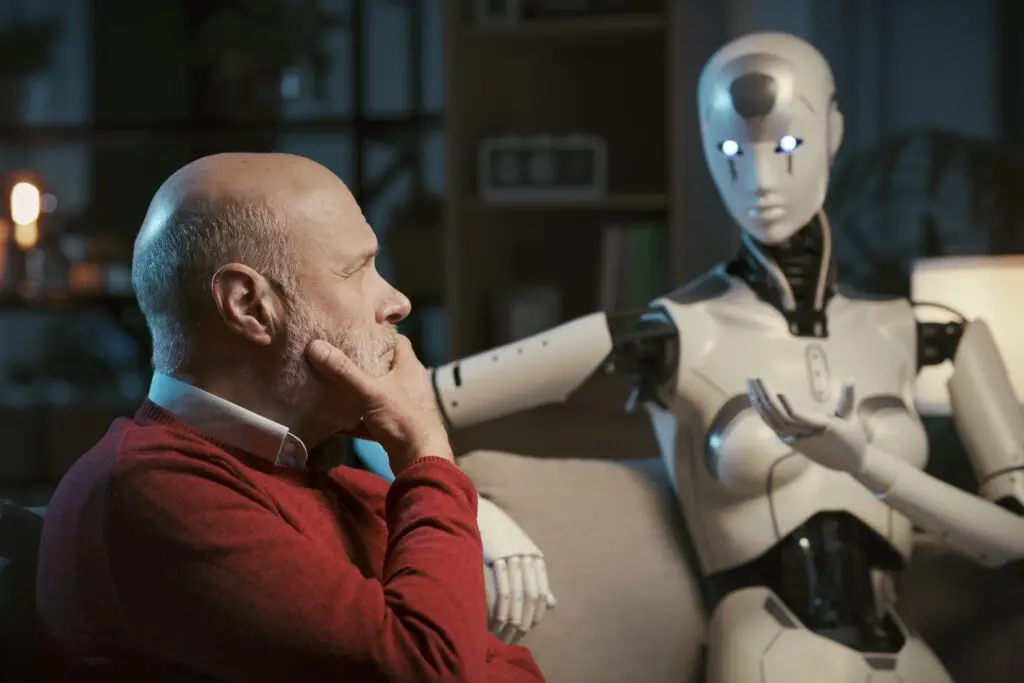
One truth AI cannot change: upset people want to feel heard, not processed.
Chatbots can simulate pleasantries. They cannot sense discomfort, detect sarcasm or handle nuance with grace. An apology without sincerity is a script, and nothing irritates a customer more than faux empathy, especially when something has gone wrong.
Empathy does not scale, not even with the best AI integration. But it is magnetic. The brands that win invest in it as a skill, not a setting, in the words and in how they are delivered: tone, timing and truth. Real empathy does not rush, does not deflect and does not try to win. It listens to understand, not to solve.
And the paradox: the more automated service becomes, the more noticeable and valuable real empathy gets. It is what customers talk about, post about and stay loyal to. Most brands sound the same now, and the ones that feel different will win. That difference is often one person, on one day, who did not read a script but responded like a human. AI can handle millions of requests. Only people can meet another person where they are. You can automate convenience. You cannot automate care.
Why is automation without intention a liability?
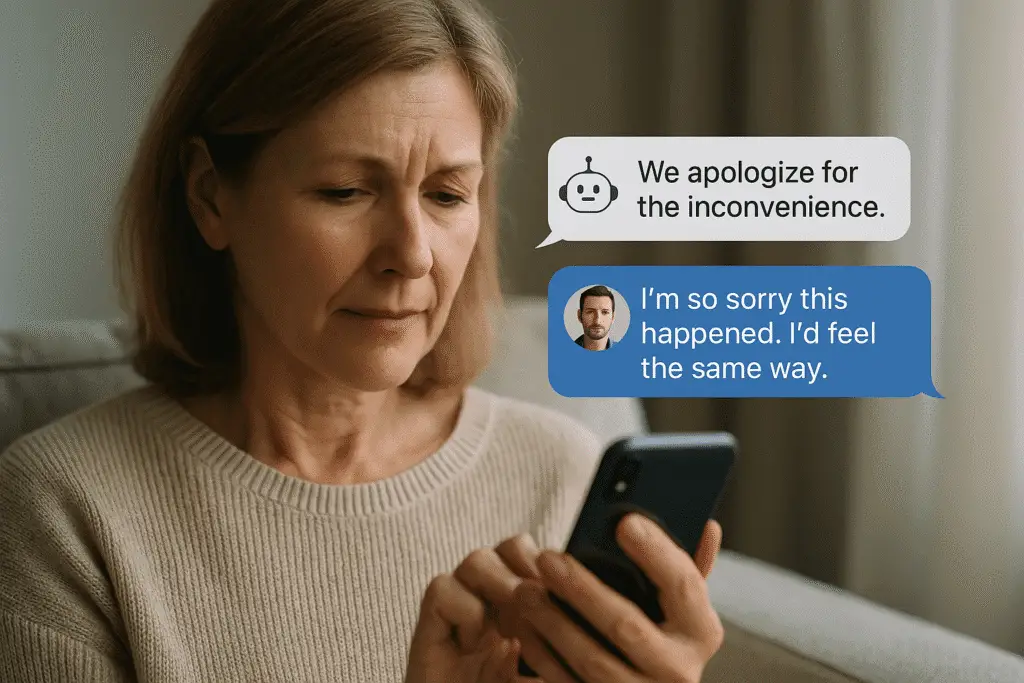
Just because you can automate it does not mean you should. Over-automated service is brittle: impressive in the demo, collapsing in real life.
Every time a machine fails, it erodes trust faster than a human mistake. Why? Because customers assume your AI represents your best effort. A cold response, a missing escalation path or a misrouted chatbot is not read as a glitch. It is read as “they don’t care.”
There is also an identity cost. Over-automating means outsourcing your voice, your tone and your instincts until the brand itself feels algorithmic. Customers may not put it into words, but they feel it when a company sounds like software instead of people. That creates emotional distance, and emotional distance kills loyalty.
AI should strengthen the experience, not hollow it out. No clear path to a human, irrelevant options on repeat, tone-deaf replies to nuanced issues: that is not innovation. It is insulation. The customer ends up boxed in, unheard and unlikely to return. In service, perceived indifference is brand poison, not because the customer did not get what they wanted, but because nobody cared enough to make sure they felt understood.
When should customer service be human?

If AI does the first 90 percent, the final 10 percent matters more than ever. That is the moment of truth: a refund decision, a tone of voice, a gesture of goodwill. Not scalable. Not programmable. Unforgettable.
Those moments do not happen by accident. They need employees who are trusted to think instead of only following protocol. Leaders who care about emotional outcomes as much as operational ones. And a culture where the human touch is a principle, not an afterthought.
The final 10 percent decides whether a customer feels part of a transaction or a relationship. Whether they leave quietly or advocate loudly. Whether they come back, not because it was easy, but because it meant something. They will not remember the chatbot. They will remember the choice you made to show up human. Trust people to care, and they will do what no automation ever could.
When does human choice become the competitive edge?
AI is changing how businesses operate. Do not mistake speed for satisfaction, or automation for loyalty. The brands that thrive will master one distinction: knowing when to let the machine answer and when to make it personal.
Those companies will do more than survive the AI wave. They will be the ones customers run toward, not because they had the best tools, but because they never forgot what the tools were for: to serve people, not replace them.
For the bigger picture, read artificial intelligence vs human intelligence, or see how I bring it to the stage in my keynote Forever Human.
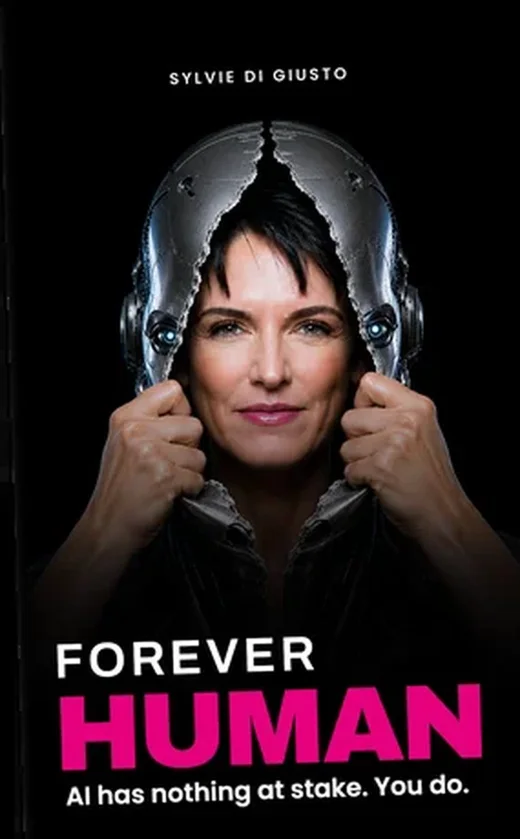
Forever Human
Empathy, timing and the judgment to know when a customer needs a person: these are the human moves I write about in my book Forever Human, for leaders who want their service to feel different when every brand has the same chatbot.