Where does AI speed win the race?
Speed is the superpower of artificial intelligence. It processes massive data sets, scans for compliance red flags, sends hundreds of alerts and finishes tasks before we have finished our first cup of coffee. Where time is money, think financial trading, emergency response or high-volume customer service, that speed changes everything.
There is a flip side. Fast does not always mean right. Sometimes the email fired off in milliseconds is the one that breaks a relationship. The alert is technically correct and emotionally tone-deaf. The instant decision forgets the person behind the data. Yes, the speed is impressive. It is also indiscriminate, because it reacts on code, not on consideration.
Why do humans choose the detour?
Human intelligence takes the scenic route. That is not a weakness. It is the point.
Humans pause. They hesitate. They sense that something is off even when the data says it is fine. They call instead of texting. They knock instead of emailing. And that detour, that delay, is often where the value gets created: conflict defused, nuance noticed, trust repaired.
It is not about being slow. It is about being selective, because speed without wisdom is just noise. We filter with our values, and we react to the implications as much as to the input.
Showing up fast is easy. Showing up wisely is what makes you forever human.
Where does AI speed fail and human timing win?












In every industry, professionals are waking up to the same quiet truth: speed gets things done, but not always done right. The human instinct to pause is not a delay. It is a decision-making asset, the place where instinct, context and consequence meet. Here is what that looks like across fifteen professions.
Healthcare
AI may spot something unusual in a scan before the doctor walks into the room. Only the doctor sees the whole person, not just the pattern. Taking a beat for a real conversation, reading the worry in a patient’s eyes, hearing the hesitation in their voice: that often changes the diagnosis. The story matters more than the snapshot.
Human resources
AI skims a thousand resumes in the blink of an eye. It will not catch the spark in a cover letter that misses half the keywords. A human lingers a little longer, notices the grit behind the grammar, the curiosity between the lines or the growth in a nontraditional path, and realizes there is something special the algorithm could not see.
Education
AI grading tools produce results at lightning speed. A teacher notices when a child’s handwriting suddenly looks shaky, or when their usually sharp thinking feels off. No dashboard picks that up. A simple “Everything alright?” in the hallway can open more than any database ever will.
Customer service
Chatbots answer instantly without missing a beat. But when a longtime customer’s voice shifts, or their words carry a little edge, it takes a human to hear it and pause. That breath of empathy turns irritation into understanding. It is about making someone feel heard, not only answered. AI may nail the facts. People bring the feeling, and in service, feeling earns the loyalty.
Finance
AI builds a portfolio from market data in seconds. Only an advisor can tell that a client is not truly ready for that risk, even though they ticked the “aggressive growth” box. A real conversation, a pause, a read on hesitation: that is where judgment steps in. Slowing down avoids missteps, and it keeps the trust that real relationships are built on.
Law enforcement
AI triangulates data, pulls license plates and flags potential threats before anyone blinks. A seasoned officer who pauses to read the room, the clenched fists, the sidelong glances, the rising voices, can change the entire outcome. That extra second to breathe, to de-escalate, to hear what is not being said, is where real safety lives. The point is not to ignore the data. It is to add humanity to it.
Marketing
AI writes 50 ad headlines before your coffee cools. A human notices the phrase that might land wrong, the tone that feels slightly off, the pop culture reference that is a little too soon. The machine delivers speed. We deliver sensitivity. That small voice saying “Wait, will this really land the way we think?” is where strategy lives. In the sense-making, not in the speed.
Legal
AI pulls case law in seconds and drafts summaries before the paralegal opens the laptop. A good lawyer senses when a client is holding something back, or when the story does not quite add up. They hear the pause, see the discomfort and ask the question software never would. That seemingly off-topic conversation is often where the truth comes out. AI gives the facts. Humans understand the stakes.
Event planning
AI schedules, budgets and sends a vendor list in seconds. It will not know that a participant just had a family emergency, or that an executive gets uncomfortable unless seated near an exit. A human planner asks the extra question, notices the detail nobody typed and adjusts without being told. That moment of double-checking can be the difference between a flawless event and an awkward disaster.
Sales
AI sends a thousand emails before lunch. A good salesperson knows when not to hit send. They recognize when a client needs space, or when saying less builds more trust. They read the room, even a virtual one, and know when silence persuades better than any clever pitch. That kind of intuition does not scale. Honestly, it should not. It is what makes the relationship real.
Real estate
AI predicts a property’s market value before the front door opens. It cannot hear the hesitation in a couple’s voice as they step inside, or catch the quiet glance they exchange in the hallway. It will not notice the kid lingering in what could be their future bedroom, or the pause before someone asks about the neighborhood. An experienced agent feels those beats and senses whether this is the wrong fit, or the perfect one that just needs time to land.
Journalism
AI produces headlines faster than you can hit refresh. A seasoned journalist reads it twice, weighs the nuance and asks, “Is this responsible to publish right now?” They are chasing the story and protecting the truth. The algorithm may win the race, but the human understands the weight of the words. That extra beat is not hesitation. It is integrity.
Coaching
AI suggests replies based on sentiment scores. A good coach sees the weight behind a forced smile. Sometimes the most powerful move is not another prompt but staying quiet a moment longer. A thoughtful pause, a well-timed follow-up or simply holding space can be exactly what someone needs to feel safe enough to open up. Not data-driven. Deeply human.
Architecture
AI produces hundreds of layouts in a flash. The architect slows down and pictures the flow of people, the conversations at the kitchen counter, the way sunlight hits a window. They walk through each room in their mind, for experience as much as design. Speed offers options. The human touch gives them meaning, and the brilliance sits in that pause and in the quiet empathy for the people who will live there.
Crisis management
AI spots outrage trending online in seconds. A skilled PR professional knows better than to jump in right away. Sometimes the smartest move is not a crafted statement or a clever reply but a well-timed silence. It gives people time to cool down, lets the narrative reshape itself and shows a maturity no bot can imitate.
Why is slowing down the real power move?
Gut instinct still matters, even when everything is data-driven. The pause before a big decision is where self-awareness and emotional intelligence take the wheel. Machines do not pause. They process.
That pause is where you call the upset client instead of sending the perfectly worded AI-generated apology. It is where you hold the email campaign because something does not feel right. You cannot quantify a hunch, and sometimes it is more accurate than the algorithm.
At work, speed will always be rewarded. Wisdom is what gets remembered. Showing up fast is easy. Showing up wisely is what makes you forever human. For the bigger picture, read artificial intelligence vs human intelligence, and for what constant speed does to us, how AI is rewiring our patience.
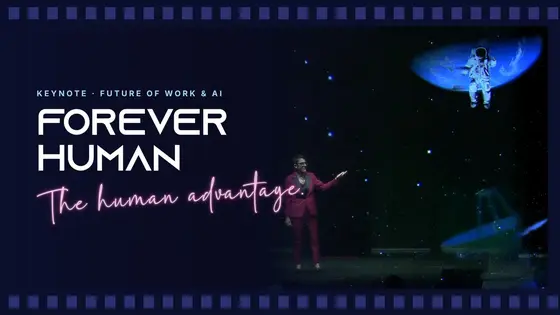
Speed vs. timing is the first of the ten moves in my keynote Forever Human: AI is fast, humans know when fast is wrong.
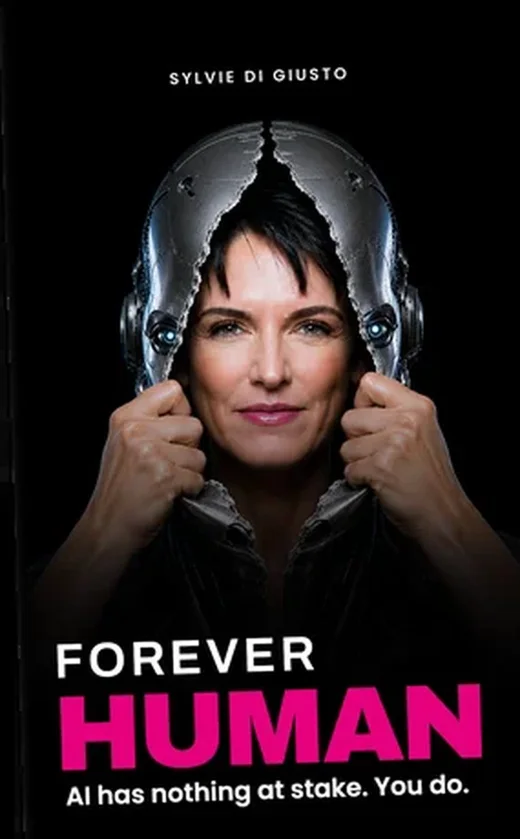
Forever Human
Knowing when fast is wrong is one of the ten human moves I write about in my book Forever Human, alongside nine others a machine still cannot make. It is for anyone who wants to stay the person their clients, patients or teams would never trade for a quicker algorithm.