1. Why do clients value relevance more than speed?

A client’s contract is about to renew. The system sends three automated reminders. A fourth email follows, with AI-generated coverage suggestions. Technically perfect, delivered instantly. The client never responds.
A week later, a human account manager calls. Within minutes, the client explains what actually mattered: they had been under pressure from their board and were evaluating several strategic changes. Every one of those automated emails had felt irrelevant.
AI is extraordinarily good at speed. It sends reminders, triggers alerts and drafts responses faster than any team could. In many processes, that is enormously valuable. But speed does not equal relevance. Professionals recognize when a situation needs something different. They hear hesitation in a client’s voice and know when a personal call means more than another message. The best organizations let AI handle the repetitive communication and trust people to step in when context matters. Sometimes the most valuable response is not the fastest one. It is the one that understands the situation.
2. Why do clients want to be understood, not just remembered?
A long-time client calls support with what looks like a simple billing question. Within seconds, the system pulls up five years of history: every renewal, every ticket, every email. The AI assistant highlights patterns, flags past complaints and suggests the next best response. The system remembers everything. And still, something important is not on the screen.
Client relationships are rarely defined by data alone. Human professionals remember what machines cannot capture: the moment a client felt vulnerable after a difficult claim, the call where trust was rebuilt after a mistake, the tension behind what looked like a routine conversation.
Machines remember events. Humans remember significance. That matters, because clients do not judge companies on efficiency alone. They judge them on how understood they feel. A database recalls the last ten transactions. A person recalls why those transactions mattered to the client’s business, and that understanding often decides whether a relationship grows or quietly disappears.
Machines remember events. Humans remember significance.
3. When do clients trust human judgment over data?

A sales team meets for its weekly pipeline review. The CRM has ranked every prospect by probability of conversion, based on thousands of signals: browsing behavior, industry trends, engagement scores, purchasing patterns. One prospect sits near the bottom. According to the model, it is a long shot.
One salesperson pauses at the name. Months earlier, that prospect had mentioned a possible expansion into a new market, and something about the timing now feels different. She makes the call anyway. It turns into a deal.
AI learns from large data sets, and the more it processes, the better it spots patterns. Professionals accumulate something else: lived experience. They remember failed proposals, unexpected wins and the faint signals that come before big decisions. That experience lets them recognize situations that look statistically unlikely but contextually promising, and in client relationships, those are often the biggest breakthroughs.
4. Why do clients remember experiences no algorithm would design?

A marketing team asks AI for campaign ideas based on what has worked before. It delivers polished messaging, refined targeting and optimized formats. Everything looks impressive. And everything feels familiar. Then someone suggests something unexpected: an experience-based client event no competitor has ever tried. It sounds unconventional, even risky. It becomes the campaign customers remember.
This is the difference between optimization and imagination. AI is remarkably good at refining what already exists. It remixes proven ideas and improves efficiency. Breakthrough experiences usually come from imagining what has never been done. Human curiosity asks the odd question and explores possibilities no data could predict. Technology improves the past. People invent the future.
5. What do clients reveal between the lines?

A client replies to a proposal: “The pricing looks fine.” A sentiment analysis tool files it as neutral to positive. A human reading the same line senses something else. The wording is careful. The tone suggests hesitation, not enthusiasm. So instead of celebrating, the professional schedules a call, and the client reveals concerns about long-term costs they did not want to put in writing.
AI can detect emotional patterns in language: frustration, urgency, satisfaction. Empathy takes more than detection. It takes interpretation. People weigh tone, silence and context, and they notice what clients do not say. Often the most important information in a relationship sits between the lines, and catching it early stops a concern from becoming a problem. If this sounds familiar, you will like AI and customer service: smarter, faster, colder?
6. Why do timing and nuance beat perfect wording?

A consulting firm uses AI to draft its weekly update for a major client. Polished language, clear structure, flawless sentences. It goes out automatically, on schedule, right into the client’s intense internal review week. Executives are already under pressure, and the perfect email creates confusion about priorities.
A few weeks later, a similar update is handled differently. A consultant calls first, explains the context, then follows up with the written summary. The exact same information sparks a productive conversation.
AI can assemble beautiful sentences. Humans decide when and how those sentences should arrive. Professionals consider relationships, internal dynamics and culture. They know when humor works, when formality matters and when silence says more than words. A message that looks perfect on a screen can land very differently with a client under pressure.
7. Why do clients stay loyal to companies that protect trust?

An analytics platform flags a long-standing client as unprofitable and recommends reducing service hours, or ending the relationship. Financially, it makes sense. The account consumes more than it generates.
The account manager hesitates. This client has introduced the company to several partners over the years and carries real influence in the industry. Walking away might improve short-term margins and damage long-term trust.
AI optimizes what can be measured. People consider the wider consequences. Ethics, values and reputation never show up in a dataset as clearly as revenue does, yet they shape how clients see a company over time. Human judgment keeps efficiency and integrity in balance.
8. Why do clients feel energy before you see it in the metrics?

A customer success team checks its dashboard before a quarterly check-in. Engagement stable. Renewal probability high. Few support requests. A healthy relationship, on paper. Then the client joins the video call, and the tone is different. The conversation is shorter. The enthusiasm that used to fill these meetings has softened. Nothing dramatic has happened yet. The energy has shifted anyway.
Humans often detect these shifts long before the numbers do. We read body language, tone and small emotional cues that show whether a relationship is strengthening or weakening. Metrics describe performance after it changes. Perception catches the change early, when a small issue is still easy to fix.
9. Why do clients believe in people before dashboards?

A quarterly review with an important client. Every slide is full of charts, milestones and tracked progress, and every slide confirms the project is on track. Halfway through, the client leans forward and asks a simple question: “Are we going to be okay?” The room goes quiet. The answer takes more than numbers.
Trust comes from human interaction. Clients want to know that someone understands their situation and is personally invested in the outcome. Professionals convey confidence, accountability and commitment in ways technology cannot. Numbers explain progress. People inspire belief, and belief is what keeps clients committed through the hard moments.
10. Who adapts when the plan no longer works?

Late on a Friday afternoon, a major client calls with urgent news. A regulatory change has altered their market overnight, and the strategy everyone agreed on weeks ago no longer works. The analytics systems immediately produce updated forecasts and scenarios. The data arrives fast. The way forward is still unclear.
So the client team gathers, reviews the options and reshapes the plan in real time: testing ideas, challenging assumptions, improvising, guiding the client through the uncertainty. AI analyzes new data quickly. Someone still has to decide what to do next. Machines follow predefined models. Humans work through ambiguity, and in complex client relationships, ambiguity shows up far more often than the predictable scenario.
What is the real opportunity in AI customer experience?
AI will keep transforming how organizations operate. It will analyze faster, automate more and generate ever more sophisticated insights. But the goal was never to replace the human side of customer relationships. The goal is to remove the tasks that distract from it.
Machines handle the speed and scale of modern business. People provide interpretation, empathy, imagination and trust. Technology accelerates communication. People make it meaningful. The organizations that get that balance right will create customer experiences technology alone could never deliver.
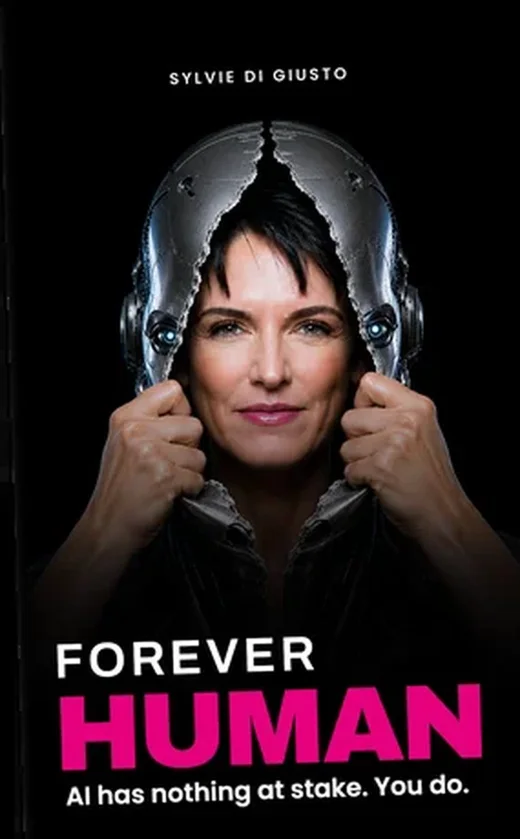
Forever Human
“Are we going to be okay?” is not a question a dashboard can answer. My book Forever Human is about the human moves that make clients stay: relevance, empathy, timing and trust, on purpose.