Why does AI trigger job anxiety?
It rarely starts with algorithms. It starts with identity.
For years, professionals build the expertise that defines their value. They learn complex processes, collect institutional knowledge and become the person whose judgment matters when it counts. Then a new technology shows up that analyzes information, writes reports, summarizes meetings and even proposes decisions. In seconds.
So a question arises, quite naturally. If a system can do part of my work faster, where does that leave me? That reaction is not irrational. It is a deeply human instinct to protect professional relevance. People want to know that the skills they invested years in will still count tomorrow.
People rarely fear technology itself. They fear becoming unnecessary inside the systems they helped build.
Organizations that name this concern directly create room for a real conversation. Instead of dismissing the anxiety, they answer it with clarity and context.
How does job anxiety spread across teams?
Inside organizations, emotions travel fast. One comment about automation in a meeting. One rumor that AI will take over certain tasks. One article about tech-driven layoffs shared in the team chat. Soon the story moves through informal channels faster than any official announcement.
From then on, people read ordinary changes through a lens of uncertainty. A request to test an AI tool feels like preparation for replacing human work. A new efficiency initiative sounds like a headcount plan. Even neutral decisions trigger speculation.
When leaders stay silent, employees write their own explanations, and those are almost always more dramatic than reality. The outcome is not a revolt. It is hesitation. Adoption slows. Information gets protected instead of shared. Innovation becomes cautious. Transparency reduces speculation, and clarity steadies a team. Once people understand the purpose behind an AI initiative, the anxiety starts to shrink.
When does job anxiety turn into silent resistance?
Most organizations assume that people who fear a new technology will say so. Usually the opposite happens. Nobody stands up in a meeting to announce they are worried about their future. They do something far subtler.
They delay trying the new tool. They ask for “a little more time” before automating anything. They keep using familiar workflows even when faster options exist.
From the outside, this looks like a productivity problem, a training gap or plain resistance to change. Underneath, people are protecting their professional identity. When they are unsure how AI will reshape their work, they hold on to the expertise that defined their value. Knowledge becomes something to guard rather than share, and collaboration weakens because everyone wants to stay indispensable.
I call it silent resistance. Nothing looks confrontational, yet experimentation drops and organizational learning slows to a crawl. The irony: the harder an organization pushes adoption without addressing the human concerns behind it, the more this resistance grows. People comply on paper and hesitate in practice.
Organizations that spot the pattern early treat hesitation as a signal, not as opposition. They start talking about how work will evolve, which new opportunities may open and where human contribution becomes more valuable. When employees see that their future still includes meaningful work, caution turns into curiosity and the experimenting comes back. The challenge is rarely the technology. It is understanding the human reaction that shows up before people learn to work alongside it.
Why do high performers often feel the most AI anxiety?
This surprises many leaders. They expect hesitation from people who struggle with change or doubt their role. Yet the most thoughtful, sometimes most worried, questions about AI often come from the people who have historically delivered the most value.
The reason is simple. High performers build their professional identity around expertise. Over years, sometimes decades, they develop deep knowledge of systems, processes, relationships and industry patterns. They are the ones others call when a problem gets complicated. Their confidence comes from trust earned through experience, not from a job title.
Now AI summarizes reports, generates insights and organizes complex information, the very tasks that used to signal expertise. Work that took years of experience to master appears on a screen in seconds. For a high performer, the deeper question is whether the expertise that defined their value will still matter.
So the anxiety often shows up first among the people who care most about excellence. They are not resisting innovation. They are trying to figure out how their contribution evolves when information is instantly available. Smart organizations help them reframe expertise. Experience does not disappear when technology improves. It transforms.
AI produces information quickly. Experienced professionals still interpret what it means in context. They spot the subtle risk hidden in the data. They understand the relationships behind a decision. They know when to follow a recommendation and when to question it. Once high performers see that AI can amplify their judgment instead of replacing it, their anxiety often turns into leadership, and the people who worried most become the ones guiding everyone else.
Is there an opportunity hidden inside the anxiety?
Yes. Anxiety is also a sign that people care deeply about their work.
Disruption forces organizations to ask fundamental questions. Which activities truly create value? Which processes exist only because old technology required them? Where do human skills offer an advantage automation cannot copy?
AI is particularly good at removing the repetitive tasks that eat large parts of a workday: administrative prep, data formatting, routine reporting, searching for information. When those shrink, space opens for strategic thinking, creative problem solving, relationship building, collaboration across teams and the interpretation of complex situations.
In other words, AI rarely eliminates meaningful work. It shifts attention toward the more human parts of it. Explain that shift clearly, and teams stop staring at what disappears and start looking at what becomes possible. I wrote about the other side of this coin in will AI replace jobs?
How can leaders reduce AI anxiety and the fear of AI in the workplace?








Technical training alone will not solve it. The challenge is cultural and psychological as much as technological. Organizations that handle this transition well take deliberate steps, and leaders own most of them.
1. Talk about AI before the rumors do
Silence lets fear grow. When AI only gets discussed after the tools arrive, people feel surprised and unprepared. Start early. Even admitting that leadership is still exploring the possibilities builds trust, because people see transparency instead of secrecy.
2. Clarify the purpose behind adoption
Employees often assume automation exists to cut headcount. Explain the strategic goals instead: better insight, more speed, higher service quality. A clear purpose changes the story people tell themselves.
3. Explain what will change and what will not
People tend to imagine that AI will transform everything overnight. Describe which tasks may evolve and which human contributions stay essential. Perhaps repetitive work disappears while analytical or strategic responsibilities grow. When people understand that judgment, creativity, relationships and decisions still need humans, the fear softens.
4. Redefine value, beyond roles
Go beyond job descriptions and help people see the value they bring. Technology may automate tasks. Interpreting results, building trust with clients and guiding complex decisions remain deeply human. When people see where their value sits, they can see where they fit.
5. Encourage safe, hands-on experimentation
Fear drops quickly once people actually use the tools. Create small, low-pressure chances to try AI for brainstorming, research or process improvement. The goal is not mastery. It is familiarity.
6. Invest in human skills
The more capable AI gets, the more communication, judgment, empathy, critical thinking, leadership and creativity are worth. Investing in them sends a clear signal: human contribution stays central to our strategy.
7. Celebrate learning, not perfection
Many people avoid AI because they are afraid of getting it wrong. Reward learning instead of flawless execution, and exploring feels safe. During a transition, progress matters more than expertise.
8. Share real internal examples
Stories shape culture. When teams see a colleague use AI to kill a tedious task, simplify research or find a new insight, the technology starts to feel practical instead of threatening. One concrete example beats ten abstract promises.
9. Reinforce the human mission of the organization
Every organization exists to serve people: clients, customers, patients, communities. AI may support the work. It does not replace the purpose behind it. Reconnecting people with that mission puts the technology back in its proper place.
What does the future look like for organizations that get this right?
Job anxiety around AI will show up in many workplaces over the coming years. Technological progress always raises questions about identity, value and contribution, and people want reassurance that their work still matters.
Organizations that acknowledge these concerns openly adapt faster and more thoughtfully. They do not force change on uncertain teams. They guide people through it. And over time, the employees who once hesitated discover how AI strengthens their work: tedious tasks automated, insights faster, more energy for the complex challenges that need human thinking.
The technology does not erase their value. It reframes it. Machines may analyze information quickly. Organizations still rely on humans to decide what truly matters. For why our first reaction to new technology is so often fear, read why we panic first and adapt later.
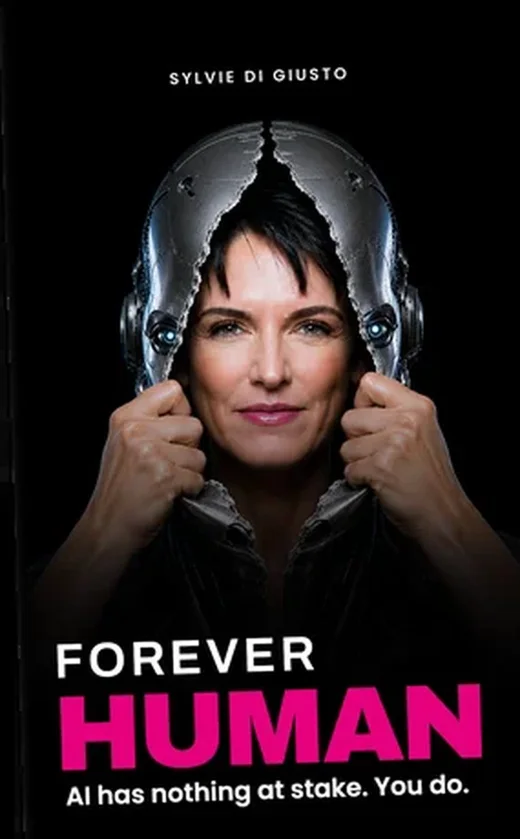
Forever Human
Worried employees do not need a pep talk about technology. They need to know which human contributions become more valuable as machines take over tasks. That is the heart of my book Forever Human.