011. Automating your emails will replace you
Picture this: an email arrives from a colleague or client, and it is painfully obvious it was AI-generated. Stiff tone, robotic phrasing, zero effort. How does that make you feel? Undervalued, probably.
I always cringe when I get one. It is like being invited into a conversation the sender did not want to be part of. Between the lines it says: “I could not be bothered to connect with you myself.”
Now flip it. If AI writes all your emails, to clients, team members and partners, you send that same message. AI can help you brainstorm or polish. The heart of the message has to come from you.
If you will not invest effort in an email, why should your recipient invest time reacting to it?
022. Auto-connecting and auto-commenting on social media will replace you
Social media is where relationships begin, or fall apart. Yet many professionals let AI auto-connect, comment or send canned messages. The result screams “I did not take the time to know you.”
I bet your LinkedIn inbox looks like mine: daily uninvited, robotic messages. I cannot count how many times I have been asked whether I would like to fulfill my dream of becoming a speaker, or of writing a book. After decades on stage and more than a dozen books, these messages do not just miss the mark. They make me wonder whether the sender knows where the target is. (More in my article The Hidden Costs of Automated Outreach.)
Would you trust someone who commented “Great post!” or “So inspiring” on a thoughtful, niche article without adding anything? These interactions do not just fall flat. They actively erode trust. AI-generated activity might save you time, but it costs you trust, and eventually relationships.
033. Replacing creative work entirely will replace you
Will AI replace jobs in creative fields? Only if we let it take over the heart of what makes creative work resonate. Creativity is fueled by emotion, intuition and lived experience. AI is a fantastic partner for ideas and refinement. It should never take over.
An example. I am part of a community that connects podcast hosts with guests. Recently, I was invited to a fully AI-generated podcast. Curious, I listened to a few episodes: the “interviewer” was an AI voice robotically reading pre-written questions, the descriptions were bland, the images and video all generated. What struck me most was that none of this was disclosed. It gave the impression a real person was behind it, and when I realized there was not, I felt, well, slightly offended.
Who is this meant to attract? Do listeners want a conversation between a human guest and a lifeless host? Do experts want to share their stories with something incapable of curiosity or empathy? AI can replicate patterns. It cannot replicate passion, and passion is what people crave. Authenticity and transparency matter now more than ever.
044. Relying on AI for team collaboration will replace you
Collaboration thrives on nuance: reading the room, picking up subtle cues, adapting to different personalities. Some professionals now let AI manage team communication, send updates or even assign tasks. It saves time in the short term and strips away the emotional intelligence that builds trust.
Situational awareness has become one of the most critical leadership skills. Our workplaces span generations, cultures, work styles and perspectives, many of them hybrid or remote. Leadership is not just directing. It is listening, observing and responding in a way that resonates with each person.
Teams are ecosystems of relationships. Understanding the unspoken and creating a sense of belonging are what make them flourish, and no algorithm does that. Teams are built on relationships, not data points. AI forgets that. Don’t you.
055. Blindly following AI insights will replace you
AI provides valuable insights, but treating them as gospel is a mistake. Data without context leads to poor decisions, especially when emotions, ethics or culture are involved. An AI tool might suggest cutting a popular but unprofitable service. Without human input, that decision could alienate loyal customers and damage your brand.
AI is only as good as what it is fed, and that can be incomplete, outdated or biased. If the training data lacks diversity or context, the output will be just as narrow.
So treat AI as your co-pilot, not your captain. Ask questions, challenge assumptions, look at the bigger picture. AI can process billions of data points. It cannot fully understand human complexity or the ethics of a decision. Trusting it without context is like driving blindfolded with GPS.
066. Will AI replace jobs? Only if you let it
Use AI to sharpen your skills and streamline tasks, and it makes you indispensable. Delegate the most human parts of your role to it, and you pave the way for your own replacement.
So the question is not “Will AI replace jobs?” It is “Am I using AI in a way that makes me irreplaceable?” Use it to support your creativity, deepen your relationships and amplify what only you can do. Your best bet is not to compete with AI. It is to do what AI cannot: be human.
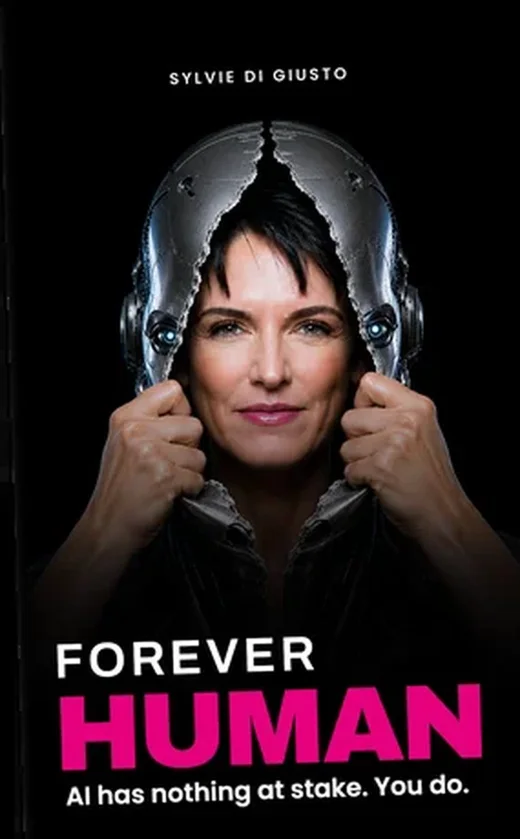
This article is part of my series on AI and the human edge. Read artificial intelligence versus human intelligence for the full picture, or see what AI does to customer service. If your organization is preparing its people for what comes next, have a look at my keynote Forever Human.
Research and reporting on AI and jobs