Trust in AI-assisted work now comes from being human
Trust in AI-assisted work no longer comes from polish. When emails, voices, photos and whole strategies can be generated in seconds, people look for proof that a human did the thinking: transparency about the tools, visible reasoning and someone who stands behind the result.
Trust used to be easier. You saw someone speak. You met them in person. You read an email and assumed a human wrote it. A photo looked real because, well, someone had taken it.
That assumption no longer holds. The question people quietly ask is no longer “Is this impressive?” It is “Is this real?”
KEY TAKEAWAYS
- AI and trust are now inseparable in every professional relationship.
- Deepfakes, automation and generated content make skepticism rational, not cynical.
- Perfection used to signal professionalism. Now it sometimes signals automation.
- Transparency about how you use AI has become a credibility signal of its own.
- Clients do not just want impressive results. They want to know a human is behind the decision.
- The human fingerprint, your reasoning, voice and ownership, is what sets you apart.
When everything can be generated, everything becomes questionable
AI is extraordinarily good at producing content. Emails, photos, videos, voice recordings, reports, entire strategies. What once took hours now appears instantly. Impressive, and a new problem: the signals we used to judge credibility (polish, professionalism, even expertise) are now easier than ever to simulate.
A perfectly written message might have been drafted by AI. A headshot might be generated. A testimonial video might be cloned. Even thought leadership can be produced in seconds, which makes it harder to tell original thinking from automated assembly.
Individually, none of these tools is the problem. Many are incredibly useful. Collectively, they change the math. When the cost of producing something convincing drops close to zero, so does the value of believing it. AI is quietly shifting the burden of proof: instead of assuming authenticity, people now look for signs of it.
The quiet skepticism growing in every industry
A client reads a beautifully written proposal and wonders: did they write this, or did AI? A recruiter sees a polished LinkedIn profile and wonders whether this person is really that accomplished. A consumer watches a testimonial and wonders whether the voice is even real.
That is the new reality of AI and trust. And trust rarely collapses dramatically. It erodes. A moment of doubt here, a hesitation there, a question that lingers a little longer than it used to. The micro-moments add up. Not dramatically. Quietly.
Perfection used to signal professionalism. Now it sometimes signals automation.
Why authenticity suddenly matters more
Here is the paradox. The more flawless machines become, the more we are drawn to what feels human. Not perfect. Human. The speaker who forgets a line and laughs. The email that sounds like an actual person wrote it. The colleague who pauses, thinks and answers honestly instead of reciting a script.
Those small signals tell us someone is present, paying attention and taking responsibility. AI optimizes for smoothness. It removes friction, uncertainty and imperfection. Yet a slightly messy explanation can reveal original thinking, and a moment of vulnerability can build connection faster than any polished statement. What used to look unpolished may become the most trusted signal of all.
Trust is no longer built by polish alone
For years, professionalism meant polishing everything: perfect decks, perfect language, perfect visuals. Today, extreme polish can trigger the opposite reaction. When everything sounds flawless, people start to wonder whether anyone actually thought about it.
So they ask different questions. Who did the thinking? Who checked the work? Who stands behind the outcome? In the past, perfection signaled competence. Today, authenticity signals trust. The professionals who explain their reasoning, acknowledge their tools and stand behind their conclusions earn more trust than those who simply present something that looks perfect.
How transparency builds trust in AI-assisted work
Something simple is emerging as one of the strongest ways to build trust in AI-assisted work: saying how you did it. “I used AI to help draft this, but I reviewed it and adjusted the conclusions.” “We used AI to analyze the data, but the strategy decisions were made by our team.”
Sentences like these signal confidence. They turn AI from something mysterious into something practical, and they restore what automation quietly removes: accountability. People relax when they know who evaluated the information and who took responsibility for the result. You are not pretending the tool is smarter than it is, and you are not pretending you did everything by hand. That balance reads as maturity. Honesty is becoming a competitive advantage.
How to build trust when you use AI: six principles
011. Be transparent about how you use AI
Hiding AI involvement creates more suspicion than admitting it. When people are left guessing whether something was written, analyzed or generated by a machine, doubt fills the gap. And the moment someone discovers AI was involved but never mentioned, trust drops fast, because it feels like something was hidden.
022. Always add your human interpretation
AI can generate content. Insight still has to come from you. Raw output presents patterns and possibilities, but it does not decide what matters. Explain why a recommendation matters, what you noticed in the data, what your experience tells you. If everyone can generate the same output, the differentiator is the person who explains it best.
033. Show your reasoning
People trust decisions more when they can see the thinking behind them. Walk clients and colleagues through the path: the questions you asked, the assumptions you challenged. Without that, a conclusion can look like something a tool spat out, and doubt creeps in.
044. Let your personality show
Perfect language can feel artificial. Humor, a personal perspective, a natural tone: these remind people they are dealing with a real person. Communication that is too polished or too uniform starts to resemble AI-generated text, whether you used AI or not.
055. Stand behind the outcome
Technology can assist. Responsibility stays human. AI can generate suggestions, but it cannot carry the consequences. “This is the recommendation I stand behind” is one of the most trust-building sentences you can say.
066. Protect the human moments
When so much runs through automated messages and dashboards, a real conversation carries more weight than ever. Listen carefully, ask thoughtful questions, respond personally. Without those moments, relationships drift from relational to transactional, and trust thins out with them.
What happens to trust when AI enters the client relationship
Sales teams draft outreach with AI. Marketing generates campaign copy. Service platforms answer common questions automatically. Analysts summarize data sets in minutes. Operationally, it all makes sense.
From the client’s side, something else is happening. Clients rarely object to technology. What they care about is whether someone is still paying attention, thinking critically and taking responsibility. When automated communication starts to dominate, the relationship itself can feel automated, and that quietly changes its emotional foundation.
That is why clients increasingly want to know who is doing the thinking. AI can summarize and spot patterns. Clients still expect you to interpret, challenge assumptions and apply judgment. Explaining how you reviewed the information and why you chose a direction shows something AI alone cannot provide: discernment.
The real competitive advantage in the age of AI
AI will keep getting better. Better text, more convincing video, sharper analysis. One thing stays hard to automate: human accountability. The willingness to say, “I stand behind this.”
So the conversation about AI and trust is not really about technology. It is about credibility. In a world where almost anything can be generated, people are still looking for something simple: someone they can trust.
This article is part of my series on AI and the human edge. Read artificial intelligence versus human intelligence for the full picture, or go deeper with what machines can do and what leaders must do better and the difference between AI decisions and human choices.
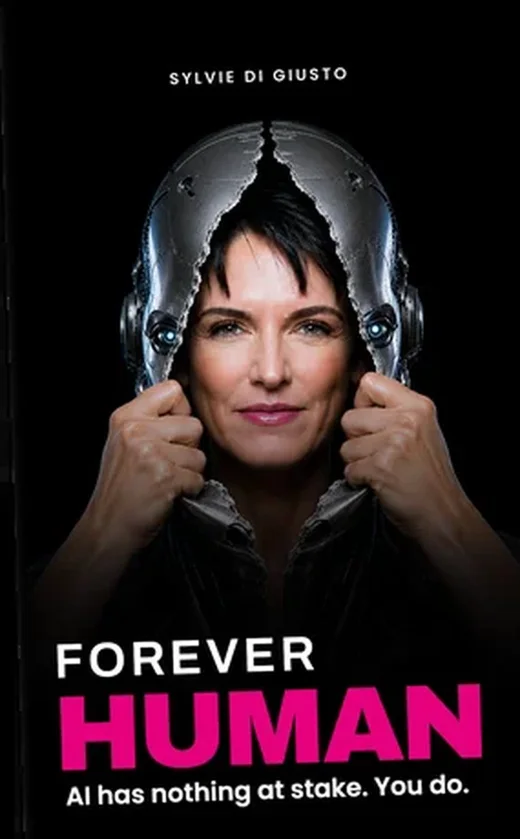
Forever Human
Everything in this article, the doubt, the transparency, the ownership, comes back to one question: what stays human when machines can do almost everything else? My book Forever Human is my answer, written for leaders who want to be trusted, not just efficient.
Frequently asked questions
Why is trust in AI-generated content declining?
Because convincing content is now cheap to produce. When emails, photos, voices and reports can all be generated, people can no longer take polish as proof of effort or expertise. Skepticism becomes rational, so audiences look for other signals: transparency, visible reasoning and a person who takes responsibility.
Should I tell clients when I use AI?
Yes. Disclosing how you used AI usually builds more trust than hiding it. Be specific about where the tool helped and where your judgment took over. If clients later discover undisclosed AI involvement, it feels like something was hidden, and trust drops much faster than it was built.
How do leaders build trust in an AI-driven workplace?
By keeping the human parts visible. Explain the reasoning behind decisions, add your own interpretation to AI output, let your personality show in how you communicate, protect real conversations and openly take ownership of outcomes. Accountability is the one thing AI cannot carry for you.
Does perfect content make people trust you less?
It can. Flawless, uniform content now sometimes reads as automated, which raises the question of who did the thinking. Small human signals, such as a personal perspective, a natural tone or an honest pause, often build more credibility than a perfectly polished output.