To read people well, read them in the right order
To read people well, look at three things in this order: how they appear, how they behave and how they communicate. Then check their digital footprint, and check yourself, because your own biases decide more of the verdict than you think.
There is no shortcut. Every encounter throws thousands of signals at you, and your brain sorts them in seconds. Some are obvious. Most are not.
That is why I split the “code” of a first impression into three areas, the ABCs: the way you look, the way you behave and the way you communicate. They will not make you a mind reader. They will help you sort what you see before you decide what it means.
KEY TAKEAWAYS
- Read people in layers: appearance first, then behavior, then communication.
- Most first reads now happen online, so a person’s digital footprint counts as much as a handshake.
- Once an opinion is imprinted, it is hard to change, for them and for you.
- Your past experiences and your own insecurities color what you see in others.
- People who try too hard can wear a persona. Meet that with empathy, not suspicion.
- The better you know how you come across, the better you read everyone else.
How to read people by their appearance, behavior and communication
Most of us start with appearance. The second we see someone, we make assumptions based on their physical presence, their clothing and how they groomed themselves for the encounter. We are visual creatures, like it or not.
Behavior adds the next layer: attitude, energy, body language and etiquette. Are they positive or negative? Present or distracted?
Communication completes the picture, verbal and nonverbal. The sound of the voice, tone and volume, and the habits that show up in conversation: gossiping, complaining, making excuses, or actually listening.
Reading someone through their digital footprint
Here is the twist. For most of us, the first impression no longer happens in a conference hallway or at the airport. It happens on a screen. We meet people through their social media, their emails, their website and their comments, and we apply exactly the same criteria: how they look, how they behave, how they communicate.
That online read shapes your opinion before you ever shake hands, and it is remarkably hard to overwrite in real life. Which brings me to the part most advice skips.
Once you form an opinion about someone, good or bad, it is incredibly hard to change that imprint later.
Three traps that make you misread others
011. Immediate bias
Trusting your gut is tempting. But everybody is different, and everybody walks in with circumstances you cannot see. Treat your first read as a hypothesis, not a verdict.
022. Your own history
Your past experiences, perceptions and intuition steer how you read others, and how you see others often says a lot about how you see yourself. If someone rubs you the wrong way, ask what trait of theirs you might envy or find triggering. Sometimes the issue is not this person. It is an old one, wearing a new face.
033. Manipulation, and nerves
Some people try too hard to make an impression and put up a persona. Rather than holding it against them, meet them with empathy. First impressions make people anxious, and when you see the situation from their side, you read who they really are much faster.
Start with how you come across
The fastest way to read others well is to know how others read you. When you understand your own signals, you notice theirs, and you understand how they hope to come across in the encounter.
Know your own signals, and everyone else gets easier to read.
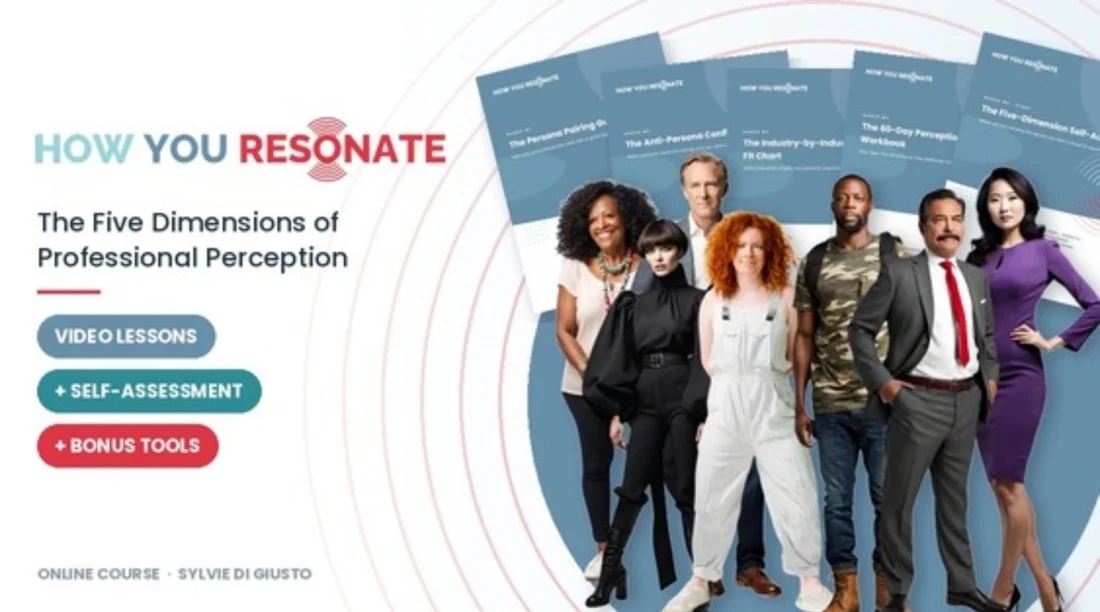
How You Resonate
Reading people is half the skill. The other half is knowing what they read in you. In 18 short video lessons, my course walks you through the five dimensions of perception and the seven personas, so you can read the room and be read the way you intend.
Frequently asked questions
What is the fastest way to read people?
Start with three layers: appearance, behavior and communication. Notice what you see, how the person acts and how they speak and listen. Then hold your conclusion loosely. A first read is a hypothesis, and the most accurate observers stay curious long enough to let the person prove them right or wrong.
Can you judge someone accurately online?
Partly. Profiles, emails and posts reveal how someone presents themselves, behaves and communicates, the same three layers you read in person. But online impressions are curated and easy to over-trust. Use them as a first signal and confirm them in a real conversation before you decide who someone is.
Why do I misjudge others so often?
Usually because of bias, not lack of skill. Your past experiences, the mood you are in and what you are insecure about all filter what you see. When someone triggers a strong reaction, ask what that reaction says about you before you decide what it says about them.
How do I know how other people read me?
Ask for honest feedback from people who have no reason to flatter you, and take a structured look at yourself. My course How You Resonate walks you through the seven personas others most likely see in you, a useful baseline before you work on how you come across.