The fear of being judged comes down to five signals
The fear of being judged at work usually comes down to five things: your appearance, your behavior, your communication, your digital footprint and your environment. You cannot stop people from judging. You can decide what they see, by checking each of the five honestly and fixing the signals that do not match who you are.
Many of us say we do not care what others think of us. Is that really true?
Deep down, most of us worry about being judged at work. We worry about what people think of how we look, how we behave, how we communicate, what they find online and who we surround ourselves with. Privately, that may not matter much. Professionally, what others think of you can be the difference between success and failure.
KEY TAKEAWAYS
- People judge you on five dimensions: appearance, behavior, communication, digital footprint and environment.
- Appearance is the first thing anyone notices, whether we like it or not.
- Calm under pressure, eye contact and taking criticism well shape how clients see your behavior.
- Clients will google you, so what they find online is part of your professional image.
- Your workspace and the people around you reflect on you too.
What are we afraid of being judged on?
There are five areas of our professional image we tend to worry about. If you want to know where your own worry sits, read through the questions below and notice which ones make you wince. If people get you wrong despite your best efforts, it helps to know why first impressions can be misleading.
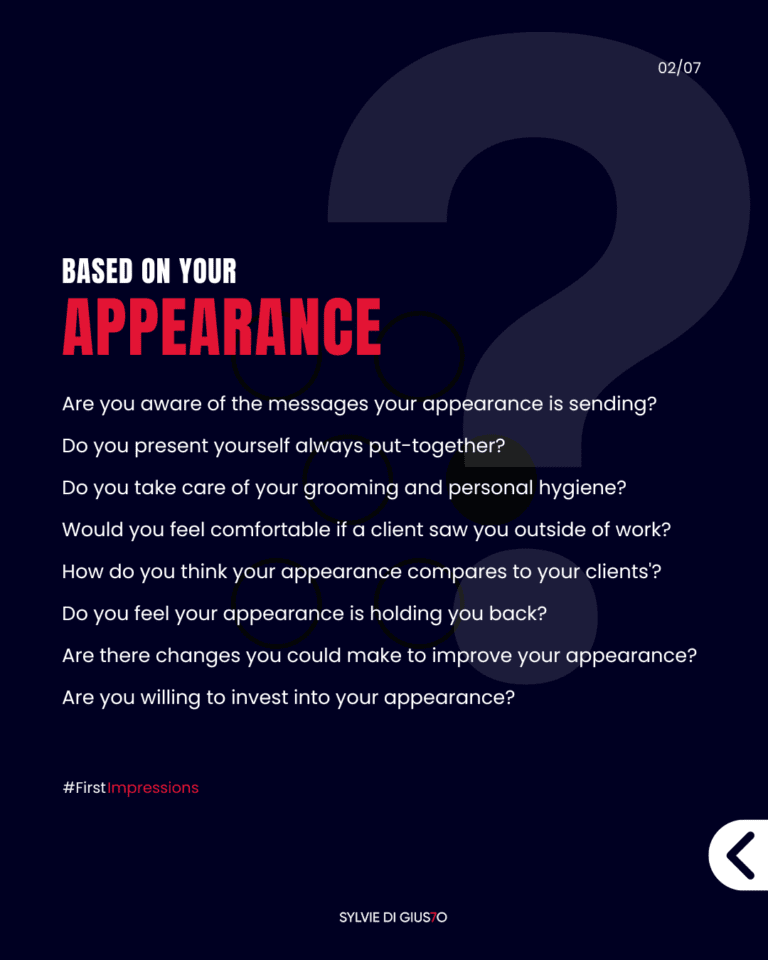
Appearance
However often we tell ourselves appearances do not matter, it is the first thing people notice. Typical worries:
- What message does my appearance send?
- Do I look put together?
- Do I take care of grooming and hygiene?
- Would I feel comfortable if a client saw me outside of work?
- How does my appearance compare to my clients’?
- Is my appearance holding me back?
- Should I change something to improve it?
- How much am I willing to invest in my appearance?
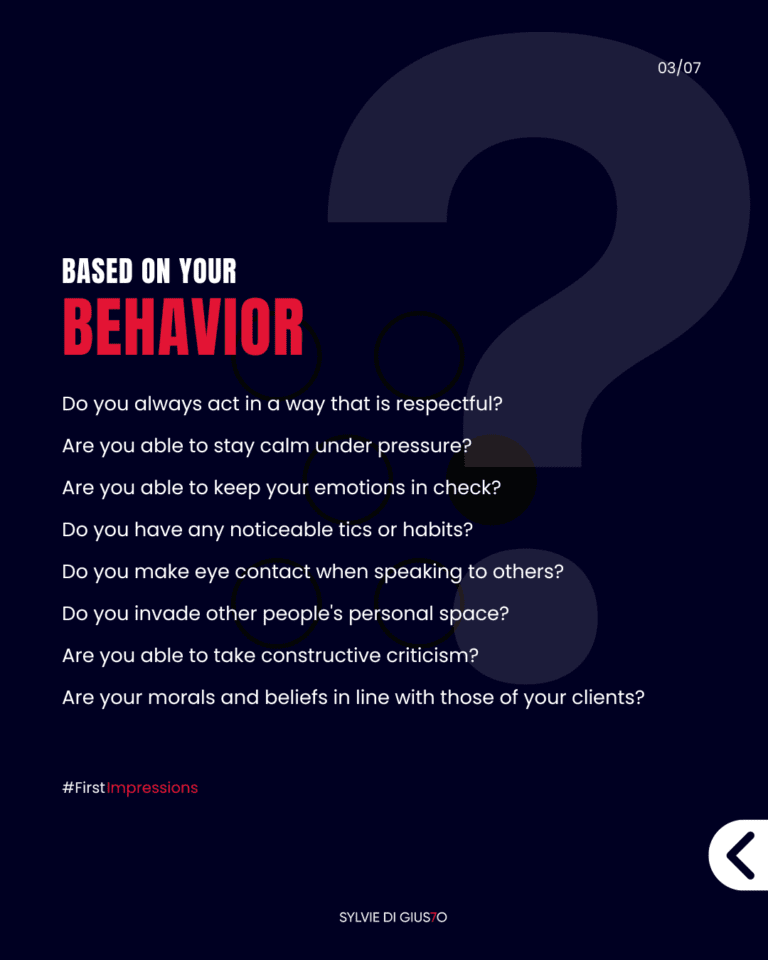
Behavior
How you behave makes a big difference in what clients think of you. Ask yourself:
- Am I acting respectfully?
- Do I stay calm under pressure, and keep my emotions in check?
- Do I have tics or habits people notice?
- Do I make eye contact when I speak?
- Do I respect other people’s space?
- Can I take constructive criticism?
- Are my values in line with my clients’?
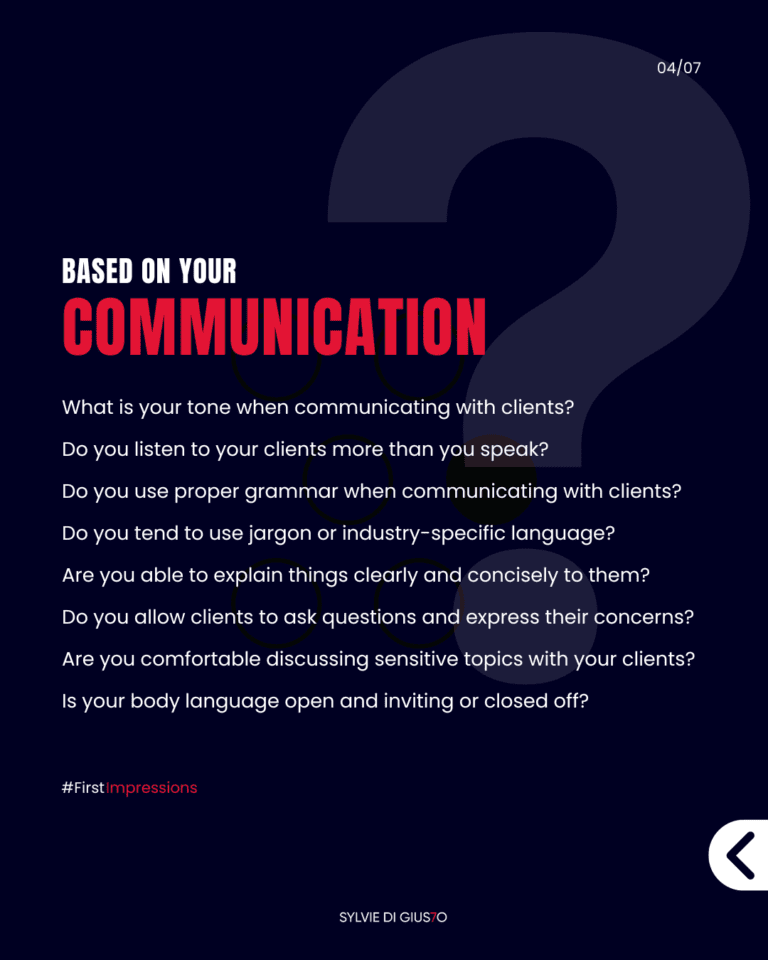
Communication
Then there is how well you communicate:
- What tone do I use with clients?
- Do I listen more than I speak?
- Is my grammar correct?
- Do I hide behind jargon?
- Can I express ideas clearly and concisely?
- Do I give clients room to ask questions and voice concerns?
- Am I comfortable with sensitive topics?
- How does my body language come across?
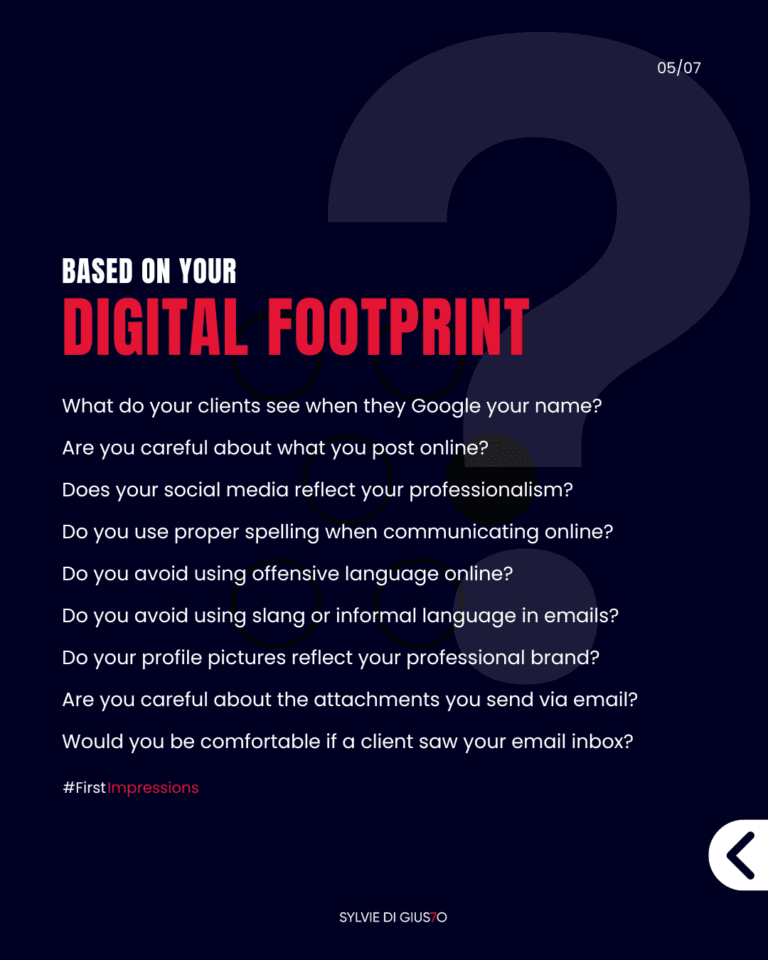
Digital footprint
Your digital footprint is how you come across online:
- What do clients see when they google my name?
- What am I posting, and does my social media look professional?
- Do I use correct spelling and grammar online, and avoid offensive language or sloppy slang?
- Does my profile picture reflect my personal brand?
- Am I careful with the attachments I send by email?
- Would I be comfortable if a client saw my inbox?
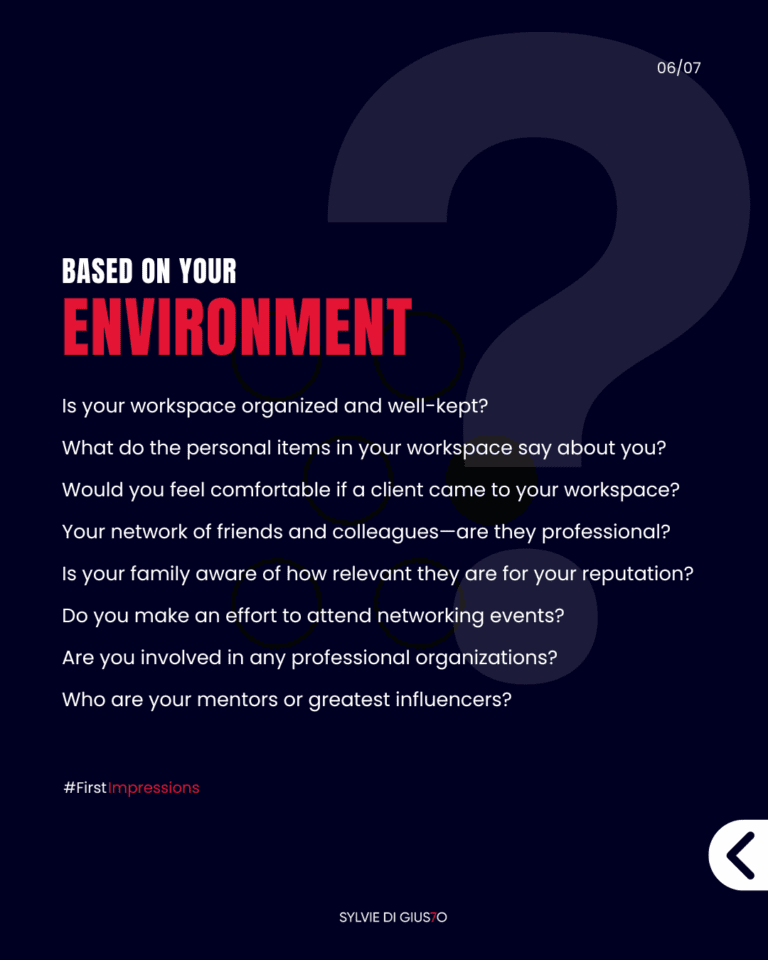
Environment
Environment is everything around you, from your workspace to your network:
- Is my workspace organized and well kept?
- What do the personal items on my desk say about me?
- Would I be comfortable if a client walked in?
- Do my colleagues and friends behave professionally?
- Does my family know how much they shape my reputation?
- Do I attend networking events, and belong to a professional organization?
- Who are my mentors and influences?
Should you worry about being judged at work?
We grow up learning that judging others is not nice. “Judge not, lest ye be judged.” In business, though, we have to care what others think of us, especially our clients.
There is another saying in business: the customer is always right. If a client does not like what they see, they may choose not to work with you or your company, and that shows up in your bottom line.
People will judge you, like it or not. What they see is still your choice.
How to overcome the fear of being judged: tips for all five areas
So how do you put your best foot forward? A few suggestions.
Appearance
- Practice good hygiene: brush your teeth, shower, use deodorant.
- Groom your hair and nails. Keep nails trimmed and hair neat.
- When in doubt, stick to neutral colors. Bright colors can be fun, but if you are unsure how to combine them and still look professional, neutrals are the safer bet.
- Think about tattoos and piercings. They are becoming the norm, but in more conservative industries, you may want to take piercings out and keep tattoos covered.
Behavior
- Things will stress you out. Keep your cool and do not lose your temper.
- Maintain eye contact when you speak. It signals honesty and transparency.
- Be honest with yourself when you receive criticism. Instead of getting defensive, look for the improvement.
- Your values will not always match your client’s. Focus on the common ground, and leave potential disagreements out of the conversation.
Communication
- Watch your tone, so you always sound professional and never condescending.
- Listen to clients by asking questions, and do not talk over them.
- Use correct grammar. Not everyone is a grammar champion, but poor grammar can hurt business. Take a class if you need to.
- Go easy on jargon and industry terms your client may not understand.
- Be clear and concise. Some ideas are harder to explain than others, but aim for the simplest language and the fewest words.
- Handle sensitive topics sensitively. Open communication makes difficult moments more comfortable for everyone.
- Make sure your body language matches what you say.
Digital footprint
- Your social media should establish you as a professional. A few photos of family fun are fine. A photo of you and your buddies drunk is not your best representation.
- People will google you before they hire you. If they find unflattering photos or information, it can hurt your career. Fortunately, you can control what others see about you across Google services, so take some time to edit your account.
- What you write online counts too. Use correct grammar and skip the slang.
- Your profile pictures should reflect your personal brand: what you wear, how you pose, the quality of the photo.
- Write emails that are clear and concise. Mind your attachments: not so large they clog inboxes, and careful with confidential files, because they can be forwarded.
Environment
- Keep your office neat, clean and organized. Limit personal items, and make sure the ones you keep are tasteful.
- Your environment includes the people you surround yourself with. Colleagues, mentors and family should reflect well on your professional image.
- Attend networking events that support your profession.
The people around you will judge you, like it or not. Make the effort, and they will see you at your best. So which step will you take first?
Being judged at work in a nutshell


The Image of Leadership
Appearance, behavior, communication, digital footprint and environment are the five dimensions at the heart of The Image of Leadership. The book shows you how to align each of them with the professional you are, so judgment works in your favor.
Frequently asked questions
Why am I so afraid of being judged at work?
Because judgment at work has real consequences. What colleagues and clients think of you affects projects, promotions and business. The fear often grows when you are unsure what signals you send. Checking your appearance, behavior, communication, digital footprint and environment honestly turns a vague worry into a list of things you can fix.
What do people judge you on at work?
Mainly five things: your appearance, your behavior, how you communicate, what they find about you online and your environment, meaning your workspace and the people around you. Clients and colleagues read all five, often within seconds, and form an opinion before they know your work.
How do I stop worrying about what others think at work?
You cannot control whether people judge you, but you can control what they see. Ask for honest feedback, review the five areas people judge, fix one signal at a time and keep your behavior consistent. Confidence grows as the gap between who you are and how you come across closes.
Does my social media affect how I am judged at work?
Yes. Clients, recruiters and colleagues often google you before meeting you. Unprofessional photos, careless language or sloppy grammar can hurt your reputation. Review your profiles, adjust privacy settings, use a profile photo that matches your personal brand and post as if a client is reading.