Self-sabotage at work hides inside good habits
Self-sabotage at work is any habit that undermines your own success: procrastination, negative self-talk, perfectionism, overcommitting, waiting for permission or always putting others first. Most of it is unconscious. To stop it, learn your triggers, challenge self-defeating thoughts, invest in yourself and accept that progress beats perfection.
Using your fair advantage, the unique value only you bring, takes commitment, effort and self-awareness. It is not always an easy road, mostly because the biggest roadblocks are the ones we put there ourselves.
Here are the traps professionals fall into on the way to success, the twenty signs that you are sabotaging yourself, and what to do about them.
KEY TAKEAWAYS
- Using your fair advantage is a process, not an event. There are no shortcuts.
- What you see as a weakness may be one of your greatest strengths.
- Investing in yourself is not selfish. It is how you keep contributing to others.
- Aim for progress, not perfection.
- Sabotaging yourself is an inside job, so the fix starts with self-awareness.
- Many signs look like virtues: being busy, putting others first, being thorough.
Why do we sabotage ourselves at work?
The instant gratification trap
We are wired to want immediate results, and our society only reinforces it. So we overlook long-term gains. But using your fair advantage is a process, not an event. There are no shortcuts and no quick fixes. It takes consistent effort, patience and a focus on the bigger picture. Commit to growing, step by step.
Self-doubt and insecurity
Self-doubt and insecurity are major obstacles. Even highly knowledgeable, skilled professionals struggle to see themselves in a positive light. They get discouraged, second-guess themselves and procrastinate on important tasks. Yet what you perceive as a weakness may be your greatest strength. Embrace your unique qualities, skills and experiences and use them to set yourself apart.
Not investing in yourself
In our selfless effort to serve others, we often neglect our own needs. Investing in yourself is not selfish. It is essential for personal and professional growth. Make room for self-care, continuous learning and skill development, and set aside real time and real resources for your well-being, education and professional development. The better you take care of yourself, the more you can give others, and the longer your success lasts.
The perfectionism trap
Perfectionism paralyzes. Many professionals believe they must be perfect before they act or go after their goals. Perfection is an unrealistic expectation. Growth is ongoing, so take consistent steps forward, even small ones, and treat imperfections as chances to learn.
Progress, not perfection. Waiting until you are perfect is just procrastination with better manners.
The inside job
Sabotage usually comes from our own thoughts and behaviors. We engage in destructive habits without noticing that they undermine us. Overcoming them starts with self-awareness: identify your triggers and patterns, challenge self-defeating thoughts and replace them with beliefs that support you. Take control of your reactions and consciously choose behaviors that serve your goals. Mentors, coaches and therapists can help you see the patterns you cannot see yourself.
20 signs of self-sabotage at work
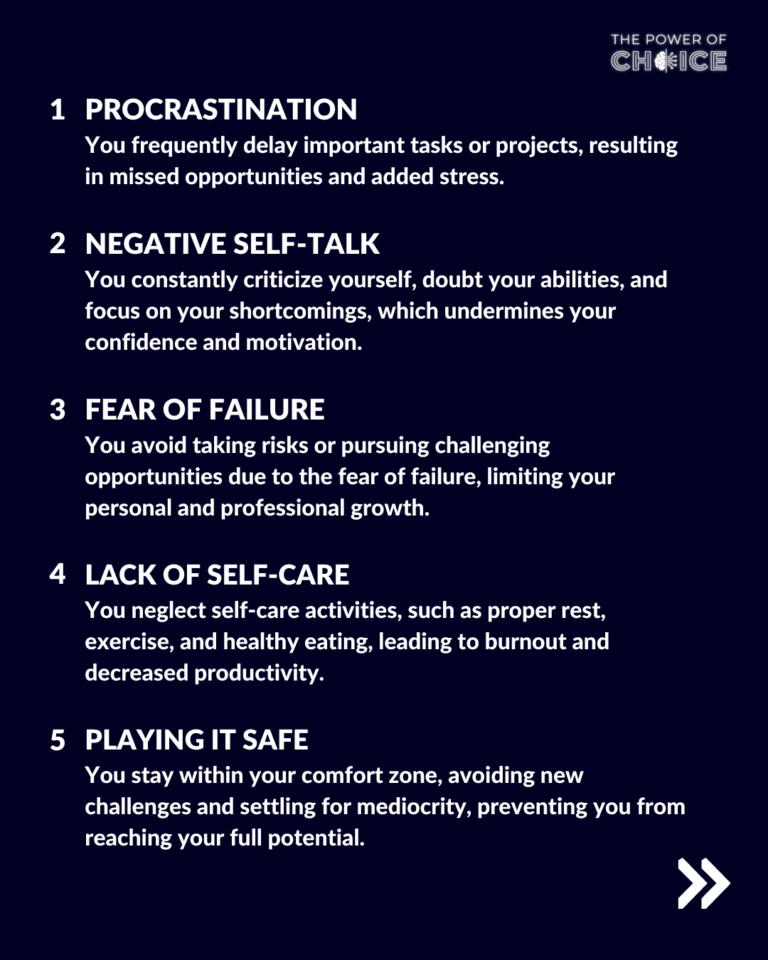
- Procrastination: you keep delaying important tasks or projects, and miss opportunities while adding stress.
- Negative self-talk: you criticize yourself, doubt your abilities and focus on your shortcomings, which drains your confidence and motivation.
- Fear of failure: you avoid risks and challenging opportunities, and your growth stalls.
- Lack of self-care: you skip rest, exercise and healthy eating, and pay for it with burnout and lower productivity.
- Playing it safe: you stay in your comfort zone, avoid new challenges and settle for mediocrity.
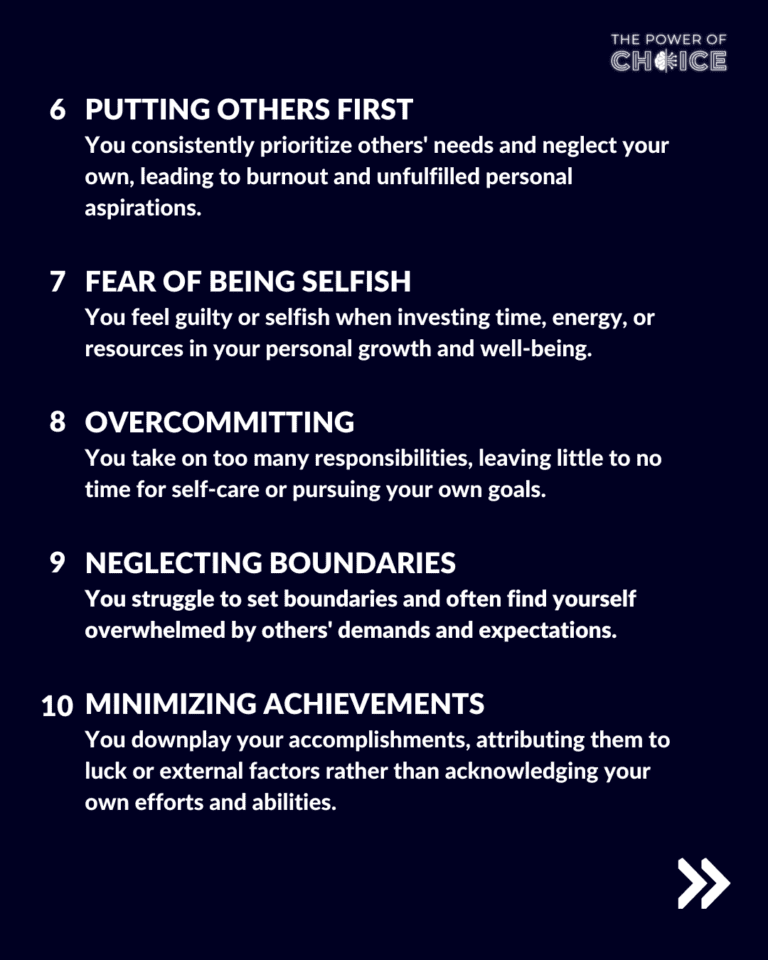
- Putting others first: you always prioritize everyone else’s needs, until you burn out with your own goals unfulfilled.
- Fear of being selfish: you feel guilty investing time, energy or money in your own growth and well-being.
- Overcommitting: you take on so much that there is no time left for self-care or your own goals.
- Neglecting boundaries: you struggle to set limits and end up overwhelmed by other people’s demands and expectations.
- Minimizing achievements: you credit your success to luck or circumstance instead of your own effort and ability.
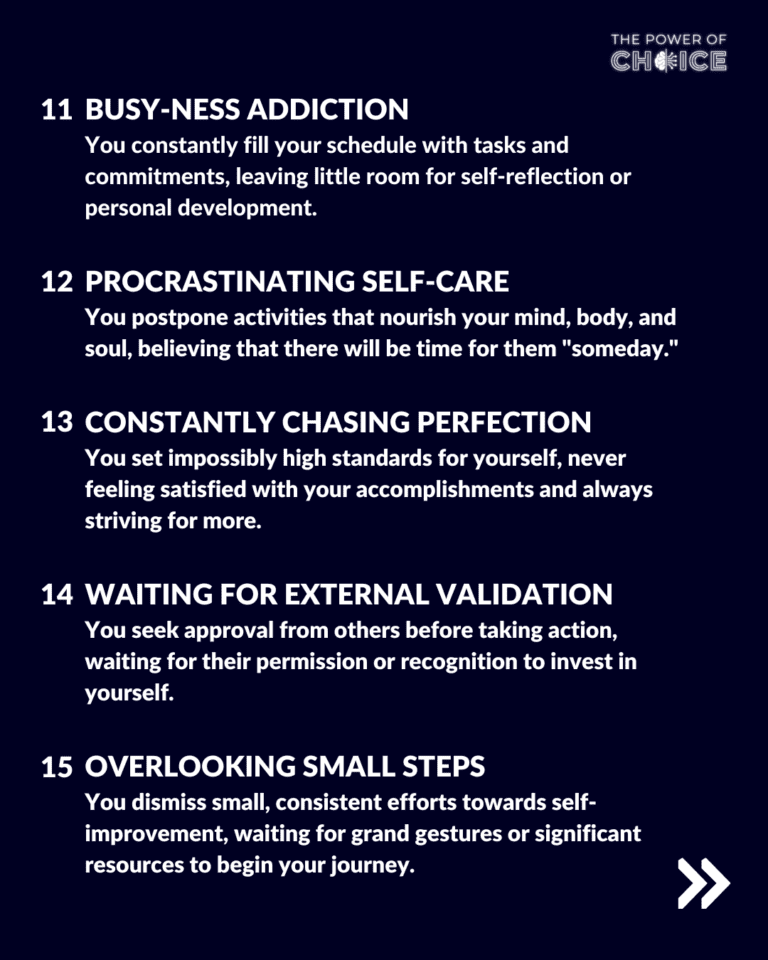
- Busyness addiction: your calendar is so full there is no room for reflection or development.
- Postponing self-care: the things that nourish your mind, body and soul are always scheduled for “someday.”
- Chasing perfection: your standards are impossibly high, and nothing you accomplish ever feels like enough.
- Waiting for external validation: you need someone’s approval, permission or recognition before you invest in yourself.
- Overlooking small steps: you dismiss small, consistent efforts and wait for a grand gesture or big resources to get started.
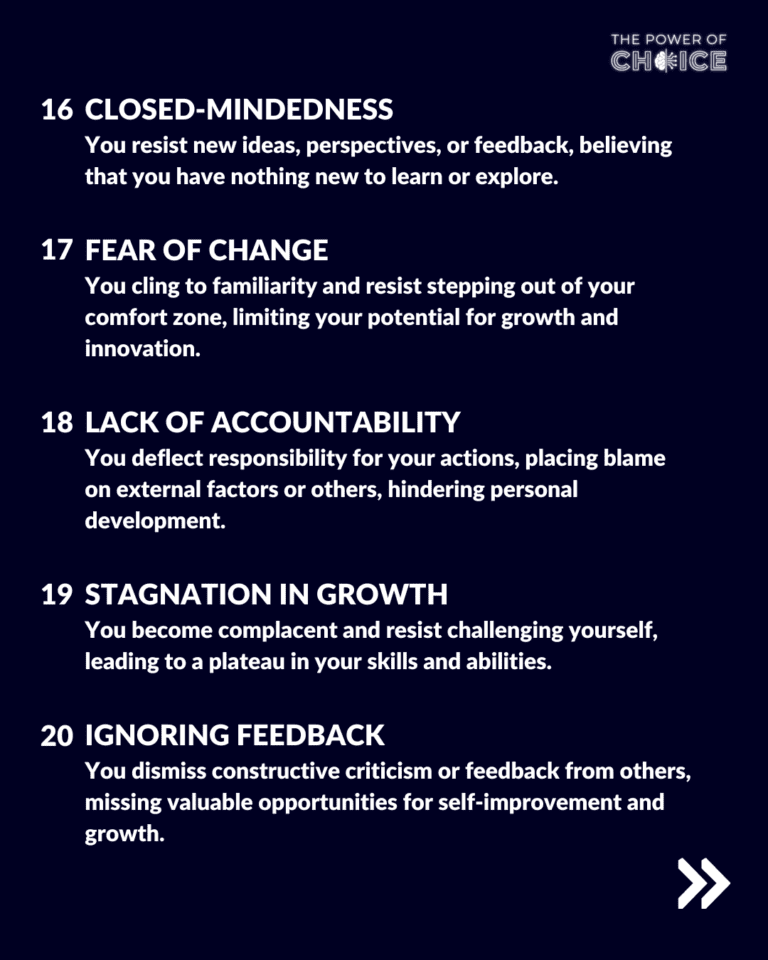
- Closed-mindedness: you resist new ideas, perspectives and feedback, convinced there is nothing new to learn.
- Fear of change: you cling to the familiar and limit your potential to grow and innovate.
- Lack of accountability: you blame circumstances or other people instead of taking responsibility.
- Stagnation: you get complacent, stop challenging yourself and your skills plateau.
- Ignoring feedback: you brush off constructive criticism and miss valuable chances to improve.
Notice how many of these look respectable from the outside. Busy, selfless, thorough, loyal. That is exactly why they go unchallenged for years.
How do you stop self-sabotage?
Recognize your patterns and address them head-on. It takes self-awareness, a commitment to your own growth and the willingness to challenge limiting beliefs. Take charge of your mindset, protect time for self-care and adopt a growth mindset, and your fair advantage has room to work.
The road is challenging, and it is worth it. Identify the signs, confront them and take concrete steps forward. You have far more say in your career than your inner saboteur wants you to believe.
If your inner critic is the loudest saboteur, read how to overcome self-criticism at work. If you are doing great work that nobody sees, read are you the best kept secret at work? And for the bigger picture, Discover Your Fair Advantage in a nutshell.
20 signs of self-sabotage in a nutshell



Discover Your Fair Advantage
The third part of my book Discover Your Fair Advantage is called “Sabotaging Your Fair Advantage,” and it takes each of these obstacles in turn: commitment, self-talk, self-criticism, confidence, comparison, self-care, discipline and self-promotion.
Frequently asked questions
What are common signs of sabotaging yourself at work?
Typical signs include procrastination, negative self-talk, fear of failure, perfectionism, overcommitting, weak boundaries, minimizing your achievements, always putting others first, waiting for permission or approval, resisting feedback and change, and blaming others instead of taking responsibility. Many of these look like virtues, which is why they often go unchallenged.
Why do people sabotage themselves at work?
Usually without realizing it. Self-doubt, insecurity, fear of failure, the wish for instant results and perfectionism drive habits that undermine success. Many of these habits look like virtues, such as being busy or selfless, which is why they often go unnoticed for years.
How do I stop self-sabotaging at work?
Start with self-awareness: identify your triggers and patterns. Challenge self-defeating thoughts, set boundaries, invest time in yourself, aim for progress instead of perfection and take small consistent steps. A mentor, coach or therapist can help you spot patterns you cannot see yourself.
Is perfectionism a way of sabotaging yourself?
It can be. When you believe everything must be perfect before you act, you delay, overwork and never feel satisfied with your results. Perfection is unattainable, so perfectionism often stops progress entirely. Focusing on steady improvement serves your career far better.