What is the Trust Quotient (TQ)?
Leadership qualities are usually measured in intelligence and emotional savvy. TQ adds the dimension that decides whether either of them gets used: trust.
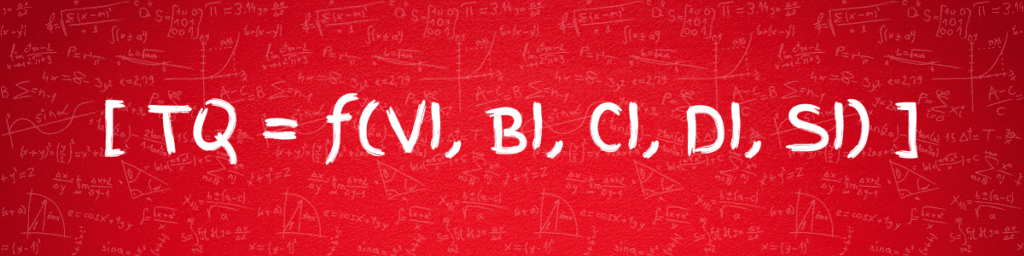
Like IQ or EQ, the Trust Quotient is a metric with many facets, but its focus is trust-based leadership. It is not a single number. It is a composite of several intelligences. When I lay the principles of TQ over my framework of modern emotional intelligence, the two fit together remarkably well, and the result gives individual leaders a way to measure and improve their TQ. Think of it as adding high definition to a picture that was already worth a thousand words.
Which five intelligences make up your TQ?
- Visual intelligence (VI): building a trustworthy persona through your appearance and your environment.
- Behavioral intelligence (BI): the consistency and ethics behind your actions and decisions.
- Communication intelligence (CI): your ability to send and receive messages in a way that builds trust.
- Digital intelligence (DI): how you use digital channels to build and keep trust.
- Social intelligence (SI): your awareness of, and interaction with, the living and non-living factors around you that influence trust.
I take each of these variables apart in the context of trust-based leadership in my LinkedIn article on the trust equation.
How do you know if people trust your leadership?
Your TQ works like a silent language. It is the invisible thread that either weaves trust or unravels it. So how do you know whether you are leading the waltz or stepping on toes? Watch for these signs.
Signs of a high TQ
- Cohesive visual branding (VI): a trusted leader has a well-crafted visual identity that matches their professional persona. From the outfit for a board meeting to the design of their digital assets, everything is in harmony.
- Consistent ethical behavior (BI): leaders with a high TQ show consistent ethics and morals, even when they think nobody is watching. Their actions match their words.
- Open and honest communication (CI): they are not only articulate. They are transparent and honest, and that creates an environment where trust can grow.
- Digital savviness (DI): they use technology to build trust, through timely email responses or well-run virtual meetings.
- Social awareness (SI): they are attuned to the nuances of their environment, living and non-living, and understand how their actions affect team dynamics and the wider culture.
Signs of a low TQ
- Inconsistent visual identity (VI): a mismatch between someone’s professional persona and how they present themselves raises questions about credibility, and with it trustworthiness.
- Ethical discrepancies (BI): inconsistent ethical behavior breaks down trust and can cause real reputational damage.
- Poor communication (CI): being overly secretive, giving misleading information or simply not communicating at all.
- Digital negligence (DI): ignored emails, poor virtual meeting etiquette or an outdated digital presence.
- Social ignorance (SI): a lack of awareness of, or disregard for, the social and environmental factors that build trust. A significant red flag.
Trust is rarely lost in one big moment. It leaks through mismatches: between how you look and who you claim to be, between what you say and what you do.
How does trust in leadership influence organizational success?
Trust-based leadership is never a solo act. It is a collective force that ripples through an organization. When a leader with a high TQ walks in, you can feel it. Collaboration thrives, ideas flow freely and shared goals take priority over individual agendas. That is the foundation of a strong culture, one that attracts talent, keeps employees and drives innovation.
And it does not stop at the water cooler or the virtual team meeting. A leader’s TQ reaches customer relationships, stakeholder engagement and the organization’s reputation in the market. When trust is the currency, transactions turn into long-term relationships. Individual TQ becomes a cornerstone of organizational success: employee satisfaction, customer loyalty and, in the end, business growth.
How can you raise your TQ?
Start with the five intelligences and look for the mismatches, because that is where trust leaks. Ask yourself:
- Does my appearance, and the look of everything I put my name on, match the leader I claim to be?
- Do my actions match my words, also when I think nobody is watching?
- Am I transparent, or do I hold back information people need?
- Do I answer emails in time and run virtual meetings people want to attend?
- Do I understand how my decisions land in my team and my culture?
Trust-based leadership is the metric that goes beyond the tangibles. It measures an influence no balance sheet can capture. Becoming a trusted leader is not a destination. It is a road paved with intentional choices, ethical considerations and a commitment to keep improving. So, as you move forward: are you merely a leader, or are you a trusted one? The choice is yours.
Where can you learn more about trust in leadership?
If you want to go deeper, I highly recommend David Horsager’s book The Trust Edge: How Top Leaders Gain Faster Results, Deeper Relationships, and a Stronger Bottom Line. It offers a comprehensive look at how trust is built, sustained and put to work in leadership, with both frameworks and practical strategies. The Trust Edge Leadership Institute also shares events and resources on trust-based leadership.
For more on how leaders build cultures people trust, read 10 culture questions every manager needs to ask and why great leaders surround themselves with good people. Planning a leadership conference? See my keynotes for leadership audiences.
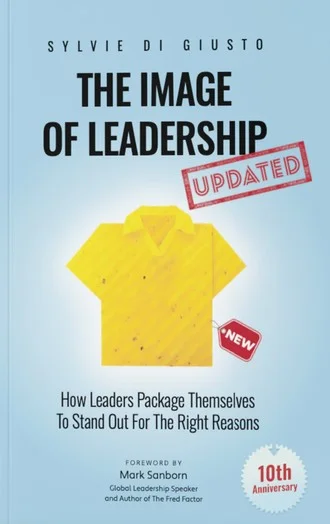
The Image of Leadership
Visual, behavioral, communication, digital and social intelligence: the five ingredients of your TQ are the five dimensions of my book The Image of Leadership. It helps leaders close the gaps between who they are and how they come across, which is exactly where trust is won or lost.