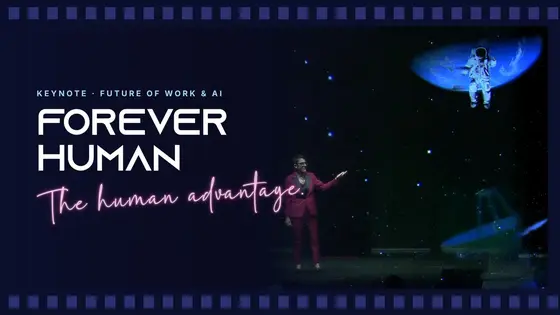
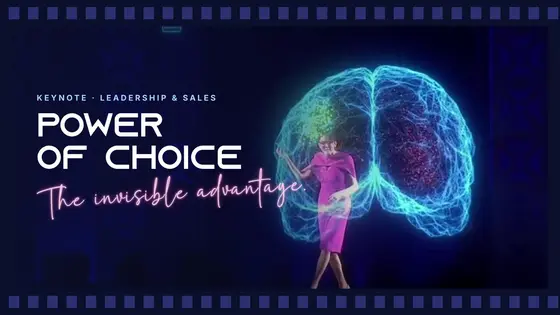
What does a hologram on stage actually look like?
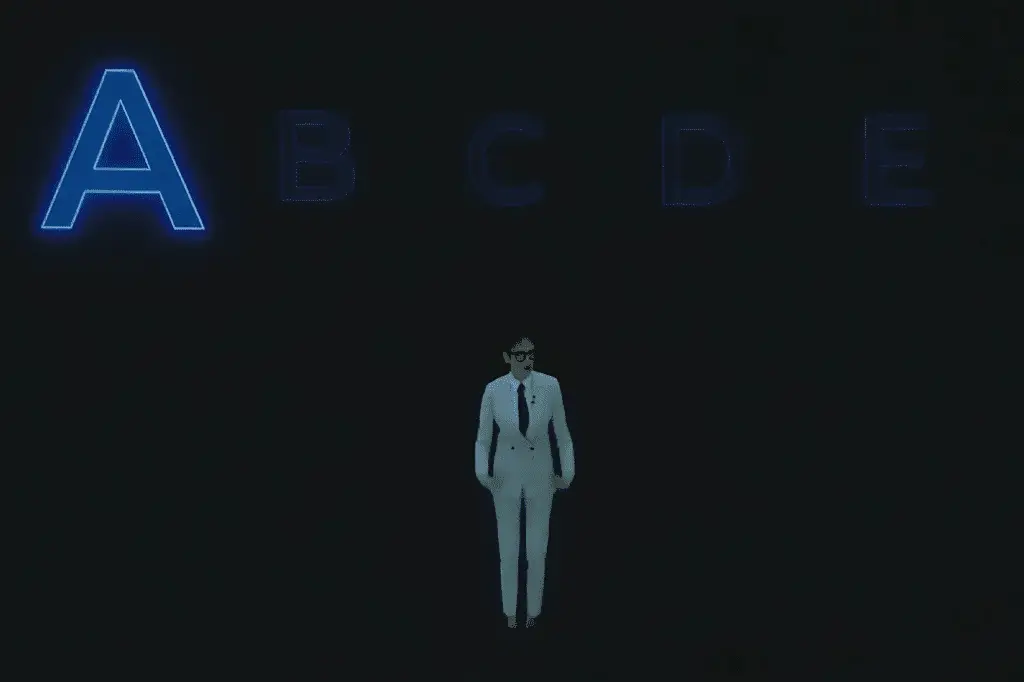
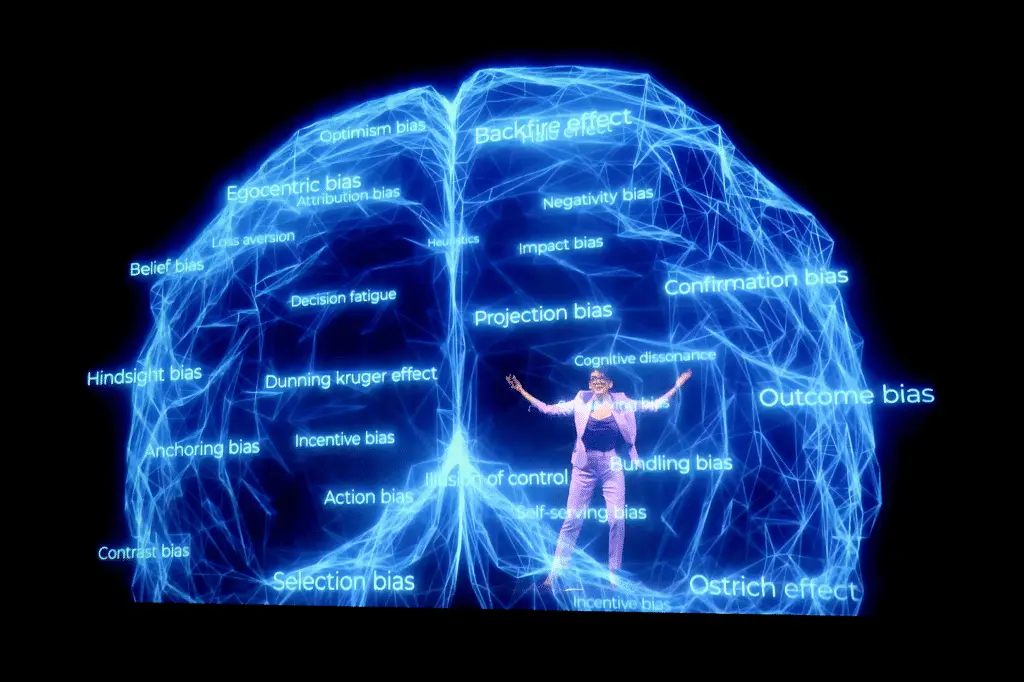
Not all hologram keynotes are created equal. If you are weighing holography for your next conference, understanding the difference is more than helpful. It is the blueprint for your production plan, your AV partnerships, your budget and your audience’s expectations.
The term “hologram speaker” gets tossed around a lot, and people mean very different things by it. Is the speaker dialing in from somewhere else and appearing in 3D? Are they on stage, surrounded by holographic visuals? Or both? Here are the three most common formats you will see today.
1. The remote hologram speaker
The classic use: a speaker appears as a 3D hologram on stage even though they are physically elsewhere. Sometimes they dial in live from another location. Sometimes it is a pre-recorded keynote designed to look live.
2. The live speaker inside a holographic environment
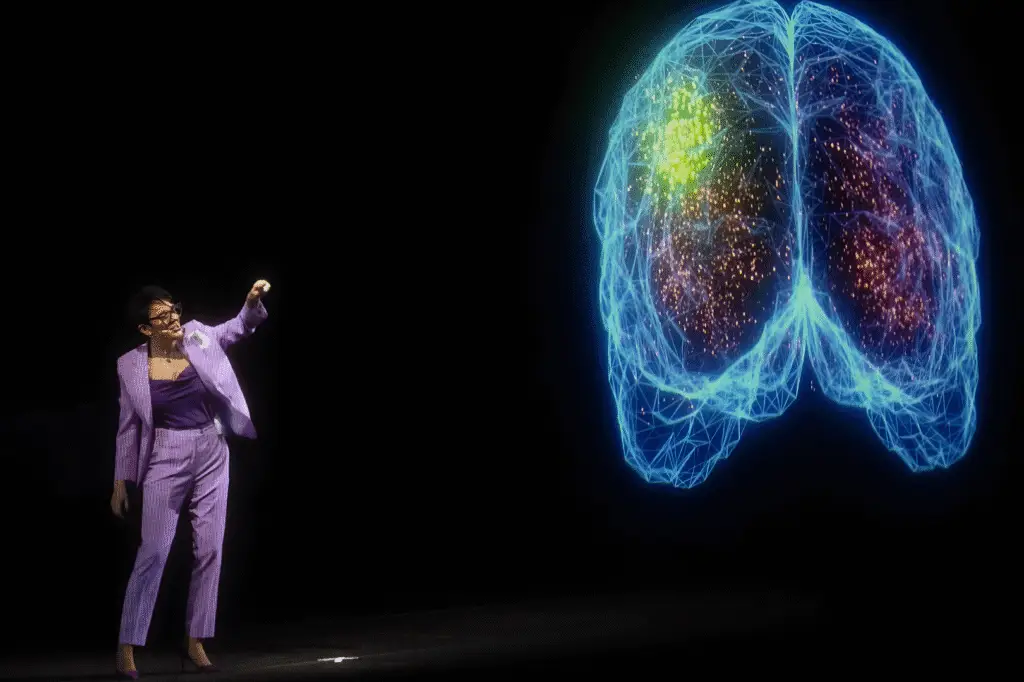
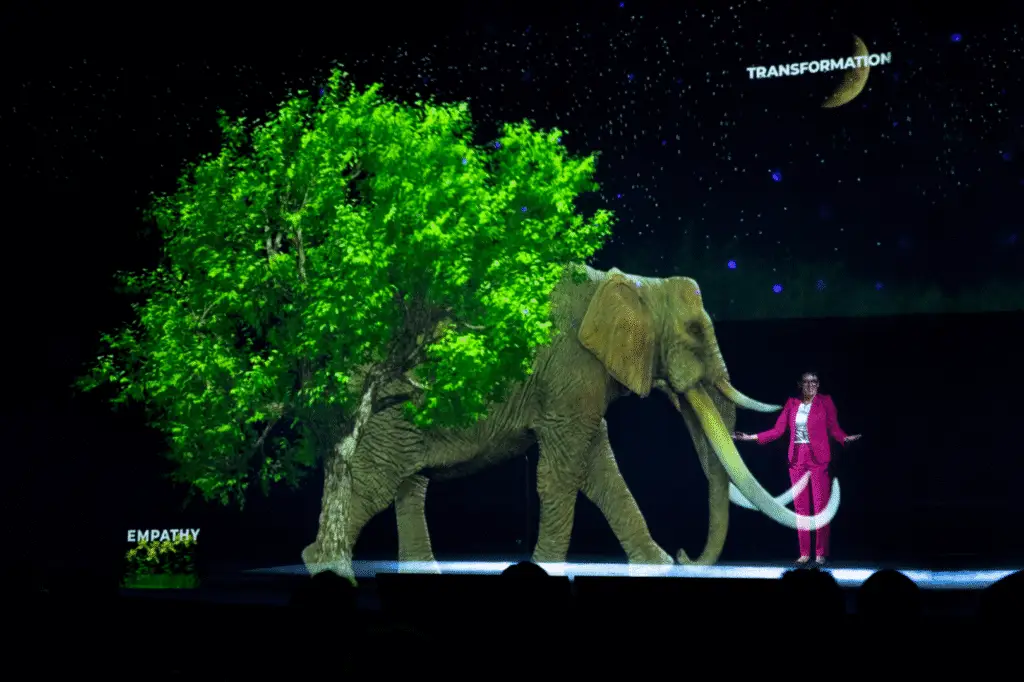
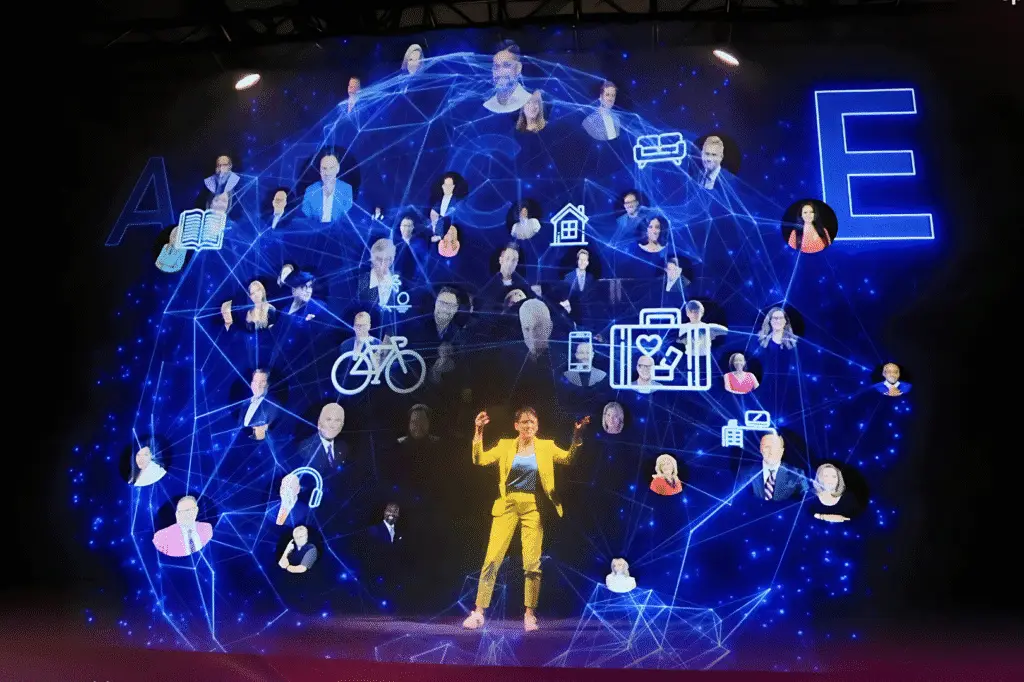
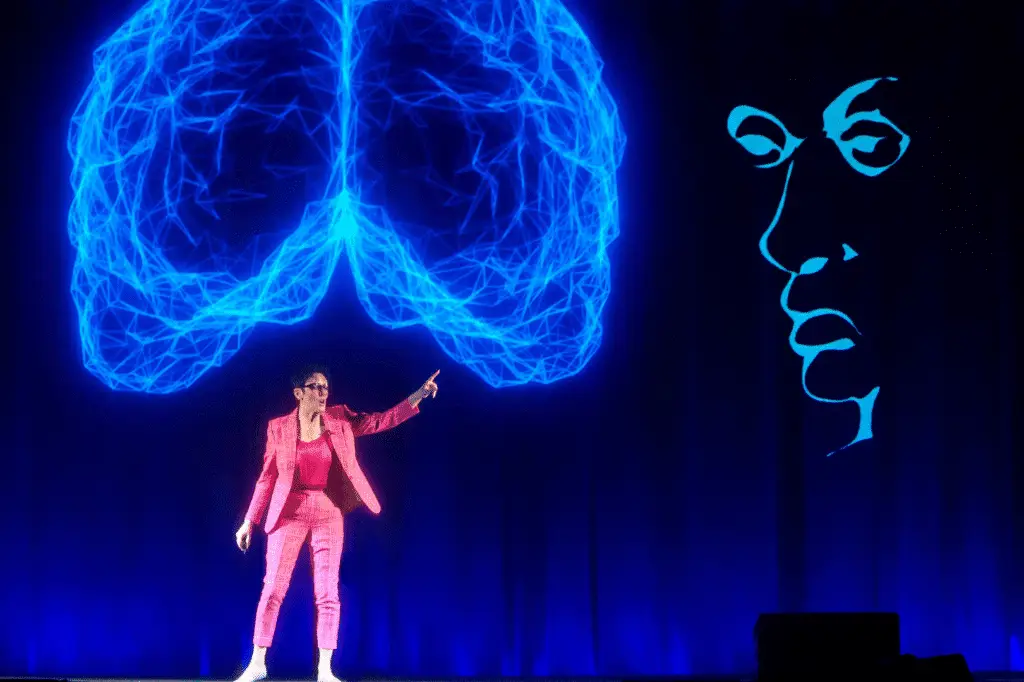
The speaker is physically on stage, and the environment around them becomes holographic: animated graphics, floating visuals, 3D motion and cinematic effects, all timed to the story. This is the format I use.
3. The hybrid
Some conferences combine both: a live speaker with a remote guest beamed in as a hologram, or a live keynote enhanced with environment design and pre-recorded holographic content.
Whichever you choose, one rule applies to all three. The technology should follow the narrative, not lead it.
How do you plan a hologram conference that works?
If you are considering a hologram conference, you are doing more than organizing an event. You are adding a new dimension to it. It is about redefining what presence looks like, what storytelling feels like and how audiences remember what they saw and heard.
With innovation comes complexity, and with complexity comes responsibility. In holographic territory, you are managing expectations, emotions and immersive moments that can go wonderfully right or distractingly wrong. So getting it right is not about mastering the technology alone. It is about how that technology fits a larger story, a strategic goal and a human experience. Think of what follows as a mindset shift, not a checklist.
1. Purpose first, then production
Do not start with the technology. Start with the why. Before you think about platforms or projection angles, ask what you want your audience to walk away with. Inspiration? A new understanding? An emotional shift? Holography should never be the headline. It should be the vehicle.
2. Choose the right format
One size never fits all. A remote speaker beamed in creates a very different atmosphere from a live speaker surrounded by responsive visuals. Are you trying to unite satellite locations? Add cinematic flair to a product launch? Anchor a message in emotion? Let the intent pick the format.
3. Check your location requirements
Like it or not, holographic technology has a physical footprint. Check whether your venue has enough ceiling height, whether it can go properly dark and whether the sightlines support the holographic effect. These are not nice-to-haves. They are the foundation. Do not assume the space is “good enough.” Verify it with the venue before you sign off.
4. Pick the right production team
You want a team that is not only capable, but curious. The best partners point out what is hard and then help solve it, and they are as excited about your vision as you are. Avoid vendors who start from skepticism or default limitations, and choose people who bring clarity, creativity and collaboration, without a giant surprise invoice halfway through.
5. Pick the right performer, not just a speaker
Not every keynote speaker is a hologram speaker, and that distinction matters more than you might think. Delivering inside a holographic experience takes presence, timing, spatial awareness and emotional intelligence. You are moving through an environment, responding to visual cues and keeping the connection while the room reacts to the technology. If your speaker is not excited by that challenge, they might not be the right fit.
6. Align the budget
Yes, a holographic keynote is an investment. It is also an asset. Done well, it increases audience engagement, media coverage and long-tail content value. Be transparent with your production partners about the budget. A good team can scale effects creatively without compromising quality. And ideally, you work with a speaker who already brings much of the technology as part of the offer, which keeps execution smooth and takes real pressure off your production budget.
7. Rehearsal is non-negotiable
This is not a mic check. A holographic performance is part theater, part technology and all timing. The speaker has to move in sync with the animations, the tech team needs time to calibrate, and your show caller becomes the conductor of a complex orchestra. Schedule full run-throughs and protect that time like your event depends on it. Because it does.
8. Set audience expectations, or maybe don’t
Sometimes the most powerful reaction comes from surprise. Giving your audience a lens can help them connect with your intention, but not every moment needs an announcement. Some of the most unforgettable holographic moments I have created were never announced at all. They simply unfolded, unexpectedly and in service of the story. If the moment is strong enough, the audience does not need to be told what they are seeing. They feel it.
9. Make it part of your event’s DNA
If you call it a hologram conference, do not let the holography live in isolation. Too often the immersive moment is limited to one keynote when it could run through the entire event. Could your emcee use holographic transitions? Could sponsor messages or award segments use the same technology? Are there surprise moments that would benefit from the same layer? Treat it as part of your event’s signature, not a one-off feature.
Magic on stage always begins with meticulous planning off stage.
What do event planners need to know about the tech?
A hologram on stage does not have to complicate your logistics. With the right planning, a holographic keynote can be nearly as smooth as a traditional presentation. But details matter.
Consider venue lighting, stage depth and coordination with your AV team. Some venues need small adjustments, such as dimming ambient light or providing a dark backdrop. With the right speaker and production team, it is absolutely doable, and the result feels futuristic without the logistical headaches.
It is also easy to assume holographic experiences are reserved for massive, high-budget productions. Not anymore. Some holographic speakers bring compact, travel-ready systems that fit standard event setups, no stage overhaul required. In my case, the 3D technology travels with me, and production teams receive detailed technical specs, instructional videos, stage layouts and step-by-step setup guides. As costs come down and setup gets simpler, holography is moving from exclusive novelty to a realistic tool for corporate conferences and global summits alike.
How do you answer the skeptics?
Not everyone will be on board right away. Some will say the technology is too new, too risky, too expensive or too gimmicky. You might hear it from internal stakeholders, your production team, your CFO or even guest speakers who are unsure they can perform in that environment.
Those concerns are real, and they are addressable. Most hesitation comes from outdated assumptions or a lack of exposure. Your job is not to push. It is to listen, educate and offer context: share examples where it worked beautifully, clarify what is possible today versus five years ago, and show how immersive technology can deepen the message instead of distracting from it. Do not overpromise. Be honest about the learning curve. Here are the objections you will most likely hear, and how to respond.
- “It’s too expensive.” Fair concern. But the return is not only the wow factor. It is attention, retention and amplification. Holographic moments often become the most shared content of an event.
- “It’s too risky. What if the tech fails?” That is why you work with specialized teams who build in redundancies and run multiple rehearsals. Every innovation felt risky before it became standard.
- “It’s just a gimmick.” Only if it is used as one. Designed with purpose, holography amplifies the story. It is about emotional resonance, not flash.
- “We’ve never done this before.” Exactly. That is why it will stand out.
- “This will take too much time to plan.” It is not plug-and-play. With the right partners and a clear timeline, it is manageable, and the outcome is worth every planning hour.
- “Our speakers won’t want to deal with the tech.” Then let’s talk about the right speaker. Not every presenter suits this format, but the ones who do thrive in it, and some bring their own integrated technology.
- “What if it doesn’t land with the audience?” You build the experience for the audience, then test it, refine it and rehearse it. If the message matters and the medium fits, it will not only land. It will linger.
- “What if we just stick to what we know?” Then you will get the results you have always gotten. Safe feels comfortable. Bold is what people remember.
Do not fear resistance. Fear staying safe so long that you miss the moment.
Who will go first?
Every conference has a choice: stay familiar or lead forward. Designing a hologram conference is not trend-chasing. It is audience-respecting. Today’s audiences have seen enough to know when something is truly different, and they crave moments that surprise them, challenge them and stay with them.
Innovation is not about perfection. It is about intention, and the courage to ask, “What if we didn’t just fill the agenda, but redefined what a keynote could be?” The technology is ready. The audiences are ready. The only question left is whether you are.
New to the format? Start with what an immersive keynote experience is, then see how my 3D immersive experience works in a real room.