Why should a professional write a book at all?

For a professional or entrepreneur, a book is not only a creative project. It is one of the most strategic credibility moves you can make. It turns expertise into tangible authority. It builds trust before you speak, opens doors before you knock and puts your name in rooms you have not entered yet.
A book travels where you cannot. It keeps speaking on your behalf long after the meeting ends, the conference wraps up or the project closes.
With so many voices competing for attention, a well-positioned book says, “I am not just part of this conversation. I am leading it.” Perception follows. Clients see you differently. Media take notice. Event organizers, podcast hosts and decision makers look at you through a new lens.
So before you ask what to write, ask this: what do I want to be known for, and how can I make that known at scale? A great non-fiction book does not just say you are an expert. It proves you are irreplaceable.
What should you decide before you start writing?

If you are staring at a blinking cursor, wondering how to fit everything you have learned into something worth reading, you are in good company. But a non-fiction book does not begin with the perfect first sentence. It begins with a decision about the role the book should play in your business, your brand or your legacy.
Do you want it to teach? To inspire? To attract clients, media or speaking invitations? To reposition you as a thought leader? Once that is clear, everything else gets easier: the structure, the stories, the tone, the title. The most powerful books begin with a single decision, and it is called ownership.
What to write a book about: 10 ideas for professionals
These ten concepts have helped professionals turn expertise into something tangible. Not theoretical. Not generic. Practical ideas already sitting inside your work, waiting to be written down.
1. The framework book
Package your process. Take what you do instinctively and break it into steps others can follow: your sales system, your leadership model, your hiring playbook. A clear, repeatable framework can carry a timeless book.
2. The “lessons from the field” book
You have been in the trenches and survived. Real stories, wins and stumbles, and the wisdom you earned along the way are more than content. They are credibility. This book reads like a conversation between peers, not a lecture.
3. The big idea book
Which insight of yours shifts people’s thinking? What does your industry keep getting wrong? This is your chance to write something provocative and point-of-view driven. A book like this repositions you and may even redefine your field.
4. The “what I wish they had taught me” book
Many professionals write the book they needed ten years ago, full of the lessons, mindsets and decisions that shaped their career. It is a gift to the next generation, with a bonus: it attracts up-and-coming talent to you.
5. The client playbook
You already teach your clients the same things again and again. Turn that into a resource they, and others like them, can keep, share and use. Done well, it becomes a silent ambassador for your services.
6. The personal brand book
Want to be seen as more than your title? Share your origin story, your values and your vision, all tied to the work you do. Not a memoir. A positioning tool wrapped in narrative that moves you from expert to known name.
7. The disruption book
Every industry is changing. If you can see where yours is heading, and how to help others keep up, this book puts you at the front of the conversation. It is timely, media-friendly and very shareable.
8. The culture book
Building a team or leading a movement? Books that put values, behaviors and internal philosophy into words often become required reading for clients, new hires and communities. If you have built something with heart and intention, this is how you share it.
9. The “behind the curtain” book
Transparency builds trust. Lift the lid on how your business really works, how decisions get made or what it is like to sit in your chair. These books humanize leaders, attract collaborators and build buy-in.
10. The hybrid book
Who says you have to pick one? Combine storytelling with a framework. Blend thought leadership with client case studies. Mix memoir with strategy. The best non-fiction often lives in between.
What feels ordinary to you might be life-changing to someone else.
How do you find your book idea?

Sooner or later, every professional faces the question, even if not out loud: what do I want to be known for? Long before your book hits a shelf or your name appears on a conference banner, there is the quiet work of shaping perception and owning your narrative. Your ideas may inspire for a moment in a pitch or a keynote. A book endures. So maybe the question is not only what to write. It is why you have not written yours yet.
Perhaps you were not sure where to start, or thought you needed the perfect idea first. You do not. If you are overwhelmed by options, that is a sign you have something worth saying.
First, clear the page
Give yourself room to think and wander. Brainstorming is not only for novelists. It is a strategic tool for professionals too. Block real time to map your experiences, your frameworks, the questions people ask you most and the patterns you see in your field. These are not just notes. They are the building blocks of influence.
Try this: list the ten most common challenges you, your team or your clients face. Then write down the advice you give most often. Somewhere between problem and solution sits the foundation of a compelling book. Still stuck? Ask yourself:
- What do I say in team meetings or client pitches without even noticing?
- What do people always thank me for?
- Which industry trend makes me want to grab the microphone?
- What do I believe that others in my field are not saying, but should?
Use a whiteboard or sticky notes to connect ideas visually, or pair things that do not usually meet: your personal origin story with your professional method, your leadership philosophy with your client cases. Those unexpected bridges reveal fresh angles. And before the outline and the writing schedule, ask the question that sets the direction: what do I want this book to do for my career and my reputation? You do not need more ideas. You need a moment to see them.
Turn lived experience into assets
Everyone has a backstory. Not everyone recognizes its value. Your lived experience is intellectual property, and in non-fiction it is your differentiator. In a sea of recycled frameworks, your real setbacks and growth moments offer what nobody else can: an original perspective with proof attached.
Trace the defining moments: when you pivoted, persevered or pushed for change, and how they shaped what you teach and decide today. The time you changed direction. The client you almost lost, and did not. The product launch that flopped and taught you everything you now charge for. These are not just memories. They are narrative hooks that show your expertise, your empathy and your resilience.
Look for recurring themes: reinvention, resilience, leadership, risk, identity, cultural change, belonging. Reflect on the clients who challenged your thinking, the uncomfortable decisions behind closed doors, the things you built when no playbook existed. What keeps resurfacing in your story that your audience needs to understand in theirs? Experience is what you have been through. Authority is what you learned from it.
How do you make readers keep turning the pages?
Forget characters, focus on your reader
Non-fiction does not need invented characters. It needs clarity about who the book is for. Your main character is the reader. Your job is to mirror their needs, questions, frustrations and hopes. They want results, insight or resonance. They want to feel seen, and they want to walk away with something they can use.
So think in reader transformation instead of character arcs. What will someone believe, know or do differently after your book? Which myths will you bust? Use their language and real voices: client quotes, anonymous anecdotes, field-tested cases. Reference the decisions they face and the doubts they have not spoken aloud. A great non-fiction book feels like mentorship on the page. It walks next to the reader instead of talking at them, and credibility comes from that relevance, not from polished prose.
Give it a structure with momentum
Yes, non-fiction needs an arc too. Without one, even powerful insights feel disjointed. You do not need cliffhangers. You need progression: from uncertainty to clarity, from frustration to solution, from question to conviction.
Think in movements, not just chapters. Where does the reader begin, and where should they end up? Use chapter titles that spark curiosity and promise a payoff, such as “From Burnout to Clarity.” Open chapters with tension: a misconception, an industry myth, a personal moment of doubt. Then build toward resolution with clear insights, relatable cases and frameworks people can apply. Client stories, market shifts and internal dilemmas work like subplots that give depth, as long as they tie back to the main idea.
And clarity is queen. If readers get lost in jargon or no longer know where they are in your argument, they leave. Information fills pages. Structure keeps them turning.
Choose your voice and point of view
Non-fiction does not have to sound academic. Many of the most successful books work because they are written with clarity and personality. Is your voice instructional, inspirational or investigative? Conversational, the way you sound on stage? A reassuring mentor, or a bold challenger of norms? All of it works, as long as it reflects how you show up in real life. If someone read a page aloud, would your clients know it was you?
Point of view matters too. Personal authority (“I learned this the hard way”) builds intimacy. Shared expertise (“We see this trend again and again”) builds community. Observed insight (“What nobody is talking about is…”) builds thought leadership. Pick the lens on purpose. Voice is not about sounding smart. It is about sounding like you.
Set the scene with context
In non-fiction, the setting is your professional context: the high-stakes board meeting, the one-on-one coaching session, the late-night email exchange, the quiet reflection on a missed opportunity. A sales floor, a hospital hallway, a Zoom room, a founder’s whiteboard. Real settings help readers feel the stakes.
Context also creates clarity. Writing about your leadership philosophy? Do not just list the principles. Describe the moment you had to apply them under pressure. Look for the times your environment, a launch, a crisis, a culture shift, forced you to adapt. That is where the story lives, and where the learning lives for your reader. Those scenes may even shape your table of contents. Context turns advice into application.
Let a theme carry the message
What should readers feel when they close the book? Inspired, equipped, reassured, shaken up? Let that emotional outcome choose your themes: transformation, legacy, reinvention, disruption, belonging, clarity, resilience. A book about reinvention should not just mention change. It should embody it in its examples, pace and tone.
Start with where your audience is right now: burned out, ambitious, in transition, struggling to lead through complexity? Choose a theme that meets them there and leads them where they want to go. Or reverse-engineer it: which idea do you want readers to underline, quote and share? That is probably your real theme. What they feel decides what they remember.
Where does your best book idea hide?
When in doubt, ask: what do I know to be true, and what do I believe is misunderstood? The best non-fiction lives between what is widely accepted and what is begging to be questioned. It challenges assumptions, simplifies complexity and gives people words for what they feel but cannot quite say.
Your best material sits where frustration meets clarity. What do your clients keep getting wrong until they work with you? What do you say on stage that always makes heads nod? Which concept have you explained more than a hundred times? Those are the signs. So do not wait for inspiration to strike like lightning. Look at your past. Listen to your clients. Question what you have normalized. Then write the book only you can write, the one between your lived expertise and the future your reader wants to build.
What would happen if you did not write it?

You do not have to be a writer to write a great book. You have to be someone who lived through something others want to understand. So maybe the better question is: what do people thank you for most, and how could that insight help thousands more?
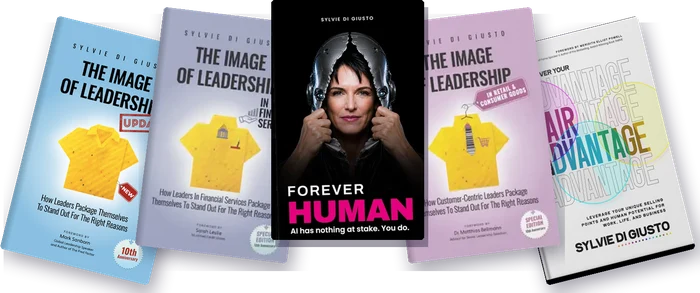
How do I know? I have written more than a dozen books, which you can find on my Amazon author page and on my resources page. If writing about your own achievements makes you squirm, start with how to write about yourself without sounding arrogant, and read why PR in business is the natural next step once the book is out.
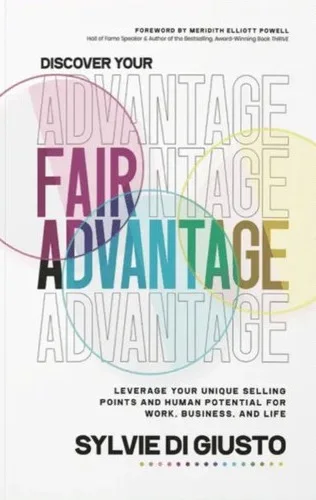
Discover Your Fair Advantage
Every good book idea starts with the same question this book asks: what makes you different in ways that matter? Discover Your Fair Advantage walks you from self-awareness to self-branding, which is exactly the ground your own book will grow from.