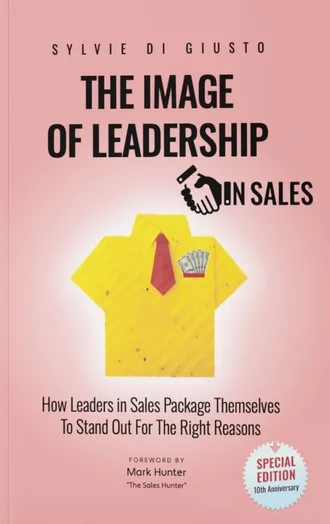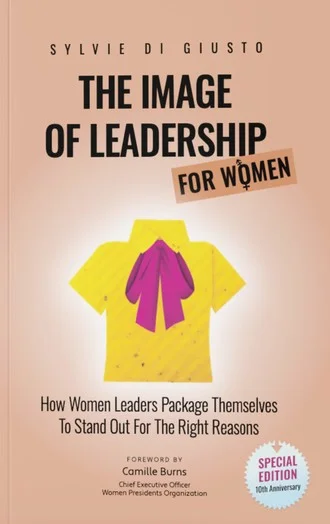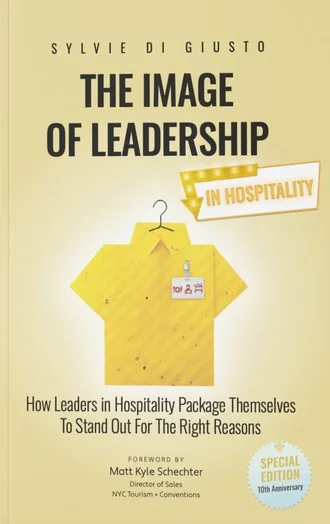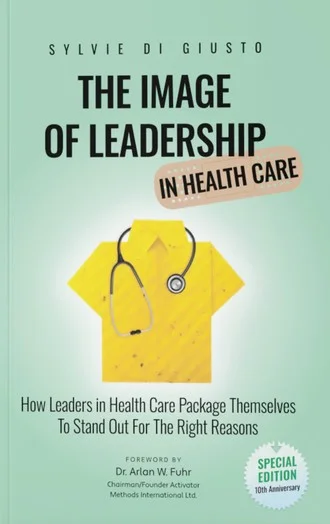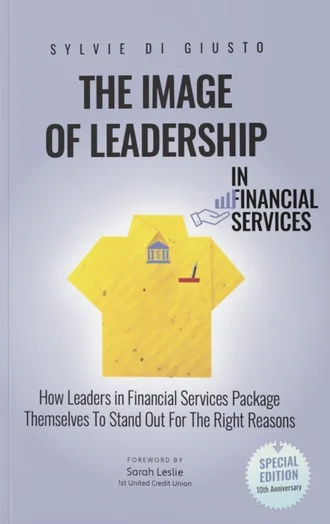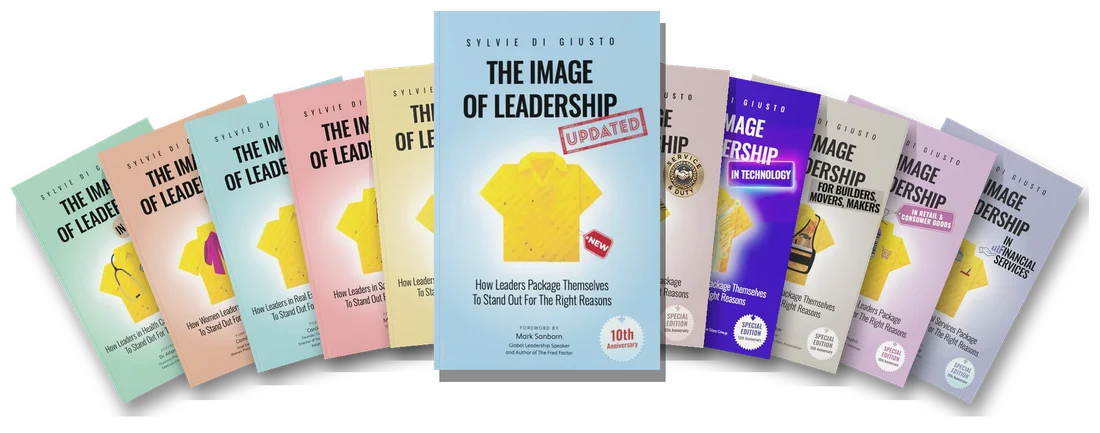
The Image of Leadership and its ten special editions
The book behind The Power of Choice

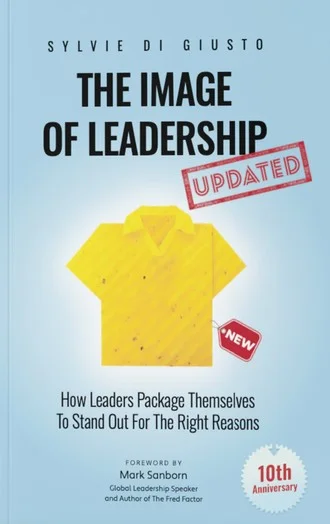
The Image of Leadership

How leaders package themselves to stand out for the right reasons

What people know rarely gets them chosen. What others see in them does.

10th anniversary · new and expanded · 11 editions

Order on Amazon

Before you speak, people have already decided.

The Image of Leadership shows how that decision is made across five signals, and how to align them with the leader you already are. Not by becoming someone else, but by making sure what people see matches what you bring.

Ten years after its first release, the book has been rewritten and expanded, and it now comes in ten special editions written for the industries where perception decides the most.

Sylvie’s commitment to embracing change and integrating new insights into her work is an excellent example for all leaders.
Mark SanbornGlobal leadership speaker and author of The Fred Factor, foreword to the original edition

Who it is for

  • An aspiring professional preparing for a first leadership role
  • A team leader making their first strategic decisions
  • A mid-level professional eyeing a strategic leap into senior management
  • A seasoned leader aiming for a top executive or C-suite position
  • An entrepreneur leading a team through a new venture or start-up
  • A nonprofit leader guiding an organization toward its mission

The five signals

The ABCDE framework at the heart of the book, and of The Power of Choice keynote.

AAppearanceWhat people see first, and keep seeing.
BBehaviorHow you act in the room, and when no one is watching.
CCommunicationThe verbal and nonverbal messages you send.
DDigitalWho you are online before anyone meets you.
EEnvironmentThe spaces and people you surround yourself with.
The opening story

Michael, David, and the Vice President Role

Michael and David are competing for the same vice president role at a prestigious Fortune 500 company, a step that would mark a major advance in either career. On paper, nothing separates them: their résumés are identical. Both are greeted in the same sleek lobby by Jennifer, the chief operating officer, with the same confident smile and firm handshake. Both walk with her through the same open-plan office to her glass-walled room. Yet the two meetings could not unfold more differently. One interview ends after twenty minutes with a polite promise to be in touch, and a candidate who senses he is being ushered out. The other runs for an hour, pulls in a senior manager, and ends with an invitation to continue the conversation next week. At the next day’s executive meeting, Jennifer needs only a sentence or two for each man. If their qualifications were the same, what did Jennifer see that the résumés could not show, and when did she decide?

Chapter 1 tells you what happened next.
Inside the book

  1. Seven SecondsThrough the story of two equally qualified candidates for a vice president role, this chapter shows how quickly others decide whether you look like a leader, the invisible biases that filter every later interaction, and why small details decide who stands out.
  2. Your Professional IdentityWhy Sylvie chooses professional identity over executive presence or personal branding, how the ABCDEs (appearance, behavior, communication, digital footprint, environment) work together, what research on enclothed cognition suggests, and the visibility levels that separate invisible leaders from those in the spotlight.
  3. Leaders Look ConfidentConfidence as the foundation every leader builds on, the saboteurs that quietly erode it, such as comparison and rejection, and what it means to be confident about your body, your age, your gender identity, and your style.
  4. Leaders Look AuthenticChameleon or peacock? This chapter challenges the “you do you” version of authenticity and introduces seven keyword styles, from the Explorer to the Dramatic, that help you read the mental uniform of your field and find your place within it.
  5. Leaders Look ProfessionalFrom boardroom attire to baseline casual, how traditional dress codes dissolved, why casual remains undefined, the prescribed and unwritten uniforms of industries from finance to tech, the shadow uniforms leaders impose on themselves, and when situational awareness should override the code.
  6. Leaders Look RespectfulRespect as a boomerang: why self-respect comes first, how your look signals respect for your team, organization, stakeholders, and the cultural, religious, generational, and gender diversity around you, what to do when respect is not returned, and how to repair a misstep.
  7. Leaders Look ControlledLike a captain on an unpredictable ocean, a leader steers their narrative through self-awareness, self-care, and self-promotion, plans their look for both the predictable and the unpredictable day, and keeps appearance aligned with behavior, communication, digital presence, and environment.
  8. Leadership in a Digital LandscapeThe digital handshake now arrives before the real one. This chapter separates your intentional and unintentional footprint and outlines five stages (know, repair, own, control, monitor) for managing your e-shadow, from search results to your virtual meeting setup.
  9. Leaders Lead by ExampleHow your choices become the organic dress code of your team, the excuses leaders hear (the weather, the price tag, the zip code, “just the internet”), and how to prepare for sensitive conversations about attire, hygiene, or online conduct.
  10. Moving ForwardWhy the cover of this book shows a potato chip, and what chip packaging, shelf placement, and color expectations reveal about being recognized, trusted, and chosen as a leader, even when the reality inside is not yet perfect.

Ideas you will take with you

The invisible filters of perception

Nobody sees you neutrally. Every person you meet runs what they notice through mental shortcuts shaped by stereotypes, experience and culture: confirmation bias, anchoring, the horn effect. A crumpled paper under a waiting-room chair can decide what a patient expects from the doctor. Sylvie shows how these filters work for and against you at work, and how to give people the evidence that lets their biases land in your favor instead of against you.

The sustained imprint

The moment you are first seen opens the door, but it does not keep it open. In a leadership seminar Sylvie ran with horses, the group that took command fastest lost the horses’ trust once their conduct turned unpredictable. The lesson runs through the whole book: predictability and consistency are the cornerstone of leadership, being respected matters more than being liked, and outstanding leaders are measured by the presence they sustain, always and everywhere.

Standing out for the right reasons

“Good” is the baseline now, the expectation. Think of Tetris: the piece that fits perfectly completes a line and then disappears. In a career, aligning too neatly with the patterns already in play makes you part of the background. The book shows how to become the piece that changes the board instead, by being the architect of your own perception and choosing on purpose what you want to be known for.

One message, inside and outside

Credibility collapses when your signals contradict each other: a reliable look with unpredictable behavior, a polished voice with careless emails, a digital presence that does not match the person in the room. Sylvie calls for all five signals to sing the same tune, and for that consistency to hold in both directions, with your team and upper management inside the organization, and with clients, partners and the industry outside it.

Advocating for your own work

If you do not speak up for your achievements, who will? Many leaders hold back for fear of sounding arrogant, out of imposter syndrome, or because their culture treats self-promotion as boasting. The book reframes it as controlling your narrative: acting as the CEO of your own career, making your team’s contribution visible, and choosing progress over the exhausting pursuit of perfection.

The conversations leaders avoid

Sooner or later, leading means telling someone on your team what nobody else will: about their clothing, their hygiene, an emotional outburst, an unfortunate post. Most leaders put these conversations off to protect harmony. Sylvie shows how to prepare for them, where and when to hold them, and how to keep the focus on the person’s professional growth rather than on criticism, so the relationship survives and the standard holds.

Find your edition

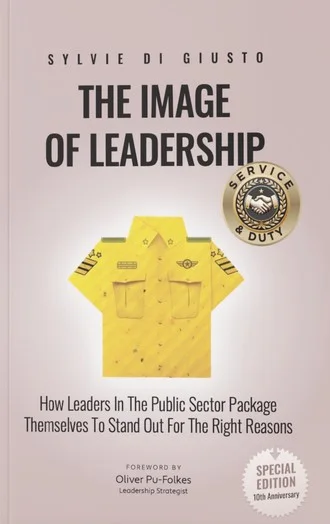
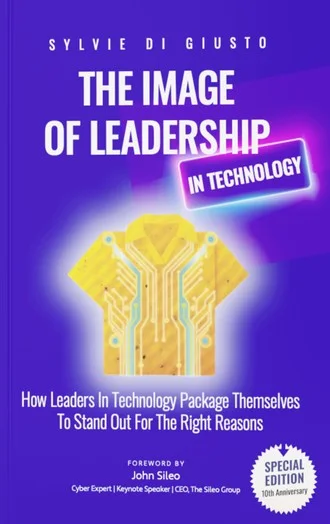
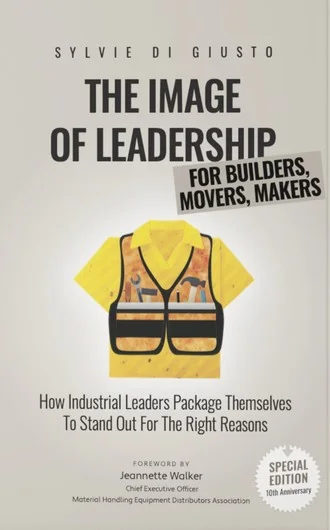
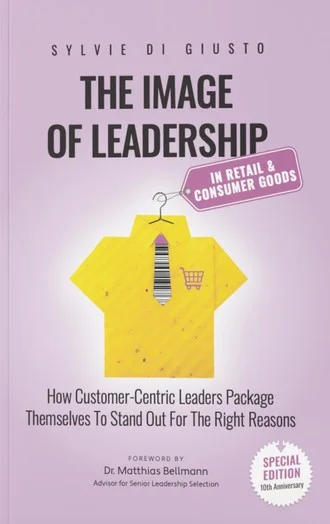
The same framework, with every story, example and checklist rewritten for your field.

Questions readers ask

What is The Image of Leadership about?

It is about how the way you present yourself shapes whether you are trusted, followed, and chosen. Sylvie shows that your professional identity is the sum of five signals: appearance, behavior, communication, digital footprint, and environment. When all five tell the same story, inside your organization and outside it, you stop blending into a sea of sameness and start standing out for the right reasons. Chapter 2, Your Professional Identity, introduces the framework.

Why do equally qualified candidates lose out on leadership roles?

Because in a brief encounter no one can assess your capabilities, so decision-makers rely on what they observe, and unconscious biases such as the horn effect and anchoring bias filter everything that follows. The book links an inconsistent professional identity to lost respect, a stagnant career trajectory, and diminished earning potential, often decided by small details. Chapter 1, Seven Seconds, shows how two identical résumés can lead to very different outcomes.

How should leaders dress now that dress codes are more casual?

This is not a fashion guide, so the book prescribes no items to buy. Instead, it teaches you to decode the silent standards of your industry and role, the unwritten uniforms people read at a glance. Your look should bolster your confidence, reflect your environment, consider your audience, show deliberate choices, and complement rather than overshadow your abilities. Chapter 5, Leaders Look Professional, explains how to read your own setting.

How can a leader stay composed under pressure?

Sylvie treats composure as control over your professional identity. Your conduct amid adversity, clear directives, and swift decisions must match the authority your presence suggests; indecisiveness or lost composure turns even an impeccable appearance into an empty shell. The book builds that control through self-awareness, self-care and self-discipline, and self-promotion, and by preparing for the predictable and the unpredictable. Chapter 7, Leaders Look Controlled, covers each step.

How do I talk to an employee about a sensitive issue without damaging the relationship?

Treat the conversation as support for their professional development, not personal criticism. The book recommends defining the problem precisely and its consequences for the team and organization, consulting HR or a legal advisor on sensitive topics, and choosing a private space and a calm moment, never a hallway or the minutes before a stressful meeting. Chapter 9, Leaders Lead by Example, walks through these conversations step by step.

What does my online presence say about me as a leader?

More than you may think. Search engines act as the new background check, and team members may look you up during a meeting. Your footprint has two threads: the intentional one you build through profiles, posts, and articles, and the unintentional one formed by signals such as outdated information or your absence from search results. Both should affirm who you are in person. Chapter 8, Leadership in a Digital Landscape, covers this in depth.

Does my workspace really affect how people see me as a leader?

Yes. From the moment a team member walks into your office, they register whether it is organized and current, and a cluttered background on a video call can undercut the identity you intend to project. The book extends environment further, to the car you drive, the books on your shelves, and the people you associate with, because you are judged by the company you keep. Chapter 7, Leaders Look Controlled, explores these choices.

What is new in the 10th anniversary edition?

The book was rewritten and expanded ten years after its first release, with new chapters on digital presence and leading in a hybrid world, plus ten industry special editions.

Which edition should I read?

Read the original if you lead across industries. Choose a special edition if you want every example, story and checklist written for your field.

Can I order copies for my event or team?

Yes. Preferred pricing is available for groups, conferences and client gifts, often paired with The Power of Choice keynote, which is built on this book.

Is the book available as an ebook or audiobook?

Yes. The Image of Leadership is available in paperback, as a Kindle ebook and as an audiobook. The ten special editions are available in paperback and as Kindle ebooks.

Around the clock

Still have questions? Ask Edna.

Edna

Ready to make your people impossible to replace?