Confirmation bias: when AI sees what it is trained to see
Confirmation bias in AI happens when a model favors information that supports what it already “believes” and ignores evidence that contradicts it. Predictive policing tools, for example, often focus on certain neighborhoods simply because past data says so. That creates a loop in which those communities are over-policed, whether they need it or not.
In insurance, AI pricing models might assume certain demographics carry higher risk, not because of anyone’s actual behavior, but because past claims data suggests a pattern that may no longer hold for the individual in front of them. The outcome: higher premiums, denied coverage and financial roadblocks that have nothing to do with personal circumstances.
- AI does not fact-check history. It automates it.
- The more biased data AI consumes, the more confident it becomes in that bias.
- Once a biased model is deployed, the damage is hard to reverse.
If you feed AI biased data, it will not question it. It will just keep proving itself right.
Anchoring bias: when AI gets stuck on the first thing it sees
AI, like us, tends to stick with its first impression. A résumé scanner might overweight a candidate’s first-listed experience, even when stronger qualifications appear further down. In medicine, an AI system might latch onto an initial, incorrect diagnosis and make it harder to correct course later.
In real estate, AI pricing models might keep insisting an area is “up-and-coming” or “declining” long after market conditions have changed. Once AI locks onto its first assumption, breaking free is hard, and the consequences can be serious.
- The first inputs can shape the entire decision, accurate or not.
- AI over-relies on early data points and resists change even when more relevant data arrives.
- If AI cannot move its anchor, it keeps systematic inequalities in place.
Algorithmic bias: when AI favors one group over another
AI does not play favorites on purpose. Sometimes it does anyway. Facial recognition software has a well-documented track record of misidentifying people of color at far higher rates than white individuals, which has led to wrongful arrests and security concerns.
On the financial side, AI loan approval systems might deny applications from certain zip codes because past data labels those areas “risky,” regardless of the applicant’s actual financial health. When AI bakes in old inequalities, it keeps closed the very doors that should have opened long ago.
- Algorithmic bias does not only reflect disparities. It amplifies them at scale, making discrimination more efficient and harder to detect.
- Models reinforce the patterns they learn, so systemic inequities become part of the decision process.
- In law enforcement or hiring, the consequences of biased AI can be devastating.
Selection bias: AI learns from what it is given, and nothing else
Selection bias occurs when the data AI learns from does not represent reality. AI cannot account for what it has never seen. A model trained mostly on English-speaking job applicants may struggle to assess non-native speakers fairly. In healthcare, AI that learned mainly from studies on white patients may overlook how diseases show up in other racial or ethnic groups.
This is not about malice. It is about missing puzzle pieces. And when AI works with an incomplete picture, its decisions leave too many people out of it. AI does not know what it does not know.
- Selection bias favors dominant perspectives and excludes underrepresented ones.
- AI can only be as diverse as the data it is trained on.
- Recommendation algorithms may overlook marginalized voices and limit their opportunities.
Availability bias: when AI prioritizes the obvious and ignores the unseen
AI is obsessed with what is common. Sometimes what is rare matters more. In law, AI case analysis tools might prioritize frequently cited cases and overlook lesser-known precedents that could change the outcome. In climate science, AI may struggle to predict extreme weather events because they do not happen often enough to dominate its training data.
Something happening less often does not make it less important. Try telling that to an algorithm.
- AI assumes the most common answer is the most relevant one, even when a rare insight would matter more.
- Without exposure to diverse data, AI never challenges its own assumptions.
- Reliance on frequent data makes AI resistant to innovation and unexpected discoveries.
Group attribution bias: painting everyone with the same brush
AI has a habit of assuming that what is true for a few must be true for all. Customer service chatbots may file every customer with a similar concern under the same script and miss individual needs. In academia, AI research tools might favor widely cited papers and bury fresh ideas that challenge the status quo.
What you get is a world where AI decisions feel more like lazy generalizations than thoughtful insights. The machine stops seeing individuals and starts seeing stereotypes.
- AI decisions lose nuance when they assume group identity defines individual potential.
- When AI overgeneralizes, flawed statistical assumptions replace fairness.
- Pattern recognition turns into harmful stereotyping if nobody checks it.
Bandwagon effect: when AI follows the crowd instead of thinking
AI loves a trend, and that is not always a good thing. On social media, recommendation systems push the content with the most engagement, which makes it harder for new or niche voices to be heard. In political coverage, AI news curation can amplify popular narratives and sideline alternative perspectives, creating echo chambers that reinforce existing biases.
Following the crowd is not about accuracy. It is about keeping up with the majority, right or wrong. Popularity does not equal truth, but AI acts as if it does.
- AI assumes that if something is widely accepted, it must be correct.
- The more AI rewards popularity, the less room remains for original or disruptive ideas.
- AI can turn into an echo chamber that magnifies bias instead of offering balance.
Framing bias: how the way information is presented shapes AI
AI does not just process data. It absorbs the way that data is framed. In finance, an AI investment tool might present risk based on past performance rather than current conditions, nudging investors toward certain decisions. In journalism, AI-generated news summaries might quietly reinforce a political slant, depending on how the underlying data is structured.
AI has no opinions of its own, but it can absolutely be influenced by how information is packaged. It learns the data, and it learns the spin.
- AI does not only relay information. It decides how that information is framed.
- The same data can tell wildly different stories depending on context.
- AI-crafted narratives can shape reality, amplifying some viewpoints and suppressing others.
What AI bias examples teach us: machines are only as fair as we make them
Bias in AI is not a technical glitch. It is a human problem with machine-scale consequences. AI learns from us, and if we fail to correct our own biases, we are simply teaching it to automate discrimination. The question is not whether AI can be neutral. It is whether we are willing to make it better.
So what is the solution? Ethical AI development, diverse training data and constant human oversight. The future of AI is not only about smarter machines. It is about smarter choices. If AI is learning from us, are we giving it the right lessons?
Where to read more about AI bias
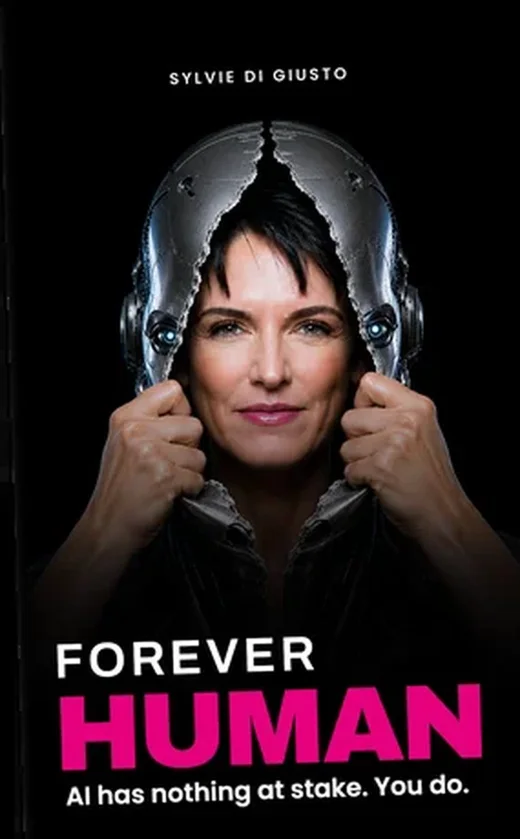
This article is part of my series on AI and the human edge. For the full picture, read artificial intelligence versus human intelligence, find out what AI knows about you and what it is only guessing, or see how bias shapes the way we judge each other in perception and AI. On stage, this is part of my keynote Forever Human.