Unconscious bias decides for your customers, quietly
Unconscious bias influences your customers’ decisions without them noticing: they trust what confirms their beliefs, follow the crowd, stick with what is familiar and judge you by first impressions. You cannot remove these biases, but you can work with them by managing first impressions and protecting your reputation.
We are biased. All of us. We are taught to eliminate the preconceived notions that shape how we act, decide and treat others. The uncomfortable truth is that many of our biases are unconscious. We do not even know they are there, yet they play a role in almost everything we do.
That includes buying decisions. Say you dislike the color green, and you land on a website full of it. You might be less inclined to buy, and you would never realize why. You simply leave, without once suspecting that a color made the decision for you.
Bias has many facets, and each one can sway a customer’s decision. The better you understand them, the better you can respond, and the more customers say yes.
KEY TAKEAWAYS
- Unconscious biases are automatic thinking shortcuts that we are not aware of, and they influence what customers buy.
- Eight biases matter most in sales: confirmation bias, herd mentality, sunk cost, the bandwagon effect, the halo effect, anchoring, status quo bias and the availability heuristic.
- Many of them cut both ways: they help you once customers like you and hurt you once they don’t.
- Your first impression, built from appearance, behavior, communication, digital footprint and environment, sets the anchor customers judge you by.
- Reputation maintenance after a bad experience keeps one incident from becoming the story customers believe.
What is unconscious bias, and what causes it?
It is a judgment our brain makes automatically, based on beliefs and experiences we are not aware of. Society is working hard to reduce bias and prejudice and to make the world fairer. But it is difficult to override instincts that once helped hunter-gatherers survive. However hard we try, our intuitive, automatic system takes over in many decisions, and we fall back on beliefs that were ingrained in us from day one.
In buying decisions, that shows up in a sneaky way. We like to think we decide on the facts: prices, features, numbers. Creativity and feelings may play a part, but in the end it seems to come down to hard data. Yet even the way we read that data is colored by bias we never see.
Your customers think they are deciding on the facts. Their biases decided which facts they noticed.
Which biases influence your customers’ decisions?
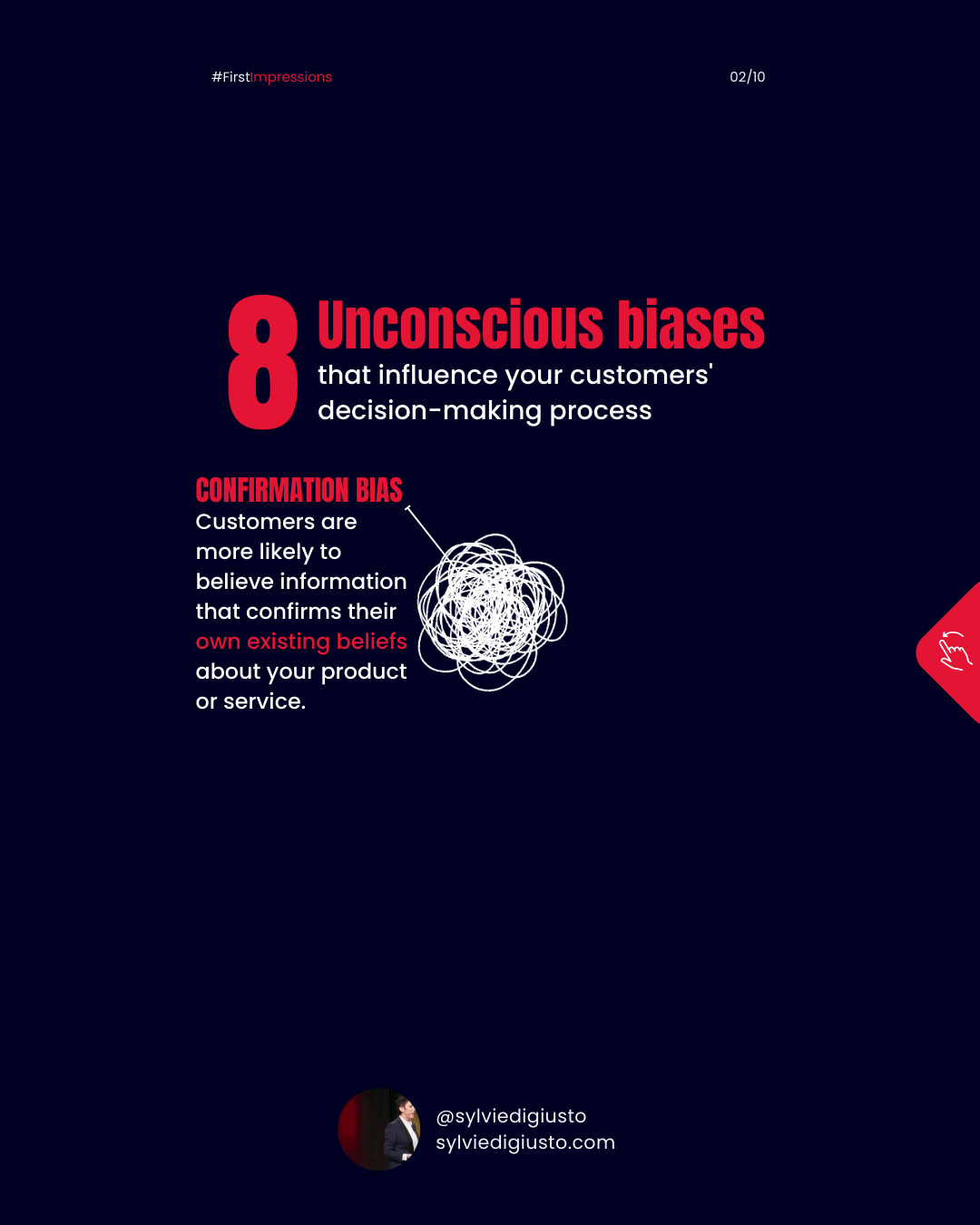
011. Confirmation bias
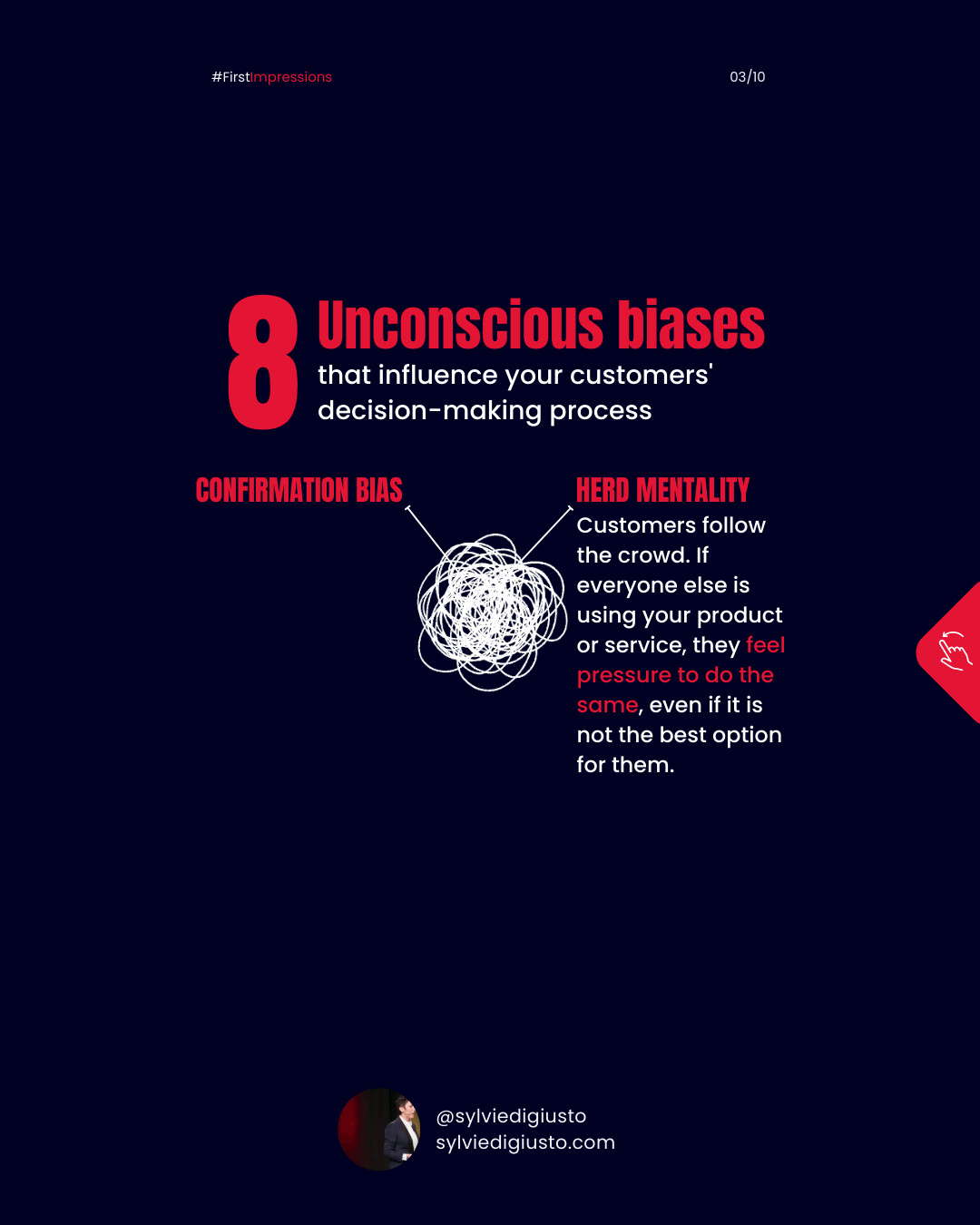
We tend to believe what we would like to be true. We build our beliefs from past experiences and information, and we ignore whatever challenges them. For your business, that means a customer who had one bad experience with your company will be quick to expect the same thing again, and to overlook evidence to the contrary.
022. Herd mentality
People go along with the herd. If many people buy your product, others will follow. Unfortunately, it is a two-way street: if few people buy it, or many speak badly about it, it becomes harder to sell.
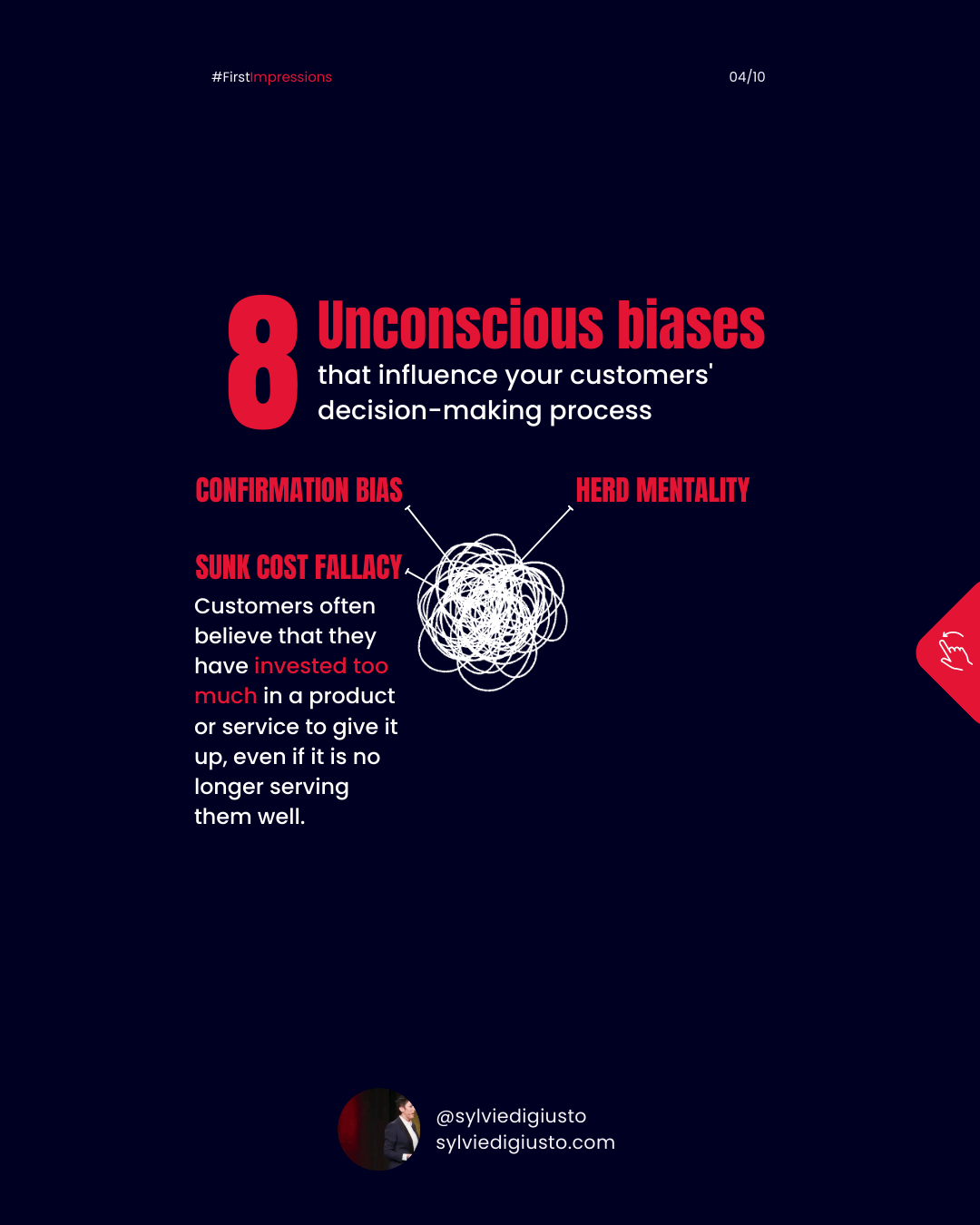
033. Sunk cost fallacy
Closely related to loss aversion, the sunk cost fallacy makes us reluctant to abandon something we have already invested time and money in, even when the signs say it is time to move on. Customers who have invested in your product tend to stay. Customers invested in a competitor’s tend to stay there too.
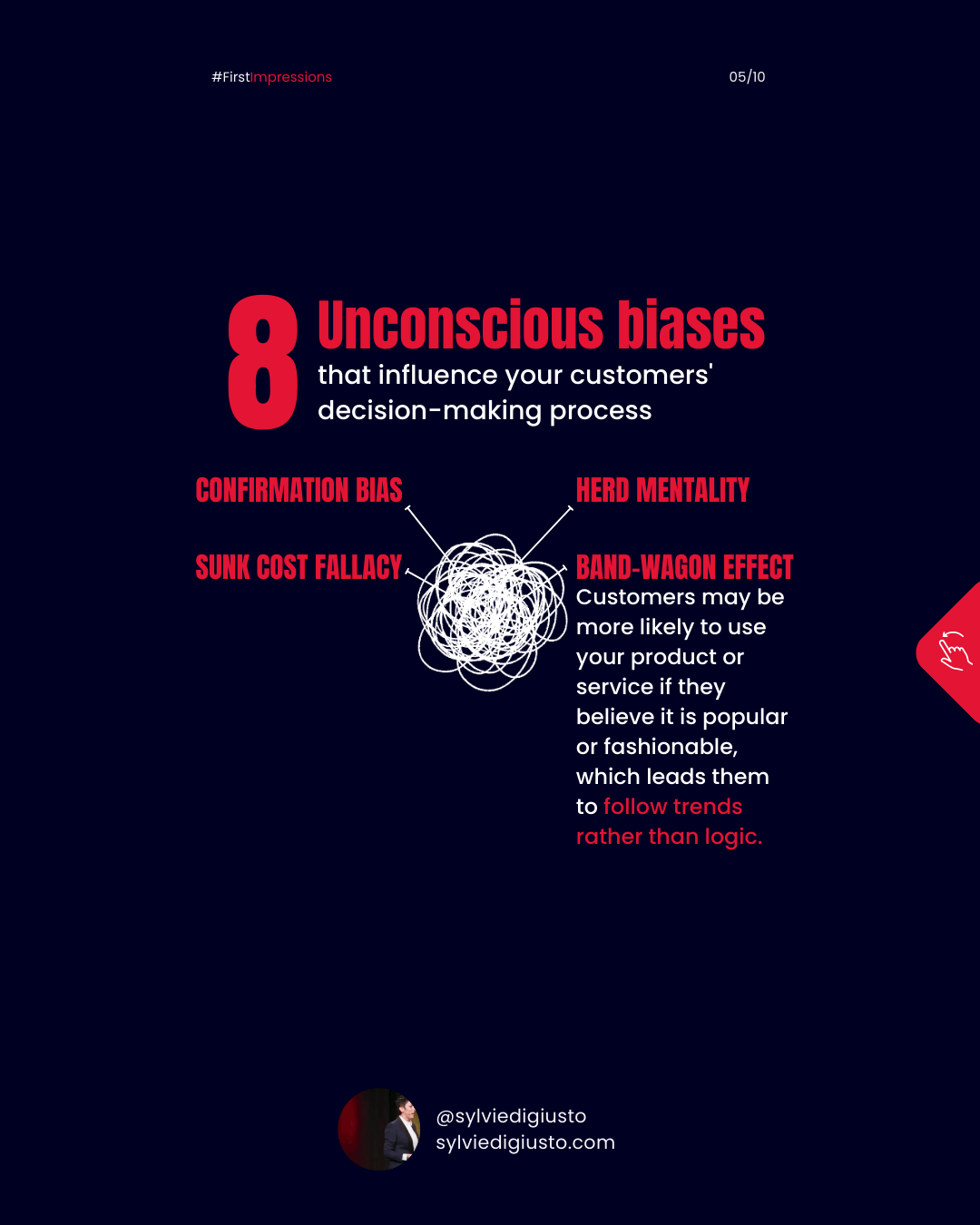
044. Bandwagon effect
Similar to herd mentality, but closer to home: people want to buy a product because their friends are buying it.
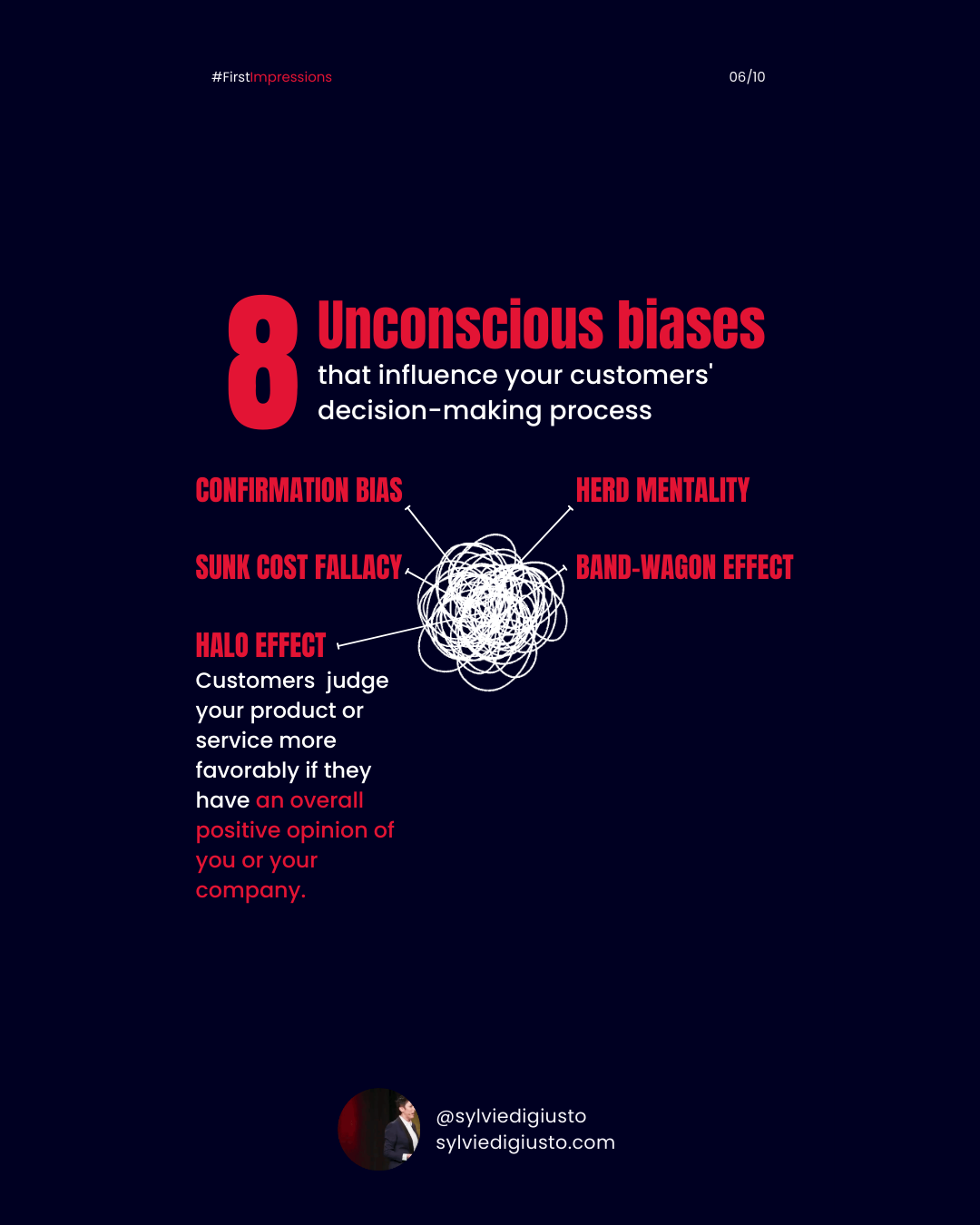
055. Halo effect
A favorable view of your company makes people more likely to buy from you. If they bought one of your products and loved it, they may assume everything you touch turns to gold.
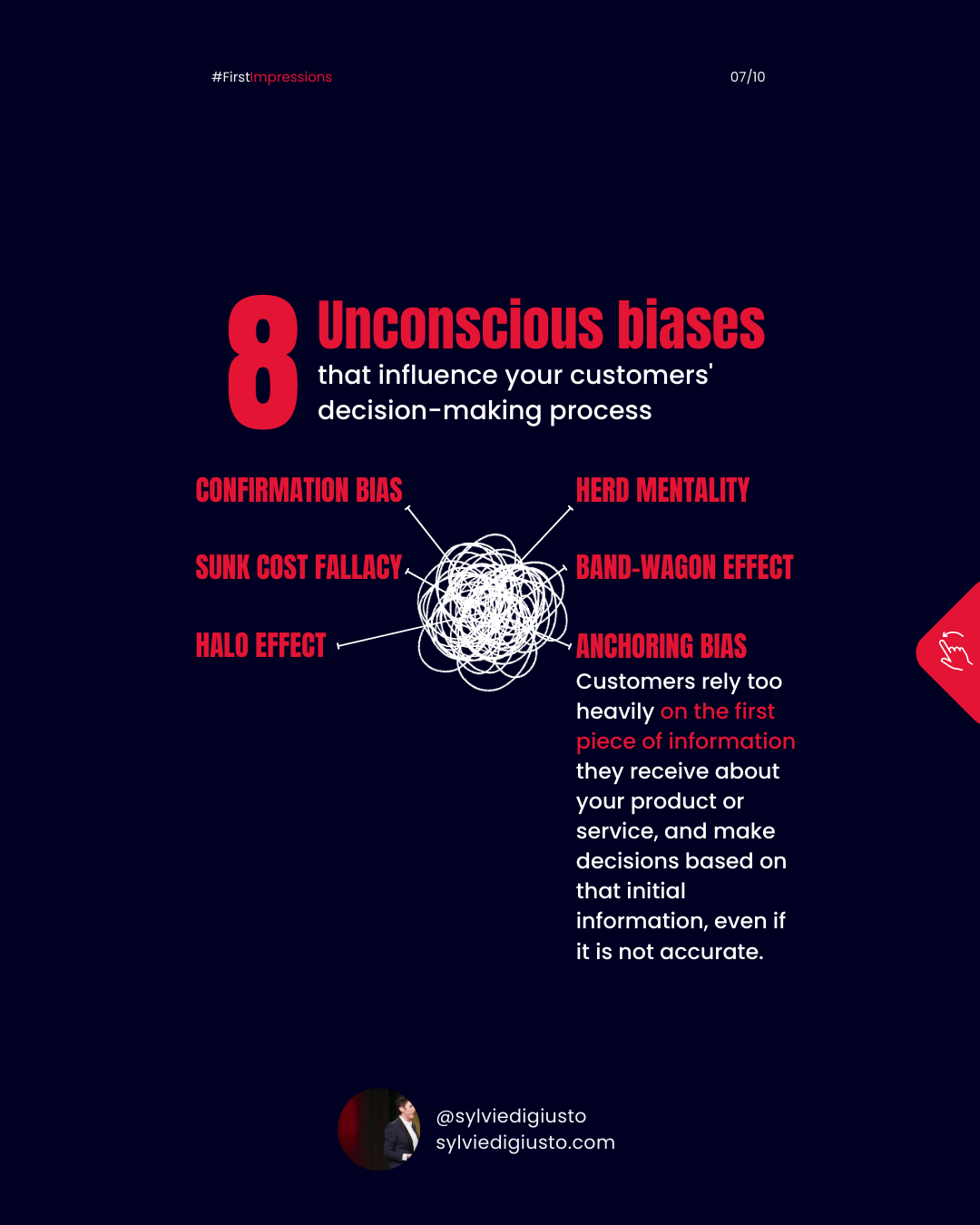
066. Anchoring bias
Anchoring means we rely too heavily on the first piece of information we receive and judge everything after it in relation to that anchor. The first price a customer sees shapes what feels expensive or cheap. The same goes for people: your first impression becomes the anchor. A good one makes customers think highly of you from then on. A bad first impression is hard to turn around.
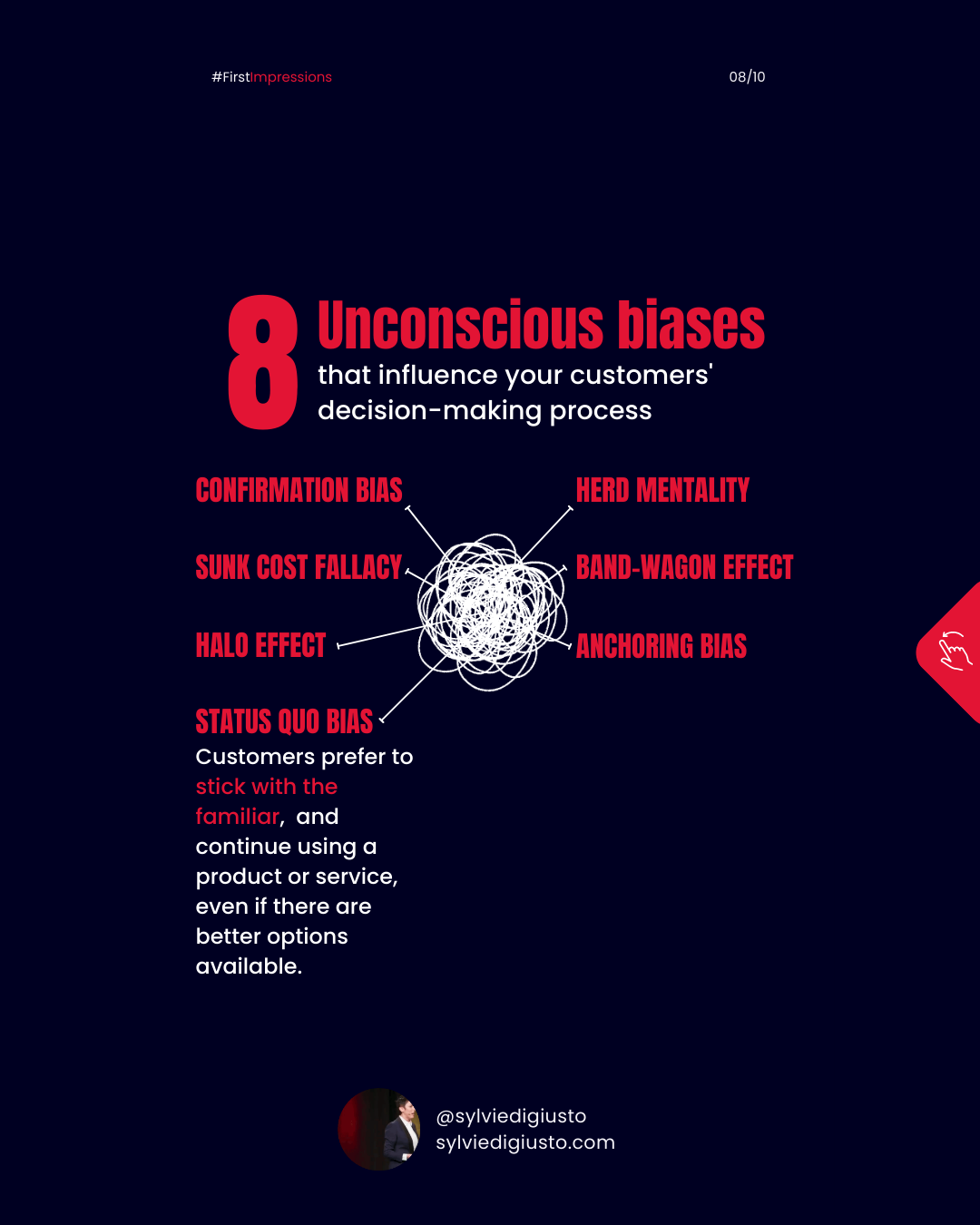
077. Status quo bias
People keep using a product simply because it is familiar. They will not switch brands, even when the alternative is proven to be better.
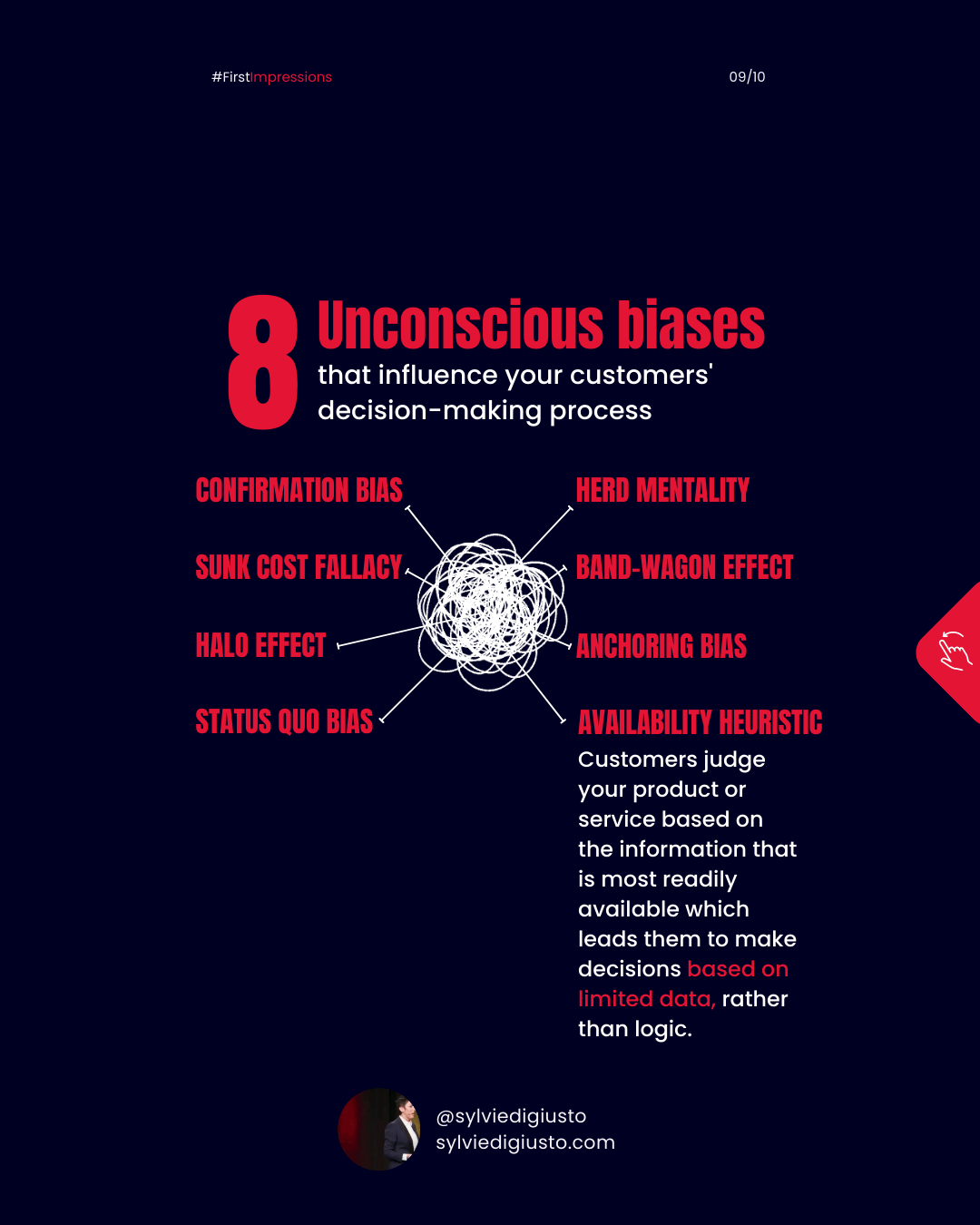
088. Availability heuristic
Customers judge your product by the information that comes to mind most easily: the story they heard recently, the review that stood out, the ad they keep seeing. That means they may decide on very limited data.
How can you deal with unconscious bias in sales?
These biases are not ideal, but a smart businessperson accepts that they exist and works with them. You do not have to be perfect. You do have to be deliberate. Two strategies make the biggest difference.
Improve your first impression
Because so many biases anchor on the first impression, make it a great one. I use what I call the ABCDE model:
- Appearance: we all know not to judge a book by its cover, and many people do it anyway. Keep your appearance neat and professional: your clothes, your hair, your office.
- Behavior: be pleasant when you meet clients. Good behavior goes a long way.
- Communication: what you say and how you say it. Communicate clearly and tactfully, use proper grammar and prepare what you want to say.
- Digital footprint: social media is often the first impression a potential client gets of your company. Use professional pictures and post content that adds value.
- Environment: people notice your surroundings when they meet you for the first time. Keep your office neat, and if you meet elsewhere, choose a place that represents you well.
Maintain your reputation
When something goes wrong with a customer, repair it. If you get a bad review, apologize and try to make it right, no matter how “in the wrong” you think the customer is. To keep a stellar reputation with the many, I follow the old rule that the customer is always right.
Do both, and the biases start working for you. People form a good impression that lasts through the relationship. They invest in your product, get used to it and are less likely to give it up. And they influence others, so more people buy.
Biases are inevitable. The sooner you accept that, the sooner you can make them work in your favor, in the most positive way possible.
Have you experienced bias with customers? What helps you when a customer is biased? Share it with me. For more on what costs sellers the deal, read the 42 most common mistakes in sales.
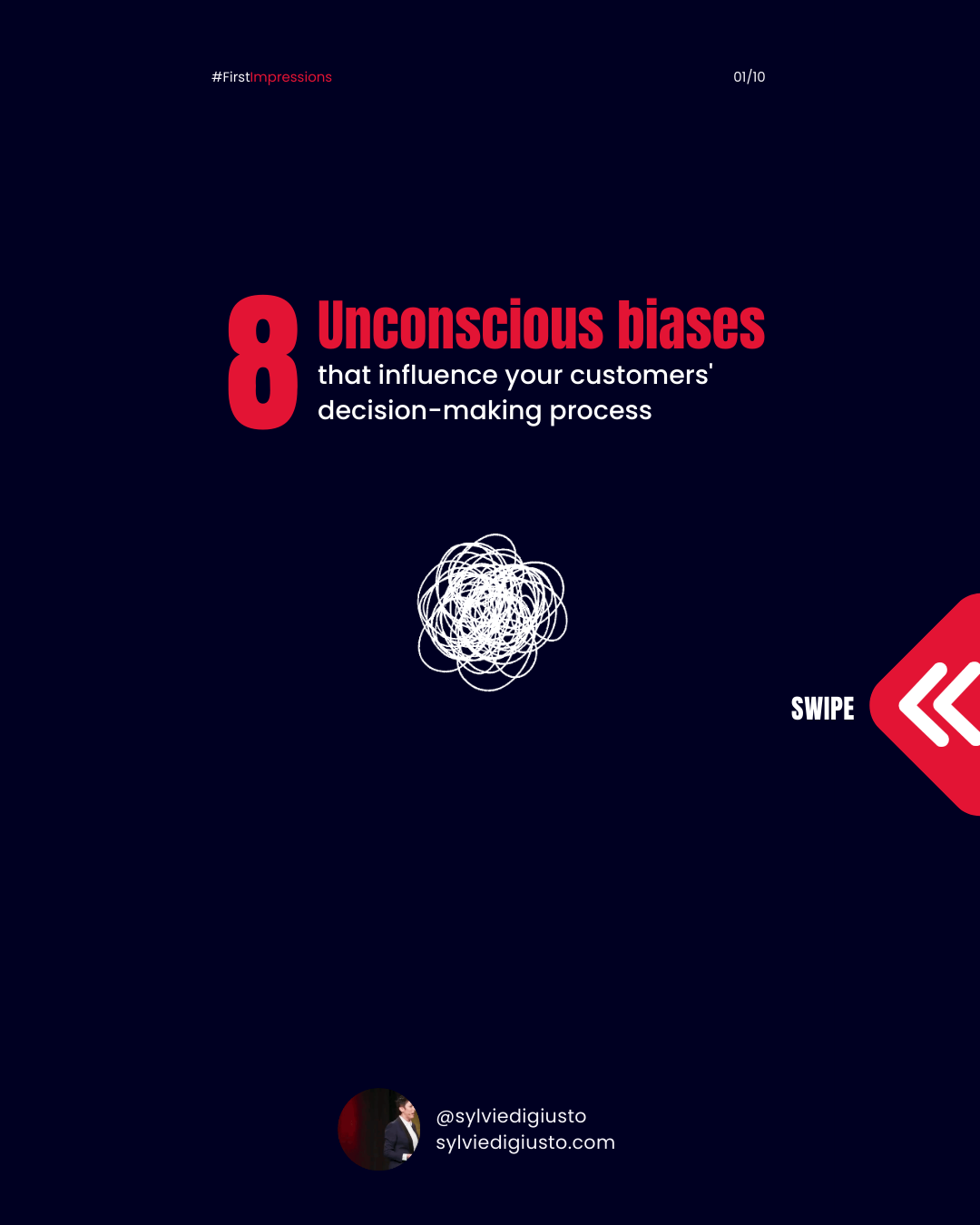
Unconscious bias in a nutshell
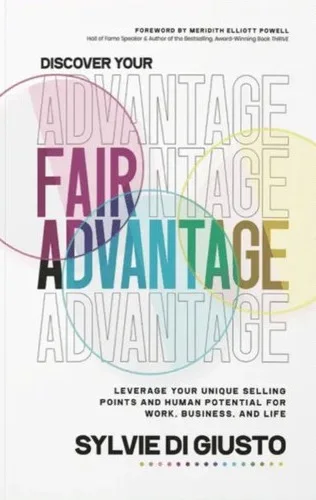
Discover Your Fair Advantage
When customers decide on shortcuts, being slightly better is not enough. Discover Your Fair Advantage shows you how to become so clearly different that the comparison trap stops working against you, and the biases start working for you.
Frequently asked questions
What is unconscious bias?
Unconscious bias is an automatic judgment or preference our brain forms without our awareness, based on past experiences, beliefs and mental shortcuts. It influences how we perceive people, products and information, and it affects decisions even when we believe we are being completely rational and objective.
How do biases affect customers’ buying decisions?
It steers what customers notice and trust. They believe information that confirms their views, follow what others buy, stick with familiar brands, rely on the first price or impression they get and generalize from one good or bad experience. Many purchases are decided before the customer weighs the facts.
What is an example of bias in sales?
The halo effect: a customer who loved one of your products assumes everything else you sell is just as good. The reverse happens with confirmation bias, when one bad experience makes a customer expect the next one to be bad too, no matter what you do differently.
How can businesses work with customers’ unconscious biases?
Make a strong first impression across appearance, behavior, communication, digital presence and environment, because many biases anchor on it. Encourage reviews and referrals so social proof works for you, and repair problems quickly and graciously so one bad experience does not define your reputation.