Why is emotional intelligence in sales and customer service so important?
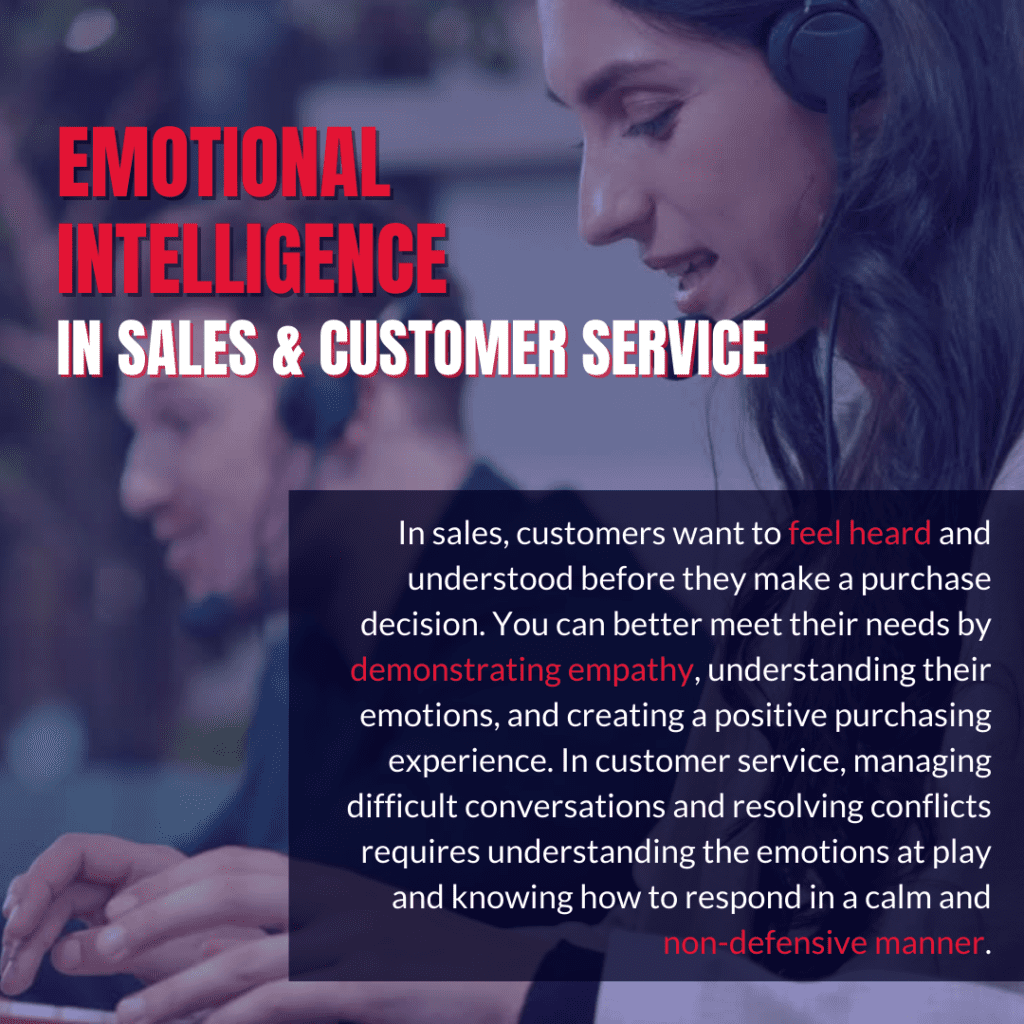
In sales, customers want to feel heard and understood before they make a purchase decision. When you show empathy, understand their emotions and make buying a positive experience, you meet their needs far better.
In customer service, difficult conversations and conflicts are part of the job. Resolving them means understanding the emotions at play and responding calmly, without getting defensive.
In both roles, reading emotions and responding to them makes everything else easier: building rapport, establishing trust, closing deals. Show customers you are attuned to how they feel, and they are far more likely to trust you, and to do business with you.
Customers rarely tell you what they feel. They show it, and they buy from the person who noticed.
What are the signs of low emotional intelligence with customers?
The symptoms are easy to spot from the outside: customer needs consistently go unmet, conflicts escalate and negative feedback piles up. Usually, it is because the salesperson or service rep is:
- not listening to what the customer is saying
- not making eye contact
- interrupting
- talking over them
- talking at them instead of with them
- failing to follow up after an interaction
- not taking their concerns seriously
- making promises they cannot keep
- overpromising and underdelivering
- trying to force a sale
Low emotional intelligence does not only hurt the customer relationship. It wears down the professional too. People who struggle to manage their own emotions in challenging interactions are more prone to burnout, and companies pay for it with high turnover.
Many of these behaviors also appear in my list of the 42 most common mistakes in sales.
What are the signs of high EQ in sales?
Emotionally intelligent sellers and service professionals empathize with the customer’s perspective, communicate clearly, listen to concerns, stay calm and confident in difficult moments and adapt their approach to each individual. They also understand their own emotions and how those emotions affect the interaction. Customers perceive you as someone with high EQ when you are:
- listening attentively to what they have to say
- asking questions to make sure you understand
- maintaining eye contact throughout
- speaking respectfully and not interrupting
- visibly interested and engaged in the conversation
- thanking them for their business or their time
- following up as promised
- showing genuine concern for their needs
- making realistic promises
- delivering on those promises
- handling objections respectfully
- closing without being pushy
- leaving them wanting to work with you again
What does emotional intelligence look like in different industries?
- Real estate: as a realtor with high EQ, you sense when a client feels hesitant about making an offer, and you address those concerns before moving forward.
- Hospitality: high EQ lets you pick up on guests’ emotions and anticipate their needs, which is the difference between good and exceptional service.
- Travel: if you sell travel experiences, you can tailor the itinerary to your clients’ emotions and desires, so the trip delights everyone involved.
- Customer service: a representative with high EQ hears the frustration in a customer’s tone and takes steps to defuse the situation.
- Finance and banking: understanding your clients’ emotions and concerns helps you recommend the financial options that truly fit their needs.
- Healthcare: when selling in the healthcare sector, empathy for the emotions and concerns of patients and their families builds trust and makes them more likely to choose your services.
EQ in sales and service is not a soft extra. Practice it deliberately, and you build stronger customer relationships and better results. For everyday inspiration, look at these customer service examples of good attitude. And if you want your whole team to experience it, emotional intelligence is part of what I bring to sales teams as a sales keynote speaker.