Why does technology move faster than leadership?
AI excels at speed. It analyzes patterns across millions of data points, simulates scenarios and spots trends in seconds. For operational work, that is extraordinary. For leadership, speed is not the point.
When information arrives instantly, leaders feel pressure to react instantly. Teams speed up simply because the systems around them have. Meetings get shorter. Decisions get quicker. Reflection quietly disappears. Yet meaningful leadership decisions rarely improve when they are rushed.
A dashboard shows declining performance. A model predicts a shift in customer behavior. An algorithm recommends restructuring a team. Those signals matter. But interpreting them takes context, experience and an understanding of human dynamics no data set provides. Technology shows you what is happening. Leadership decides what to do about it.
Why doesn’t data tell the whole story?
AI is remarkably good at remembering. It stores enormous amounts of history and retrieves it instantly. Leadership asks for something else: understanding what it means.
A report says a client relationship ended unexpectedly. Engagement is dropping across a department. Productivity suddenly fell. Those numbers describe outcomes. They rarely tell the story underneath: the tension between two departments that has been building for months, the employee who lost motivation after a leadership change, the client who started reconsidering the partnership long before the cancellation showed up in the system.
Those details do not live in dashboards. They live in conversations, observations and relationships. Which is why leading well in the digital age requires something algorithms cannot replicate: reading human context.
Technology can reveal what is happening. Only leadership decides what to do about it.
Are leadership decisions still human decisions?
Yes. AI can recommend actions, forecast outcomes and simulate risk. But leadership decisions rarely happen in purely logical environments.
A leader deciding whether to restructure a team has to weigh morale, trust and long-term culture. A manager responding to falling engagement has to read the emotions behind the metrics. An executive evaluating a strategic change has to balance financial projections against organizational stability. Technology can inform every one of those decisions. The leader still owns them. Responsibility cannot be automated. I explore this distinction in depth in AI decisions vs human choices.
Is emotional intelligence still a leadership advantage?
More than ever. AI is getting better at identifying patterns in language, sentiment and behavior. It analyzes surveys, scans written feedback and detects emotional signals in messages. But recognizing an emotion is not the same as understanding it.
A system flags frustration in an employee’s message. A leader senses whether it signals burnout, disagreement or simply a bad day. A model detects hesitation in a customer conversation. A sales leader knows whether it reflects concern, confusion or negotiation. Reading nuance, interpreting silence and understanding motivation often decide whether a choice strengthens a relationship or damages it. Those capabilities remain human. If you want to go deeper, start with emotional intelligence for leaders.
What does digital leadership look like in practice?





The rise of AI does not shrink the role of leadership. It enlarges it. As technology produces more insights and recommendations, leaders have to help their teams interpret those signals responsibly. Six practices make the difference.
1. Teach teams to question technology
AI presents its insights with authority. Charts look precise. Predictions sound confident. Strong leaders remind their teams that every algorithm reflects assumptions, training data and limits. Healthy skepticism turns AI output into an input, not an unquestioned conclusion. Without it, organizations mistake technological confidence for actual certainty.
2. Slow down important decisions
Speed defines digital systems. Not every decision should match that pace. Some need reflection, discussion and a careful look at the human impact. Slowing down at critical moments protects the organization from reacting impulsively to automated recommendations. Good leadership often starts with a pause.
3. Translate data into meaning
Most employees see dashboards, metrics and analytics. Fewer understand what those signals mean. Interpretation is one of a leader’s central jobs now: which signals matter, which are temporary noise and how insights connect to strategy. Without that translation, teams drown in information and lose sight of their priorities.
4. Protect attention and focus
Digital systems produce a constant stream of alerts, reports and notifications, each competing for attention. Strong leaders protect focus, by cutting unnecessary alerts, making room for deep work and clarifying which metrics truly count. When attention fragments, decision quality drops. (More on that in why focus is the real battle of the AI era.)
5. Prioritize human conversations
Many organizations now run most of their communication through digital tools. Yet the most important leadership insights still come from direct conversations. Leaders who invest time in listening, observing and engaging with their teams gain context data alone will never reveal.
6. Model thoughtful decision-making
Teams watch how leaders respond to information. React instantly to every data point, and your team learns that speed beats judgment. Show reflection, curiosity and careful interpretation, and they adopt the same mindset. Leadership is shaped not only by the decisions you make, but by how visibly you make them.
Is the future of leadership still human?
AI will keep evolving. Systems will analyze more data, generate more predictions and automate more processes, and that will reshape how organizations work. But leadership will not be defined by the technology. It will be defined by how leaders interpret it.
Algorithms analyze patterns. Leaders decide what those patterns mean. The organizations that thrive will be the ones where technology expands human insight instead of replacing it.
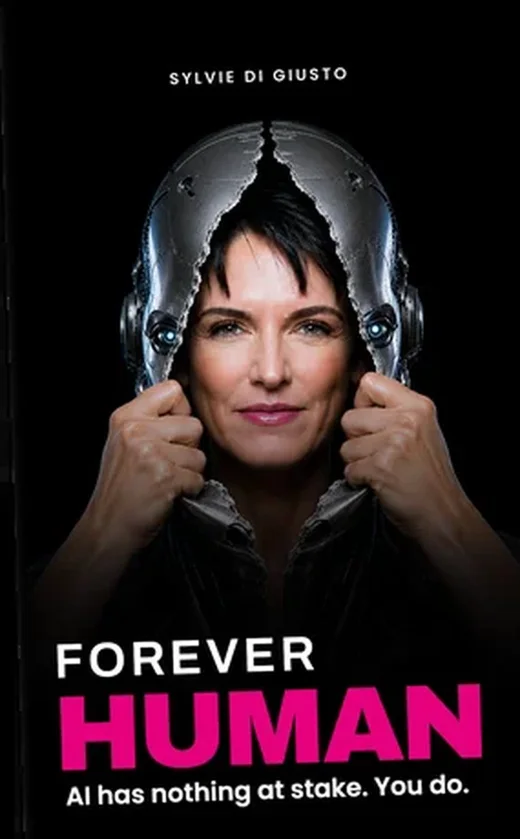
Forever Human
A dashboard can tell you engagement dropped. It cannot tell you why, or what to say on Monday morning. My book Forever Human is about the judgment, context and responsibility leaders can never hand over to a machine.