Emotional intelligence in leadership decides who follows you
Emotional intelligence in leadership decides how people experience you: whether they trust you, follow you and stay. Leaders with high EQ manage stress, own their mistakes, handle feedback and build strong relationships. Leaders with low EQ create conflict, lose morale and damage their reputation, often without noticing.
Is emotional intelligence for leaders really that important, or is it one more soft skill on a long list? I would argue it is the skill that makes every other skill visible.
It affects your performance, and it affects how others perceive you. Your reputation and professional brand rest heavily on your ability to manage yourself and your relationships, and a strong EQ opens doors to advancement and to more satisfaction in the job you already have.
KEY TAKEAWAYS
- Emotional intelligence (EQ) shapes communication, teamwork, leadership and company culture.
- Decision-makers, clients, stakeholders and investors all value professionals with high EQ.
- The five skills that matter most: self-awareness, self-regulation, motivation, empathy and social skills.
- Low EQ shows up as poor stress management, defensiveness, impulsive decisions and strained relationships.
- Ignoring your emotions does not make them go away. It can feed anxiety and depression.
- Your EQ is visible in your appearance, behavior, communication, digital presence and environment.
Why is emotional intelligence important for your organization?
Emotional intelligence, also called EQ, plays a big role in how successful an organization is. It shapes communication, teamwork, leadership and the culture as a whole. People with high EQ manage their emotions and their relationships well, which means better collaboration and higher productivity. A lack of it brings conflict and a negative work environment.
That is why decision-makers value professionals with high EQ: they handle difficult situations and keep relationships with colleagues and clients healthy. Clients and customers respond well to them too, because they understand and meet their needs with consideration and efficiency. And stakeholders and investors see the value as well, since emotionally intelligent people build a strong reputation for the organization they represent.
Which skills define emotional intelligence in leadership?
The five skills most requested of professionals at work:
- Self-awareness: recognizing and understanding your emotions and their impact on others.
- Self-regulation: managing your emotions productively instead of letting them hijack your decisions or actions.
- Motivation: being driven toward goals and passionate about reaching them.
- Empathy: seeing things from other people’s perspective and understanding their emotions, which leads to better communication and collaboration.
- Social skills: building solid relationships, influencing others and managing conflict well.
Missing these skills has a price: lower productivity, low morale, a damaged reputation and strained relationships with colleagues. For the full picture, read the benefits of emotional intelligence in the workplace.
What are the signs of low emotional intelligence in a leader?
Some indicators are hard to miss: constant anger or frustration, conflicts that never get resolved, inflexibility, a closed mind and relationships that are always strained. Others are quieter: little self-awareness, an inability to accept feedback, resistance to change.
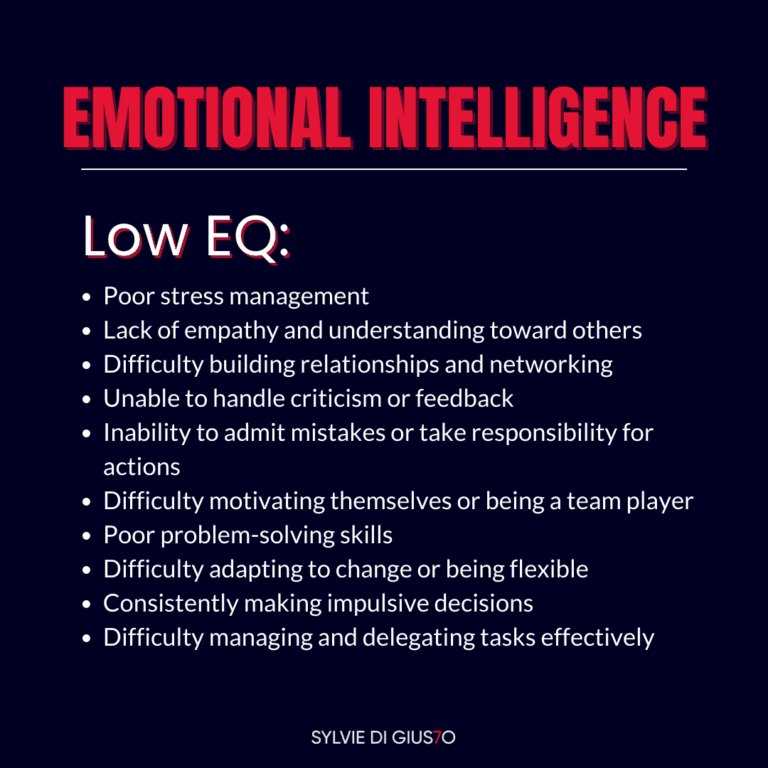
Leaders with a low EQ typically struggle with:
- poor stress management
- a lack of empathy and understanding toward others
- building relationships and networking
- handling criticism or feedback
- admitting mistakes or taking responsibility for their actions
- motivating themselves or being a team player
- solving problems
- adapting to change and staying flexible
- impulsive decisions, again and again
- managing and delegating tasks effectively
What are the signs of an emotionally intelligent leader?
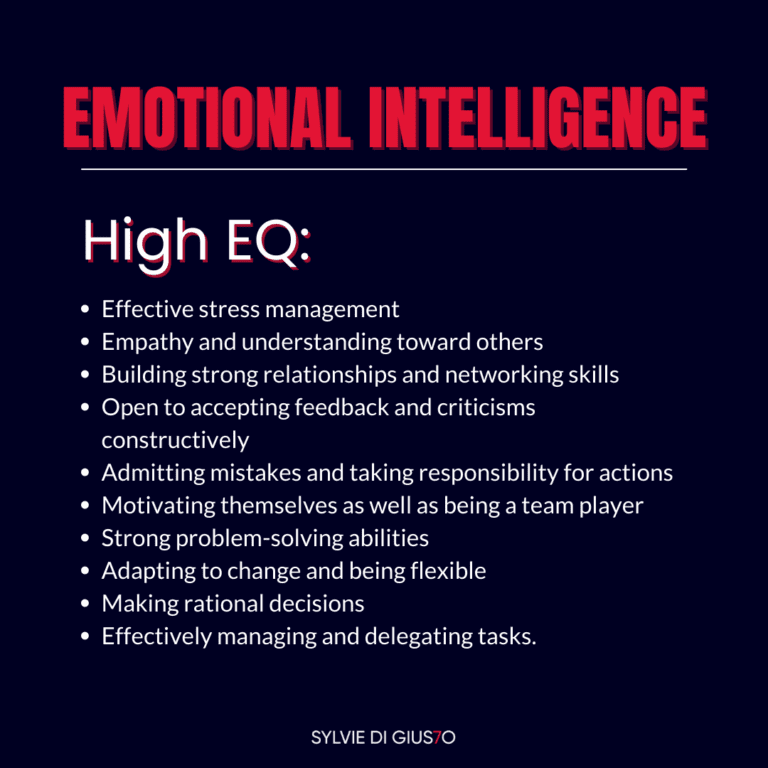
Emotionally intelligent leaders are self-aware and understand their emotions. They manage stress, show empathy, communicate well, stay motivated toward personal and professional goals, take feedback without flinching, stay open to change and make rational decisions.
Leaders with a high EQ are good at:
- managing stress effectively
- showing empathy and understanding toward others
- building strong relationships and networks
- accepting feedback and criticism constructively
- admitting mistakes and taking responsibility
- motivating themselves and being a team player
- solving problems
- adapting to change and staying flexible
- making rational decisions
- managing and delegating tasks effectively
Read the two lists side by side and you notice something. They describe the same ten situations. The difference is only in how the leader chooses to handle them.
The difference between a high EQ and a low EQ leader is not the situation. It is how they choose to handle it.
What happens if a leader lacks emotional intelligence?
Strained relationships, conflict and a negative work environment, to start with. Then the career costs: missed opportunities for advancement and less satisfaction in the job. A lack of emotional intelligence also damages your reputation and professional brand, and it makes it much harder to leave a strong first impression.
A low EQ causes problems in personal relationships too. People who struggle with it often avoid stress and ignore their emotions. Keep pushing those emotions down long enough and they can turn into mental health problems, including anxiety and depression.
At work, being unable to handle stress and emotions leads to poor decisions and lower productivity. It gets harder to build strong relationships with colleagues, conflicts multiply and promotions go to someone else. Lacking emotional intelligence hurts you and the people around you, at work and at home.
How does emotional intelligence shape first and lasting impressions?
Emotional intelligence influences how people perceive each other, in the first meeting and throughout the relationship. People with high EQ read emotions accurately, communicate effectively, handle conflict productively and make rational decisions, and all of that shows from the first minute. Over time, it is also what keeps relationships healthy and impressions positive. A low EQ does the opposite: misunderstandings, conflict and reputation damage.
To make a good impression and keep relationships healthy, apply emotional intelligence to every signal you send:
- Appearance: be mindful of how your body image, clothing, accessories, makeup, hair and even scent affect how others perceive you. Consider the environment and the culture, and how your look reflects on your reputation and professional brand.
- Behavior and communication: be aware of your body language, your tone of voice and your words. Read emotions accurately, express your own clearly, handle conflict productively and decide rationally.
- Digital communication: watch your language and tone in emails, texts and online posts. Stay professional and represent yourself appropriately while still being authentic.
- Environment: be aware of how your physical space, the office, the meeting room or simply your desk, shapes what others think of you.
We cannot control other people’s perceptions. We can, however, keep improving our emotional intelligence, and with it how we present ourselves and interact with others. That raises your chances of a positive first impression and of relationships that stay positive long after it.
Emotional intelligence runs through my keynote The Power of Choice. Leading a team or planning a leadership conference? See my keynotes for leadership audiences.
Emotional intelligence for leaders in a nutshell
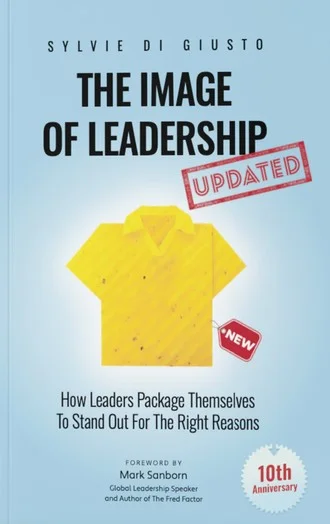
The Image of Leadership
Leaders are judged on more than their decisions. In The Image of Leadership I show how appearance, behavior, communication, digital presence and environment add up to the leader people believe they see, and how to align that image with the emotionally intelligent leader you are.
Frequently asked questions
Why is emotional intelligence important in leadership?
Because leadership happens through people. Leaders with high emotional intelligence manage stress, communicate clearly, show empathy and handle conflict and feedback well. That builds trust, morale and productivity, and it reduces turnover. Leaders with low emotional intelligence create tension and lose credibility, no matter how strong their technical skills are.
What are signs of low emotional intelligence in a leader?
Typical signs include poor stress management, little empathy, defensiveness when receiving feedback, refusing to admit mistakes, impulsive decisions, resistance to change and difficulty delegating. Teams led by such leaders often experience frequent conflict, low morale and strained relationships. The good news: every one of these signs describes a behavior, and behaviors can change.
Can a leader improve their emotional intelligence?
Yes. Emotional intelligence is a set of skills. Leaders can improve it by naming their emotions, pausing before reacting, asking for honest feedback, practicing active listening and deliberately considering how decisions affect others. Coaching and training speed up the process.
What are the five emotional intelligence skills leaders need?
The five most requested skills are self-awareness, self-regulation, motivation, empathy and social skills. Self-awareness and self-regulation help leaders manage themselves. Motivation keeps them goal-focused. Empathy and social skills help them understand their people, build relationships and resolve conflict. Together, they decide whether people follow a leader because they have to or because they want to.