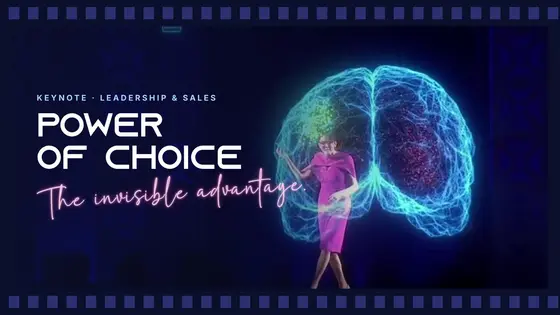
Today’s professional speaker designs experiences, not monologues
Today’s best professional speaker is an experience designer, not a monologue machine. Audiences expect to participate: interaction, co-creation, real-time relevance and moments they feel as much as hear. The speaker’s job has moved from delivering a script to designing what the room thinks, feels and does, during the keynote and long after it.
Once upon a time, a speaker could walk on stage, deliver a perfectly rehearsed talk and walk off to polite applause. The formula was predictable. Story. Lesson. Quote. Applause.
That formula has quietly expired. Audiences no longer just consume content. They take part in it. And for meeting planners, conference hosts and event professionals, that changes what you should look for when you book.
KEY TAKEAWAYS
- Speaking is shifting from scripted delivery to the design of an experience.
- Interaction and immersion are now baseline expectations, not extras.
- The strongest speakers treat their talks as frameworks with room for live moments.
- Technology belongs in the keynote only when it serves emotion and memory, never as spectacle.
- Design thinking on stage means planning what the audience feels, says and does afterwards.
Why the perfect script is dying
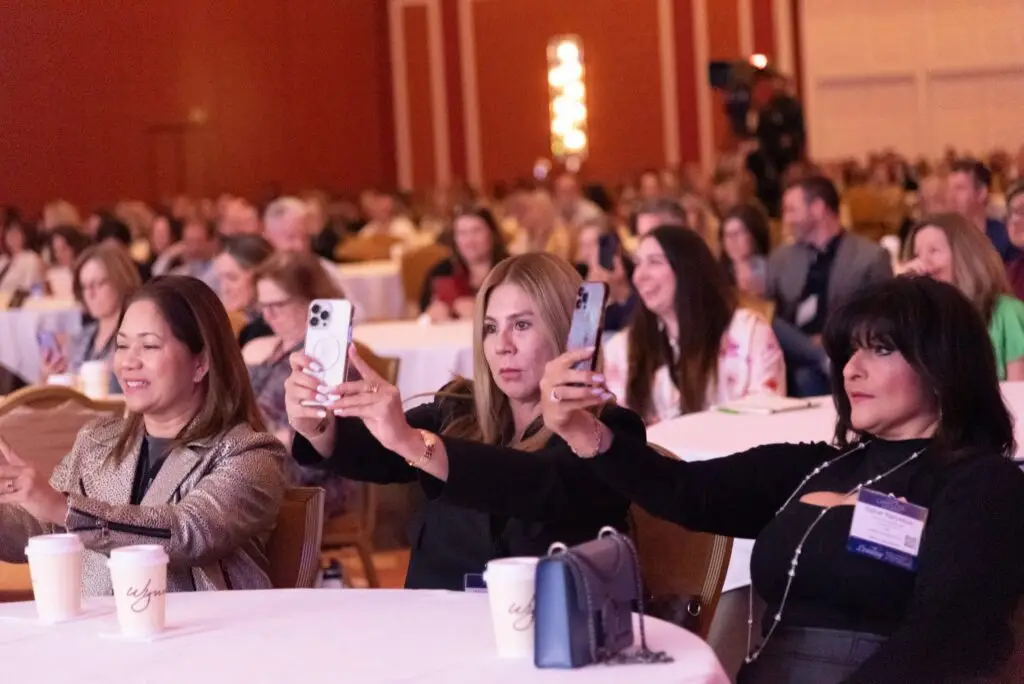
What used to set a speaker apart, a polished performance delivered word for word, is now often a liability. Audiences can smell “canned” from a mile away. It does not matter how compelling the content is if it does not feel made for this moment, this room, these people. Real mastery is making every person feel the message was crafted just for them. Because it was.
People do not want to be talked at anymore. They want to be seen, heard and challenged. They want to feel that their presence is not just appreciated but built in. A speaker who clings to a script misses the chance to create something with the room.
So the best treat their talks as frameworks, not final drafts. They leave space for live moments and for the audience to shape the direction. Less control, more connection. That takes a different skill set: reading emotional cues in real time, adjusting rhythm to the energy, and using improvisation as a tool of trust. When a speaker dares to step away from the perfect script to respond to the people in front of her, it creates a rare moment of mutual presence.
And planners notice. A speaker who can pivot, adapt and genuinely listen during a keynote does not just meet expectations. She raises the whole event.
The future of speaking is not dazzling delivery. It is meaningful human presence.
How do you turn passive listeners into active participants?
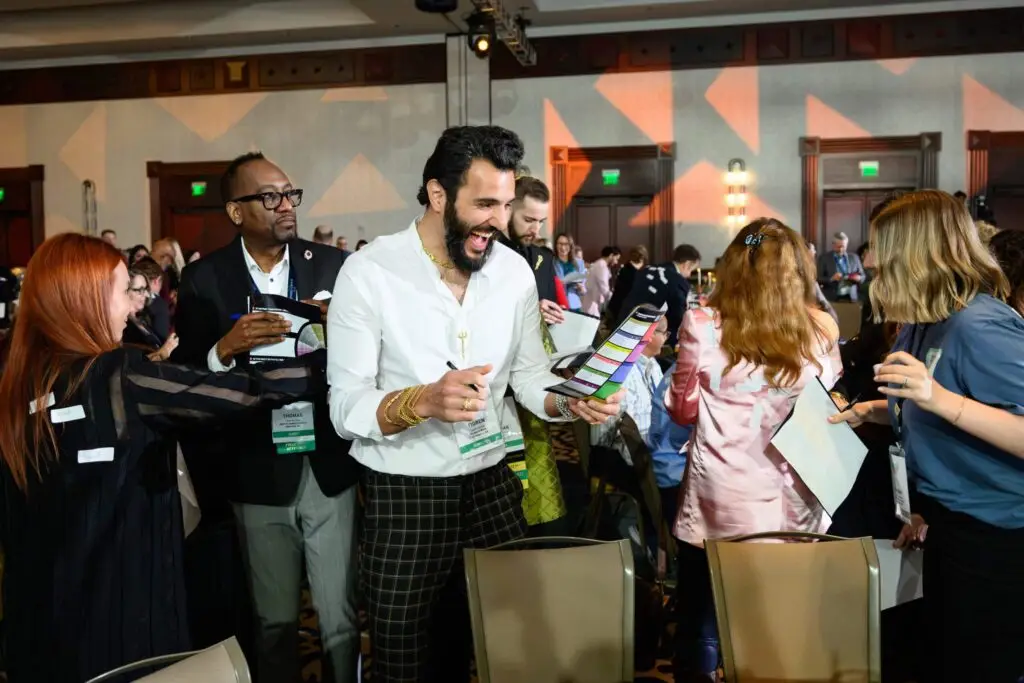
In every industry, from education to finance to hospitality, from boardrooms to ballrooms, audiences are no longer passive. Streaming, swiping, live polls, chatbots and collaboration platforms have trained people to engage, and to expect engagement in return. The bar for attention has never been higher.
Events are no exception. Through interactive exercises, live Q&A, digital whiteboards, AR and VR, gamified learning or real-time decision challenges, the audience wants a voice and a role. They want their presence to shape the outcome, not just the applause.
So a professional speaker today also has to be a skilled facilitator who reads the room, adapts on the fly and invites participation that does not feel forced. Not just a show of hands, but thoughtful frameworks: discussion prompts, tech-supported collaboration, storytelling arcs that pull people in.
It also means giving up a little control. Engagement is rarely neat. But in that messiness lies real connection, and unscripted contributions, dialogue and even disagreement make a message more relevant, not weaker. None of this is about gimmicks. It is about dignity: respecting the intelligence and attention of every person in the room by giving them something to do with it.
Attention is no longer a given. It is a currency, and interaction is how you earn it.
Where technology meets humanity
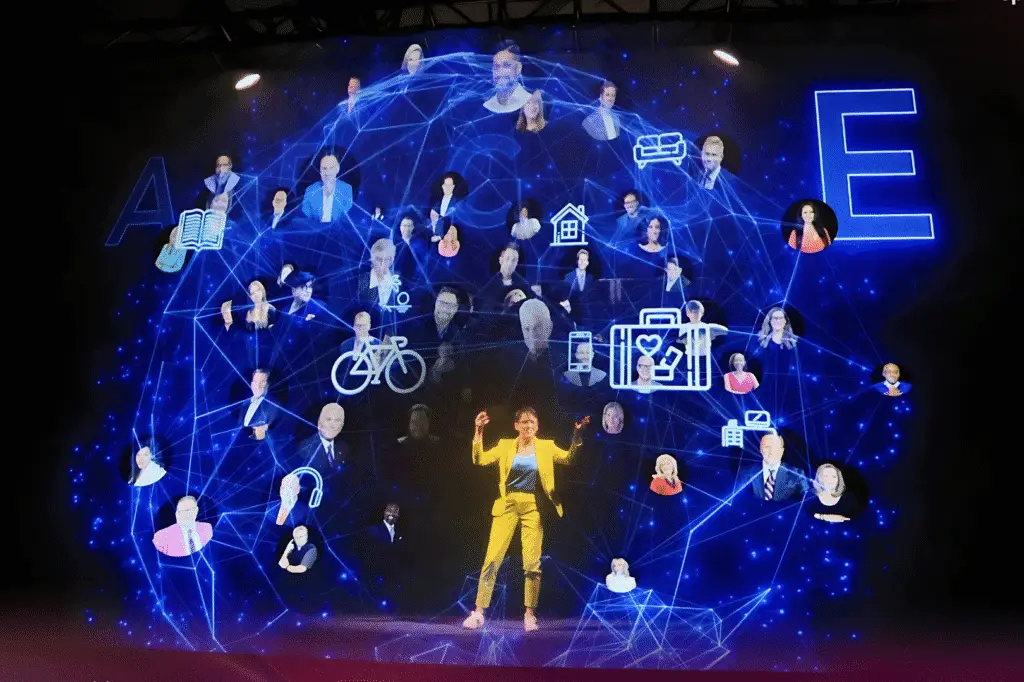
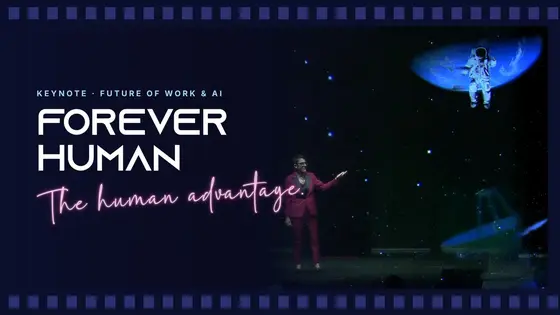
Technology is no longer just part of the production. It is part of the keynote. Immersive media, augmented visuals, holograms and live digital feedback can all support emotion, deepen understanding and create memory anchors, so the message is felt and remembered long after the lights come up.
The magic is not in the tech itself. It is in how it serves the message: a hologram that surprises, a visual sequence that connects data to emotion, a soundscape that anchors a story. Used wisely, technology even creates mental pauses where insight can land. Overused, it leads to distraction, detachment and a diluted message, because attention spans are short and cognitive overload is real.
And none of it matters without emotional intelligence. The best speakers do not hide behind technology. They use it as a bridge to human connection, as a window rather than armor, so that no matter how advanced the tools get, the experience always leads back to meaningful human impact.
The best keynotes do not rely on technology. They are enhanced by it, never eclipsed.
What does design thinking look like on stage?
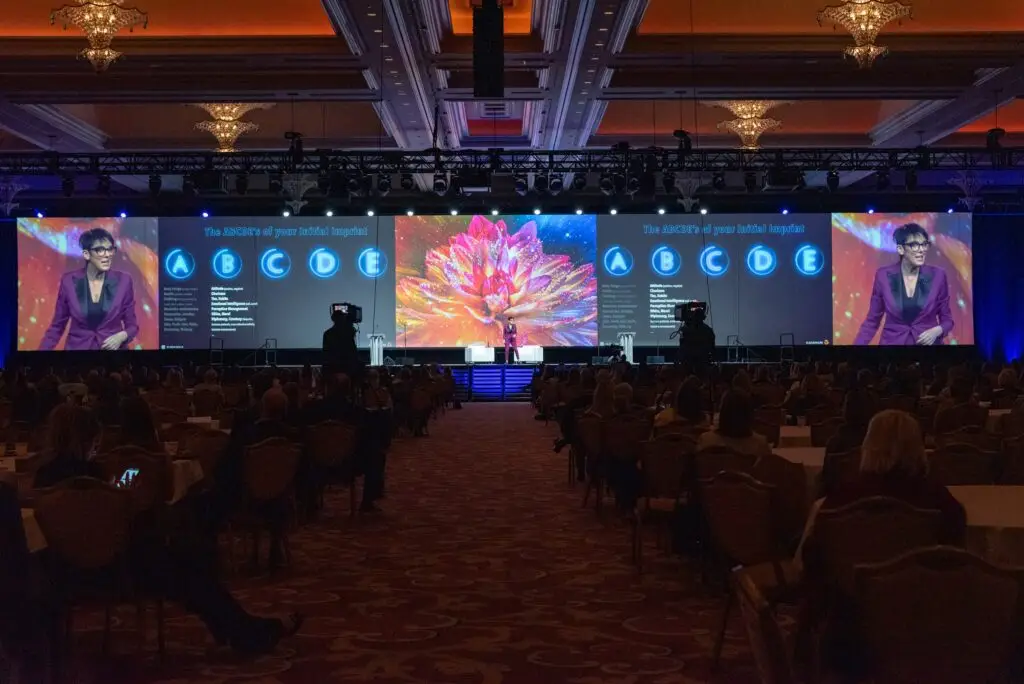
Experience designers in business apply design thinking to every step of a customer’s experience. A professional speaker can, and should, do the same. That means asking: What does the audience feel walking into the room? What do they carry in, mentally, emotionally, even physically? How should they feel forty minutes later? What will they say at the coffee break, in the ride home, in next Monday’s leadership meeting? What behavior change might show up a month or a year from now?
Speakers who think this way map the emotional arc. They choreograph each beat with purpose: the anticipation, the drop, the laugh, the shared breath of silence. They use narrative arcs, rhythm, visual anchors and pauses with precision, and they build in tension and release, collective reflection and individual revelation.
They obsess over transitions, not just between slides but between emotions, because transformation is rarely linear. It is usually many small moments adding up to clarity. They aim to transform, not just to teach, and they build the experience backwards from that goal, one deliberate choice at a time.
A true professional speaker does not just move an audience. She designs the conditions for the audience to move itself.
What this means when you hire a professional speaker
When you book a speaker today, you are not booking a voice. You are booking a moment-maker. So ask: Will this person deliver a keynote or an experience? Performer or designer? Will they speak to your audience, or shape something unforgettable with them?
Monologues are over. The microphone is now a matchstick, and the best speaker is the one who knows how to use it to light something bigger.
That is exactly how I build the 3D immersive experience: around your audience, your story and the moment you want them to remember. For more on what to look for, read whether experiential keynote speakers are the answer to event fatigue and how to find a keynote speaker.
Frequently asked questions
Can a professional speaker really tailor an experience to every audience?

Yes. An experienced speaker uses research, interviews, industry insight and real-time audience feedback to shape the keynote around that room’s goals and energy. Real customization is not swapping a slide or two. It aligns content, tone and delivery with the audience, so the keynote feels like a conversation built just for them.
How do I know if a speaker is truly interactive or just using buzzwords?

Ask how they engage the audience beyond a basic Q&A or a show of hands. A genuinely interactive speaker can describe specific tools, such as live polling, discussion prompts or tech integrations, and give examples of keynotes where audience input changed the direction. If it is all slides and a memorized script, it is not interactive.
What is the benefit of technology in a keynote?
Used with intent, technology turns a good keynote into a memorable one. Immersive visuals, audio design, holograms or live feedback can strengthen emotion, clarity and retention. The key is that the tech serves the message. If it overshadows the human connection, it distracts instead of deepening the moment.
What is an experience designer in speaking?
A speaker who plans the audience’s entire experience, not only the content: how people feel walking in, which moments create tension and release, how the audience participates, and what they say and do afterwards. The keynote is built backwards from the change the client wants to see.