Your professional reputation is built in small, daily proof
Your professional reputation is the perception others hold of you, shaped by your actions and your words over time. It is invisible yet consequential: decision-makers rely on it when they hand out trust, projects and promotions. You cannot fully control it, but you can influence it every single day.
Reputation is often treated as a measure of success or worthiness. Others largely determine it. Still, we have more control than we think. We can be intentional about how we present ourselves and the message we send, and we can defend our reputation when it is challenged.
It is also not an objective measure. It rests on other people’s opinions, and outside forces influence it easily. Consistent positive actions build a good reputation slowly. A single mistake can tarnish it quickly. And a negative reputation may be unfair or inaccurate, yet still shape someone’s career. So treat reputation as what it is: a complex, subjective verdict, never a definitive measure of your worth or ability.
KEY TAKEAWAYS
- Reputation is how others perceive you, built by what you do and say, and you can influence it even if you cannot control it.
- A strong professional reputation earns trust, gives you an edge over equally (or even better) qualified competitors and opens doors you did not know existed.
- Reputation-conscious professionals are aware of how their actions land, in person and online.
- Consistency, integrity, humility and owning your mistakes protect your reputation more than any polish.
- Twelve everyday behaviors, from punctuality to listening, reveal whether you are building your reputation on purpose.
Why does a strong professional reputation matter?
For three reasons. First, decision-makers are influenced by the opinions of others. If your reputation is strong, they are more likely to trust your judgment and give you opportunities to advance.
Second, it gives you an advantage when you compete for jobs or clients. Even if you are not the most qualified candidate, employers and clients tend to choose the person with the better reputation.
Third, it brings opportunities you would never have had otherwise. A strong reputation opens doors and helps you reach your goals. Neglect it, and you may miss out on jobs or struggle to advance. Cultivate it, and the possibilities multiply.
Reputation is not a verdict on your worth. It is the story other people tell when you are not in the room.
What does reputation-conscious mean?
When we think about reputation, we usually think about what other people think of us. But reputation is also about how we see ourselves. A reputation-conscious person is aware of their image and works to maintain a positive one. That shows in simple ways, like dressing neatly or speaking politely, and it goes deeper than that.
Reputation-conscious people are always aware of how others will perceive their actions. They are mindful of their impact and make sure they put their best foot forward.
Your online presence is often the first impression you make, which makes this awareness more critical than ever. Whether you build an online profile or post on social media, think about how others will receive your words.
Reputation consciousness is not about being perfect. It is about being conscious of your impact on the people around you.
How do you maintain a good reputation at work?
Building and keeping an excellent reputation takes effort, and it is worth it. People with solid reputations are trusted more, treated better and get more opportunities. Four habits make the biggest difference.
Be consistent
If you are known for being reliable, always follow through. If you are known as a great leader, behave in a way that inspires others every day, not only on good days. Align your actions with the image you want to project.
Don’t take shortcuts
Under pressure, cutting corners is tempting. Over time it damages your reputation. People notice that you are not as reliable or trustworthy as you seemed, and they start wondering what else you would sacrifice to save time or money.
Stay humble
Own your accomplishments and be proud of them. Just don’t let success go to your head. Nobody is perfect, and even the most successful people have room to improve. Humility keeps you from coming across as arrogant or entitled, two major red flags for any reputation.
Admit your mistakes
Everyone messes up. How you handle it is what matters. Own the error, apologize sincerely and make things right, and people will respect you, even if they were disappointed at first.
Are you a reputation-conscious professional? 12 signs
Think about how you act and what you say in different situations. Do you actively put your best self forward, or do you mostly protect the status quo? Do you consider how others might perceive your words, or do you go with your gut? Or do you avoid risks and decisions altogether because you fear what they might do to your reputation?
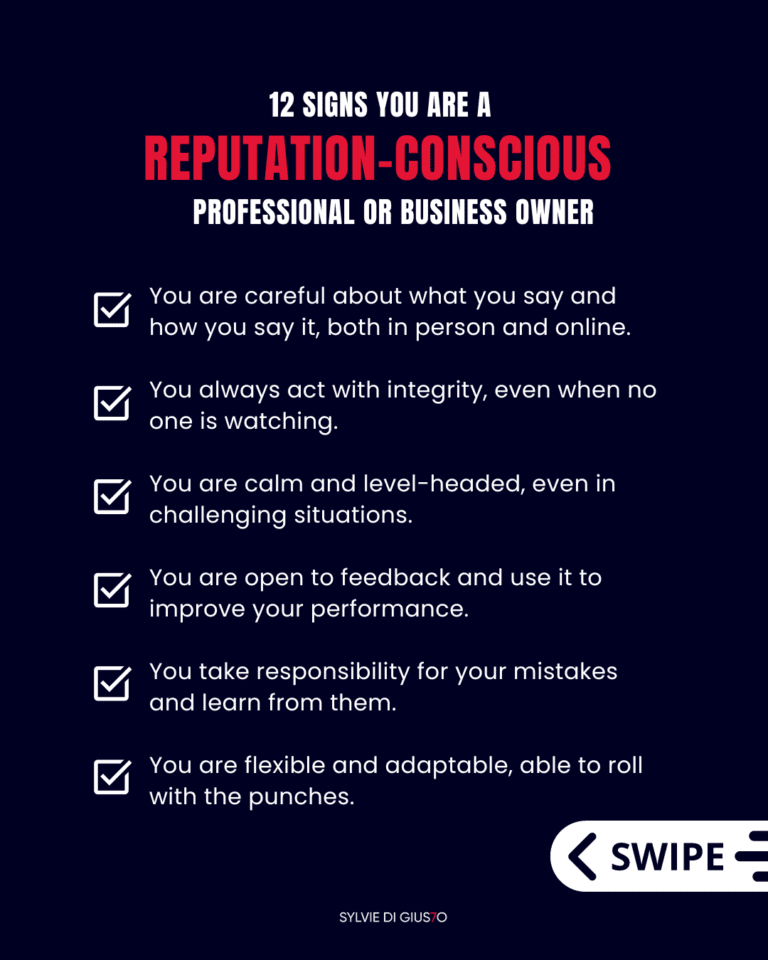
If you are ready to question yourself, here are 12 signs that you are (or are not yet) a reputation-conscious professional.
011. You are careful about what you say, in person and online
We have all had a moment when something slipped out and we instantly regretted it. It will probably happen again. You can reduce those moments by thinking before you speak, and by keeping topics that might offend others out of the conversation.
Online, be especially careful. Once something is posted, it is hard to take back. Even if you delete it, someone may have taken a screenshot. The upside: posting gives you time to think. Use it to decide whether something should go public at all.
022. You act with integrity, even when no one is watching
Integrity means doing the right thing when no one is looking: following your moral compass even when it is not easy or popular. For reputation-conscious professionals, this comes naturally.
These days, you can never be sure who is watching, or whether someone will post your actions on social media without your knowledge. So act with integrity no matter what. Pay attention to what you wear, how you behave and how you treat others, in every circumstance.
033. You stay calm and levelheaded in challenging situations
The wrong words slip out far more easily under stress, and professionals face stressful situations often. Emotional balance and control are critical. If you handle stress well, you likely already have what it takes. If you get worked up easily or make impulsive decisions, it is worth working on how you respond to pressure.
044. You are open to feedback and use it to improve
If you are visible in business, you will get feedback that is not always easy to hear. Keep two things in mind:
- Never look visibly offended. Even if you disagree, accept feedback graciously and acknowledge it. Otherwise it looks as though other people’s opinions are not a priority for you.
- Learn from it. Admitting you were wrong is hard. But if the person has a valid point, or you hear the same feedback again and again, it is time to take it seriously.
055. You take responsibility for your mistakes and learn from them
Mistakes are not failures. They are opportunities to learn. If you keep making them, in your communication or anywhere else, evaluate what goes wrong and where you can improve. To regain trust after a mistake, show that you take responsibility and do everything you can to make it right.
One mistake rarely ruins a reputation. Repeating the same mistake and refusing to learn from it does. Find the source of the problem and change what you do next time.
066. You are flexible and adaptable
The business climate keeps changing. Trends come and go, and yesterday’s technology is outdated today. Add everyday unpredictability: canceled meetings, altered plans, shifting priorities. Reputation-conscious professionals roll with the punches without letting their emotions take over. Change can be nerve-racking, but if you cannot adapt, you will be seen as difficult to work with and outdated.
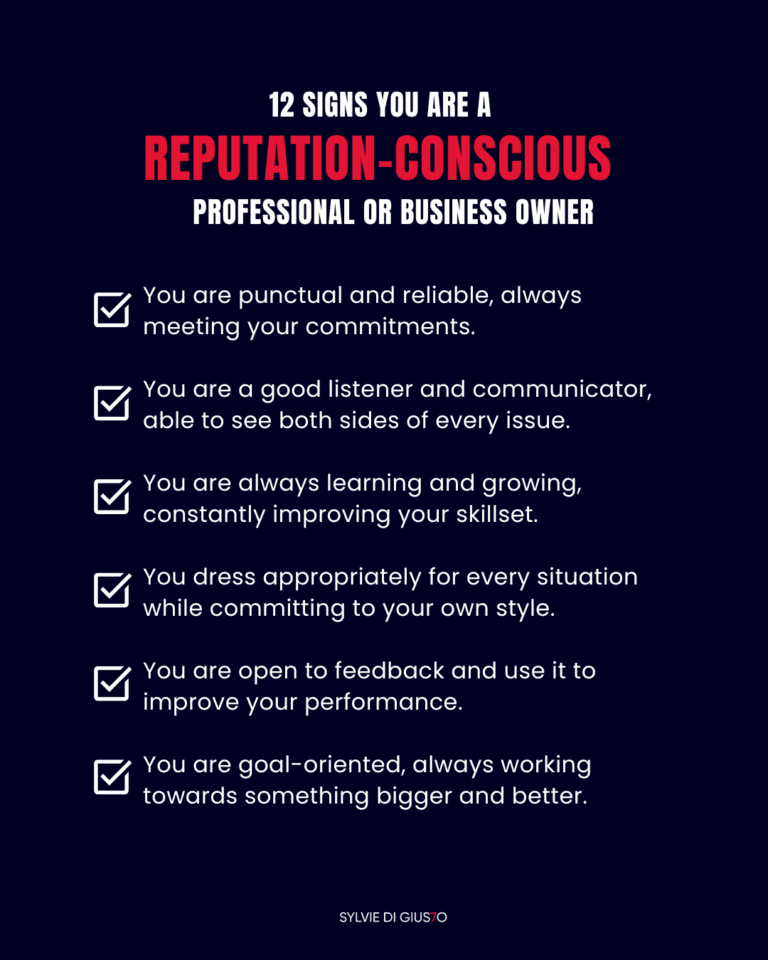
077. You are punctual and reliable
Let’s face it: the world is full of flakes. People show up late and do not come through on their commitments. To be the reliable professional others turn to and trust, meet your obligations. Be on time and do what you say you will do. In a world of flakes, that alone makes you stand out.
088. You listen well and see both sides of an issue
Listening and communication are fundamental. Poor listening leads to miscommunication, poor work and the impression that others are not a priority to you. Active listening keeps you aware of other people’s situations and needs, helps you maintain positive relationships and lets you see every side of the story. Stay open-minded to what colleagues, managers and clients say. It gets the best outcome for everyone involved.
099. You keep learning and growing
Meeting expectations is not enough. You want to exceed them, maybe even your own. Set goals and, if needed, seek training or mentoring to reach them. You will be seen as dedicated to growth, and you will become a more valuable asset to your company or team.
Imagine a client hires you, everything goes well, and they hire you again. This time they find you have made payments more convenient, or upped your game on the designs you deliver. Continuous learning improves your service every time, keeps you ahead of the competition and marks you as an innovator in your field.
1010. You dress appropriately for every situation, and stay true to your style
Dressing appropriately does not mean squeezing yourself into a cookie-cutter look. It means understanding your audience and adjusting accordingly. Meeting a corporate client calls for professional attire. At an outdoor venue or a casual office, it is fine to dress down. Either way, you show that you care about your work and the people around you. If you wonder where the line is, read about looking professional without losing your style.
1111. You are goal oriented
Doing your job is one thing. Helping yourself and others, such as your clients, reach their goals is another. Stay goal focused in every task, always working toward something bigger. Clients love goal-oriented professionals because they see the value of the work. It shows you are committed to their success, it adds trust, and it makes them far more likely to hire you again.
1212. You are consistent in your values
Brands are expected to have values. So are professionals. With clients, colleagues and managers alike, hold on to your values and act consistently. It builds trust and shows people they can count on you for quality work every time.
What does reputation mean to you?
Reputation matters in every part of life, personal and professional, so take it seriously. There are many ways to improve it, and if yours has taken a hit, do not despair. Reputations can be rebuilt. A strong one brings so many benefits that it is worth nurturing and protecting every day.
For the bigger picture, read the myths and truths of branding, image and reputation. If you want to work on yours one-on-one, have a look at my executive coaching.
What does reputation mean, in a nutshell
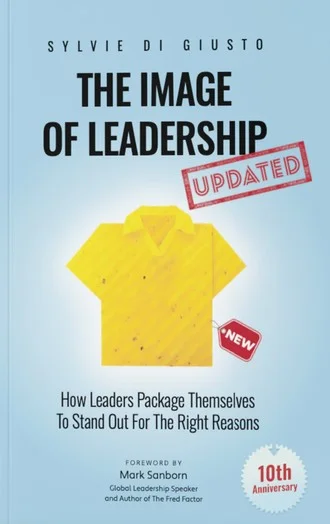
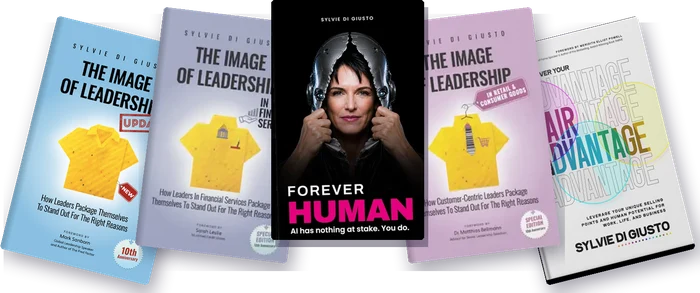
The Image of Leadership
A professional reputation is built from five dimensions people judge every day: appearance, behavior, communication, digital presence and environment. The Image of Leadership shows you how to shape each of them on purpose, with special editions for ten industries.
Frequently asked questions
What does reputation mean at work?
At work, your reputation is the shared opinion colleagues, managers and clients hold about you, based on how you behave, communicate and deliver over time. It influences who trusts you, who recommends you and who gives you opportunities. It is subjective, but it is built from very concrete everyday actions.
How do you build a good professional reputation?
Be consistent, keep your commitments, act with integrity even when no one is watching and stay humble about your success. Listen well, stay open to feedback and own your mistakes quickly. Online, think before you post. Over time, these behaviors add up to a reputation people trust.
Can you fix a damaged reputation at work?
Yes, though it takes time. Acknowledge what went wrong, apologize sincerely and make things right where you can. Then show new behavior consistently, because people need repeated evidence before they change their opinion. One mistake rarely ruins a reputation; repeating it without learning does.
What is the difference between reputation and personal brand?
Your personal brand is what you intentionally project: the message, values and image you choose. Your reputation is what others actually conclude about you based on experience. A strong professional closes the gap between the two, so what people say about you matches what you stand for.