Too much AI makes everyone sound the same
Too much AI makes you sound like everyone else. Rely on it for every email, post and message, and your communication turns generic, repetitive and emotionally flat. People notice, and they start to question not only your words but the effort behind them, which slowly erodes your credibility.
Artificial intelligence is everywhere. ChatGPT, Claude, Jasper and a long list of others now write our emails, draft our content and chew through our to-do lists. I use them too. They save time and make life easier.
But they can also cost you something: your authenticity, your personal touch and the quality of how you communicate. And that changes how you are perceived, long before anyone says a word about it.
KEY TAKEAWAYS
- AI is a fantastic helper, but overusing it strips out the personal touch that makes communication meaningful.
- Heavy reliance on AI leaves your messages sounding robotic, generic and repetitive.
- People are getting better at spotting AI text, and they read it as a lack of effort.
- How you communicate shapes how you are perceived, so overly automated content chips away at your credibility.
- Let AI handle the boring parts, and keep the parts that carry your judgment, empathy and voice.
Why do we reach for AI in the first place?
Because it makes life easier. It handles the repetitive work that eats up the day: quick emails, first drafts of reports, a round of brainstorming. It rescues us from staring at a blank screen for an hour.
And it is ridiculously easy to use. No tech genius required. Need a catchy headline? Done. Stuck on how to structure a blog post? Covered. AI is not only about speed, either. It promises consistency, keeping your tone and style on-brand (supposedly) while you juggle a million deadlines.
The catch: lean on it too hard and you lose what makes your communication yours. Instead of helping, it flattens your messages or polishes them until they no longer feel human. The danger is not the tool. It is the blind reliance on it.
AI is a great tool for solving problems, until it becomes the problem.
What gives away too much AI in your writing?
Think you can hit “generate” and nobody will notice? Think again. People are getting better at spotting AI content every month, and the clues are everywhere. Over time, overuse creates a tone that feels generic, detached and, frankly, fake. Here is what gives you away.
011. Generic phrases
The cookie-cutter lines that sound lovely at first and say very little:
- “In today’s rapidly changing world…”
- “In the ever-evolving field of…”
- “As we navigate this transformative era…”
- “The possibilities are truly endless…”
- “Now, more than ever…”
- “In the fast-paced landscape of…”
- “Harnessing the power of…”
- “Revolutionizing the way we…”
- “Holds a significant…”
- “In the modern world…”
- “At the intersection of…”
- “The next level…”
- “Casting long shadows…”
- “An unwavering commitment…”
- “A pivotal role in shaping…”
- “I’m thrilled…”
- “In conclusion…” and “Ultimately…”
- “An indelible mark…”
- “Consequently,” “furthermore,” “moreover” and “in addition to” stitching every idea together
And many, many more.
022. Repetitive patterns
AI recycles the same families of phrases, which makes you sound predictable and, worse, boring.
- “In today’s world…” / “In today’s fast-paced world…” / “In the world we live in today…” So overused they have become invisible. They set the stage and are forgotten before the curtain rises.
- “It is essential to understand that…” / “It is important to note that…” / “It is crucial to recognize that…” They sound like weight. They are filler, especially on repeat.
- “Harnessing the power of…” / “Leveraging the power of…” / “Unlocking the potential of…” Dynamic at first glance, then pure corporate brochure.
- “As we navigate…” / “As we continue to navigate…” / “As we move through…” Meant to sound forward-thinking. Read as avoiding specifics.
- “The future is bright for…” / “The future holds great promise for…” A rosy picture with no substance. Everyone wonders what exactly is so promising, and nobody tells them.
- “Driving innovation in…” / “Revolutionizing the way we…” / “Transforming how we…” The bread and butter of every innovation keynote. When everyone is revolutionizing, nothing sounds revolutionary.
- “In conclusion…” / “To sum up…” / “In summary…” Fine in theory, robotic in practice. A neon sign saying “This is the end” instead of an ending people remember.
- “Unprecedented opportunities…” / “Unparalleled possibilities…” / “Endless opportunities…” Big promises, zero details.
- “Plays a critical role in…” / “Serves as a key factor in…” / “Is essential to the success of…” Classic ways to signal importance that no longer tell anyone why something matters.
As AI tools get better, so do people at detecting when a human did not write something.
033. A lack of emotional nuance
AI content can be polished and efficient, and still stumble the moment it needs real empathy. Empathy is not about the right words. It is about timing, tone and an understanding of context that comes from lived experience.
A condolence email written by AI might say: “I’m deeply sorry for your loss. Please let me know if there’s anything I can do to help.” Appropriate words. Hollow without the specific, heartfelt touches a person would add: a shared memory, a concrete offer to help, a small story that shows you were paying attention.
Lean on AI for those moments and you end up with one-size-fits-all messages that strip out the emotional connection personal and professional relationships run on. AI can imitate encouragement. It rarely carries real motivation or care. A congratulatory note drafted by AI might settle on “Your achievement is commendable,” when the moment calls for “You crushed it, so proud of you.”
In sensitive situations, that lack of nuance leaves people feeling undervalued or unheard. AI can copy the structure of empathy. It cannot copy the soul behind it. And once people pick up on the signs, they stop questioning just your words and start questioning your effort.
How does too much AI change the way people see you?
It will not surprise you to hear this from me: perception is everything. How people judge your credibility, your professionalism and your personality is shaped by how you communicate. Every email, every presentation, every text tells people who you are.
When your communication feels robotic or automated, you risk losing trust and respect, often without realizing it. Overusing AI can make you come across as:
- Inauthentic: people feel like just another name on a list.
- Lazy: copy-pasted words signal you did not bother.
- Disconnected: a wall goes up between you and the reader, and your messages feel cold.
- Predictable: once you sound like a broken record, nobody listens to the song.
- Tone-deaf: AI misses the register, making a serious email too casual or a casual one too stiff.
- Confusing: without clarity and nuance, people are left scratching their heads.
- Forgettable: canned communication is hard to connect with and harder to remember.
If perception shapes reality, what reality are you creating when your communication feels robotic? I explore the same question from another angle in first impressions and AI.
How do you use AI without losing your voice?
AI is not the enemy. It is a tool, and it works best when you use it on purpose. Here is how to keep your voice, your personal touch and your critical thinking intact.
- Use it as a springboard. Let AI help you brainstorm or organize your thoughts, then take control of the final product.
- Edit and refine. Treat AI output as a rough draft, never the finished piece. Adjust the tone and add your own touches.
- Lean into context. Personal details and small anecdotes make a message feel tailored and genuine.
- Ditch the clichés. Cut the phrases that scream “AI wrote this” and write the way you actually talk.
- Check the tone. Before you hit send, ask: does this sound like me? If not, rework it until it does.
- Personalize your settings. Many platforms let you set tone and style, and even add a list of phrases never to use.
Balance AI’s efficiency with your own creativity and your communication stays polished without losing its human edge. When AI adds to your voice, it is powerful. When it replaces it, you lose.
Is AI the problem, or how much we hand over?
AI is not going anywhere, and that is a good thing. But rely on it for everything and you risk losing the very thing that makes your communication meaningful: your humanity.
People connect with effort, authenticity and personality. AI can enhance your voice. It cannot replace it. So use it to save time, spark ideas and filter overwhelming amounts of information, and then bring your own perspective to the table. The best way to stand out is still to be unapologetically human.
And if you are worried about losing your job to AI, here is my take: you only need to worry if you let it do the parts of your job that only a human should do. In a world full of tools, the greatest one is still you.
What does the research say?
- Sciety (2024): The AI-authorship effect
- Springer Nature Link (2024): Negotiating the authenticity of AI
- Cornell, arXiv (2023): Do you trust ChatGPT?
- The Atlantic: My deepest condolences. Signed, ChatGPT
- MIT Technology Review: How AI-generated text is poisoning the internet
- WIRED: To fight AI search spam, prioritize real human voices
This article is part of my series on AI and the human edge. For the full picture, read artificial intelligence versus human intelligence, or see why authenticity now beats perfection.
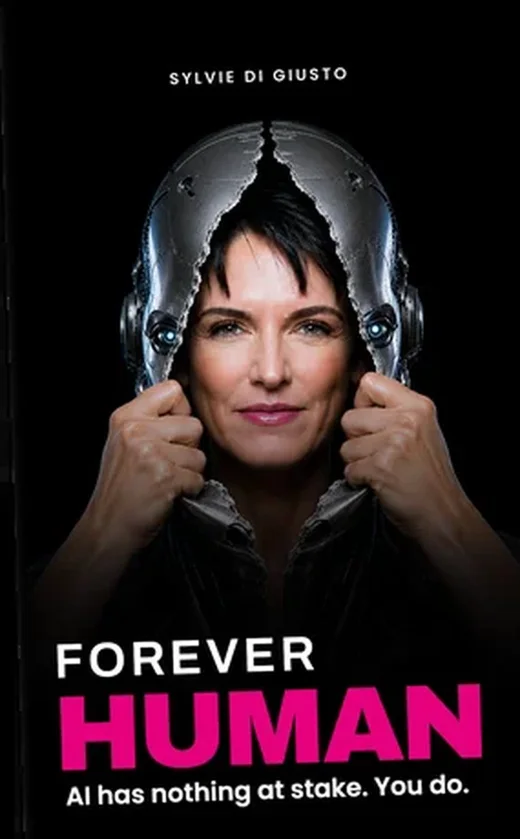
Forever Human
The empathy, timing and judgment this article is about are exactly what I mean by staying human on purpose. My book Forever Human shows where AI helps you and where it should never speak for you.
Frequently asked questions
What are the signs I am relying on AI too much?
Your emails, posts and messages start sounding alike, generic phrases creep in, and people say your tone feels off or impersonal. Responses get less warm than they used to be. And if you send AI output without reviewing or adjusting it, it is time to step back and reassess.
Can people tell when my content is written by AI?
Increasingly, yes. AI text often relies on repetitive phrases, overly smooth transitions and little emotional depth. Readers may not consciously identify it as AI, but they sense something is off: the tone does not fit the context, or it feels too polished. Personalize and edit before you hit send.
Can overreliance on AI hurt my creative thinking?
It can. If AI always delivers the ideas, you stop exercising your own creative muscles. AI is useful for brainstorming and sparking inspiration, but creativity grows through exploration, experimenting and your own judgment. Use AI to start the thinking, never to finish it for you.
Does overusing AI affect relationships with clients and colleagues?
Yes. People value effort and authenticity, especially in professional relationships. When your messages feel automated or generic, clients and colleagues can read it as a lack of interest. Over time that chips away at trust, so keep the personal, caring parts of your communication in your own hands.