First impressions can be misleading, in both directions
Yes, first impressions can be misleading. Some people work hard to fake a good one, others send inconsistent signals without knowing it, and the person judging brings their own biases into the room. That is why a first impression is a starting point, never the full picture of who someone is.
You would never rely on something as superficial as a first impression to judge people. Would you?
I am sure you have seen it happen. You hired someone who shone in the interview and turned out to be a completely different person day to day. Or the opposite: a new colleague joined your project team, your first impression was far from good, and today you genuinely enjoy working together. So my short answer is yes.
Or imagine you met someone at an event who gave you such a good feeling that you hired them, only to discover later they were unqualified or untrustworthy. What happened? There are two options.
KEY TAKEAWAYS
- Some people intentionally engineer a great first impression, and the disappointment comes later.
- Others unintentionally send inconsistent signals because they do not care or do not know better.
- The receiver matters as much as the sender: our own biases shape what we think we see.
- “First impression traps” are the automatic judgments we trust far too much.
- When who you are and how you come across match, people read you right the first time.
Misleading first impressions: two reasons they happen
Intentional
People often work very hard to make a good first impression. And yes, that can give us a false sense of who someone is.
Let’s face it: in a job interview or a sales meeting, we all put our best face forward. Someone who is very self-aware and has learned how to look more trustworthy, more reliable, more anything, can imprint that impression on you on purpose. The good news? People who fake their way through a first impression end up disappointing those who trusted them even more, the moment those people realize they were tricked.
Unintentional
Others simply do not care, or do not know better. They have no idea what their appearance, behavior or communication signals to others, so they send inconsistent and possibly wrong messages. Or they do not know there are ways to show their best, true self from the start.
Sometimes it works out for them, sometimes it does not. Sometimes the right message lands, sometimes it misses. And that makes it hard for you to grasp the information you need to decide whether you can trust them.
It is not only about the sender of the signals. It is also about the receiver. You.
Why first impressions can be misleading on your side too
When we form an opinion about someone, dozens of factors influence us. When we try to figure out what is true or false about others, we cannot step completely outside ourselves.
First impression traps
In many of my posts and videos on my channel, I talk about the unconscious biases that shape how others think about us. And of course you, I and everyone else are biased too. Most of us are overconfident in our opinions once they are formed. We do not realize how risky it is to rely on automatic judgments that often stem from associations stored in our memory.
I call them first impression traps: factors that heavily influence how we perceive someone and that can be completely misleading.
First impression intelligence: how to make yours accurate
The truth is, most of us want to leave a good and lasting impression. We want people to work with us, trust us, befriend us, buy from us, hire us, and see us as confident, trustworthy, kind or smart. We want to be an asset. We want to be remembered for the right reasons, not for things we never took the time to consider.
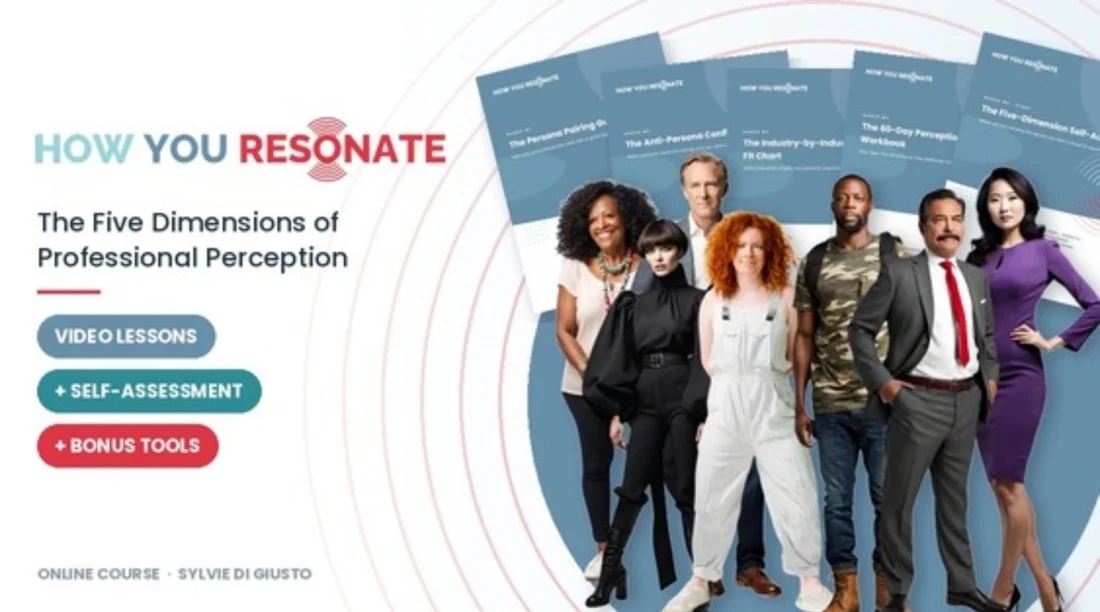
Often it comes down to understanding what your impression is saying to others and adjusting it until it says exactly what you mean, and keeps saying it. That is why I created my course How You Resonate: it shows you which signals you send to the world and whether they might be misleading too.
My goal is to help you take control of how you are perceived and make it work in your favor. When you shape the best version of you, inside and out, making the right impression becomes easy every single time. And you attract people who do the same.
Want to go further? Learn how to read people without falling into the traps, find out how long it takes to form a first impression, and see what to do if you made a bad one.

How You Resonate
Misleading impressions start with signals nobody chose on purpose. My online course takes you through the five dimensions people read and the seven personas they assign, so what people conclude about you finally matches who you are.
Frequently asked questions
Are first impressions accurate?
Sometimes, but not reliably. People can deliberately engineer a great first impression, others send inconsistent signals by accident, and the person judging brings their own mood and unconscious biases. A first impression is a useful starting point, but it should be tested against how someone actually behaves over time.
Why are first impressions often wrong?
Because they rely on shortcuts. Our brains judge in seconds using associations stored in memory, and we tend to be overconfident in those quick opinions. Add someone who is performing for the moment, or someone who has no idea what signals they send, and the picture can be far from reality.
What is a first impression trap?
It is my term for the factors that heavily influence how we perceive someone and can mislead us, such as unconscious biases, past experiences and associations we carry. We fall into them when we trust our automatic judgment without questioning it.
How can I make sure my first impression is not misleading?
Close the gap between who you are and how you come across. Look at what your appearance, behavior, communication and digital footprint signal, ask for honest feedback, and adjust whatever sends a message you do not mean. Consistency across all of them makes you easy to read correctly.