Brand vs reputation: one you project, one you earn
Brand vs reputation: your brand is what makes you unique and what you deliberately project. Your reputation is what others conclude and say about you, increasingly in public, online. Your image is everything people see, hear and experience of you. All three, plus perception, visibility and standing out, have to tell the same story.
A strong professional identity has six building blocks: branding, image, reputation, perception, visibility and standing out. As a business person, you need to develop every one of them.
The problem is that most people mix them up. There are plenty of myths around, and they lead to a lot of logo redesigns that fix nothing. So let’s set the record straight.
KEY TAKEAWAYS
- Branding is not your logo. It is what makes you unique, and every visual element should express it.
- You will never hear what people say behind your back, but much of your reputation now sits in reviews and comments you can answer.
- Image is far more than appearance: it includes how you speak, move and where you meet people.
- Perception is not one view. It is the sum of everyone’s emotional reactions to every contact with you.
- Standing out is not only about looks. It is also about what you do.
- Visibility means being top of mind and easy to find when someone needs what you offer.
Branding: is it your logo?
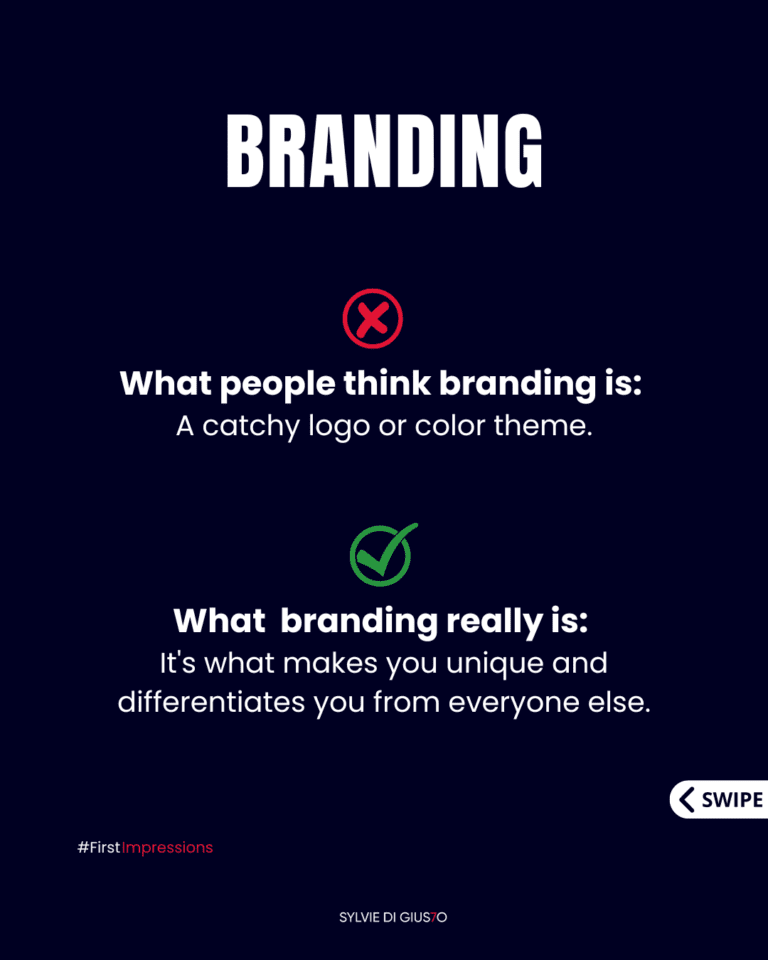
The myth: branding is logos, color schemes, web design, social media, marketing materials, mascots.
The truth: those are the elements of branding. They are not branding. Branding is what makes you unique and sets you apart from everyone else, and the elements exist to express it. So they need to be cohesive, and they need to show your personality.
Pair a modern logo with a gothic website, a traditional color palette and childlike images, and you will not present a strong identity. You will present a group project. Think about what you and your brand stand for, then let it shine through in every element.
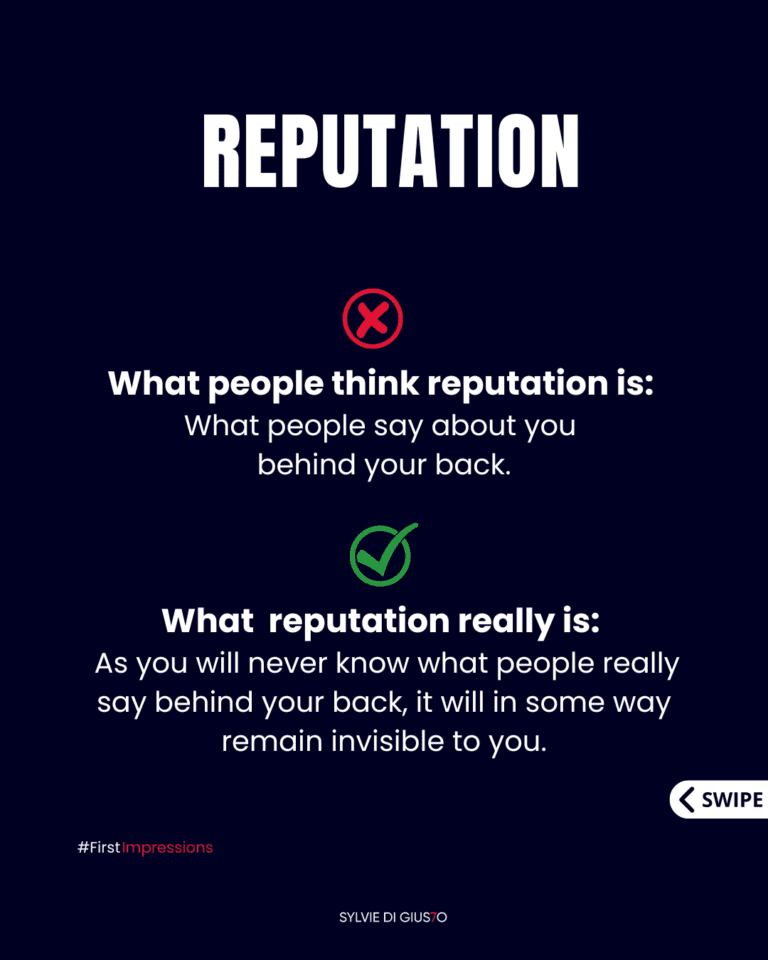
Reputation: is it what people say behind your back?
The myth: your reputation is what people say about you when you leave the room.
The truth: you will never know what people say behind your back. So start with what you can see. Your brand identity is a big part of your reputation, and the good news is that you control it, which means you decide the image you project.
The other part of your reputation is what people say about you, and thanks to technology, most of it is right in front of you: online reviews, social media comments, press coverage.
You may feel you have little control over that part. You have more than you think. When you see negative commentary, respond as soon as possible, before things escalate. Get a bad review, or a good one? Respond. It shows the client their feedback matters and that you are doing something with it. And if a crisis hits, take charge early so you can limit the damage. More on what reputation means for you at work.
Image: is it only what people see?
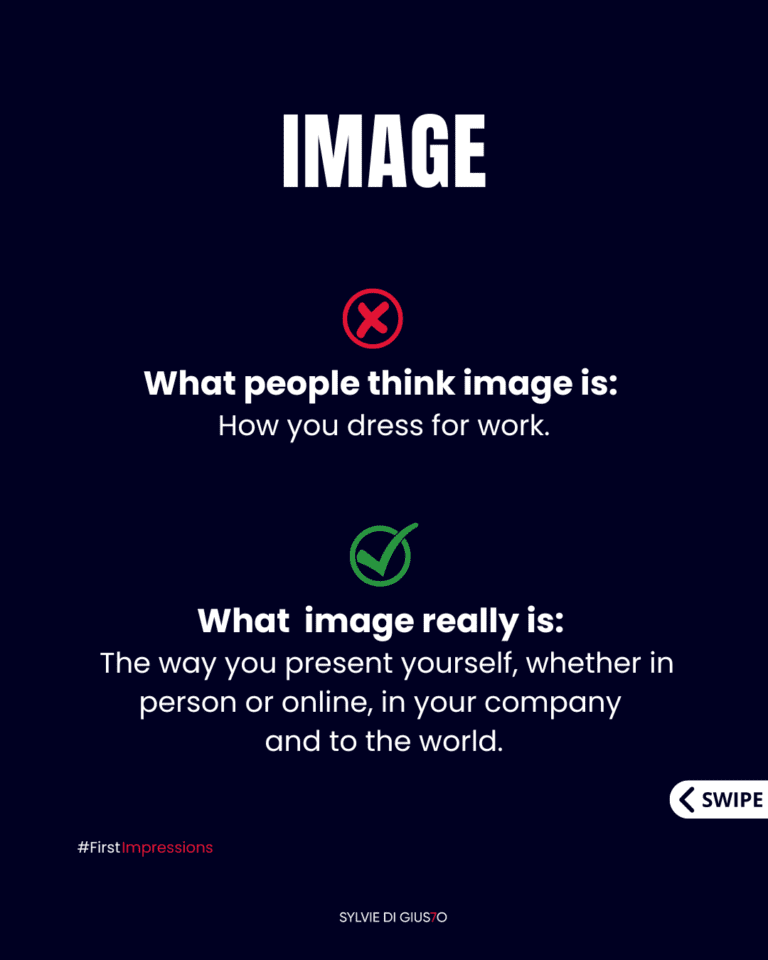
The myth: image is appearance. Clothes, hair, the general look.
The truth: image shows up in everything you do. It includes the way you speak, your mannerisms and your body language. Your professional image also includes your branding elements and your environment: your office, or the place where you choose to meet someone, becomes part of how you are seen.
Your image should always put your best foot forward, so assess it honestly and improve where needed. Some people think appearance does not matter. A professional outfit and a good haircut still go a long way. Keep your office space in good shape, and when you meet someone elsewhere, choose a place that represents you well.
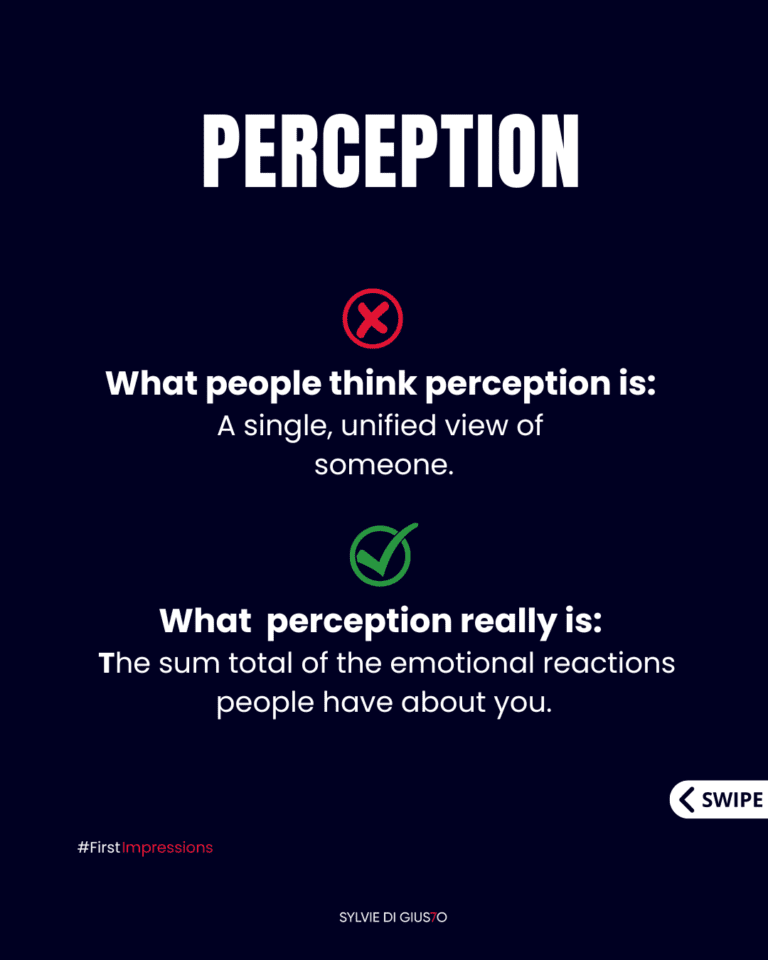
Perception: is it one single opinion?
The myth: perception is one unified view people have of you.
The truth: perception is how you come across to other people, and it is the sum of all their emotional reactions. It is not one-dimensional. Someone who meets you once reacts to what you wear, what you say, your body language and more. Others see you several times and also interact with your brand and its elements, and every one of those contacts adds to the picture.
That is why consistency matters so much. Send one unified message about what you stand for. If you support a cause, the environment for example, stay true to it: wear eco-friendly products and use eco-friendly processes in your manufacturing.
Fail to do so and it can be extremely damaging. People start to question your transparency, and they lose faith in your brand.
Perception is not one opinion. It is the sum of every reaction to every contact people have with you.
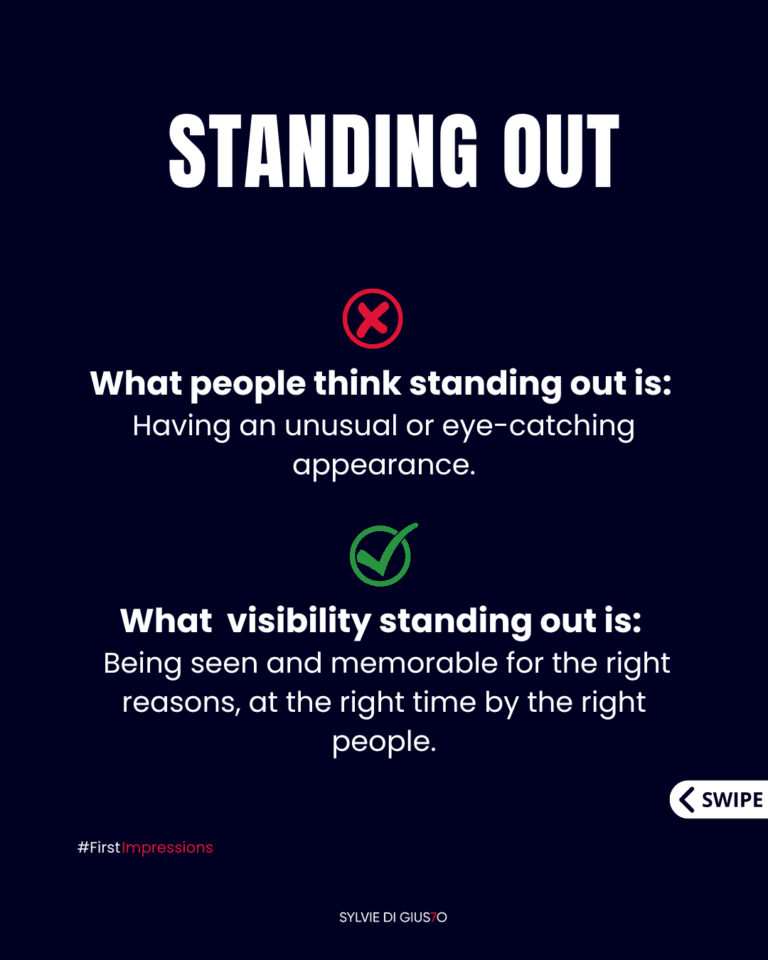
Standing out: is it about an eye-catching look?
The myth: standing out means looking different.
The truth: an eye-catching look works, no question. Wear a metallic green leather dress and you will be noticed. Put metallic green packaging on your products and they will be noticed on the shelf.
But standing out is also about what you do. Rosa Parks stood out when she refused to give up her seat on the bus. Greta Thunberg stood out when she skipped school to protest in front of the Swedish Parliament, calling for climate action.
Those are acts of bravery few of us will match in a lifetime. There are still many ways to make yourself and your company stand out: support a cause, launch a product nobody else has, design a revolutionary campaign, and so much more.
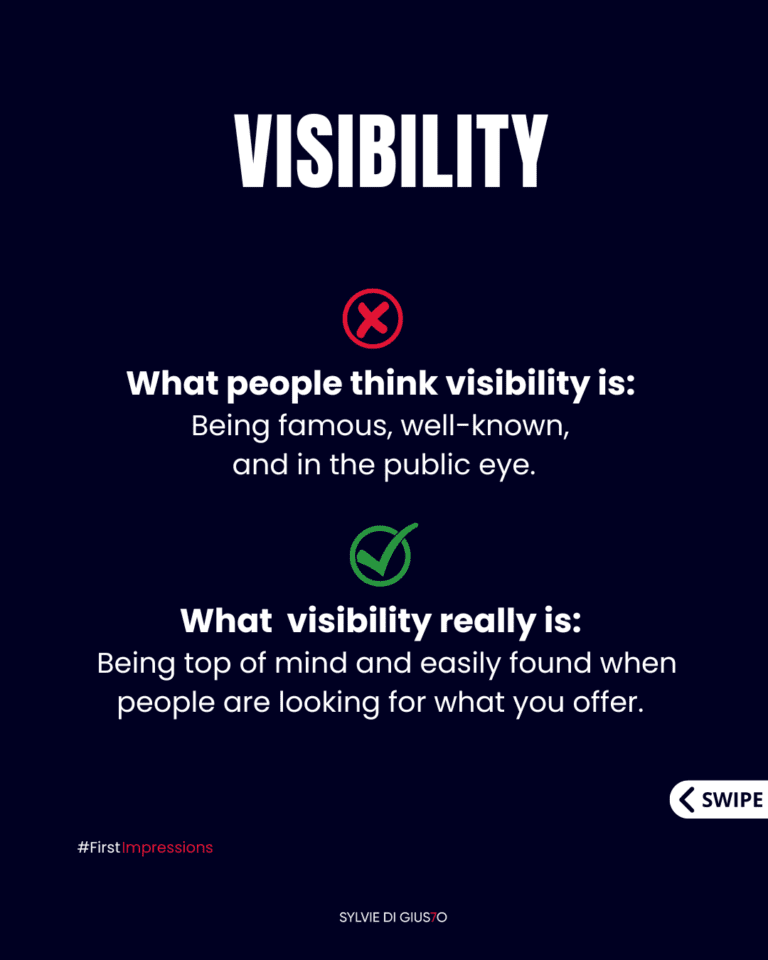
Visibility: does it mean being famous?
The myth: visibility means being famous, well known, in the public eye.
The truth: that is not wrong. But in business, visibility means being top of mind and easy to find when people look for what you offer.
To increase it, make your brand as visible as possible: build attractive social media accounts, post on them regularly and wisely, and offer several ways for people who need you to reach you.
Brand vs reputation vs image: why you need all six
A strong professional identity needs branding, reputation, image, perception, standing out and visibility, working together. Now that you know what each one really means, you can build a plan that covers all of them instead of polishing one and neglecting the rest.
Want to work on it one-on-one? That is exactly what my executive coaching is for.
The myths and truths about branding, image and reputation in a nutshell
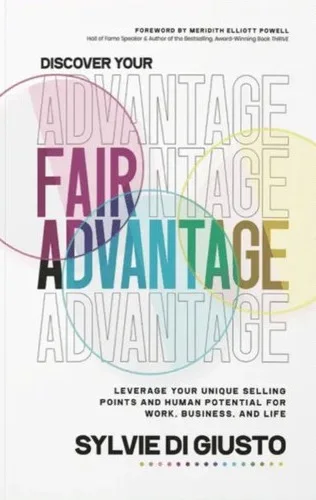
Discover Your Fair Advantage
Branding starts with knowing what makes you unique. My book Discover Your Fair Advantage walks you through hundreds of questions to find your unique selling points and turn them into a personal brand people remember for the right reasons.
Frequently asked questions
What is the difference between brand and reputation?
Your brand is what you deliberately project: what makes you unique, expressed through every visual and verbal element. Your reputation is what others conclude and say about you based on their experiences, including reviews, comments and press. You control your brand directly. You influence your reputation by how consistently you live up to it.
What is the difference between image and reputation?
Your image is everything people see, hear and experience of you right now: appearance, speech, body language, environment and branding. Your reputation forms over time from those impressions and from what others share about you. A strong image repeated consistently builds a strong reputation.
Can you control your reputation?
Partly. You will never hear what people say behind your back, but much of your reputation now lives online in reviews, comments and media coverage. Responding quickly and respectfully to both negative and positive feedback, and taking charge early in a crisis, gives you far more influence than most people assume.
Why does consistency matter for your brand?
Because people form their perception from many contacts with you, not just one. If your appearance, behavior, messages and actions contradict each other, people start to question your transparency. A brand that claims to support a cause but ignores it in practice loses trust quickly.