What not to post on social media if your career matters
What not to post on social media: politics and religion, negativity, drama, threats, irrelevant viral content, inappropriate photos, sloppy spelling, anything self-incriminating, expensive purchases, unsolicited or unproven advice, constant requests for advice, scammy giveaways and inside information. Each one costs you trust, and not only yours.
We have all heard “what happens in Vegas, stays in Vegas.” Social media works the other way around. What happens there stays there, and it can come back to haunt you years later.
Oversharing or posting questionable content has consequences far beyond your own profile. Before we get to the list, let’s look at who pays the price.
KEY TAKEAWAYS
- There is no such thing as a private post. Assume everything you share is public and permanent.
- A careless post affects your family, your team and your company, not just you.
- Political, negative, gossipy or self-incriminating posts make decision-makers question your judgment.
- Even small things, like typos or recycled viral memes, chip away at your credibility.
- Use social media on purpose: share expertise, build your network and shape a digital footprint that supports your goals.
Who pays the price for a bad post?
You
Your social media blunders are likely to stay part of your digital footprint for as long as the internet exists. That can mean:
- Damaged relationships with colleagues and clients
- Lost trust from stakeholders, supervisors and executives
- A weakened position or reputation in your industry
- Being passed over for promotions or leadership roles
- A poor impression on future employers
- Even legal consequences
Your family
Think about how your online behavior reflects on the people closest to you. Your parents, siblings and children may not want to be associated with offensive or inappropriate posts. The fallout can include embarrassment, lost respect, strained family relationships, exclusion from social circles, family members missing out on job opportunities, and even online harassment aimed at them.
Your team
One unprofessional post can make a whole team, department or organization look careless. It can jeopardize team success, lower morale, damage the company’s reputation, cost the trust of clients, and lose business and profits.
Your company
As an employee, you represent yourself, your team and your organization as a whole. A single slip-up can hurt the company’s standing in the market: lost business, damaged relationships with clients and partners, doubts about its values and leadership, weaker recruiting, lower morale and possibly legal trouble.
There is no such thing as a private post on social media.
14 things not to post on social media
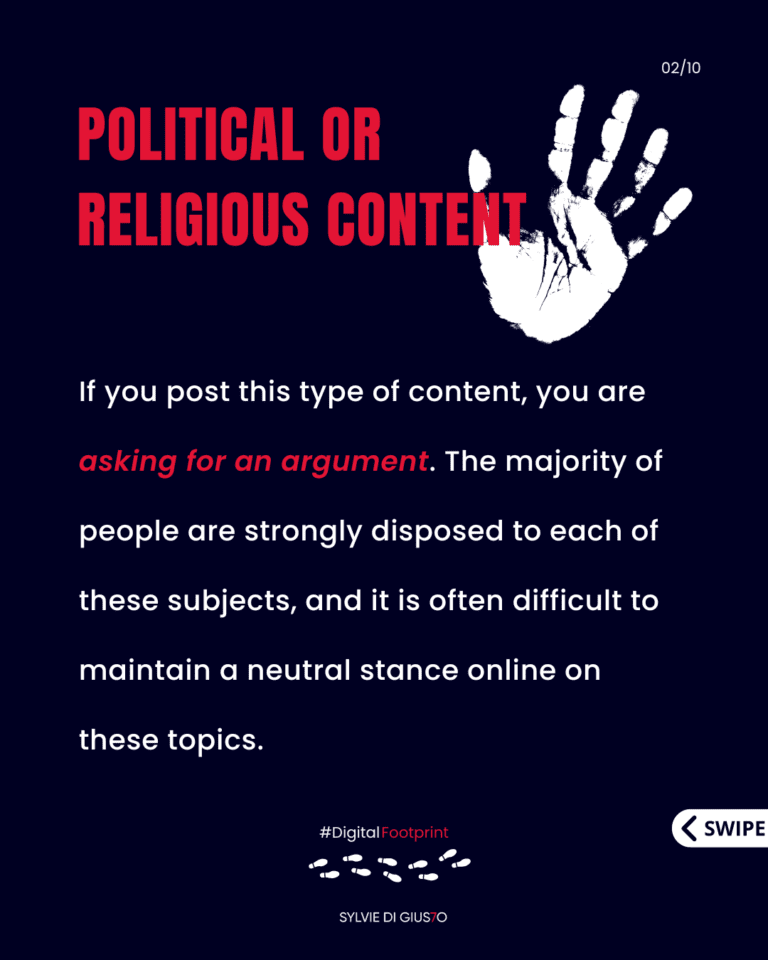
011. Political and religious content
Post it and you are asking for an argument. Most people feel strongly about both topics, staying neutral online is nearly impossible, and your beliefs may alienate people who will then see you in a negative light.
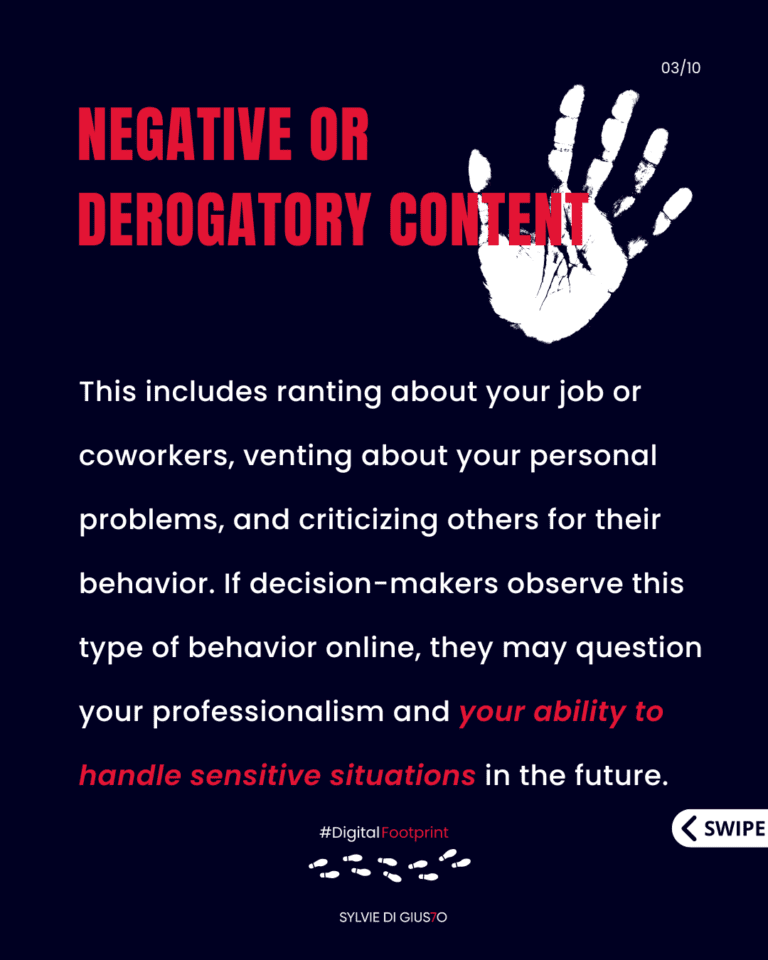
022. Negative or derogatory content
Post negativity and you will be seen negatively. It is that simple. Ranting about your job or coworkers, venting about personal problems or criticizing others makes supervisors and clients question your professionalism and how you will handle sensitive situations.
033. Drama or gossip
Sharing drama is tempting. The people who make decisions about you, your supervisors or your clients, may read it as unprofessional or unreliable.
044. Threats or harassment
Never acceptable, and it can have legal consequences. Posts are easy to screenshot and share, which makes harmful content almost impossible to take back.
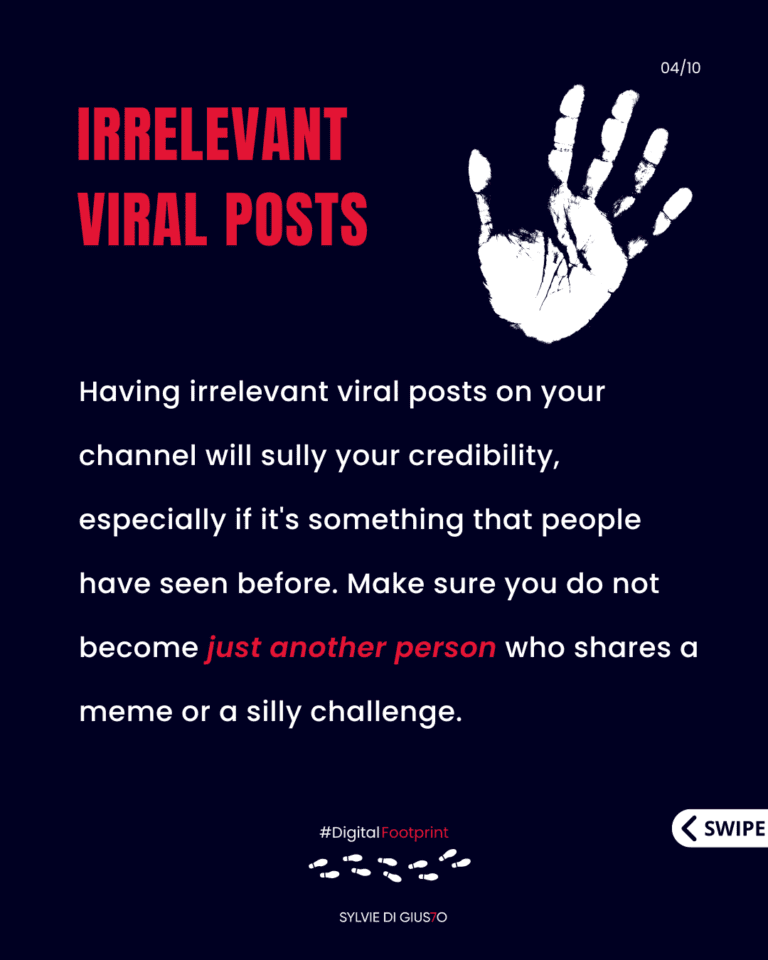
055. Irrelevant viral posts
Recycled memes and silly challenges sully your credibility, especially when everyone has seen them already. Do not become just another person sharing the same joke. Post content that fits your professional brand.
066. Inappropriate photos or language
They read as unprofessional and hurt your reputation in the short and the long run. Potential employers will see them as a red flag. (Even what you wear in an otherwise harmless photo sends signals. More on that in too casual for the workplace.)
077. Posts with spelling and grammar errors
Check before you hit publish. Sloppy spelling and grammar suggest you lack attention to detail, and people judge you for it.
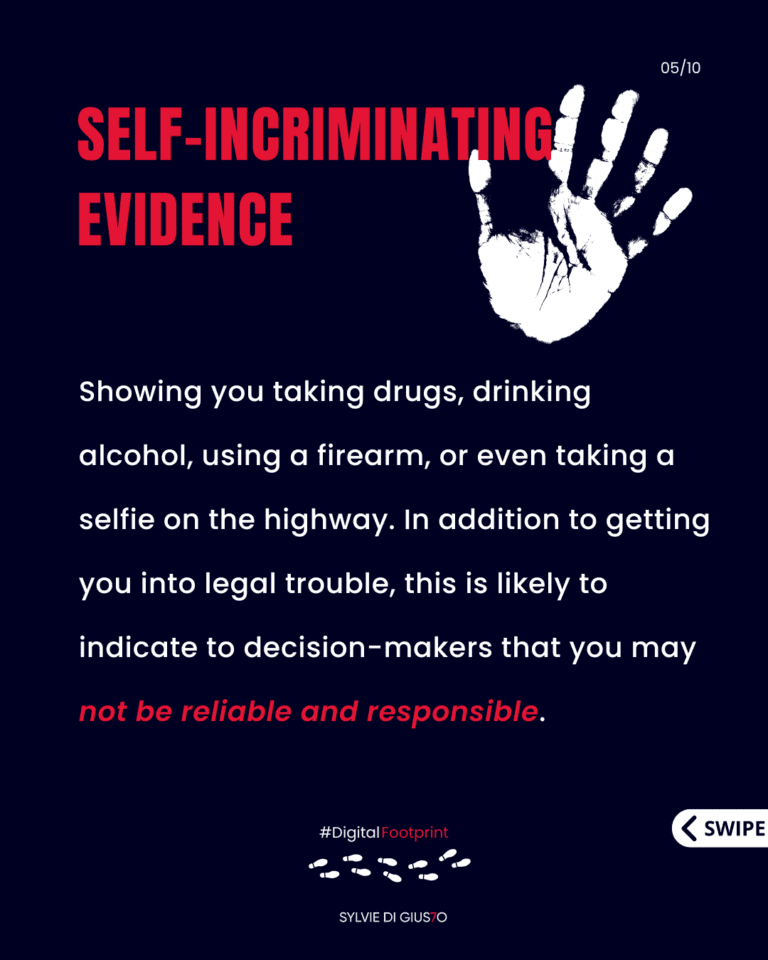
088. Self-incriminating evidence
Videos or photos of you taking drugs, drinking, handling a firearm or snapping a selfie while driving can get you into legal trouble. They also tell decision-makers you may not be reliable or responsible.
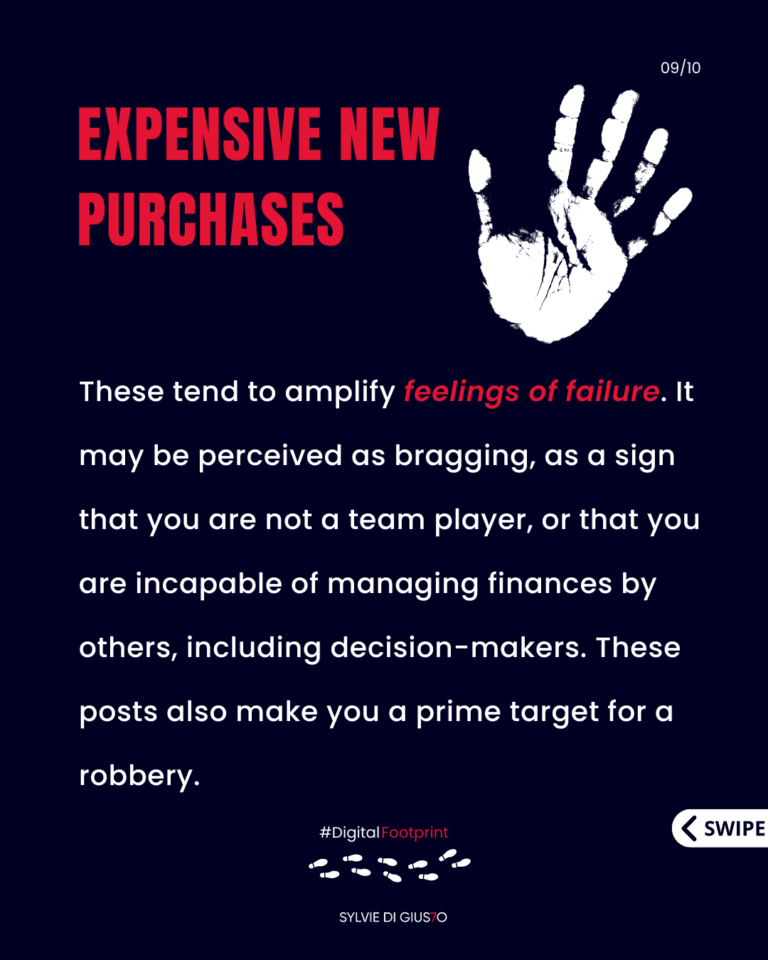
099. Expensive new purchases
They can read as bragging, as a sign you are not a team player, or that you cannot manage money. They also make you a target for theft. Keep expensive purchases offline.
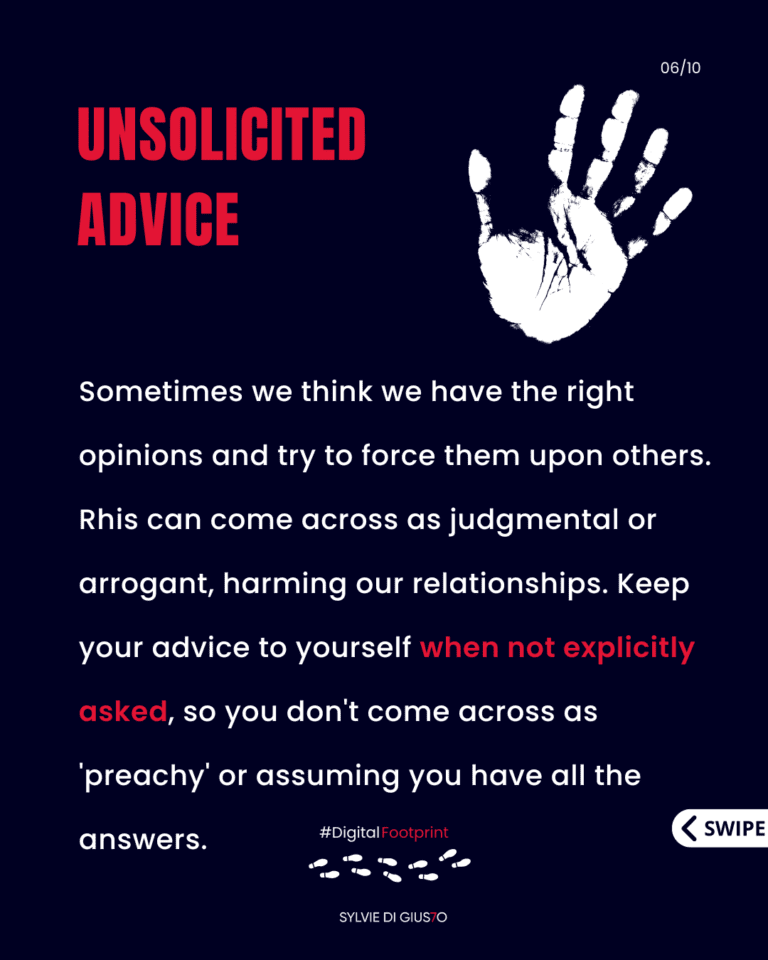
1010. Unsolicited advice
Unless someone asked, keep your advice to yourself. Forcing opinions on others comes across as judgmental or preachy, as if you had all the answers.
1111. Unproven advice
If you do not have all the facts, your advice can backfire. Leave sensitive subjects, financial, medical, legal or relationship questions, to credible sources and professionals.
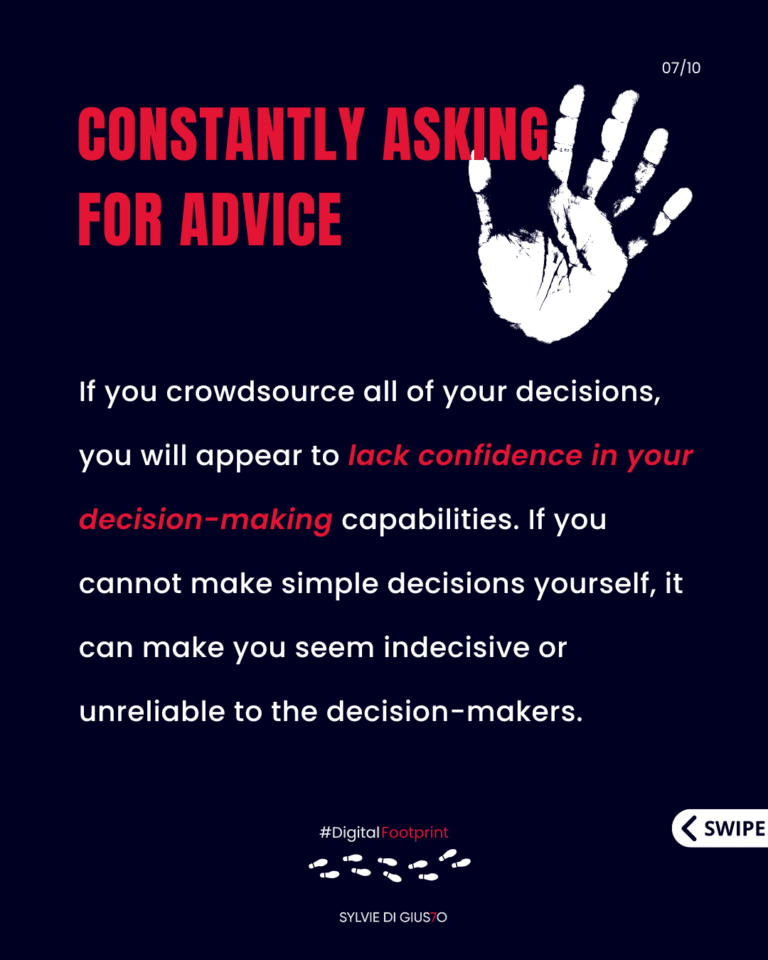
1212. Constantly asking for advice
Crowdsource every decision and you look like someone who cannot make one. Decision-makers notice. Seek professional advice from credible sources instead.
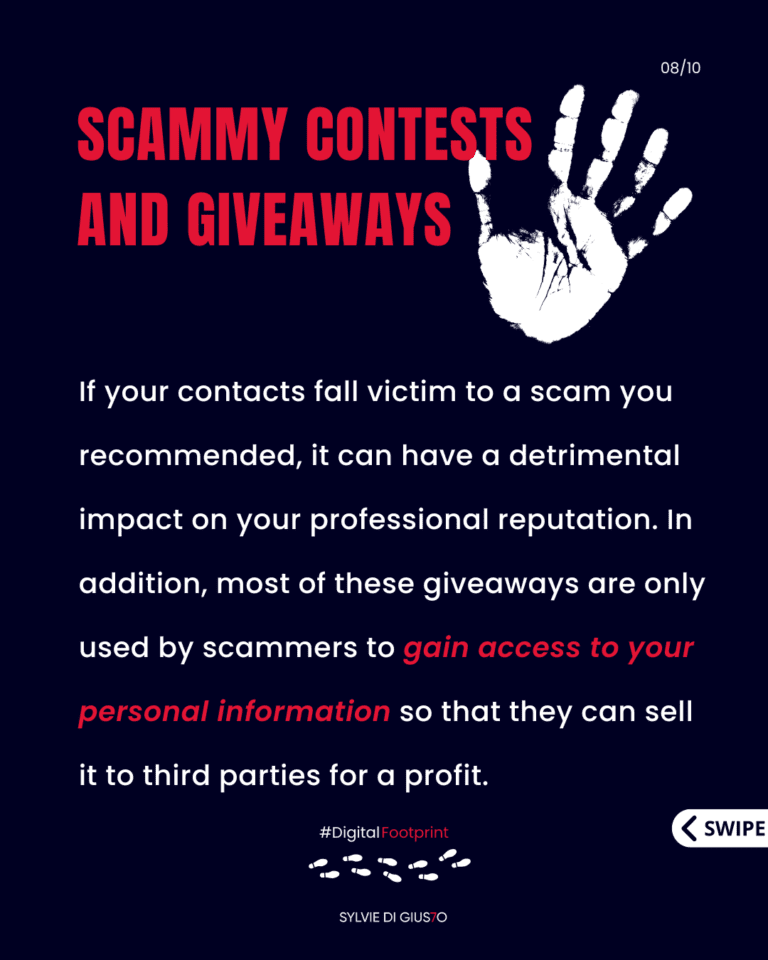
1313. Scammy contests and giveaways
If friends fall for a scam you shared, your reputation takes the hit. Many of these giveaways exist only to harvest personal information and sell it.
1414. Privileged inside information
You may have access to sensitive company information. Sharing any of it can harm the organization and get you into serious trouble.
What to post on social media instead
If you are tempted to overshare or post on impulse, pause and consider the impact on you, your family and the teams and organizations you belong to. Then use social media to:
- Share information and updates relevant to your industry
- Build a network of connections in your field
- Endorse and recommend others for their skills
- Join online discussions and contribute real insight
- Keep your profile current with your role and qualifications
- Engage actively in professional groups
- Keep a positive, professional tone in every interaction
- Think twice before posting personal information
- Create, on purpose, a digital footprint that supports your career goals
Before you hit post, ask e.v.e.r.y single time how others may perceive it and whether it fits your personal and professional brand. When in doubt, leave it out.
What not to post on social media, in a nutshell

What are your own rules for what you will and will not post?
For the bigger picture, read the myths and truths of branding, image and reputation, ask yourself whether you should quit social media, or see why public leaders face a digital danger zone.
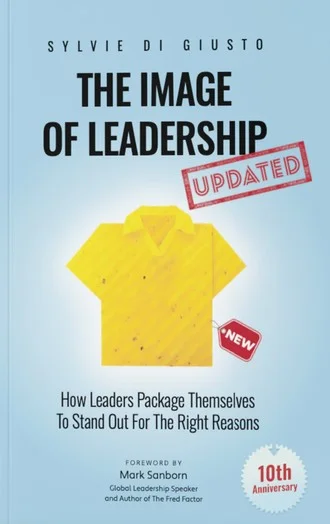
The Image of Leadership
Your digital footprint is one of five signals people use to decide whether to follow, hire or promote you. The Image of Leadership covers all five, from what you post to how you show up in the room, and now comes in ten special editions for the industries where perception decides the most.
Frequently asked questions
What should you never post on social media?
Never post threats or harassment, self-incriminating photos or videos, confidential company information, or scams. Those can carry legal consequences on top of reputational damage. Close behind: inappropriate photos, rants about your job or coworkers, and content that makes decision-makers doubt your judgment.
Can a social media post really cost you a job?
Yes. Recruiters, employers and clients routinely look at candidates online, and posts can stay visible for years. A single offensive, careless or self-incriminating post can be enough for a decision-maker to choose someone else, often without ever telling you why.
Is it okay to post about politics on social media?
It is your right, but it is risky for your career. Most people hold strong views on politics and religion, neutrality is almost impossible online, and posts can alienate colleagues, clients and future employers. If your role does not require it, keep those conversations offline.
What should professionals post on social media instead?
Share industry insights, celebrate others, contribute thoughtfully to discussions, keep your profile up to date and engage in professional groups. Treat every post as part of a digital footprint you are building on purpose, one that supports the career and reputation you want.