Emotional intelligence shapes the first impression you make
Emotional intelligence and first impressions are closely linked. People judge your emotional intelligence long before they know your résumé, based on what they see: how you look, how you behave under pressure, how you speak, what you post and how your surroundings look. Five “self” skills decide whether that verdict works for you.
In business, the first and the last impression tend to be the ones people remember. Hello and goodbye. And in both moments, your emotional intelligence is quietly on display.
Emotionally intelligent people know how to manage their emotions and deal with others well. They also know that perception does not wait for an invitation, so they shape it on purpose instead of leaving it to chance.
KEY TAKEAWAYS
- People read your emotional intelligence through five signals: appearance, behavior, communication, digital footprint and environment.
- Self-awareness comes first: you cannot manage a perception you do not notice.
- Self-acceptance makes you look confident and in control, not defensive.
- Self-control is visible. Calm, composed people are read as more emotionally intelligent.
- Self-care is a signal too: if you neglect yourself, others wonder how you will take care of them.
- Self-expression has to match the professional you want to be seen as, because perception is reality.
What does emotional intelligence have to do with first impressions?
Emotional intelligence is usually described through five components: self-awareness, self-regulation, motivation, empathy and social skills. All of them live inside you. The verdict about them, however, is formed outside of you, by people who only see the signals you send.
In my work, those signals fall into five dimensions:
- Appearance. Your clothing choices and your grooming can say “competent and organized” or “chaotic.” Awareness and good hygiene are part of managing your image.
- Behavior. Can you control your emotions in a tense moment? Take criticism without getting defensive? Own your actions and make amends? That is emotional intelligence in action, and people watch it.
- Communication. Expressing yourself with confidence and respect leaves a positive impression. Mumbling, snapping or rambling leaves another one.
- Digital footprint. Future employers and clients may look at your social media before they ever meet you. What you post becomes part of your professional image.
- Environment. The place where you meet people speaks for you. Being organized and prepared for a meeting shows you are capable and in control.
Manage these five well and people will not only like you. They will perceive you as a highly emotionally intelligent professional, which is a very different compliment.
The 5 self skills that shape how you are seen
011. Self-awareness
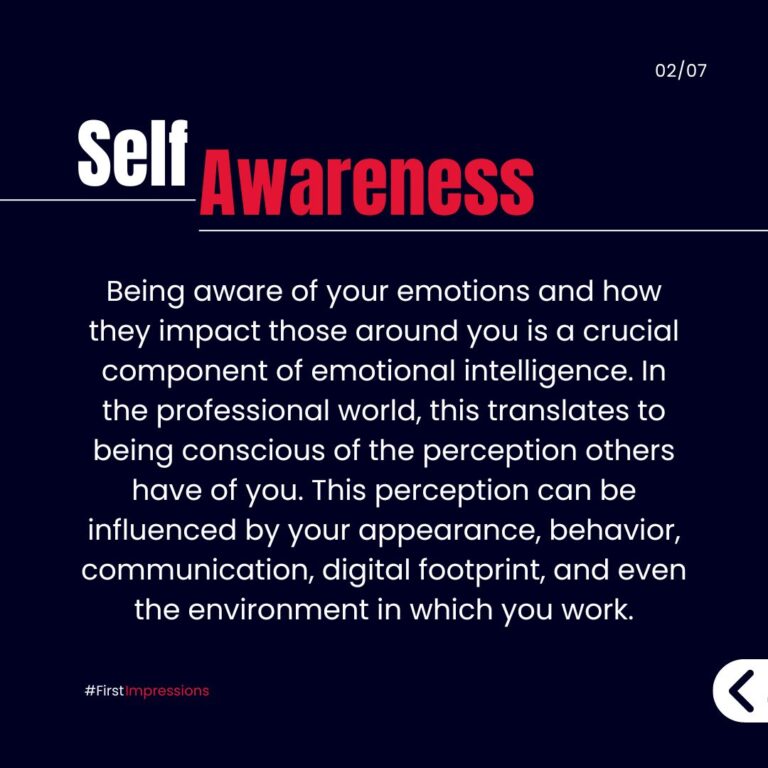
Being aware of your emotions and how they affect the people around you is the foundation of emotional intelligence. At work, it also means being aware of how others perceive you: your appearance, your behavior, your communication, your digital footprint, even the space you work in.
Once you see those signals clearly, you can improve them. That is where good first impressions and a lasting professional image start.
022. Self-acceptance
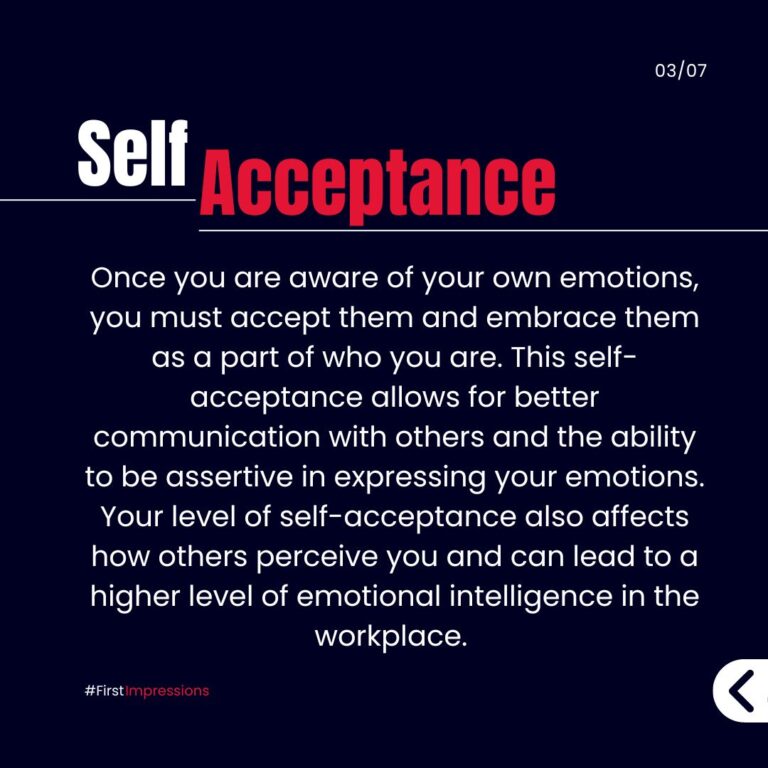
Noticing your emotions is step one. Accepting them as part of who you are is step two. Self-acceptance lets you communicate better and express your feelings assertively instead of hiding them or letting them leak out sideways.
It also changes how people see you. Only when you accept yourself and your emotions can you understand and manage the emotions of others. And someone at peace with themselves comes across as confident and in control, in the first meeting and throughout a career.
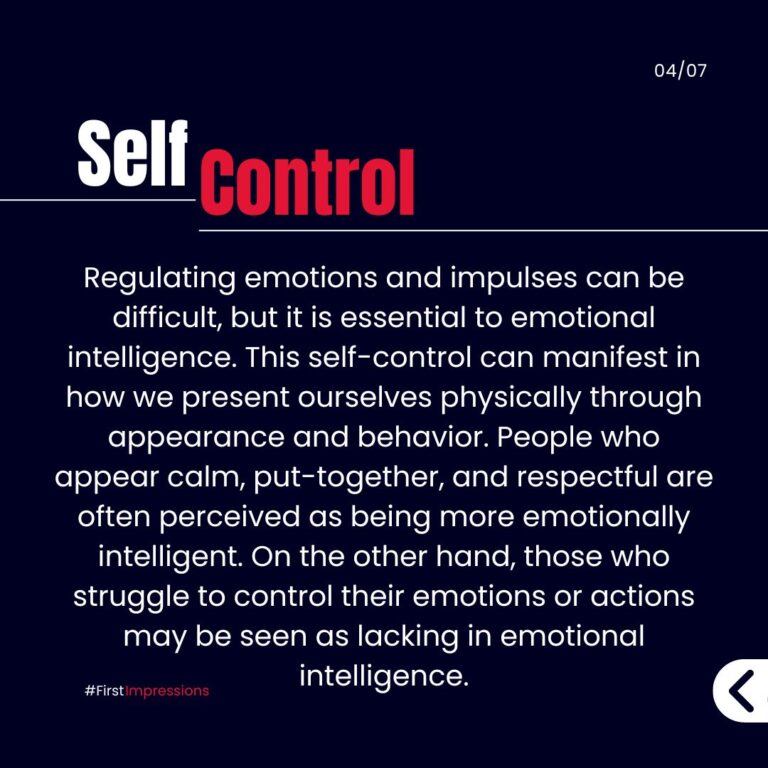
033. Self-control
Regulating emotions and impulses is hard, and it is essential. Self-control shows in how you present yourself physically, in how you behave and in the words you choose, in person and online.
People who appear calm, put together and respectful are usually perceived as more emotionally intelligent. Those who struggle to control their emotions or actions are read as lacking it, whether that is fair or not. Read more about how negative emotions at work affect your reputation, and about perception in emotional intelligence.
People who appear calm, put together and respectful are perceived as more emotionally intelligent. Fair or not, that is the verdict.
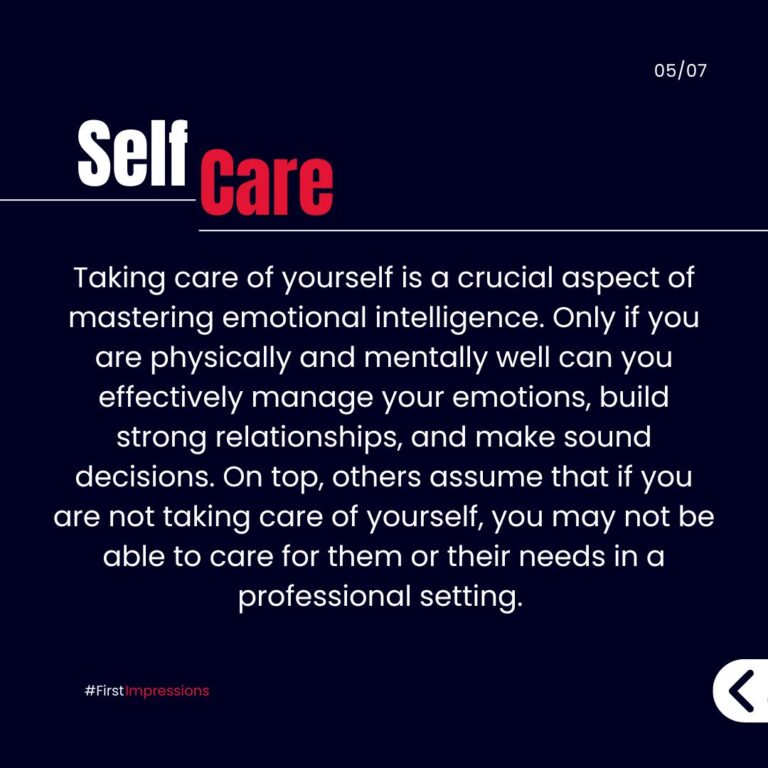
044. Self-care
Only when you are physically and mentally well can you manage your emotions, build strong relationships and make sound decisions. There is a second layer, though. Others quietly assume that if you do not take care of yourself, you may not be able to take care of them or their needs either.
Taking care of yourself first shows you are capable and confident. Every great leader knows they do their best work when they feel their best. Your body and mind are not a side project.
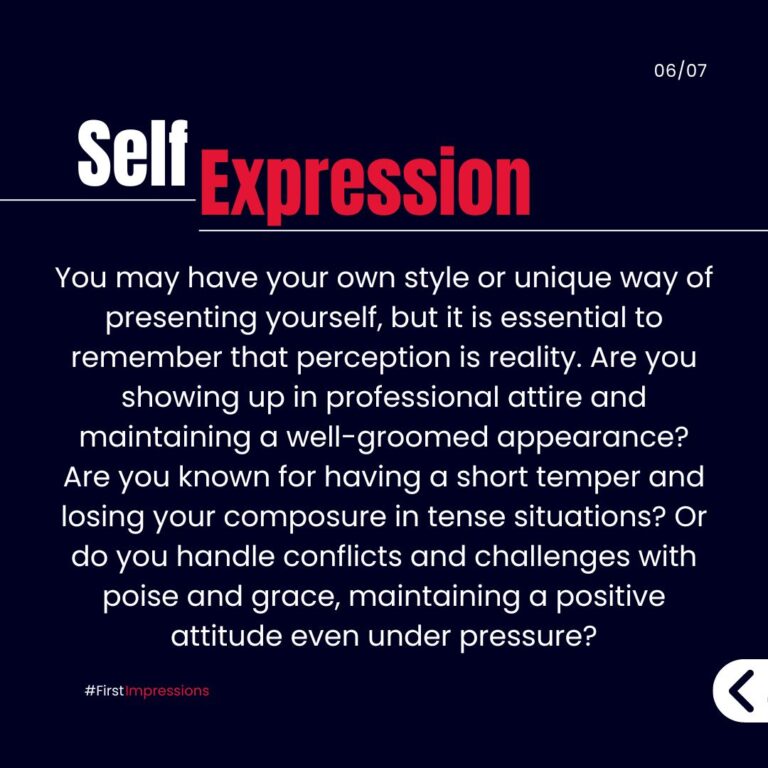
055. Self-expression
How you express yourself, verbally and nonverbally, plays a big role in how others perceive you. You may have your own style or a very personal way of presenting yourself, and that is fine. Just remember that, in the eyes of the people judging you, perception is reality.
How emotionally intelligent is your first impression?
Be honest with yourself on these five questions:
- Appearance: Do you consistently show up in professional attire and well groomed? Or are you often seen in wrinkled clothes, with grooming that lets you down?
- Behavior: Are you known for a short temper and losing your composure in tense situations? Or do you handle conflict with poise and keep a positive attitude under pressure?
- Communication: Do you convey ideas clearly and confidently? Or do misunderstandings and confusion follow you around the office?
- Digital footprint: Do you post inappropriate content or leave negative online reviews? Or do you keep a positive presence and share your professional accomplishments?
- Environment: Is your workspace chaotic and disorganized? Or is it clean and efficient, an atmosphere that supports focus?
How would you rate your emotional intelligence after that? Every signal on this list is a choice, which is exactly why emotional intelligence runs through my keynote The Power of Choice.
Emotional intelligence and first impressions in a nutshell

The Image of Leadership
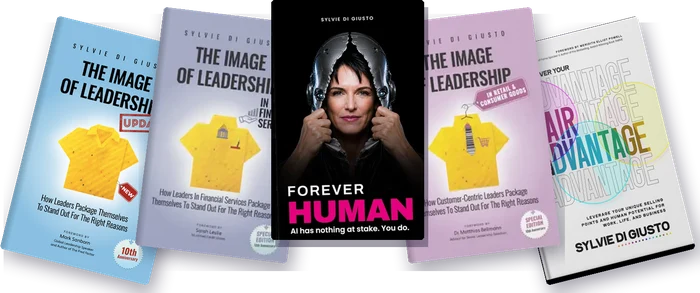
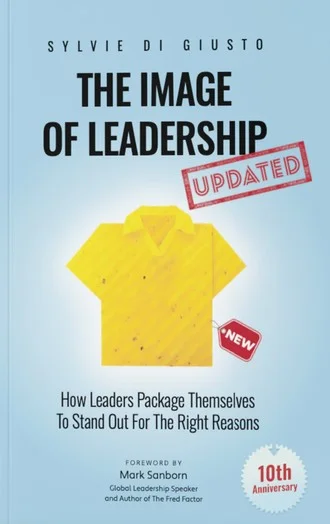
The five dimensions in this article, appearance, behavior, communication, digital footprint and environment, are the backbone of my book The Image of Leadership. It shows how to make sure the emotional intelligence you have is also the one people see.
Frequently asked questions
How does emotional intelligence affect first impressions?
People cannot see your emotional intelligence directly, so they infer it from signals: how composed you stay, how you listen, how you dress, what you post and how organized your space is. Calm, respectful and prepared people are usually read as emotionally intelligent within seconds, long before anyone tests their actual skills.
What are the five components of emotional intelligence?
The most widely used model, popularized by Daniel Goleman, names five components: self-awareness, self-regulation, motivation, empathy and social skills. Together they describe how well you recognize and manage your own emotions and how well you understand and handle the emotions of others.
Can emotional intelligence improve a bad first impression?
Yes. Self-awareness helps you spot what went wrong, self-control keeps you from repeating it, and consistent, composed behavior over the next interactions gives people new evidence. A first impression is strong, but it is not final if you keep sending better signals.
Why does self-care matter for how others see you?
Because people draw conclusions from it. If you look exhausted, neglected or constantly overwhelmed, others start to wonder whether you can take care of their needs. Looking after your body and mind protects your performance and signals that you are capable and in control.