The common sales mistakes that happen around the pitch
The second half of the most common sales mistakes is about everything around the pitch: your attitude and language, your composure, your elevator pitch and call to action, how you follow up and stay in touch, how fast you respond, your online presence, your manners and how well prepared you walk into every meeting.
At the heart of successful sales is the ability to leave a positive, lasting impact on your clients. Whether you are meeting someone for the first time or closing a deal, you need the right materials and the right information for every interaction.
Strong organization and a real understanding of industry trends and data are what let you build strong relationships and give clients a positive experience. In part 1, I covered the first 21 mistakes. Here are the next 21, numbered 22 to 42, each with signs that you are doing it right.
KEY TAKEAWAYS
- Clients hear your attitude before they hear your offer.
- Staying calm under pressure is part of the product you are selling.
- A sale is not the end of the relationship. Follow-up and staying in touch build loyalty.
- Slow replies tell clients they are not a priority.
- Your online presence and your manners are part of your sales pitch.
- Preparation, from research to materials to notes, is visible in every meeting.
Common sales mistakes 22 to 42
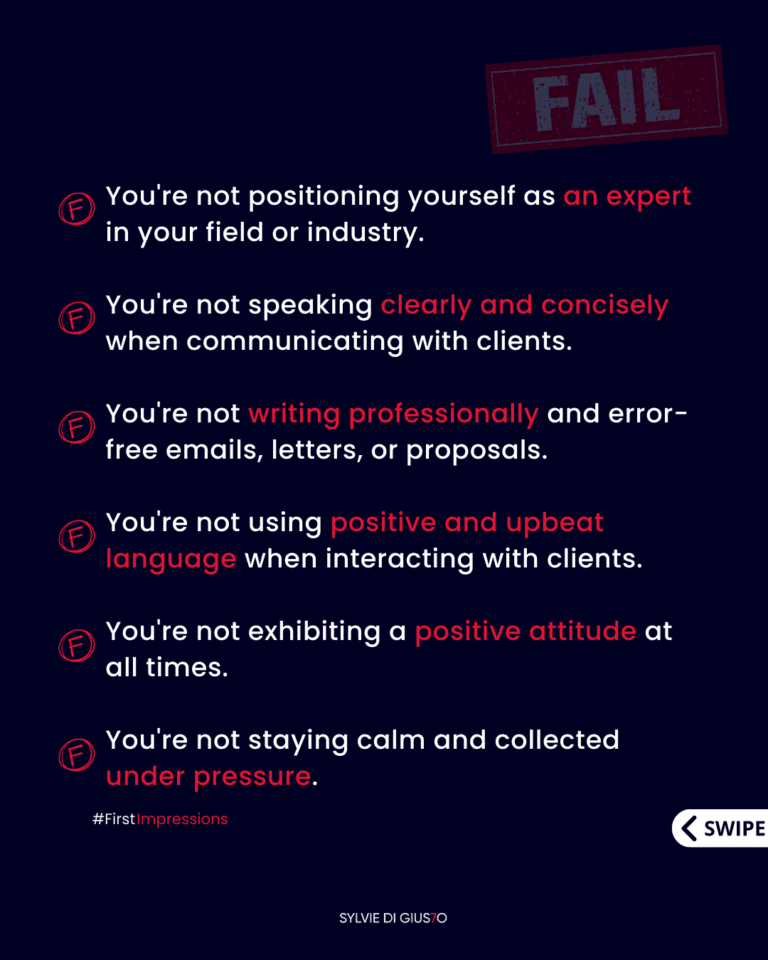
2222. You are not using positive, upbeat language
Your words set the mood. If your language is not positive, you send negativity, intended or not, and clients lose interest and stop listening. Choose your words carefully. You use positive language if:
- you focus on how your product makes the client’s life easier or more productive
- you use encouraging phrases such as “that’s a great idea”
- you speak in an upbeat, confident tone that shows you believe the product suits the client
- you use future-focused words that show belief in the client’s potential
- you focus on how you help clients reach their goals rather than dwelling on shortcomings
2323. You are not showing a positive attitude
Positivity shows in what you say and in what you do. If it is missing, clients lose interest and choose someone else. You show a positive attitude if:
- you approach sales conversations with enthusiasm, optimism and genuine interest in the client’s goals
- you go the extra mile and offer help whenever it is needed
- you take feedback in stride and use it to improve
- you keep your emotions in check and stay professional
- you take pride in your products and believe clients will value them
2424. You are not staying calm under pressure
Business is unpredictable. Someone interrupts you rudely, or a client’s reaction throws you off balance mid-meeting. Breathe deeply, or do whatever it takes to keep your cool. If you lose it, clients disengage. You stay calm and collected if:
- you anticipate difficult conversations and prepare for them
- you listen actively and stay open to feedback, even when it is not what you want to hear
- you go into conversations confident in your product and in your ability to help
- you step back in tense moments to collect your thoughts and respond rationally
- you treat complicated conversations as chances to improve your approach
Staying calm under pressure is not a soft skill in sales. It is part of the product the client is buying.
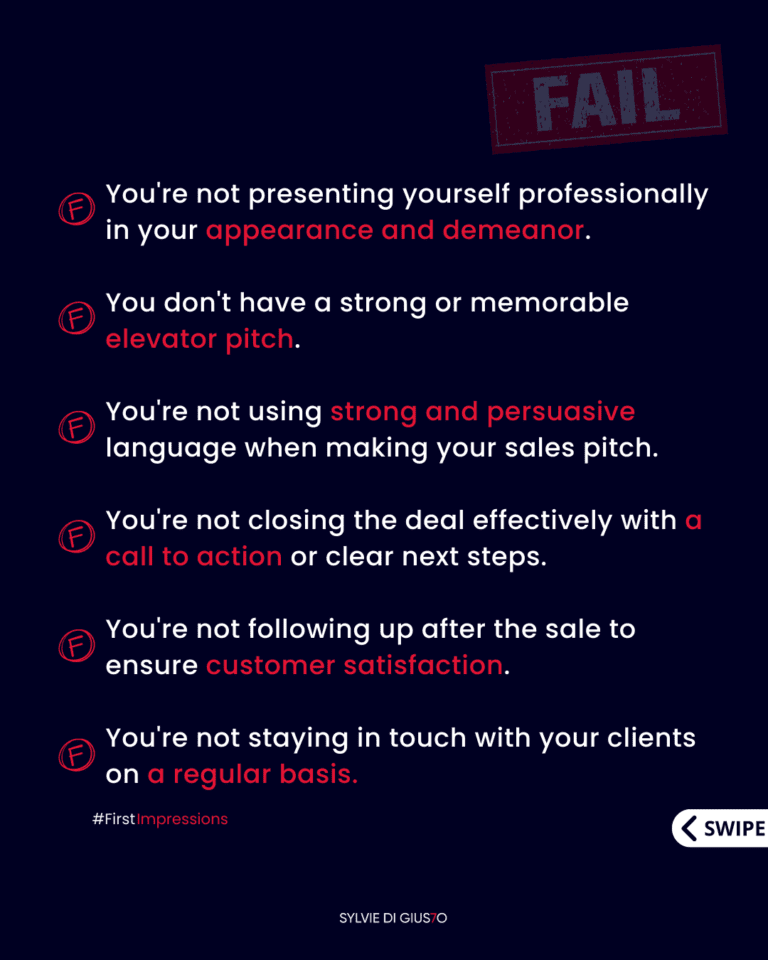
2525. You are not presenting yourself professionally
Some of us would love to work in our pajamas. Be aware of what your demeanor and appearance tell clients: dress appropriately and stay professional in every interaction, or clients may choose someone else. You present yourself professionally if:
- you are mindful of the message your words and actions send
- you dress appropriately for every sales interaction
- you take time to build rapport and trust
- you look for ways to improve yourself and your offer
- you respect other viewpoints, even when they differ from yours
2626. You do not have a memorable elevator pitch
You have to engage the client from the first sentence. Open with something boring and you may lose them for good. A strong, memorable elevator pitch captures attention. Yours is memorable if:
- you can distill your main benefit into one clear, concise sentence
- you use it in every conversation and tailor it to the client’s needs and interests
- you have practiced it and deliver it with confidence
- you can move smoothly from your pitch to the client’s needs, with the right questions at the right time
- you keep refining it with feedback and new ideas
2727. You are not using strong, persuasive language
Overly salesy pitches turn people off. Weak ones do not convert either. Aim for language that persuades without pushing. You use persuasive language well if:
- you combine facts, figures and client testimonials
- you craft each pitch for the specific needs and interests of the client
- you choose your words carefully and express yourself clearly, concisely and confidently
- you use techniques such as framing, reciprocity and scarcity responsibly
- you ask questions, listen and adapt your pitch to the feedback
For more on influence that does not feel like pressure, read how to persuade anyone in any situation.
2828. You are not closing with a call to action
A call to action states the reason for your pitch: what you want the client to do next, whether that is buying, signing up or visiting your website. Without one, clients are left unsure what you want. Put it at the end, where it sticks. Ways to close with a call to action:
- convey why your product matters and what it delivers
- if there is a real deadline or limited offer, say so clearly
- use statistics and facts that show how it improves the client’s daily life
- speak to the emotional side of the decision: health, happiness, confidence
- ask directly for the next step and make it simple to take right away
2929. You are not following up after the sale
Once a sale closes, reach out to make sure the customer is happy. If you do not, it looks like you cared about the commission more than their satisfaction. Follow up and you show a level of care that builds loyalty. Ways to follow up:
- send a personal email or call to thank them and ask if they need anything
- check in regularly, weekly or monthly, to see how they use your product and offer support
- offer incentives such as discounts or special deals for referrals
- share customer success stories on social media platforms such as Facebook or X
- send new customers a personal welcome package with tips and special offers
3030. You are not staying in touch
Beyond the first follow-up, stay in touch. Share business news or simply call to say hi, so you are the first name that comes to mind when they need what you offer. You stay in touch if you:
- send regular updates on new products, industry news and promotions
- connect on LinkedIn and other platforms to build the relationship
- host webinars or seminars where clients learn and meet your team
- offer exclusive discounts, deals or trials
- ask for feedback and respond to questions and concerns
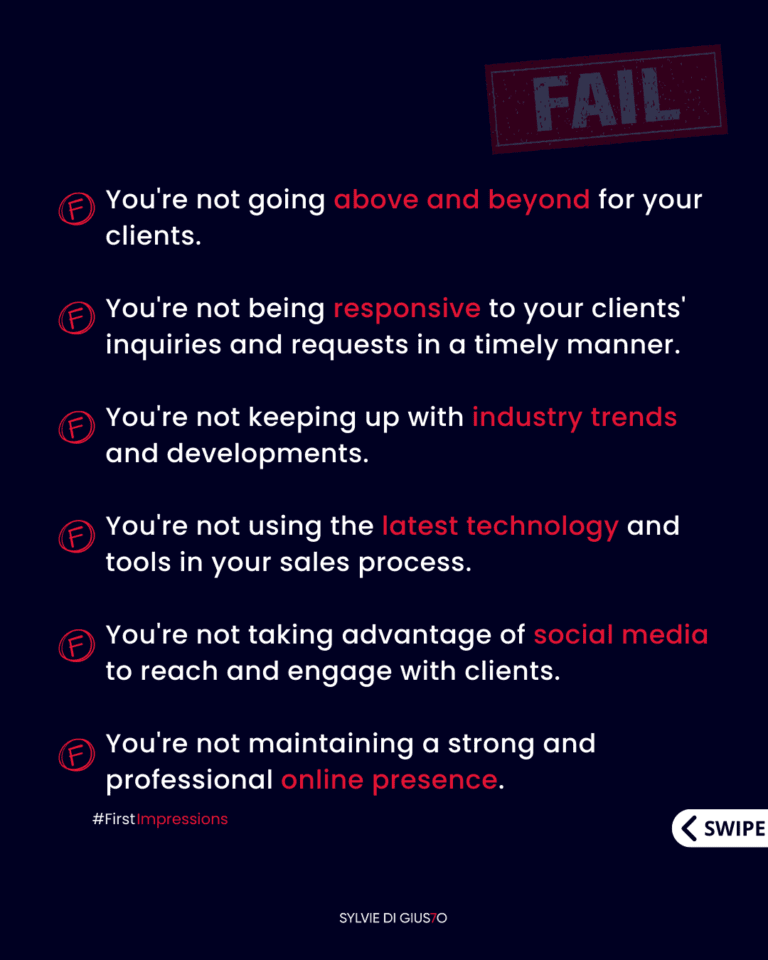
3131. You are not going above and beyond
Clients want to see extra effort. Following up and staying in touch are part of it, and so are services on top of what they asked for. That sets you apart and keeps customers longer. You go above and beyond if you:
- offer additional support, such as online training or customer success days
- build their feedback into product updates and new developments
- provide custom solutions, from a customized product to an on-site consultation
- stay transparent about order status and any issues
- personalize the service, with custom packaging or special offers for loyal customers
3232. You are not responding to inquiries in time
Clients want answers, and they want them now. Slow responses tell them they are not a priority, and they move to someone faster. You respond in time if you:
- answer calls and emails within 24 hours, or immediately in an emergency
- give regular updates on their project or order, including problems and how you are solving them
- offer other channels, such as live chat
- work with other teams to find the best solution
- keep an open dialogue and reach out proactively
3333. You are not keeping up with industry trends
Staying on top of trends is how you keep offering the best products and services, and keep up with the competition. Miss them and you lose sales or fall behind in quality and innovation. You keep up if you:
- sign up for newsletters, webinars or online courses in your field
- research competitors and customer reviews regularly
- attend trade shows and conferences
- consult experts and thought leaders, individually or through advisory boards
- collaborate with other organizations in your industry to share knowledge
3434. You are not using current technology
Technology helps you deliver the best products and services. Ignore tools such as AI-driven products or cloud computing and you put yourself at a disadvantage. You use current technology if you:
- use a CRM and sales platforms to streamline your process and track client engagement
- use predictive analytics to anticipate client needs
- use data visualization to understand your performance and decide based on data
- integrate AI to improve efficiency, accuracy and customer experience
- make sure your website works on mobile devices
3535. You are not using social media to engage clients
Every platform is a chance to keep customers engaged, social media included. Respond to inquiries and comments and post regularly, or watch sales and satisfaction slip. You use it well if you:
- post regularly: product news, offers, client testimonials
- monitor feedback and comments and respond promptly
- offer live chat on your website, especially outside office hours
- work with influencers or advocates for word-of-mouth marketing
- encourage your team to act as brand ambassadors online
3636. You are not maintaining a strong, professional online presence
Be visible across platforms: a website people can find, listings in the right directories. And keep it professional. Never post anything potentially embarrassing. You have a strong presence if you:
- network online with other professionals and thought leaders in your industry
- have a LinkedIn profile or company page that shows your expertise
- avoid overly personal or controversial posts
- follow sales blogs and influencers to stay current
- monitor online reviews and use feedback to improve your process
More on that in what not to post on social media.
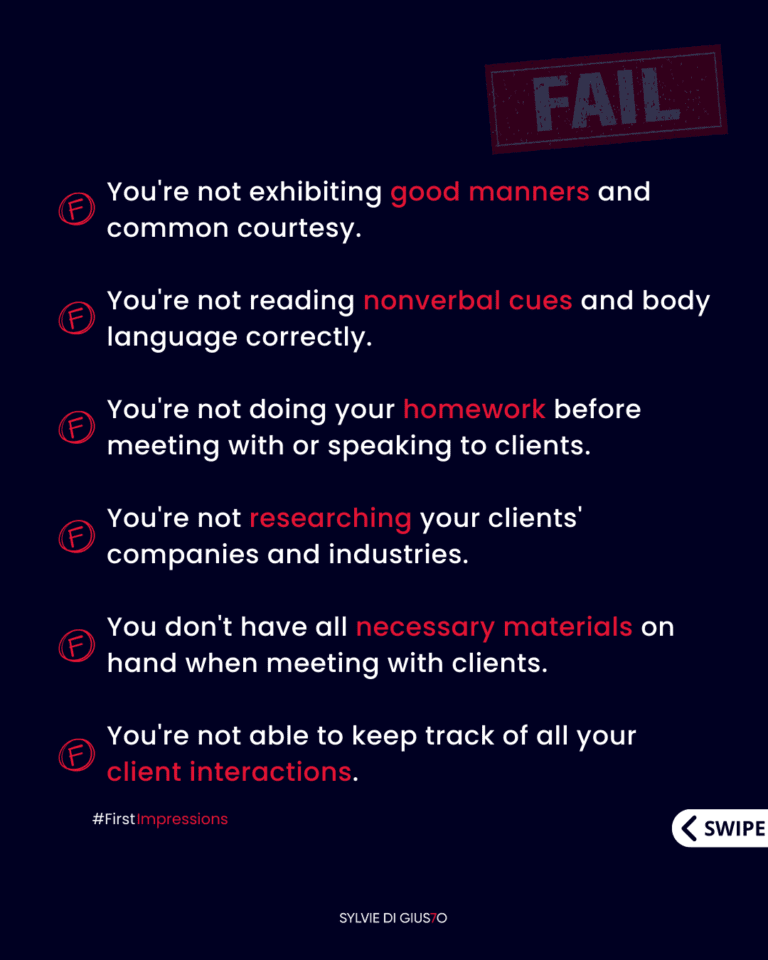
3737. You are not showing good manners
Good manners and common courtesy should go without saying. If “please” and “thank you” have gone missing, or you let the door swing shut on the person behind you, it is time to brush up. You show good manners if you:
- go the extra mile, from prompt replies to personal service
- smile and keep positive body language, even with demanding customers
- treat colleagues and customers with respect, with appropriate language and no gossip
- send small tokens of appreciation on birthdays or holidays
- arrive early, meet deadlines and take on extra responsibility without being asked
3838. You are misreading verbal cues and body language
Clients do not only speak with words. Their body language may tell you something they are not saying. You are probably misreading cues if you:
- obsess over minor details instead of the big picture
- read a neutral tone or face as disinterest, when it may simply be how that person communicates
- do not ask questions or follow up when a client seems distracted, fidgets or looks away
- interrupt instead of listening and asking for clarification
- believe words are all that matter and ignore nonverbal signals
3939. You are not doing your homework
Prepare before every client conversation, so you bring relevant advice and the best solutions to each meeting. You have done your homework if you:
- research and analyze the client before and during the meeting
- review past interactions and sales records to understand their needs and pain points
- look up industry news and trends that strengthen your position as an expert
- prepare your pitch and can clearly explain your benefits
- ask questions, listen actively and respond with empathy
4040. You are not researching the client’s company and industry
Research the client’s company and industry before you meet, so your solutions are ready. Skip it and you look bad, are not taken seriously or lose the sale. You have done the research if you:
- know their competitors, products, services and customers
- understand their industry’s trends and challenges
- know recent company news that could affect the conversation or the decision
- know their history and culture
- can speak confidently about their products and services
4141. You do not have the right materials with you
Arrive without your materials and you look unprepared, which can cost you the sale or the next one. You are prepared if you have:
- brochures, pricing, testimonials, reviews and any other relevant documents at hand
- previous correspondence and notes from earlier meetings or calls
- industry reports, data and sales statistics that back up your pitch
- a written version of your pitch and talking points in case you get stuck
- the knowledge to answer questions quickly and confidently
4242. You cannot keep track of your client interactions
Clients expect you to know the latest on their project. They do not want to repeat themselves. Keep your notes organized and review them before every call. You keep track if you:
- use a reliable CRM and sales tracking software
- take detailed notes after every call or meeting, including deal status and next steps
- keep an organized calendar with reminders for calls, deadlines and deliverables
- follow up regularly by phone, email or other channels
- listen to their needs, give advice where it helps and go out of your way to help
What do these common sales mistakes have in common?
Almost none of them are about the product. They are about the signals you send before, during and after the sale: your attitude, your composure, your preparation, your follow-through. Clients read those signals constantly, and they decide accordingly.
Start with the first 21 mistakes if you have not yet, and read about the customer behavior you cannot expect and examples of good attitude that delight clients. Want your sales team to work on this together? My keynote The Power of Choice shows sellers how they get chosen.
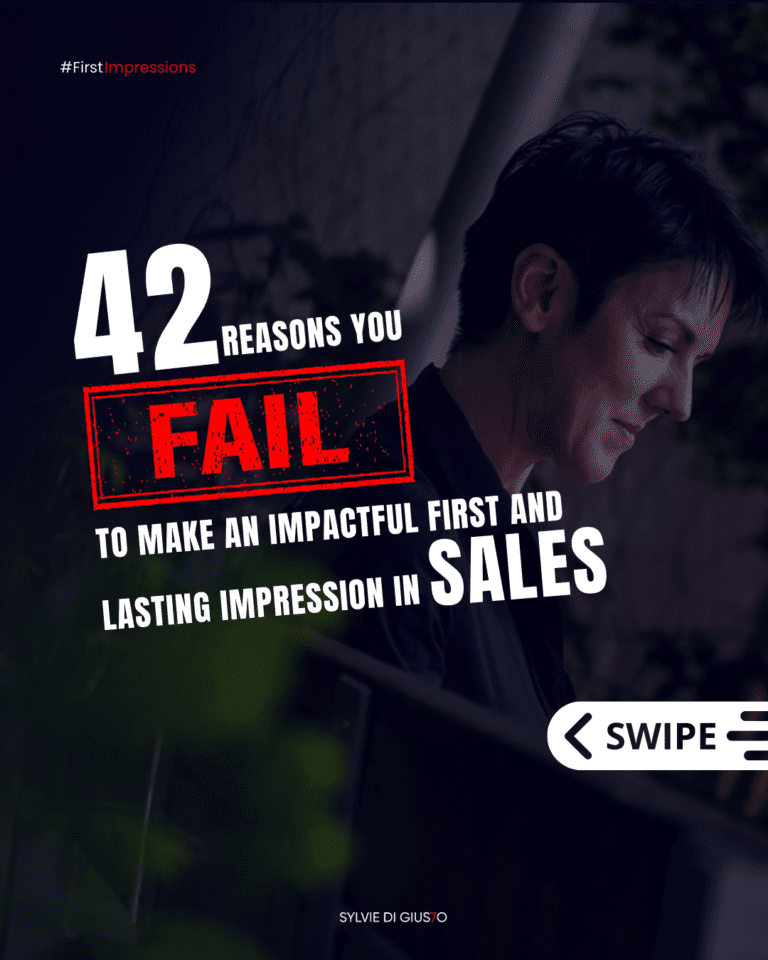
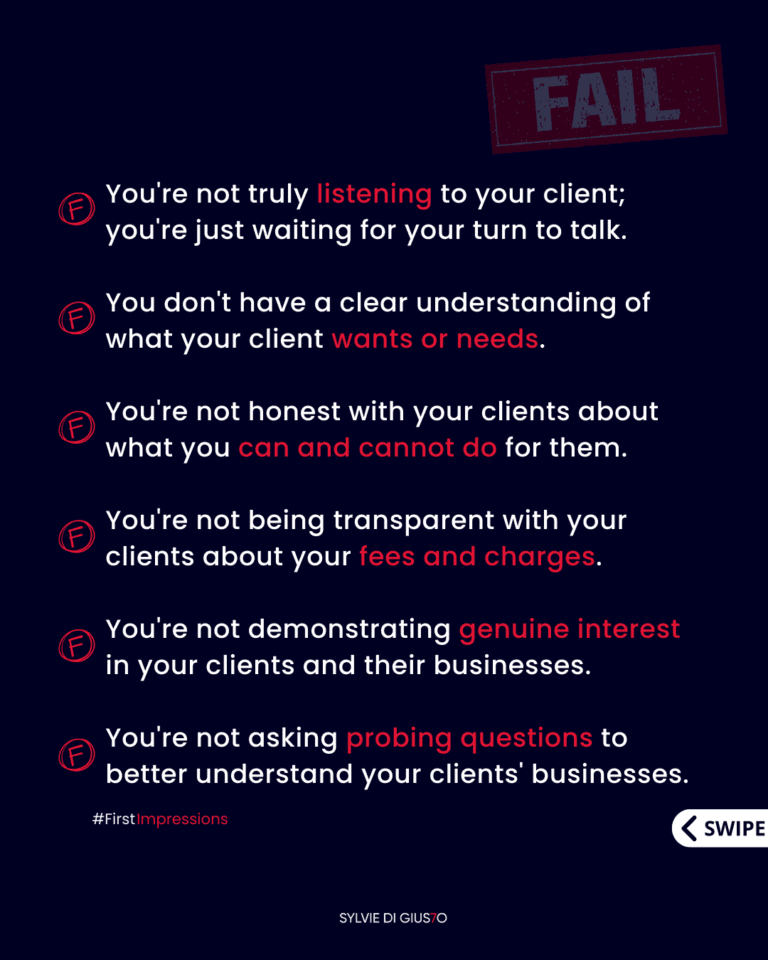
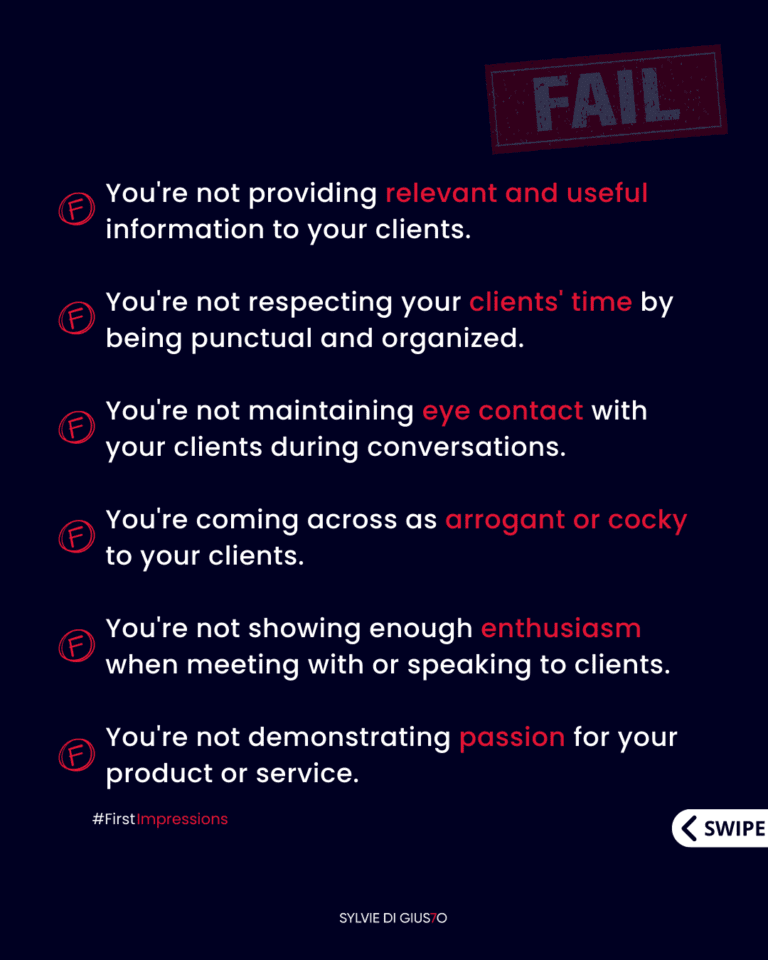
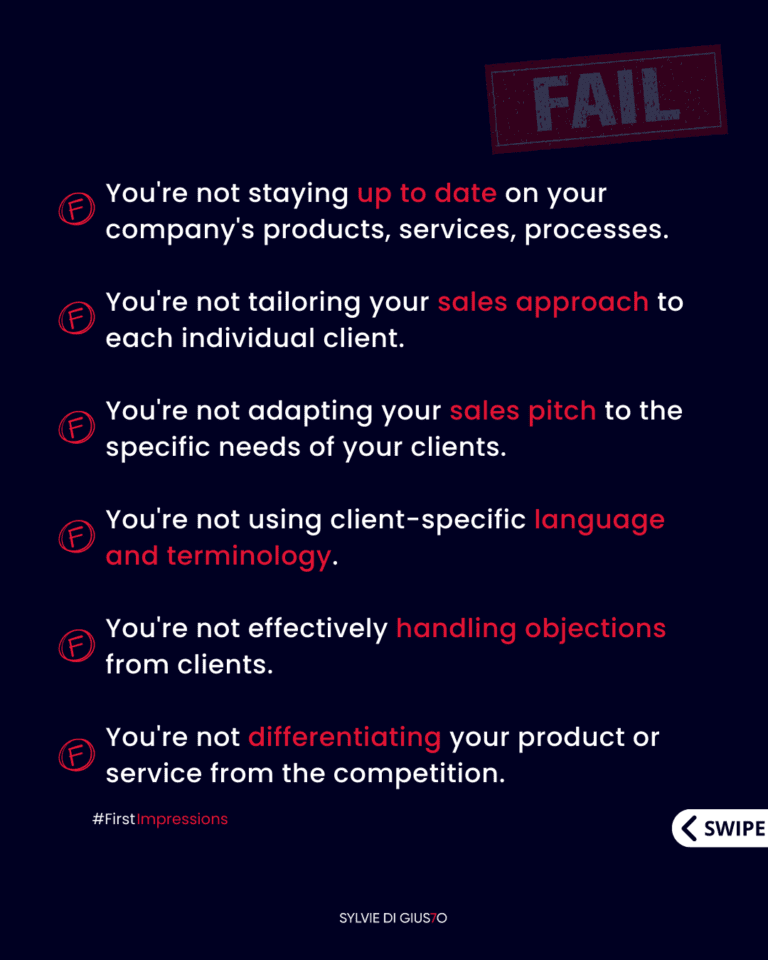
Most common sales mistakes in a nutshell

Discover Your Fair Advantage
Many of these mistakes come down to one question every client asks silently: why you and not the next seller? My book Discover Your Fair Advantage helps you answer it with something more specific than “better service,” so you escape the comparison trap.
Frequently asked questions
What should a salesperson do after closing a sale?
Follow up. Thank the customer personally, check that they are happy, offer support and stay in touch with regular, useful updates. Skipping the follow-up suggests you cared only about the commission. Consistent follow-through builds loyalty, repeat business and referrals. The sale is the start of the relationship, not the end of it.
How fast should salespeople respond to clients?
Within 24 hours as a rule, and immediately in an emergency. Slow responses signal that a client is not a priority. Regular status updates, multiple contact channels and proactive check-ins show clients that their needs are being taken seriously. Speed alone is not enough, though: a fast answer still has to be a useful one.
Why does online presence matter in sales?
Clients research you before they meet you. A professional website, a strong LinkedIn profile, sensible posts and timely responses to reviews build credibility. Controversial or overly personal content can undermine trust before the first conversation even starts. Treat your profiles as the first meeting, because for many clients they are.
How do I prepare for a sales meeting?
Research the client’s company, competitors, industry trends and recent news. Review earlier interactions and notes, bring your materials, pricing and testimonials, prepare your pitch and talking points, and plan questions that help you understand their needs. Clients notice preparation within minutes, and they notice its absence even faster.