Overcome self-criticism in four honest steps
To overcome self-criticism at work, take four steps: understand the burden it puts on you, find where your inner critic comes from, recognize the signs that it has turned unhealthy, and replace it with deliberate strategies such as reframing, self-compassion, realistic standards and support from people you trust.
Are you your own harshest critic? Do you put yourself down, pick apart every part of your performance and question your abilities at every turn? Self-criticism can sound like a relentless inner voice that points at every flaw, mistake and imagined shortcoming, and talks right over your accomplishments.
Many professionals struggle with this, often without noticing what it costs them. Let’s look at where it comes from, what it does to your self-esteem and communication, and, most importantly, how to break its grip.
KEY TAKEAWAYS
- Constant self-judgment fuels anxiety, low mood and strained relationships.
- Common sources of a harsh inner critic: unrealistic expectations, comparison, past failures, imposter syndrome and criticism you absorbed early on.
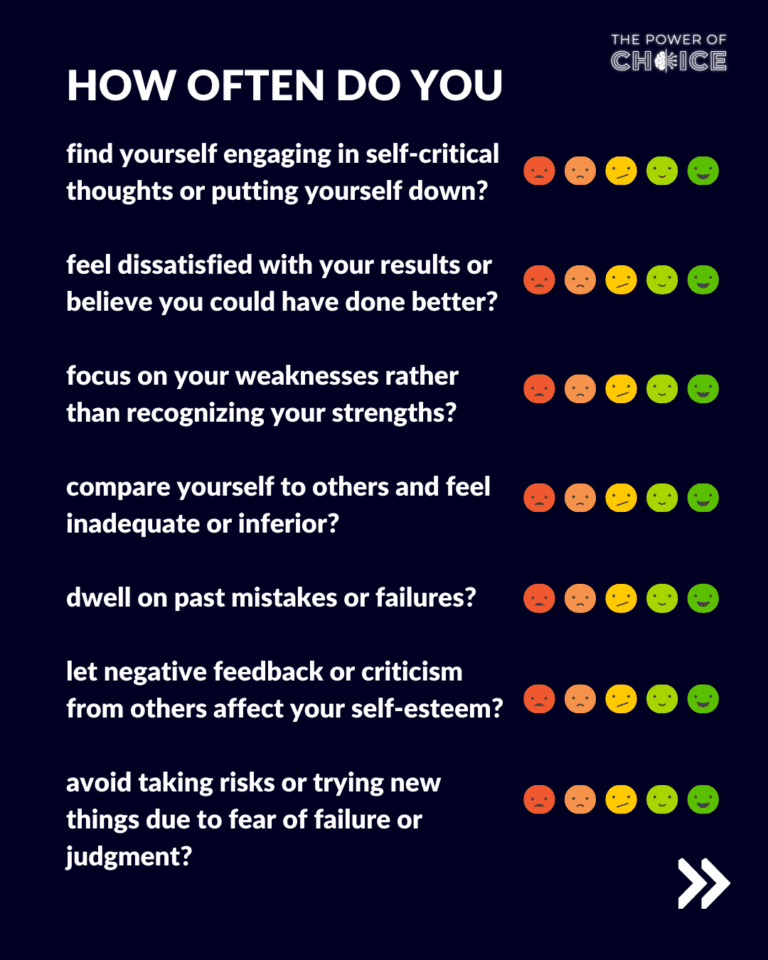
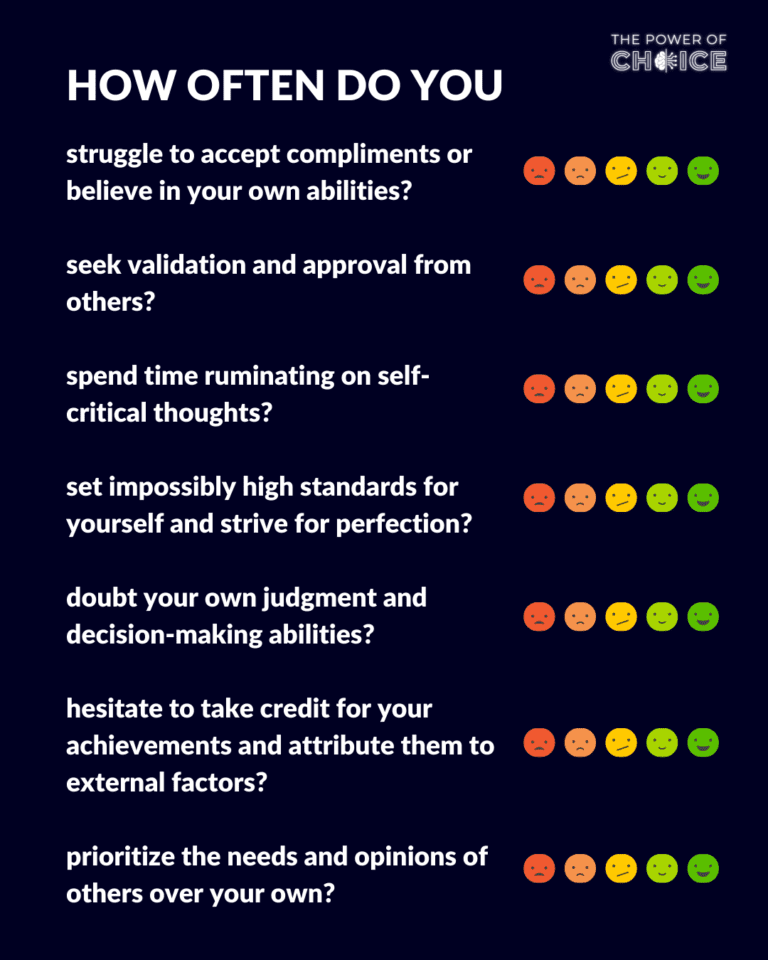
- Warning signs: putting yourself down, never feeling satisfied, obsessing over details and neglecting self-care.
- Write self-critical thoughts down to gain distance and challenge them.
- Treat yourself the way you would treat a friend in the same situation.
- Self-criticism is learned behavior, which means it can be unlearned.
011. Understand the burden
Being hard on yourself can become a heavy weight on your personal and professional life. Understanding how heavy helps you start putting it down. Five signs that it is weighing on you:
Anxiety and stress
Judging yourself constantly keeps you in a permanent state of anxiety and stress. The fear of not meeting your own high expectations and the nonstop self-judgment make it hard to relax and find peace of mind.
Depression and low mood
A harsh inner critic takes a toll on your mental health. It can lead to sadness, hopelessness and low self-worth, and the negative self-talk keeps feeding a cycle of negative emotions.
Eating disorders and body image issues
A negative self-image can show up in unhealthy behaviors around food and appearance. It often fuels unrealistic beauty standards and an unhealthy relationship with food, which can lead to disorders such as anorexia, bulimia or binge eating. If this sounds familiar, please talk to a professional.
Difficulty coping with challenges
Once the habit is ingrained, it gets in the way of handling challenges well. Instead of seeing setbacks as chances to grow, you see personal failures, which feeds the inner critic and wears down your resilience.
Impaired relationships
An overactive inner critic affects how you relate to others too. Putting yourself down all the time builds barriers to genuine connection, and self-doubt undermines your confidence in conversations.
Recognizing these signs is how you admit the weight is there, and the first step toward turning it into something useful: growth and self-compassion.
022. Find the source of your inner critic
Knowing where that voice comes from makes it much easier to challenge. Common sources:
Unrealistic expectations
Impossibly high standards feed it. You chase perfection and punish yourself for every perceived shortcoming.
Comparison and social pressure
Workplaces are full of comparison and social pressure, a perfect breeding ground for a harsh inner voice. Measuring yourself against other people’s achievements and against what everyone expects leads to harsh self-evaluation.
Past failures and criticism
Failures and critical feedback can leave a lasting mark on how you see yourself. Lingering doubt and the fear of repeating a mistake make the inner critic louder.
Imposter syndrome
Many professionals live with imposter syndrome, the persistent belief that they are frauds who will eventually be exposed. They credit their achievements to luck or circumstance instead of their skills, and the inner critic gets louder.
Internalized criticism
If you grew up around a lot of criticism, or received harsh feedback from authority figures, you may have internalized a critical voice. It becomes a constant presence, scrutinizing every move and undermining your confidence.
Once you see the source, you can start to challenge and reframe the negative self-talk. Self-compassion, realistic expectations and resilience are what break the cycle. More on that inner voice in how negative self-talk affects your self-esteem and self-confidence.
033. Spot the signs it has turned unhealthy
Not all self-judgment is bad. A healthy dose helps you improve. Here are five signs it has crossed the line into self-sabotage:
You routinely put yourself down
Do you constantly belittle your accomplishments, skills or qualities? Dismissing your achievements over and over is a pattern worth noticing. Recognize your worth and give yourself credit for your effort and your success.
You are never satisfied with your results
If no outcome is ever good enough, however well you did, your inner critic has taken over. Impossible standards and permanent disappointment drain your motivation and slow your progress.
You obsess over details and miss the big picture
Attention to detail is a strength, until you fixate on every minor flaw and lose sight of what matters. Balance the details with the wider context to keep a healthy perspective.
You neglect self-care
Putting your well-being last can be a symptom of an inner critic in charge. When work always wins over rest, relaxation and the things that bring you joy, it signals a lack of self-compassion. Self-care is part of staying healthy and successful, not a reward for later.
You do not trust your own abilities
Do you doubt yourself constantly and second-guess every decision? A lack of self-trust often grows out of constant self-judgment and erodes your confidence. Learning to trust your instincts is essential for personal and professional growth.
If several of these sound familiar, read about the 20 signs of self-sabotage at work as well.
Self-criticism is a learned behavior. Which means it can be unlearned, with practice, patience and a commitment to yourself.
044. Use 10 strategies to overcome self-criticism
011. Become aware of your triggers
Identify the situations, thoughts and circumstances that set off your inner critic. Once you know them, you notice it as it starts and can respond before it runs the show.
022. Anticipate it
If you know a situation is likely to trigger your inner critic, prepare for it mentally and decide in advance how you will respond. That builds resilience and keeps your mindset steady.
033. Shift your perspective
When criticism comes, from yourself or from others, challenge the negative story by reframing it. Look for other interpretations, or focus on the lesson and the growth it offers.
044. Change the channel
Interrupt the cycle by deliberately redirecting your thoughts. Hobbies, mindfulness or physical exercise all help your mind switch stations.
055. Externalize your thoughts
Put those thoughts on paper. Writing them down creates distance and perspective, so it becomes easier to question them and replace them with more supportive beliefs.
066. Practice self-compassion
Treat yourself with kindness and understanding. Acknowledge your flaws and mistakes without judgment, and offer yourself the same compassion you would give a friend in the same situation.
077. Challenge unrealistic standards
Recognize the impossible standards you set for yourself and question them. Perfection is unattainable, and mistakes are a natural part of learning and growing.
088. Validate yourself
Acknowledge and celebrate your accomplishments, however small. Recognize your effort and progress, and remind yourself of your strengths and qualities.
099. Ask for support
Reach out to trusted friends, mentors or professionals for guidance, encouragement and an objective view. A supportive network counters the inner critic and boosts your confidence.
1010. Adopt a growth mindset
Focus on learning, improvement and resilience. See challenges as opportunities to grow rather than evidence against yourself, and pay attention to the progress you make, not only the end result.
Apply these strategies consistently and your inner critic gets quieter, your self-compassion grows and your fair advantage, the unique value you bring, finally gets the airtime it deserves.
Overcoming self-criticism at work in a nutshell



Discover Your Fair Advantage
Self-criticism has its own chapter in my book Discover Your Fair Advantage, “The Scrutiny,” because it erodes your ability to communicate your value and teaches others to doubt you. The book shows where healthy self-criticism still serves you, and how to stop the rest from sabotaging your visibility.
Frequently asked questions
What causes excessive self-criticism?
Common causes include unrealistic expectations and perfectionism, constant comparison with others, past failures or harsh feedback, imposter syndrome, and growing up in an environment where criticism was frequent. Over time, those experiences turn into an internal critical voice that judges everything you do.
Is self-criticism ever healthy?
Yes, in small doses. Healthy self-criticism helps you learn from mistakes and improve. It becomes unhealthy when it is constant, when nothing is ever good enough, when you obsess over minor details or when it stops you from trusting your own abilities and taking care of yourself.
How do I stop being so hard on myself at work?
Notice your triggers, write down your self-critical thoughts and question them, reframe setbacks as lessons, set realistic standards, celebrate small wins, and treat yourself as you would treat a friend. Talking to a mentor, coach or therapist can provide the outside perspective your inner critic lacks.
How does self-criticism affect your career?
It drains your motivation, increases stress and anxiety and makes you downplay your achievements. Others start to see you through the same doubtful lens, so you get overlooked for opportunities. It can also make collaboration harder, because self-doubt undermines your confidence in conversations.