Why does one bad review hit so hard?

You may have heard some version of “It takes 20 years to build a reputation and five seconds to ruin it.” A little dramatic. Online, not by much.
A single bad review shows up in search results. It feeds algorithms. It becomes part of your digital footprint. Above all, it creates doubt:
- Is this a one-off?
- Is there more to the story?
- Did others notice this too and just not say anything?
- Is this the tip of a bigger problem?
- What are they not telling me?
- Are they good at hiding problems until it is too late?
People scanning your credibility online do not read everything. You are lucky if they read the headlines. In the wrong context, one bad review becomes the loudest voice in the room. In a world of skimming, one star stands out more than five.
And if you are a business owner, a service professional or a public-facing expert, you often are the brand. That review is not just about your work. It is about your character, your professionalism and your word.
Why does a bad review feel so personal?

Because it is. Even a vague review challenges your integrity, and the brain reacts accordingly: fight, flight or freeze. It is not just a critique of your work. It questions your self-image, your values and everything you built.
There is a social layer too. We live by peer validation, and when a stranger publicly questions your value, others feel licensed to do the same. The review becomes less about its content and more about the signal it sends. Psychologists call this a bandwagon effect: an open invitation for others to follow, even if they never had a bad experience themselves.
Then comes the fear of the unknown. What if potential clients believe it? What if it is the first thing someone sees before they ever talk to you? What if it gets screenshotted, reshared or misunderstood out of context?
And the cruelest part: even if 99% of your reviews are glowing, our brains give more weight to the negative one. That is negativity bias. In a sea of five-star praise, a single one-star review flashes like a warning light, distorts the whole picture and triggers overthinking, defensiveness and sometimes paralysis. Knowing this does not make it hurt less. It does help you respond with strategy instead of reflex.
What should you not do after a bad review?
Let us start with what to avoid, because your first reaction is usually the wrong one.
Do not get defensive in public
No matter how wrong the reviewer is. Arguing in the comments rarely ends well. It signals insecurity, escalates quickly, and the internet almost never rewards emotional outbursts.
Do not delete, hide or report it
Unless it is factually incorrect, violates platform policy or is clearly fake. People can tell when a business curates only praise. It looks like image control, not transparency, and it fuels suspicion: if you remove criticism, what else are you sweeping under the rug?
Do not go silent
Ignoring a bad review does not make it disappear. It suggests indifference, or that you are too rattled to respond, and neither inspires confidence in future clients.
Do not let it hijack your identity
A single bad review is data, not destiny. The moment it defines your worth or changes how you show up, you have handed over the narrative. Separate the review from who you are, and look at the whole picture.
Do not send your followers to attack
It may feel good to have others defend your honor. It can quickly look like bullying and usually makes things worse. Respond with strength, not with a swarm.
Your reaction to a bad review often says more about your brand than the review itself.
How to respond to a bad review like a pro

A bad review can feel like stepping onto a stage with the spotlight on your worst moment. The twist: your response can steal the show. This is not damage control. It is reputation resilience. Your reply is not only for the reviewer. It is for every potential client silently watching how you handle adversity. Defensiveness, or dignity?
A well-written response can outperform the review itself. It reframes the story, reveals your values and shows what real accountability looks like. Respond like a human, not a PR robot.
1. Breathe first, type later
Read it. Walk away. Come back when you are calm. Your first instinct is emotional, not strategic, and that short pause can be the difference between escalation and resolution. Step out of your ego and into your brand.
2. Acknowledge without agreeing
You do not have to validate false claims. You can validate the experience. Most customers simply want to be seen and heard, and acknowledging their feelings without accepting blame lets you meet them with empathy and protect your own truth. For example: “We’re sorry to hear you were disappointed. We never want a client to leave feeling that way.”
3. Take it offline
Show that you are proactive, and move the details out of the spotlight. A public forum is not a negotiation table. A calm invitation to talk privately de-escalates tension and tells future clients your priority is resolution, not showmanship: “We’d love the chance to speak with you directly and make this right. Please contact us at [phone/email].”
4. Keep it short, respectful and classy
No back-and-forth. No emotional essays. Treat your reply like a public billboard and ask what message you are leaving up there. Be the brand people trust, especially when challenged.
5. Watch the ripple effect
Once your reply is live, keep an eye on the thread. Sometimes the reviewer updates or removes their feedback. Sometimes new comments appear. Your job is not to respond once but to look after the conversation, and a thoughtful follow-up can even turn a critic into a fan.
The person who wrote the review is not your only audience. Everyone else is watching how you handle it.
How do you recover from a bad review?
This is the part most people miss: a bad review can become a brand builder. Not through damage control, but as a moment to reflect, recalibrate and rebuild trust. It is a mirror that shows you where perception and reality might not fully line up, and an invitation to ask better questions and sharpen the way you serve.
Clients do not expect perfection. They expect humanity, honesty and growth. A thoughtful response shows you can listen under pressure, admit where there is room to improve and take visible steps forward. Instead of shrinking your credibility, it reinforces it.
- Ask happy clients for real, recent reviews. The goal is not to drown out criticism but to balance the story. Timing matters: ask right after a win, a milestone or a thank-you note.
- Create content that answers the concern. If the reviewer did not feel heard, publish a post or video that clarifies your process, expectations or values. Turn it into a teachable moment.
- Tighten your processes. Maybe the review had a point. Clearer onboarding, a more responsive communication plan or faster conflict resolution are not an admission of guilt. They are evidence of leadership.
- Train your team. Set standards, not scripts, and give your people the authority to fix issues before they escalate. A bad review often reveals system gaps more than personal failure.
- Check in proactively. A short survey, a follow-up email or a quick call catches dissatisfaction before it shows up online. Prevention always beats repair.
- Notice the bystanders. How you handled the moment can earn unexpected loyalty from people who simply watched. And if the reviewer updates their feedback, acknowledge it.
Sometimes the most valuable client feedback comes wrapped in one star.
How do you turn a bad review into proof of trust?

A bad review can sink your confidence if you let it. It can also be a credibility checkpoint, a chance to rise above the noise instead of retreating from it. When trust is the currency, how you handle criticism becomes part of your brand story. Will you show character under pressure, or let silence and defensiveness speak louder than your values?
Handled with maturity and clarity, a bad review sends a strong signal: we care, we listen, we grow. That kind of transparency does not only repair trust. It builds it, because it shows you are not hiding behind perfection but owning mistakes and correcting course.
Some of the most trusted brands in the world have bad reviews. They also have proof that they do something about them. You do not need a spotless record. You need a transparent one. Perfection does not build loyalty. Transparency does.
A bad review is not the end
It is tempting to replay one bad review in your head like a headline on a loop. But a single review cannot define your business. How you respond to it might.
Your reputation is not built on perfection. It is built on how you handle imperfection. So the next time your stomach drops at a one-star notification, take a breath, then take the high road, and make sure that road is visible to everyone watching. Because they are.
For the bigger picture, read about the myths and truths of branding, image and reputation and why PR in business is no longer optional. And if a review hit you harder than you expected, a Rent My Brain session is a good place to bring your burning questions.
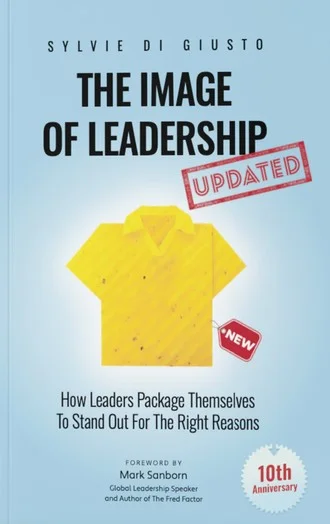
The Image of Leadership
A one-star review lives in the digital dimension, one of the five signals I write about in The Image of Leadership: who you are online, before anyone meets you. The book shows how to shape that signal on purpose, so one bad review is never the only story people find.