What does the law say about age discrimination in the workplace?
The Age Discrimination in Employment Act was passed in 1967 and made age a protected characteristic at work. Employers may not discriminate against employees and applicants aged 40 and older because of their age. That covers hiring, firing, promotions and assignments.
Keep in mind that the federal law applies to employers with 20 or more employees, and that being labeled “too young” is generally not covered by it. Some states have their own rules that go further. So when a recruiter asked Sherry for the year she graduated from university, presumably to work out her age, they were either walking a fine line of legality or simply falling for their own biases.
If you believe you have been treated unfairly because of your age, write down what happened and when, talk to HR, and get advice from the EEOC or an employment lawyer.
Where does age bias show up?
Legal or not, it is common, especially at three stages of a career:
- The job search. Younger applicants are often favored simply because of their age, especially when employers assume an older person lacks certain skills, for example with technology.
- On the job. Younger employees often get more chances to grow: extra training, faster promotions, more opportunities to show what they can do.
- Layoffs. When a company struggles, senior employees are often the first targeted for layoffs or nudged toward retirement.
How do you avoid being labeled by your age? 9 ways
If any of this sounds familiar, here is what you can do about it.
1. Always play to your strengths
Know what you are great at, and make it visible. If you want a structured starting point, these career and strengths tests can help:
- 123 Career Test
- Princeton Review Career Quiz
- My Next Move O*NET Interest Profiler
- MyPlan.com
- MAPP Career Test
And to find out what your first impression says about you, start with my course How You Resonate.
2. Invest in your personal and professional growth
This one matters. Keep investing in your knowledge and skills within your industry. Stay current, and you will always have what an employer is looking for, regardless of your age.
3. Fight the stereotypes
People love to say older employees do not handle change well or pick up new methods slowly. Do not become another example of that age stereotype. Be flexible, be open to change, get excited about new methods, handle the latest technology, and keep your energy high.
4. Toot your own horn
Many of us struggle to talk about our achievements, and it often gets harder the older we get. But if you cannot show others how valuable you are, who else will do it for you? Here is how to position your achievements without bragging.
5. Expand your network
Keep your network open and active. Whatever your age, never stop networking. It is also the best place to practice talking about your value.
6. Update your materials
Keep your resume, LinkedIn profile and any other social media up to date. Current photos and current language keep your options open.
7. Take the focus off the numbers
On your resume and LinkedIn, you do not always need exact dates for every job. Put the focus on your skills, not on the numbers.
8. Keep your stories current
When you talk about past experiences, go back only a few years so you do not date yourself. And too many stories about “the good old days” can sound as if you believe your workplace owes you something. It does not.
9. Confidence is key
The way you talk to yourself shapes how you act. If you keep telling yourself you are too old or outdated, you will send that message to everyone else too. Be confident in your skills and what you bring to the table.
If you keep telling yourself you are too old for your job, you will keep telling everyone else too.
What does it take for you to feel confident in your own skin? Maybe you touch up the grays or dress a bit more current. Just remember you can go too far in either direction.
Even if your age and photo are not on your resume, recruiters can usually find them with a simple Google search. So instead of worrying about whether they know your age, be the best version of yourself and show them that age is just a number, because you are the best candidate.
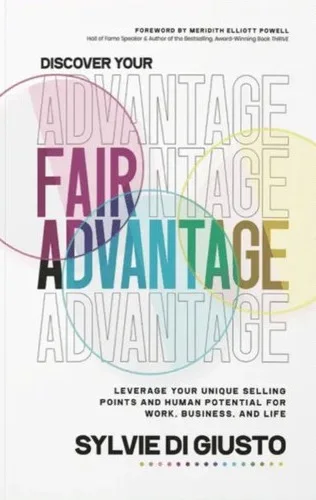
Discover Your Fair Advantage
Age is one of the labels I write about in Discover Your Fair Advantage. The book shows you how to stop treating what makes you different as a handicap and turn your experience, or your fresh perspective, into the reason people choose you.