Emotional intelligence in the digital age means reading a screen
Emotional intelligence in the digital age is the ability to understand, use and manage emotions in virtual environments: email, chat, video calls and social media. It helps you read the emotional state of people you cannot see, manage your own stress and build trust with a team you may never meet in person.
The way we communicate at work has shifted dramatically. Email, virtual meetings and social media now carry conversations that used to happen across a desk, and every one of them has its own emotional and social dynamics. That makes emotional intelligence (EI) more important, not less.
The screen removes many of the signals we rely on. It does not remove the emotions. Here is where EI makes the difference, and where professionals most often slip.
KEY TAKEAWAYS
- Every digital channel, from email to Slack to social media, needs emotional intelligence, because missing cues create misunderstandings fast.
- High EI improves virtual collaboration: better understanding, faster conflict resolution, stronger team dynamics.
- Common mistakes include treating online communication as less important, ignoring tone and failing to set boundaries.
- Digital communication still has non-verbal cues. They just look different: formatting, backgrounds, screen names, reactions.
- Reading those new cues accurately is now an essential professional skill.
Where does emotional intelligence matter in digital communication?
- Social media is a valuable tool for networking and communication. But tone and language there can escalate into conflict quickly. EI helps you handle those moments respectfully and professionally.
- Email is still the workhorse of workplace communication. Without non-verbal cues and audible tone, misunderstandings happen easily. EI helps you recognize and manage the emotions in your messages before you hit send.
- Virtual meetings are a staple of remote work, and the reduced cues make it harder to read how others feel. EI helps you communicate and collaborate without misunderstandings.
- Instant messaging demands extra care with tone and wording. A quick “fine.” can read very differently from what you meant.
- Online forums and discussion boards often have many participants, and debates can turn emotional in minutes. EI helps you respond respectfully instead of adding fuel.
- Collaboration tools like Google Docs, Trello and Slack make remote teamwork easier. Making it work still requires understanding the emotions and motivations of your teammates.
What is emotional intelligence in the digital age?
Emotional intelligence in the digital age refers to the ability to understand, use and manage emotions in virtual and digital environments. It covers the skills and traits you need to communicate, collaborate and build relationships through online meetings, email and social media.
With high EI, you recognize and respond to the emotional states of others, communicate clearly, manage your own emotions and stress, and build positive relationships in virtual teams, even with people you have never shaken hands with.
How does it affect communication and collaboration at work?
Significantly. In a digital environment, your ability to understand, interpret and respond to emotions can make or break communication. Emotionally intelligent people know that body language, tone of voice and facial expressions are often missing online, and they compensate for it.
They stay aware of their own emotions, understand the emotional states of others and consider the impact of their words and actions before they send them. That is also what makes collaboration work, regardless of the physical distance between people. Here is how EI improves collaboration in a digital environment:
- Better understanding of others: knowing how colleagues feel leads to clearer communication and collaboration.
- Better conflict resolution: recognizing and managing your own emotions helps you resolve conflicts and keep relationships in virtual teams positive.
- More effective virtual meetings: paying attention to the cues and emotional tone that remain creates a positive, inclusive and productive meeting.
- Stronger team dynamics: trust and positive relationships make virtual teamwork better.
- Better cross-cultural communication: recognizing and adapting to cultural differences in virtual teams improves cross-cultural communication and collaboration.
The screen removes many of the signals. It never removes the emotions.
What emotional intelligence mistakes do professionals make online?
Communicating digitally requires its own set of skills, because it comes with its own set of challenges. These are the most common EI mistakes I see in digital environments:
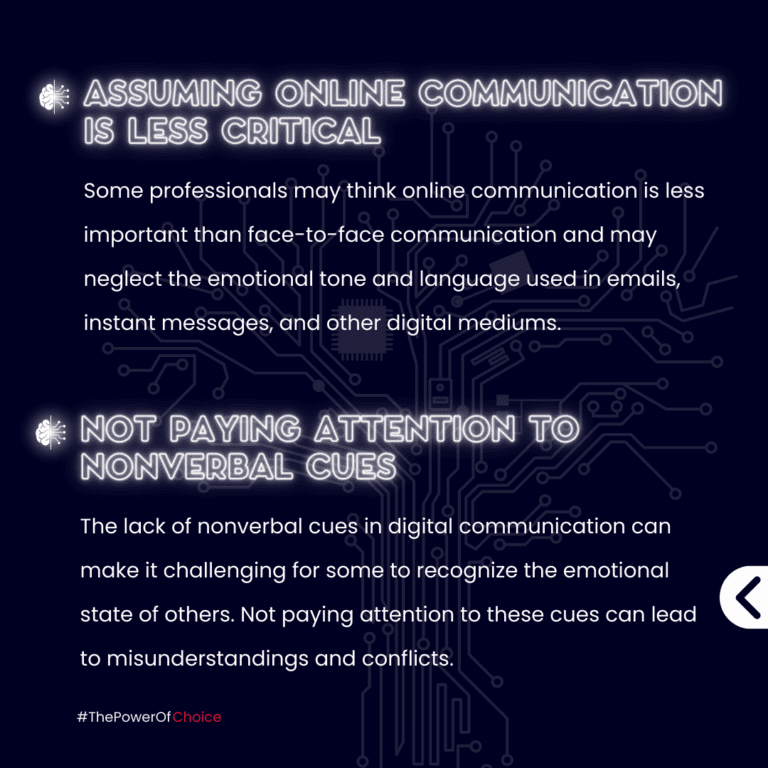
- Assuming online communication is less critical. Some professionals treat it as less important than face-to-face and neglect the tone and language of their emails and messages.
- Ignoring the cues that are there. Fewer non-verbal cues make it harder to recognize how others feel. Ignoring the remaining ones leads to misunderstandings and conflict.
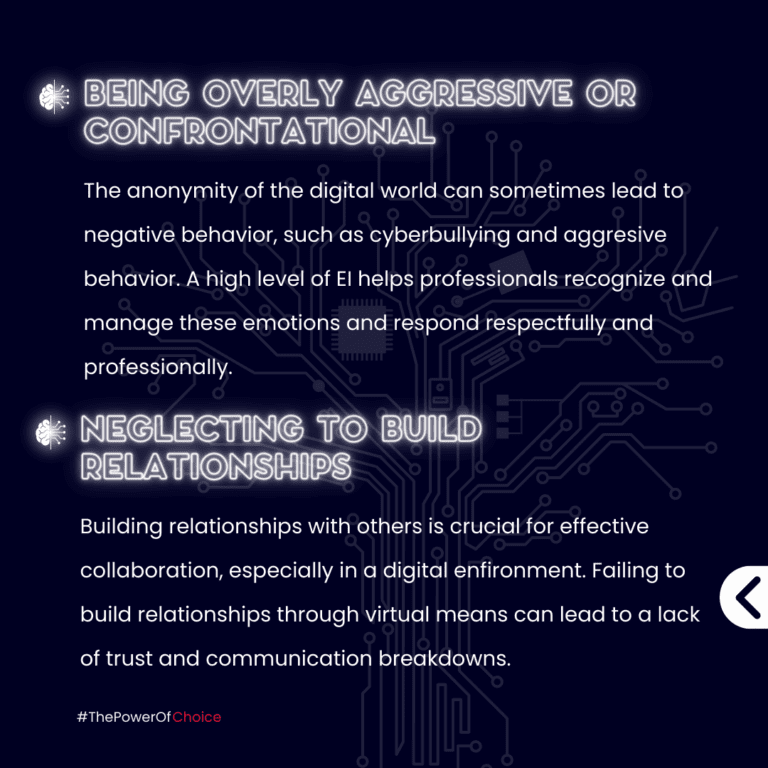
- Being overly aggressive or confrontational. The distance and anonymity of the digital world can encourage negative behavior, up to cyberbullying. EI helps you recognize those impulses and respond respectfully.
- Neglecting to build relationships. Relationships are crucial for collaboration. Failing to build them virtually leads to a lack of trust and communication breakdowns.
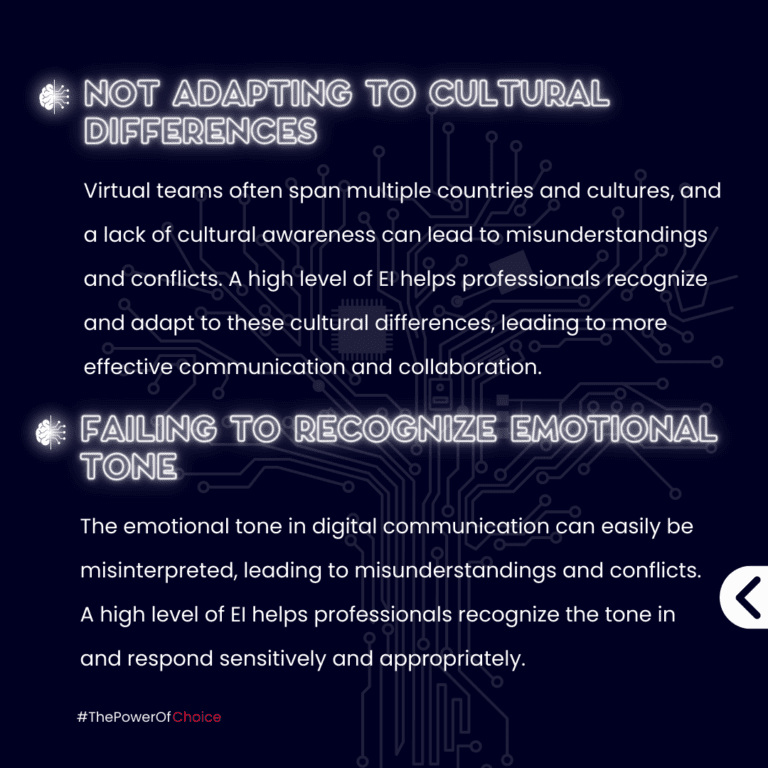
- Not adapting to cultural differences. Virtual teams often span several countries and cultures. A lack of cultural awareness causes misunderstandings that EI helps prevent.
- Misreading emotional tone. Tone in digital messages is easily misinterpreted. EI helps you read it accurately and respond sensitively.
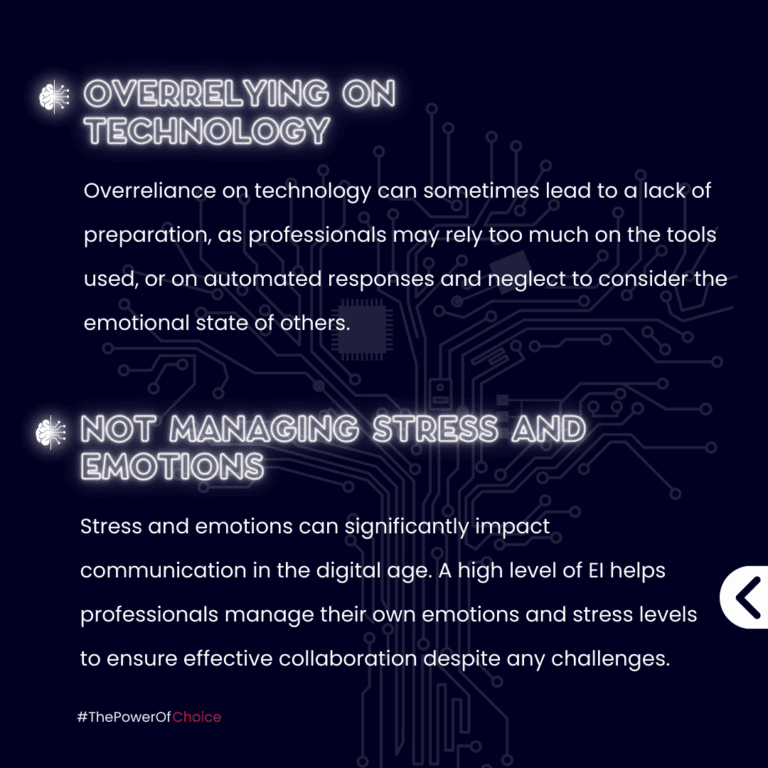
- Relying too much on technology. Leaning on tools or automated responses can lead to poor preparation and to forgetting the emotional state of the person on the other end.
- Not managing stress and emotions. Both have a major impact on digital communication. EI helps you keep your own in check.
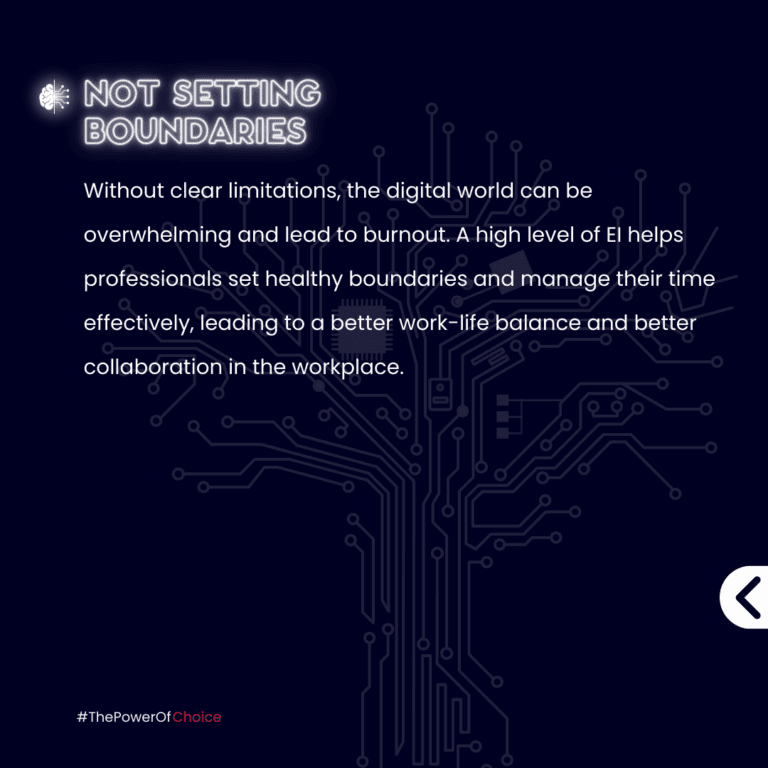
- Not setting boundaries. Without clear limits, the digital world becomes overwhelming and leads to burnout. EI helps you set healthy boundaries and protect your work-life balance.
Are there really no non-verbal cues in digital communication?
I don’t think so. There are new ways to convey emotion, ways we are not used to yet and may not notice as easily:
- Emails carry tone through typeface, color, size, emoticons or special characters.
- In virtual meetings, people express themselves by changing their background, using an avatar instead of video or simply changing their screen name.
- On social media, hashtags and reactions reveal the feeling behind a post.
These are just a few of the ways emotion shows up in the digital world. Reading them accurately is an essential skill for any professional, and so is remembering that your own digital signals are being read too.
Keep exploring with the role of perception in emotional intelligence and emotional intelligence for leaders.
Emotional intelligence in the digital age in a nutshell


The Image of Leadership
Digital is one of the five dimensions I write about in The Image of Leadership: who you are when you are not in the room. The book shows how your emails, profiles and video presence shape the way people perceive you, and how to make those signals work for you.
Frequently asked questions
What is emotional intelligence in the digital age?
It is the ability to understand, use and manage emotions in virtual environments such as email, chat, video calls and social media. It helps professionals read the emotional state of others without face-to-face cues, manage their own stress and build trust and relationships in remote and hybrid teams.
Why is emotional intelligence harder online?
Because many of the signals we rely on, such as body language, facial expressions and tone of voice, are reduced or missing. Messages are easier to misread, conflicts escalate faster and relationships take longer to build. Emotionally intelligent professionals compensate by choosing their words carefully and reading the cues that remain.
How can I show emotional intelligence in emails?
Read your email from the recipient’s perspective before you send it. Check the tone, add a personal greeting, avoid all caps and terse one-word replies, and acknowledge the other person’s situation. When a topic is emotional or complex, switch to a call or video meeting instead of writing.
What are non-verbal cues in digital communication?
They include formatting choices like typeface and emphasis, emoticons and special characters in writing, backgrounds, avatars and screen names in virtual meetings, and reactions and hashtags on social media. Each one carries emotional information, and reading them accurately is part of digital emotional intelligence.