Are certifications worth it, or just letters after your name?
Are certifications worth it? Often yes, but not only for the reasons on the brochure. A certification shapes how you see yourself and how others see you: its timing, price tag, provider, alumni and even how many letters already follow your name all send signals. Ask what it will say about you, not just what it will pay.
There is no shortage of information about how certifications boost your career and your salary. Enough articles and videos cover that already. So let’s read between the lines and look at the gray areas nobody talks about when you decide for or against a certification.
KEY TAKEAWAYS
- A certification can change how you see yourself, even if it changes nothing in how others see you.
- Timing matters: too early, too late, or just right.
- The price tag is often public, and it tells clients how you invest in yourself, and in them.
- Too many letters after your name can look like you collect labels instead of experience.
- The provider’s reputation and its alumni become part of your reputation.
Are certifications worth it? 8 questions to ask first
011. What will it do for your self-esteem?
The first, rarely discussed perspective is what the certification does for you, and for how you see yourself. Will it build your self-esteem and your confidence?
When I applied for my CSP, the Certified Speaking Professional designation of the National Speakers Association, I reached out to former and current clients to document hundreds of speaking engagements and collect testimonials. It was a long and, frankly, exhausting process.
Then I sat down and looked at the spreadsheet coming together, and I thought: wow, I am actually doing this. That feeling of accomplishment made all the extra effort worth it. It gave me the confidence to reach out to clients and book new engagements.
So while it may not have changed how others perceived me, it advanced my career and my business because of how it made me feel about myself.
It may not have changed how others saw me. It changed how I saw myself, and that moved my business.
022. Is it the right time?
Timing matters. A certification can come too early, too late or just right. Are you staying current in your industry, or will it set you back and leave people wondering what took you so long? Finding the right moment is crucial if you want what you usually want from it: to get ahead.
033. What do the price tag and the investment tell others?
Consider the price. First, for you: will it set you back financially, or is it truly the right investment? Then for others. The price is often public online, and it tells people something about your willingness to invest in yourself. How you invest in yourself tells clients how willing you are to invest in them.
044. How many certifications are too many?
Are you just collecting random letters after your name? The quality of a certification matters, and so does the quantity. If you build your reputation by stacking letters after your last name or logos on your website, people may assume your reputation rests on:
- theory only,
- easy, fast and cheap credentials,
- certifications that, in their eyes, required no prior experience or hard work.
It is common to want letters after your name to look more qualified, even when the certification itself is not that useful. Look honestly at your motivation. If it is mainly to impress others rather than to build your knowledge, you may be doing it for the wrong reasons.
055. How does it position you among peers and competitors?
Think beyond your clients. How will the certification position you among your peers and competitors? Will it make you more of an expert in your industry or workplace? Where does it place you in the market, and in their minds?
066. Will it expand your network?
Could the certification lead to new partnerships and opportunities? Every training is a chance to network, and this may be the most valuable part. The certification puts you in a group of people who appear to share your standards.
077. What does the provider’s reputation say about you?
But do you want to belong to that group? The provider’s reputation becomes part of yours.
Check whether the provider and its alumni show any proof of concept, evidence that their approach gets people where they want to be. Think of the personal trainer who is out of shape, the financial adviser who does not live an abundant life, the marriage counselor who is divorced.
What growth have graduates of this program shown? Look at the people who hold the certification and ask whether you want to be among them and have the skills you see in them. If they hold the positions you see yourself in 10, 20 or 30 years from now, it may well help you get there.
088. What if you fail?
Most providers want you to succeed. But what if you do not? What if the time or workload turns out to be too much? Think through the long-term impact of not finishing:
- on yourself and your self-esteem, and
- on everyone involved in the process. How will you tell them it did not work out, for whatever reason, and how might that change their opinion of you?
So, should you get certified?
Working through these questions helps you see how you will personally benefit from a certification, and how your relationships and collaborations will benefit from what you learn.
Certified or not, keep learning throughout your career. Stay curious, and stay current in your industry. Staying current is also your best protection against age labels. Here is how to avoid being labeled by your age, and how to tell whether you are the best kept secret at work.
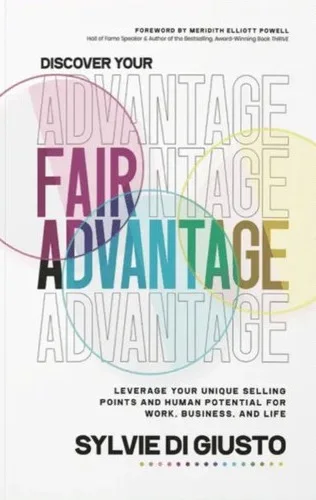
Discover Your Fair Advantage
Letters after your name are one way to stand out, and rarely the one that makes people choose you. Discover Your Fair Advantage shows you how to identify and communicate what makes you different, with or without another certificate on the wall.
Frequently asked questions
Are professional certifications worth it?
They can be, if the timing, cost and provider fit your goals. Beyond salary, a good certification can raise your confidence, give you a valuable network and signal commitment to clients. It is less worth it if you are mainly collecting letters to impress, or if the provider’s alumni show little real success.
Can having too many certifications hurt you?
Yes. A long string of letters after your name can make people assume you rely on theory, or on quick and cheap credentials that required little experience. Choose fewer, respected certifications that clearly support your expertise, and let your track record do the rest.
How do I choose the right certification provider?
Look at the provider’s reputation and, above all, at its alumni. Do they hold the roles you want in 10, 20 or 30 years? Do they show proof that the program works? Their reputation becomes part of yours, so join only a group you are proud to belong to.
What is the CSP certification for speakers?
The Certified Speaking Professional (CSP) is a designation of the National Speakers Association. To earn it, speakers document a substantial track record of paid engagements, client testimonials and ongoing education. I earned mine after documenting hundreds of speaking engagements, and the process itself gave me a real boost in confidence.