Dealing with difficult customers starts with your expectations
Dealing with difficult customers gets easier the moment you drop false expectations. Customers will not always be happy, reasonable, polite, punctual or truthful. You cannot control their behavior, only your reaction, and your reaction usually decides how the situation ends, and what everyone watching thinks of you.
If you own a business or work in a customer-facing role, you already know the customer is not always right. Sometimes they are unreasonable, frustrating or downright rude.
You cannot control what customers do or say. You can control how you react, and your reaction often dictates their next move and how the whole thing plays out. So let’s start by lowering a few expectations.
KEY TAKEAWAYS
- Expect customers to be human: impatient, inconsistent, emotional and sometimes unfair.
- Your reaction, not their behavior, decides how a difficult situation ends.
- Confused, rude, unreasonable, aggressive and over-critical customers each need a different response.
- Never take it personally, never lose your temper and never promise what you cannot keep.
- When there is drama, all eyes are on you, which makes it a chance to build your reputation.
What can’t you expect from your customers?
Here are 24 things you should never take for granted:
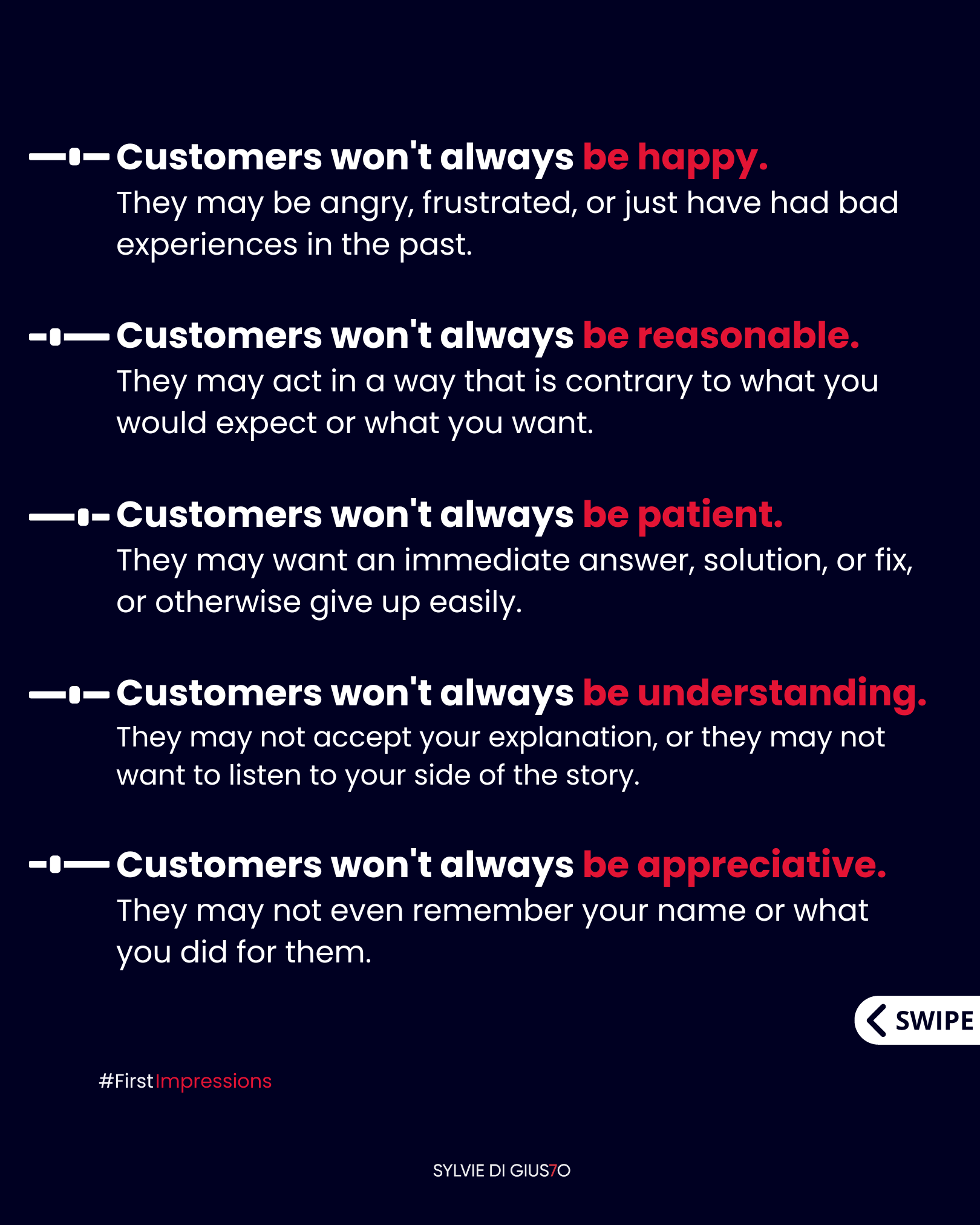
- Customers won’t always be happy. They may be angry, frustrated or carrying bad experiences from the past.
- Customers won’t always be reasonable. They may act against everything you would expect or want.
- Customers won’t always be patient. They want an answer, a solution or a fix right now, or they give up.
- Customers won’t always be understanding. They may not accept your explanation or want to hear your side.
- Customers won’t always be appreciative. They may not even remember your name or what you did for them.
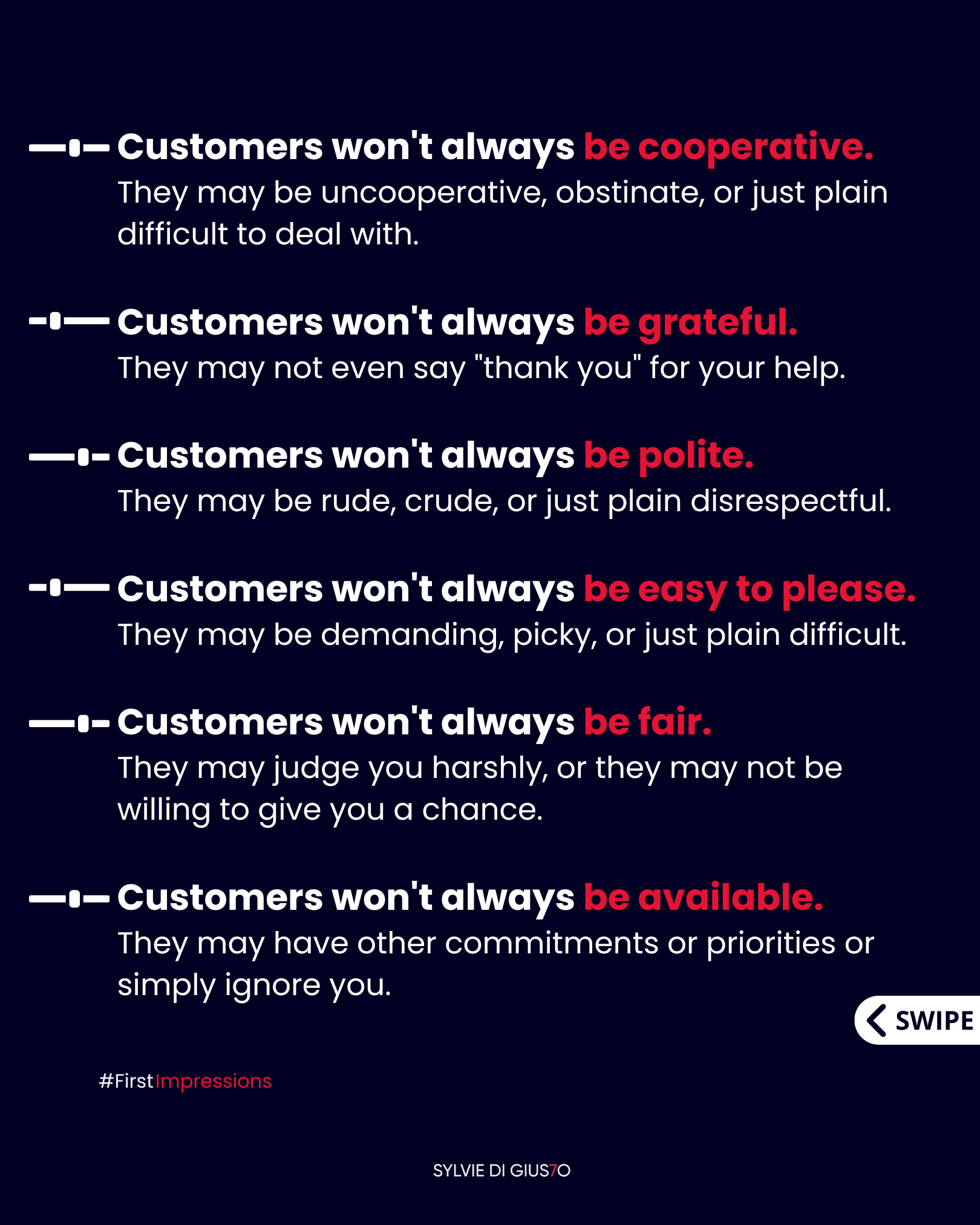
- Customers won’t always be cooperative. They can be obstinate, difficult or simply unwilling to follow instructions.
- Customers won’t always be grateful. A “thank you” is not guaranteed.
- Customers won’t always be polite. They may be rude, crude or plain disrespectful.
- Customers won’t always be easy to please. They may be demanding and picky.
- Customers won’t always be fair. They may judge you harshly or refuse to give you a chance.
- Customers won’t always be available. They have other commitments and priorities, or they simply ignore you.
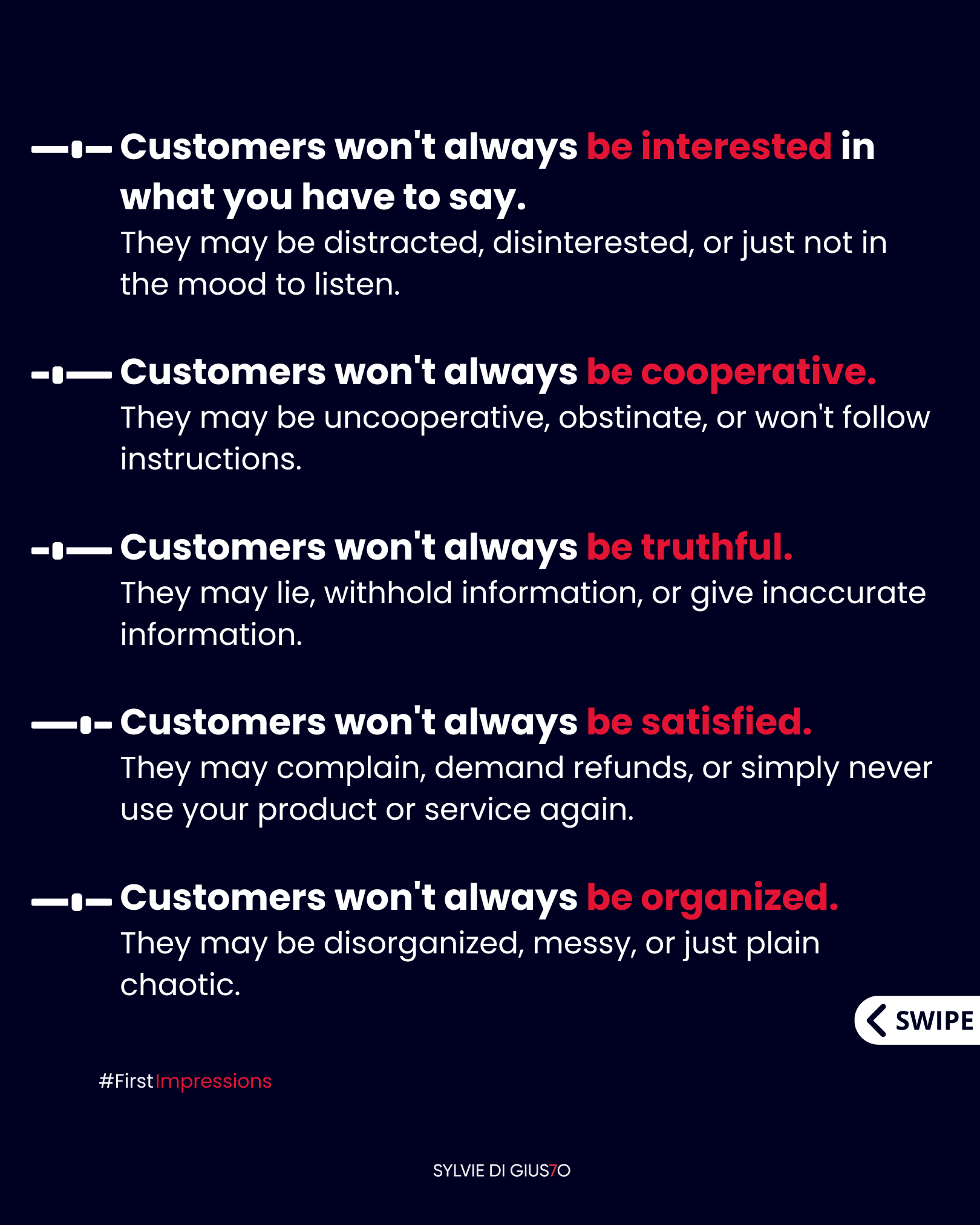
- Customers won’t always be interested in what you have to say. They may be distracted or not in the mood to listen.
- Customers won’t always be truthful. They may lie, withhold information or get the facts wrong.
- Customers won’t always be satisfied. They complain, demand refunds or never come back.
- Customers won’t always be organized. Some are messy and chaotic.
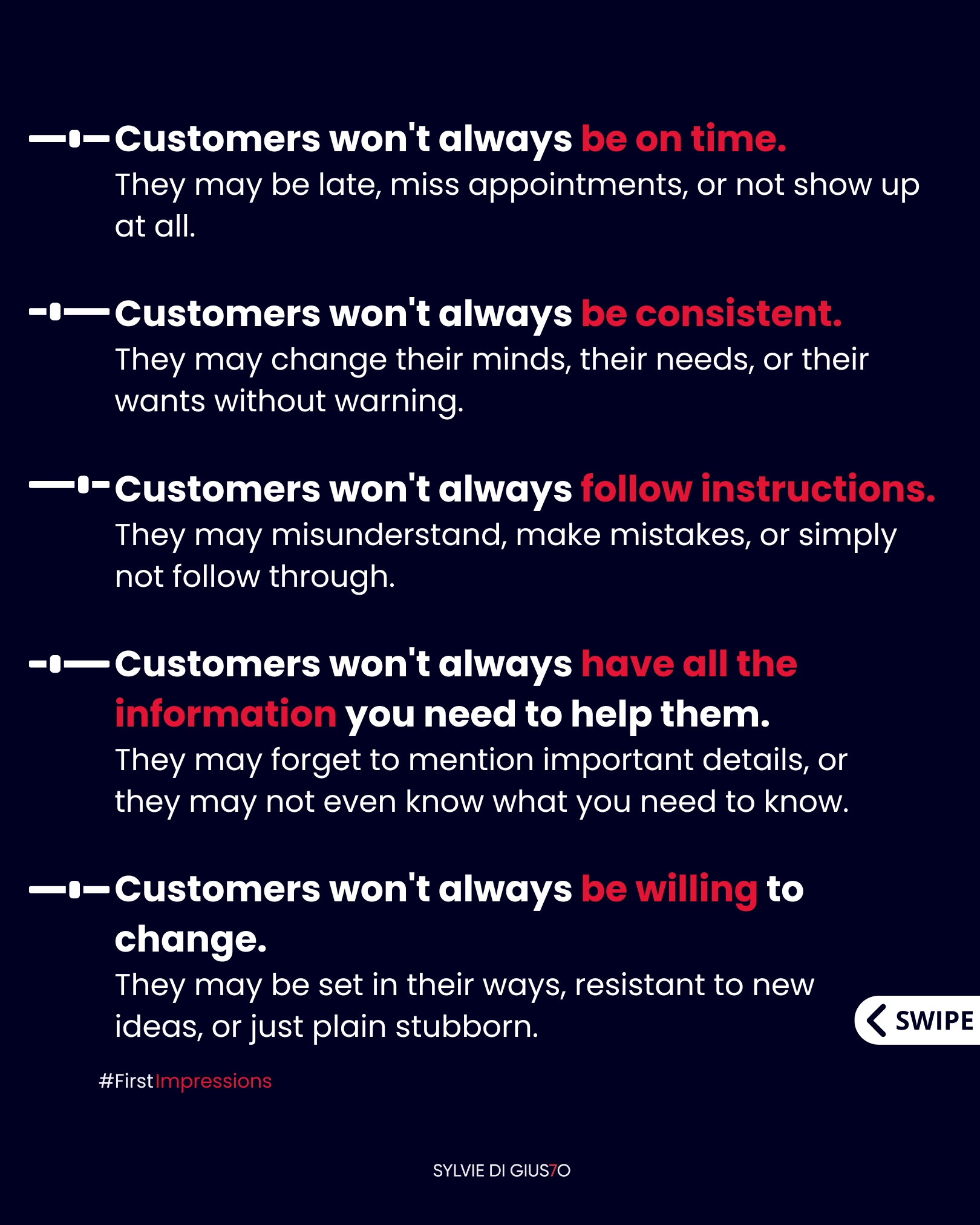
- Customers won’t always be on time. They are late, miss appointments or do not show up at all.
- Customers won’t always be consistent. They change their minds, needs and wants without warning.
- Customers won’t always follow instructions. They misunderstand, make mistakes or do not follow through.
- Customers won’t always have the information you need. They forget important details, or do not know what you need to know.
- Customers won’t always be willing to change. They are set in their ways and resistant to new ideas.
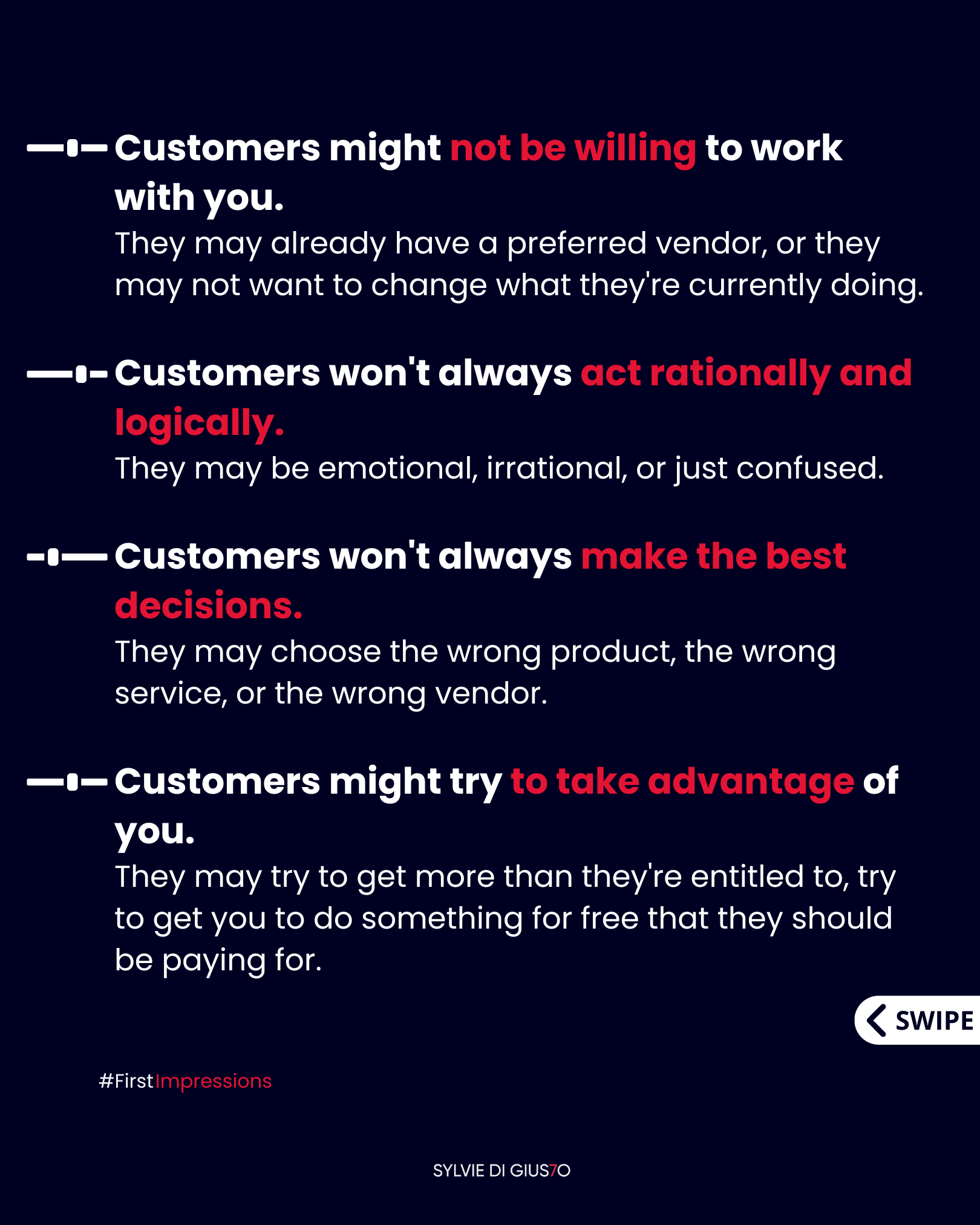
- Customers won’t always want to work with you. They may have a preferred vendor or no interest in changing what they do.
- Customers won’t always act rationally. They may be emotional, irrational or simply confused.
- Customers won’t always make the best decisions. They choose the wrong product, the wrong service, the wrong vendor.
- Customers might try to take advantage of you. They ask for more than they are entitled to, or for free work they should be paying for.
What types of difficult customer behavior are there, and how do you handle them?
The confused customer
They cannot make up their mind. They change it often, or take forever to decide, and it eats your time.
How to handle it: be patient and try to understand where they are coming from. Not everyone works at the same speed, and some people simply need more time to decide.
The rude customer
They are disrespectful or impolite. They use offensive language, interrupt you or are rude in other ways, which is hard to take when you are trying to stay professional.
How to handle it: stay calm and polite, and do not take anything personally. Sometimes people are having a bad day and taking it out on you. If it continues, address it with them or ask a manager for help.
The unreasonable customer
They expect the impossible or refuse to compromise. They are demanding and want you to bend the rules, and you end up feeling you cannot do your job.
How to handle it: look for a compromise. There is often a middle ground you can both live with. If they are still not happy, explain the company policy and why you cannot do what they ask.
The aggressive customer
They get angry, yell or threaten. That is scary and intimidating. Remember that you are not responsible for their anger, and do not take it personally.
How to handle it: stay calm and try to defuse the situation. Speak in a calm voice, listen to what they are saying and try to understand their perspective. If it becomes too heated, get help from a manager or security.
The over-critical customer
Nothing you do is ever good enough. They always find fault with your work, and it feels like you can never please them.
How to handle it: find out what they actually expect and whether you can meet it. Explain your company policy and what is and is not possible. If they are still unhappy, offer a refund or a discount on their next purchase.
What should you never do when dealing with difficult customers?
- Never take the behavior personally.
- Never get too attached to the outcome.
- Never get angry or defensive.
- Never take the easy way out by giving in to their demands.
- Never make promises you cannot keep.
- Never lose your temper.
- Never get emotional.
- Never argue loudly with the customer.
- Never let them see that they are getting to you.
- Never forget your manners, however difficult they are being.
- Never make assumptions.
- Never give up on a difficult customer.
Many of these come down to one skill: saying what needs to be said, calmly, in a tense moment. That is a skill you can learn, and a close cousin of the art of persuading anyone in any situation.
Why is challenging customer behavior an opportunity?
Be prepared for anything, because customers will surprise you. They will not always act the way you want or expect, and that does not mean you can give up on them. In fact, how you handle difficult situations and challenging customers says a lot about your professional image and reputation. When there is drama, all eyes are on you. When everything runs smoothly, far fewer peers, bosses or stakeholders even notice what you achieved.
When there is drama, all eyes are on you. When everything runs smoothly, hardly anyone notices what you achieved.
The customer is not always right, but they are always the customer. They are the ones paying your salary, so keeping them happy is in your best interest. That means keeping your cool and not expecting too much from them. They are only human. Just like you.
Negative customer behavior can even be a good thing, if you let it. It teaches patience, understanding and appreciation for customers, and it helps you grow professionally as you learn to handle difficult situations and people. So the next time a customer surprises you, take it as a lesson. Thanks, customers.
What surprising customer behavior have you experienced? What have you learned not to expect? For more, read about the 42 most common mistakes in sales and these examples of good attitude that delight clients.
False customer behavior expectations in a nutshell


How You Intervene
The hardest part of a difficult customer is the conversation itself: the boundary you need to hold, the no you need to say, without losing the relationship. My course gives you the framework and the language to handle those moments calmly and with confidence.
Frequently asked questions
How do you deal with difficult customers?
Stay calm, listen and do not take their behavior personally. Try to understand what they need, look for a compromise where possible and explain your policies clearly where it is not. Never argue, lose your temper or promise what you cannot deliver. If a situation becomes threatening, involve a manager or security.
What are the most common types of difficult customers?
Five types show up again and again: confused customers who cannot decide, rude customers who are disrespectful, unreasonable customers who expect the impossible, aggressive customers who yell or threaten, and over-critical customers who are never satisfied. Each needs a slightly different response.
Is the customer always right?
No. Customers can be wrong, unfair or unreasonable. But they are always the customer, and how you treat them affects your business and your reputation. The goal is not to give in to every demand, but to stay professional, find fair solutions and keep the relationship intact where possible.
How can difficult customers help your career?
Handling them well is highly visible. When things go wrong, colleagues, managers and stakeholders watch how you respond. Staying calm, professional and solution-focused in those moments builds a reputation for composure and competence that smooth days rarely give you. When there is drama, all eyes are on you, so make it count.