Why surround yourself with good people, and how to find them
Why surround yourself with good people as a leader? Because no vision succeeds alone. The right inner circle challenges your ideas, covers your blind spots, keeps you calm in a crisis and cheers when it counts. “Good” does not mean “just like me.” It means people who make your thinking, and you, better.
Leadership is not a solo act. Behind every strong leader stands a circle of talented, trustworthy people who lift them higher, sometimes by applauding and sometimes by asking the one question nobody else dared to ask.
However strong your vision or your skills, you cannot do it all by yourself. So why does your inner circle matter so much, and how do you build one that truly makes a difference?
KEY TAKEAWAYS
- Leadership is a team sport: the people around you can sharpen your efforts or derail them.
- Every strong inner circle needs a Challenger, an Optimist, a Strategist, a Confidant and an Innovator.
- The right circle has a ripple effect on your organization, your clients, your family and you.
- Look for work ethic, experience, tact, honesty, loyalty, calm, humor and connections.
- Great circles do not form by accident. You build them with clear values and on purpose.
- The fastest way to attract good people is to be the kind of person they are drawn to.
Why is leadership a team sport?
Even the most visionary leaders do not succeed alone. Think of the greatest sports team you have ever watched. It was never only about the star player. It was about how the whole team played together.
Leadership works the same way. You need people who bring out the best in you: who contribute ideas, challenge assumptions and execute plans with precision. Trusted advisors, reliable collaborators and supporters who help you through the hard parts and celebrate the wins with you. A well-rounded circle brings expertise, emotional support and accountability, so you can face challenges with more confidence.
Now picture a coach surrounded by players who lack discipline or refuse to cooperate. The best strategy in the world will not save that season. A roster of talented, dedicated people, on the other hand, creates momentum that carries everyone forward. When you surround yourself with capable, positive people, everything gets sharper: your vision, your strategy and your results. Leadership thrives on collaboration, not isolation.
Which five people does every leader’s inner circle need?
Surrounding yourself with good people starts with one realization: “good” does not mean “just like me.” It is tempting to gravitate toward people who think and work the way you do. But good people do more than agree. They push you out of your comfort zone and bring perspectives you had not considered. They question your ideas, which is exactly how you grow.
The people around you work like a mirror and a magnifying glass. They reflect your strengths and zoom in on what you overlook. They cover your blind spots, spark creativity and spot risks and opportunities before you do. A safety net and a launchpad at the same time. A strong inner circle includes:
- A Challenger. Someone who does not just nod but asks, “Have you thought about this differently?” They keep you from standing still.
- An Optimist. The person who lifts everyone’s spirits when things get tough, with resilience and positivity exactly when it is needed.
- A Strategist. A detail-focused thinker who turns your big ideas into plans that produce results.
- A Confidant. A trusted ally who listens without judgment, gives honest feedback and keeps you grounded through the ups and downs.
- An Innovator. Someone always looking at what is next, spotting what others miss and encouraging creative solutions.
Now grab a pen. Write down the names of the people you trust most, then check that list against these five roles. Do you have at least one Challenger? An Optimist? A Strategist, a Confidant, an Innovator? If not, you know where your gaps are.
True leadership isn’t about surrounding yourself with agreement. It’s about surrounding yourself with growth.
What happens when you surround yourself with good people?
A strong inner circle creates a ripple effect in every direction, and each ripple feeds the next.
- Your organization. Good people raise the culture. They build trust, collaboration and innovation and inspire others to step up. Morale goes up, turnover goes down, and you get a foundation for long-term success.
- Your clients. Clients sense alignment and positivity inside a team. It shows up as better service, more trust and higher satisfaction. Happy teams make happy clients, and that trust turns into loyalty.
- Your family and friends. The resilience you gain from a strong circle travels home with you. You become more present, more balanced and more supportive outside of work.
- Yourself. Perhaps the deepest ripple. Good people challenge you, inspire you and hold up a mirror to your strengths and weaknesses, so you grow in ways you never could alone.
Leadership is not about being the smartest person in the room. It is about having the smartest people in your corner.
How can leaders build their inner circle?
A circle of good people does not happen by accident. It takes effort and a plan. Look for people in many settings: professional networks, conferences, volunteer work, even social gatherings. Look beyond your usual circle for people who share your values and still bring a fresh perspective. Have real conversations, ask good questions and watch how they treat others.
Once you have found potential allies, build an authentic connection. Be proactive: reach out, invite them for coffee, work on a project together. Show your own commitment to growth, be transparent about your vision, and keep the relationship alive with mutual support and recognition. Five principles help:
Define your values
What matters to you as a leader? Which principles guide your decisions, and what kind of energy do you want around you? Once you are clear on your values, you naturally start attracting people who share them.
Prioritize diversity
The best decisions come from voices that are not just echoes of your own. A mix of experiences, backgrounds and perspectives makes creativity flow, shrinks your blind spots and makes your leadership more adaptable.
Build mutual respect
Great relationships start with trust and respect and grow through transparency and appreciation. Acknowledge what others bring to the table, and set clear expectations. When everyone knows what is needed, respect follows.
Ask for feedback
The people who truly care about your growth will not tell you what you want to hear. They will tell you what you need to hear. Keep those people close, especially when it stings a little.
Lead by example
Maybe the most important one. If you want good people around you, be the kind of person they are drawn to. Show integrity, kindness and purpose, and you will attract people who share your vision and raise your bar.
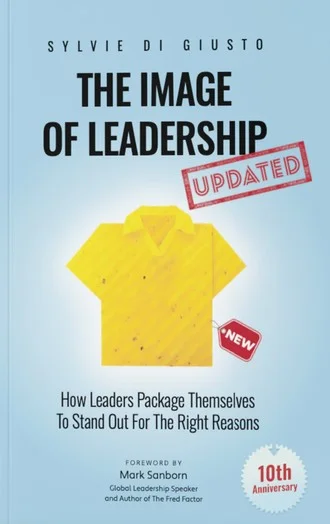
In my book The Image of Leadership, I describe your environment as one of the five dimensions of your professional image. That includes your physical spaces, and just as much the people you choose to surround yourself with. Others read your circle as a signal of who you are.
What traits should the people around you have?
Beyond the five roles, look for these qualities in the colleagues, employees and partners you keep close.
A strong work ethic
Punctuality, focus, dedication, professionalism, initiative, productivity and a desire to improve. People with a strong work ethic are the movers and shakers. They do what they say and say what they do, and they help you set higher standards for yourself. Your own habits will mirror theirs. Spend your time with people who lack that ethic, and you will mostly spend it waiting for a next move that never comes.
Knowledge and experience
People with experience in your industry teach you new things, open your mind to new perspectives, motivate you, give you worthwhile advice and, frankly, keep your arrogance in check. They also make you more self-aware. If you want to be a person of influence, learn from those who already paved the way.
Diplomacy and tact
Diplomatic, tactful people treat others fairly and set personal biases aside. They show discretion, sympathy and empathy, which matters more than ever in diverse teams where collaboration decides success. They listen, they communicate well, and they help you develop emotional intelligence, boundaries and a positive attitude. Watch how they handle conflict, and you will handle it better yourself, including the toxic relationships that can arise in any workplace.
Honesty
There is a fair amount of dishonesty in business, so honest, straightforward people are a breath of fresh air. They tell you their opinion, good or bad, and sometimes that is hard to take. Be open to it anyway. Honest feedback is a mirror. Honest people also tend to do what they say, and their transparency leads to better decisions for everyone around them.
Loyalty and trustworthiness
Loyal people stick with you through thick and thin. A loyal employee saves you the time and money of hiring and training and tends to be happier and more productive. A loyal customer keeps your business thriving. A loyal colleague has your back and speaks well of you when you are not in the room. Trustworthiness is related but not the same: it means you can count on someone to do their job, be truthful about mistakes and be honest with money, without you micromanaging.
Calm under pressure
In stressful moments, it is easy to lose your temper, and when everyone around you loses theirs too, things get worse fast. A calm, levelheaded person becomes the voice of reason, helps you stay focused on sound decisions and brings you back to solid ground.
A good sense of humor
Work can get dull. Someone funny lightens the atmosphere and brings perspective to bleak situations. Laughter is often called the best medicine, and there is a reason: it brings in oxygen-rich air, releases endorphins and stimulates circulation and muscle relaxation, which reduces stress. Over time, it may even support your immune system, release natural painkillers and improve your mood. People with a sense of humor also tend to be smart and witty, and their optimism is contagious.
Great connections
Then there are the social butterflies who seem to know everyone. Start brainstorming with them, and within minutes you hear, “I’ve got a guy (or gal).” They are especially valuable if you are not the most extroverted person yourself. Stay around them long enough, and you will become well connected too.
So, who is in your circle?
Surround yourself with good people, and success becomes a shared achievement rather than a lonely one. Good people raise your leadership, amplify your vision and build a culture others want to be part of.
If your circle shapes you, so does your mindset. Read why the attitude of a leader matters so much, and use these culture questions to find out whether your team is as aligned as you think.
The Image of Leadership
Environment is the fifth signal in The Image of Leadership: the spaces you work in and the company you keep, and what both say about you. The book shows how to choose that circle on purpose, so it reflects the leader you already are.
Frequently asked questions
Why is it important to surround yourself with good people?
Because the people around you shape your thinking, your habits and how others see you. A strong circle challenges your assumptions, covers blind spots, supports you under pressure and raises your standards. A weak one drains energy and slows decisions. For leaders, that effect multiplies across the whole team.
What are the risks of not surrounding yourself with good people?
Poorly chosen team members and advisors lead to miscommunication, mistrust and lower morale. You lose honest feedback, decisions get worse because nobody challenges them, and turnover rises as strong performers leave. Over time, it also damages how clients and colleagues perceive you as a leader.
Can leaders develop good people within their existing teams?
Yes. Encourage growth, ask for feedback and set clear expectations, and many team members will rise to their potential. Notice who already plays the role of a Challenger, Optimist, Strategist, Confidant or Innovator, give them room to do it, and invest in those who show initiative.
How does your inner circle affect decision-making?
A well-rounded circle challenges your assumptions, broadens your perspective and reduces blind spots. Different viewpoints surface risks and opportunities you would not see alone, which leads to more informed, balanced decisions. A circle of people who always agree with you feels comfortable and quietly makes your decisions worse.