Leadership in public service is more than decision-making
Leadership in public service is more than decision-making. It rests on integrity, which sustains public trust, on putting service before status, and on staying calm and prepared when a crisis hits. I learned these lessons up close from one extraordinary leader, and they apply to every leader, public or private.
Some leaders perform their duties. A few embody what leadership in public service should be. I had the privilege of learning from one of them, someone whose influence reaches far beyond policies and procedures. His leadership is measured in impact, not authority.
Through his actions, his mindset and his commitment to the people he serves, he shows what true public service leadership looks like. Watching him and his team at work gave me lessons every leader can apply.
KEY TAKEAWAYS
- Integrity is the foundation of leadership. It sustains trust in quiet moments and in high-stakes ones.
- Public service leadership is built on the trust and credibility your actions earn, not on rank or status.
- The best leaders put service over self-interest, so their decisions lift the team and the communities they serve.
- Strong public service leaders enable, mentor and develop the people around them instead of only issuing orders.
- Crises do not create great leaders. They reveal them.
- Leadership is not a privilege but a responsibility, measured by the lives it improves, not the titles it holds.
Meet Oliver Pu-Folkes, leadership strategist and chief investigator
Some leaders make an impression the moment you meet them, not through titles or accolades, but through presence, purpose and the way they carry themselves. Chief Oliver Pu-Folkes is one of those leaders.
It is not every day that a high-ranking law enforcement official reaches out to you unexpectedly. But Chief Pu-Folkes is anything but ordinary. Imagine how honored I was to hear that he had been following my work and had used principles from the original edition of The Image of Leadership in his leadership development efforts.
Later, he generously invited me to NYPD headquarters. I had the rare opportunity to see firsthand how one of the most respected law enforcement agencies in the world operates behind the scenes, and how he, as a highly regarded public service leader, engages with his team, makes critical decisions and upholds the standards of integrity and accountability that define his leadership.
His career has taken him from shaping the next generation of NYPD officers to a critical leadership role as Chief Investigator for the New York State Attorney General’s Office. To this day, his integrity and sharp leadership set the bar for what leadership in public service should look like.
Every conversation, every observation and every lesson I exchanged with him reinforced one truth: leadership is about service, never power. It is about showing up for those who rely on you, making decisions that put people before politics, and carrying the immense responsibility of public trust with humility and strength. Chief Pu-Folkes and his team live that every day.
What is the foundation of trust in public service leadership?
One of the most striking lessons I learned: public service leadership is not “just” about trust. It is about integrity. Trust may be the foundation, but integrity is what holds it up. Great public leaders understand that public service is a partnership between those who lead and those they serve, and that partnership only lasts when leaders act with uncompromising ethical standards. Always. In every decision, every interaction and every moment. Without integrity, trust is only temporary.
Watching leaders like Chief Pu-Folkes, I realized that trust is not something grand you can “give.” It grows through hundreds of daily micro-actions, especially the ones taken when no one is watching. Consistency in the smallest moments. Commitments made and honored. Every action aligned with the purpose of serving the public.
In a sector where skepticism often runs high, it made me proud to see how many decisions, ones the public will likely never see, are made with integrity, ethical consideration and a deep sense of responsibility. Many of those decisions are hard and come with difficult trade-offs. Integrity means choosing the right path over the convenient one, even when the stakes are high and it demands more of you than the easier route ever would.
Lesson learned: integrity is not optional. It is the foundation, and it shows in every choice, small or big, visible or unseen.
Service over status: why do great public service leaders stay humble?
With my corporate background, and watching public service from the outside as a speaker and as a constituent, I used to think government institutions were all about ranks, orders, stripes and hierarchy. And yes, where decisions affect entire communities, cities or even countries, a clear chain of command is essential.
But in my interactions, those formal structures did not define the public service leaders I was honored to meet. What mattered was not the insignia on their uniforms or the titles they held. It was how they carried themselves, how they led and how they served, always toward a common goal: something that benefits the agency, the team, the public and the many stakeholders whose lives are shaped by decisions made in service.
I have rarely seen this more clearly than in public service: a title does not make a leader. Service does. Chief Pu-Folkes never placed himself above the people he led. He worked alongside them and made collaboration, not command, the cornerstone of his leadership. I saw that a leader does not need to micromanage, and must not abandon the team either. I saw that effective leadership means trusting your people and enabling them to do their job well, rather than sending directives from above. And it is always about collective progress, not individual recognition, stripes or the rank on a badge.
The most effective leaders lift the people around them, never themselves.
Lesson learned: influence, not hierarchy, is what creates real progress.
Crisis management: where leadership in public service is truly tested
It is easy to lead when everything runs smoothly. True leadership shows in a crisis. During my once-in-a-lifetime visit to NYPD headquarters, I saw how prepared the greatest city in the world is for crisis, uncertainty and the unforeseen. There was a calm, steady presence of leadership in the room, and at the same time an acute awareness and respect that everything could change in the blink of an eye.
In many organizations, chaos erupts when the unexpected happens. Systems fail, communication breaks down, people are caught off guard. The strength of public service institutions lies in preparation and adaptability. They anticipate emergencies instead of only reacting to them, and they train for every scenario instead of relying on protocol alone. And they understand that leadership in public service means standing firm in the middle of the storm instead of waiting for it to pass, so the people they serve feel protected, informed and reassured.
That takes leaders like Chief Pu-Folkes and the colleagues he generously introduced me to. They face challenges head-on, not with panic or impulse, but with preparation, measured decisions and composure. They know their calm under pressure sets the tone for everyone around them, and that in uncertain times people look to their leaders for stability, reassurance and direction.
Their approach to crisis management goes beyond solving the immediate problem. They think ahead, anticipate consequences and prepare the entire team for what comes next. They understand that reacting and responding are not the same, and great leaders respond.
Lesson learned: good leaders prepare for challenges and face them with clarity, control and confidence.
What can corporate leaders learn from public service leadership?
Public service leadership operates under unique pressure: public scrutiny, accountability at every level and decisions that can change lives. But corporate leaders face their own high-stakes moments, and the most essential leadership traits cross industry lines. Watching Chief Pu-Folkes and other exceptional public service leaders, I kept thinking about what the private sector could gain from the same principles.
Lead as if the public were watching, because someone always is
Public service leadership comes with an expectation of transparency. Every decision, policy and mistake is under a microscope. Corporate leaders rarely face the same level of public scrutiny, but they should lead as if they did, because their employees, clients, stakeholders and competitors are watching. Reputation is built or broken not in boardroom presentations, but in everyday interactions, ethical choices and moments of accountability.
Serve the team, not the ego
In public service, leadership serves the shared mission: protecting it, lifting it and moving it forward. Personal gain has no place in it. There is no room for self-interest when lives depend on leadership decisions. The best corporate leaders know this too. Leadership means enabling others. Shift from “What can my team do for me?” to “What barriers can I remove so my team can succeed?” and you build a company that thrives from the inside out.
Train for the crisis before it happens
The most effective public service leaders prepare for emergencies instead of reacting to them. They anticipate challenges, train their teams for high-pressure situations and lead with clarity when the stakes are highest. Many corporate leaders still operate in reactive mode. The best ones borrow from public service and prepare for disruption, downturns and industry shifts, building cultures that withstand uncertainty instead of scrambling when adversity strikes.
Prioritize responsibility over recognition
What struck me most about Chief Pu-Folkes and his team was a mindset that should be the foundation of leadership everywhere: the best leaders do not chase recognition, they embrace responsibility. They measure success by the lives they affect, the teams they strengthen and the values they uphold. In business, leadership is often tied to metrics, financial results and market success. But a corporate leader’s true legacy is not in spreadsheets or profit margins. It is in the people they lead, the culture they shape and the trust they build.
Public service leaders rarely make headlines for doing the right thing. They do not decide based on what is easiest or most popular. And yet their impact is undeniable. Imagine if more corporate leaders led with the same integrity, service and preparation, not for recognition, but for the responsibility of leadership itself.
Beyond the badge: leadership identity in public service
My special edition The Image of Leadership in Service & Duty goes deeper into the principles that shape the professional identity of successful public service leaders and the responsibilities they carry. I am deeply honored that Chief Pu-Folkes wrote its foreword. His wisdom and experience offer insights for any leader in public service, the same lessons I was fortunate enough to receive firsthand.
For the bigger picture, read the myths and truths of branding, image and reputation, explore the unspoken uniform of public leadership, or work with me one on one through executive coaching.
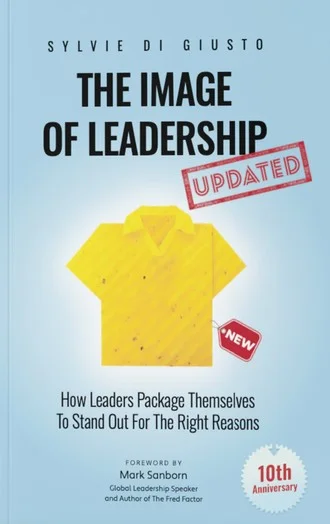
The Image of Leadership in Service & Duty
Integrity, service and composure are visible long before a leader speaks. The Service & Duty edition of The Image of Leadership, with a foreword by Chief Oliver Pu-Folkes, shows public service leaders how to align what people see with the leader they already are.
Frequently asked questions
What is leadership in public service?
Leadership in public service means guiding teams and institutions that exist to serve the public, with decisions that affect communities, cities or entire countries. It rests on integrity, transparency and accountability, and it measures success by the trust it earns and the lives it improves rather than by rank or personal gain.
What qualities make a good public service leader?
Integrity above all, because it sustains public trust. Add humility that puts service before status, the ability to enable and mentor a team, calm and preparation in a crisis, and a sense of responsibility that does not depend on recognition. Consistency in small daily actions matters as much as big decisions.
Why is integrity so important in public service leadership?
Because public trust is fragile and every decision is open to scrutiny. Integrity means acting on ethical principles in every decision, including the ones the public never sees. Without it, trust is only temporary. With it, leaders can make difficult trade-offs and still keep the confidence of the people they serve.
What can corporate leaders learn from public service leaders?
Lead as if the public were watching, serve the team instead of the ego, prepare for a crisis before it happens and prioritize responsibility over recognition. These habits build reputation, resilience and trust in any organization, whether it reports to voters, shareholders or customers.