What is the unwritten uniform of public leadership?
You might think that without a mandated uniform, you have complete freedom in how you look. Think again. Public sector leadership is full of unspoken rules about what credibility, trust and authority look like in your field. They are not written in any policy. They live in the minds of the people you serve and the teams you lead.
We all expect certain professionals to look a certain way, whether we realize it or not. A financial advisor? Polished professionalism, perhaps a well-tailored suit, confident posture, attention to every detail. An architect designing your dream home? A mix of creativity and precision, stylish yet practical, innovative with an analytical edge. A fitness coach? Probably athletic wear that signals discipline and energy. These assumptions shape our perception before anyone says a word.
Public service works the same way. In high-profile government offices, leaders often wear conservative suits, crisp shirts and understated accessories. Tradition plays a part, but mostly it is a visual expression of authority and stability. In community outreach programs, leaders often choose practical, approachable clothing that builds trust. In cultural programs and civic arts initiatives, a more expressive, contemporary style signals innovation.
Whatever your role, the uniform exists. And it speaks long before you do.
How do you read the visual language of your sector?
Your appearance introduces you before you speak. It sets the stage for how you are perceived, as a confident authority or as an uncertain presence. In public sector leadership, where your credibility is assessed all the time, the smallest details become signals of your role and your effectiveness. Mastering this language does not mean giving up your individuality. It means understanding the rules of perception and using them on purpose.
1. Observe before you act
Step back and look at the public leaders around you. What do they wear? What does it say? The point is to learn the visual language of your field, not to copy anyone. Pay attention to colors, patterns, the level of formality, even accessories. They all tell a story.
2. Consider the context
Leading in public is not one size fits all. What works in a high-level strategy meeting can make you seem distant at a neighborhood forum. What makes you relatable at a town hall can feel far too informal in a crisis response meeting. The skill is adaptability.
3. Align without losing yourself
Once you understand the silent standards of your field, personalize them, subtly. A signature color, a meaningful accessory, a tailored twist on a traditional style. The goal is not to blend in. It is to belong while still standing out for the right reasons.
4. Respect the small details
Your uniform includes more than clothing: how polished your shoes are, how well groomed you look, how intentional your choices seem. Micro-decisions create macro-impressions. Do you look prepared? Do you look like someone people can trust? The details whisper before you speak.
Micro-decisions create macro-impressions. The details whisper before you speak.
How does your perception persona fit your public role?
Every leader carries a mix of personas that shape their presence. Maybe you are naturally authoritative but need to soften your image for community engagement. Or you radiate warmth but want to project more executive-level confidence.
In my work, I describe seven perception personas, three primary and four secondary. They shape how you see yourself and how others see you, and they reveal whether your intended message and its actual impact are aligned or not. Once you know yours, it becomes much easier to make your silent uniform fit both your strengths and the expectations of your role. Two moves help:
- Balance your personas. In community engagement, your Caregiver qualities may need to take the lead. In a strategy role, your Traditionalist persona may need to step forward.
- Borrow elements. If you usually dress conservatively but attend a public arts event, borrowing a few elements of the Avant-Garde persona, such as an accessory, can help you connect with that audience.
Is your self-imposed uniform limiting you?
Beyond external expectations, many public leaders follow rules they set for themselves, often without noticing. These internal mandates can be just as restrictive as any dress code.
They come from past experiences, cultural norms or tradition. They make leaders conform to outdated expectations, downplay parts of their identity to fit in, or cling to rigid standards that no longer serve them. Noticing them is the first step, because presence in a public role is not about rigid conformity. It is about strategic authenticity. Ask yourself:
- Do you feel you have to dress like your male colleagues to be taken seriously? That outdated belief may push you to suppress your individuality as a woman instead of strengthening your presence.
- Have you worn the same style for decades? An unchanging appearance can signal reluctance to evolve. A simple refresh says you are engaged and looking ahead.
- Do you dress down to seem relatable? Approachability matters, but looking too casual can dilute the respect and influence your role requires.
Public leadership is as much about presence as it is about policy. The way you present yourself can open doors, build trust and secure your credibility, or create barriers you never intended. The point is not to be controlled by silent standards. It is to master them.
Take control of your public image
Your appearance is an extension of your leadership. Whether you follow the silent standards, bend them or break them entirely, make it a choice, not an accident. Perception comes from what you show as much as from what you say.
For the bigger picture, read about public leaders and the digital danger zone, what I learned about leadership in public service from an extraordinary NYPD leader, or the myths and truths of branding, image and reputation. And if you want to work on this one on one, have a look at executive coaching.
So: does your presence reflect the public leader you are, or the one you want to become?
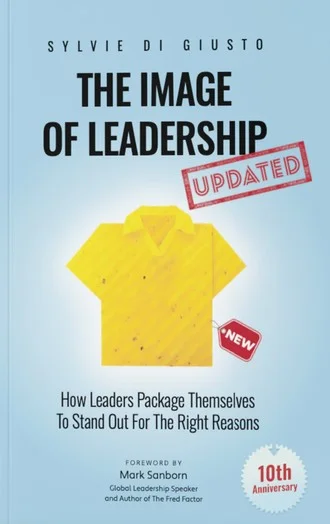
The Image of Leadership in Service & Duty
The silent uniform is one chapter in a bigger story. The Service & Duty edition of The Image of Leadership is written for government officials and public servants who lead under constant scrutiny, and shows how to align what people see with the leader they trust.