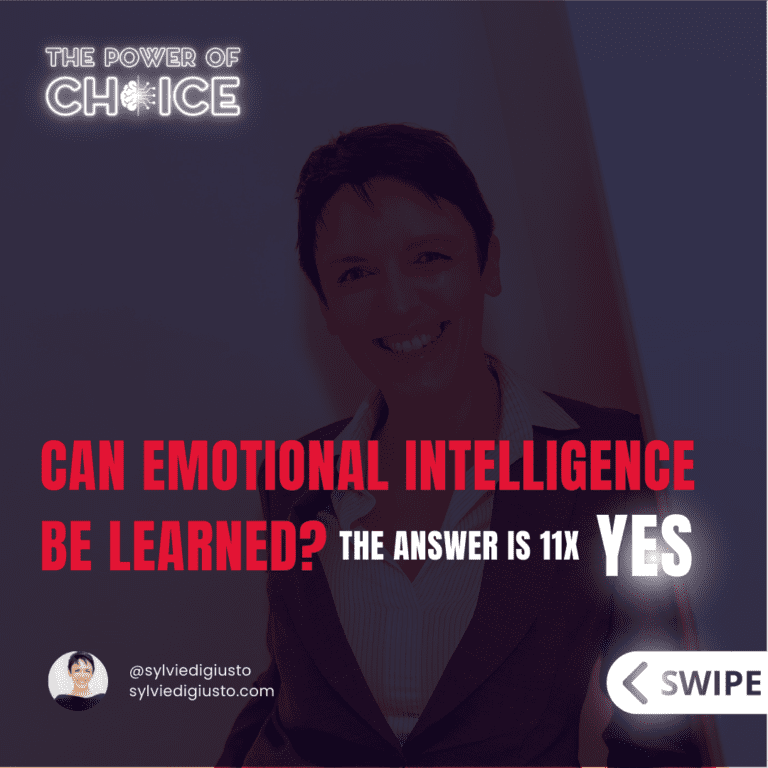
Can emotional intelligence be learned? Absolutely
Can emotional intelligence be learned? Yes. Some people are naturally more inclined toward it, but emotional intelligence is not a fixed, innate trait. It is a set of skills, such as self-awareness, empathy and emotional regulation, that you can practice and improve over time, just like any other skill.
With focus and effort, you can raise your emotional intelligence (EQ). The payoff shows up everywhere: stronger relationships, better communication and more resilience when life gets hard.
The trick is knowing where you stand today. That is why each of the eleven practices below comes with honest questions to ask yourself. Answer them without flattering yourself. Nobody is grading you.
KEY TAKEAWAYS
- Emotional intelligence can be learned, because it is made of skills, not fixed personality traits.
- Signs of high EQ include self-awareness, self-regulation, empathy, social skills, resilience and a positive outlook.
- At work, higher EQ improves communication, relationships, leadership, decisions and performance.
- Eleven practices build it, from self-awareness and empathy to seeking feedback and setting boundaries.
- Honest self-questions show you which practice to start with.
Why can emotional intelligence be learned?
Because emotional intelligence describes what you do with emotions, not which emotions you are born with. Noticing a feeling, naming it, pausing before you react, listening to understand: these are behaviors. And behaviors can be practiced until they become habits.
Some people start with an advantage, the way some people start with a better ear for music. But the ones who practice catch up, and often overtake. Emotional skills can be learned and trained like any other skill.
Emotional intelligence is not a gift you either received or didn’t. It is a practice you either do or don’t.
What are the signs of an emotionally intelligent professional?
Professionals with high emotional intelligence listen actively, know themselves, show empathy and manage their emotions. They recognize what others feel, understand how those feelings affect people and express their own emotions appropriately. They tend to have a strong sense of self-confidence and respond thoughtfully rather than impulsively. They handle relationships and difficult conversations well. Here are the signs:
- Self-awareness: a clear understanding of your emotions, strengths, weaknesses, values and motivations.
- Self-regulation: managing your emotions, impulses and behavior in a positive way.
- Empathy: understanding and sharing the feelings of others.
- Social skills: communicating effectively, resolving conflict and building positive relationships.
- Motivation: the drive to improve and reach your goals while considering the impact on others.
- Emotional expression: putting emotions into words and responding appropriately in different situations.
- Adaptability: adjusting your emotions and behavior when situations change.
- Resilience: recovering from setbacks and handling stress in a healthy way.
- Self-confidence: a strong sense of self-worth and the ability to express yourself positively.
- A positive outlook: approaching life with optimism and seeing challenges as opportunities to grow.
Why is emotional intelligence so important at work?
Greater emotional intelligence helps you succeed in your relationships and your goals, personal and professional, and it supports your mental health. You manage stress more effectively and make better decisions, with positive outcomes in the short and the long term. Understanding yourself and deliberately building your EQ is what lets you form meaningful connections and succeed in any area of your career and life. At work, it shows up as:
- Better communication: understanding others’ emotions and perspectives leads to clearer communication and better collaboration.
- Stronger relationships: better relationships with colleagues create a more positive, supportive environment.
- Better leadership: emotionally intelligent leaders motivate and inspire their teams, handle conflict and make fair and ethical decisions.
- Higher job satisfaction: self-aware professionals know what they need to feel happy and fulfilled at work.
- Better stress management: they handle pressure and emotional challenges more calmly.
- More creativity and innovation: a supportive, collaborative climate invites new ideas.
- Better decisions: they consider the emotional impact of decisions and solve problems holistically.
- Higher performance: motivation, resilience and a positive outlook lead to better results.
For a deeper look at the payoff, read about the benefits of emotional intelligence in the workplace.
How can you learn emotional intelligence? 11 practices
These eleven practices help you become more emotionally intelligent and perform better at work. The questions under each one show you where you stand today.
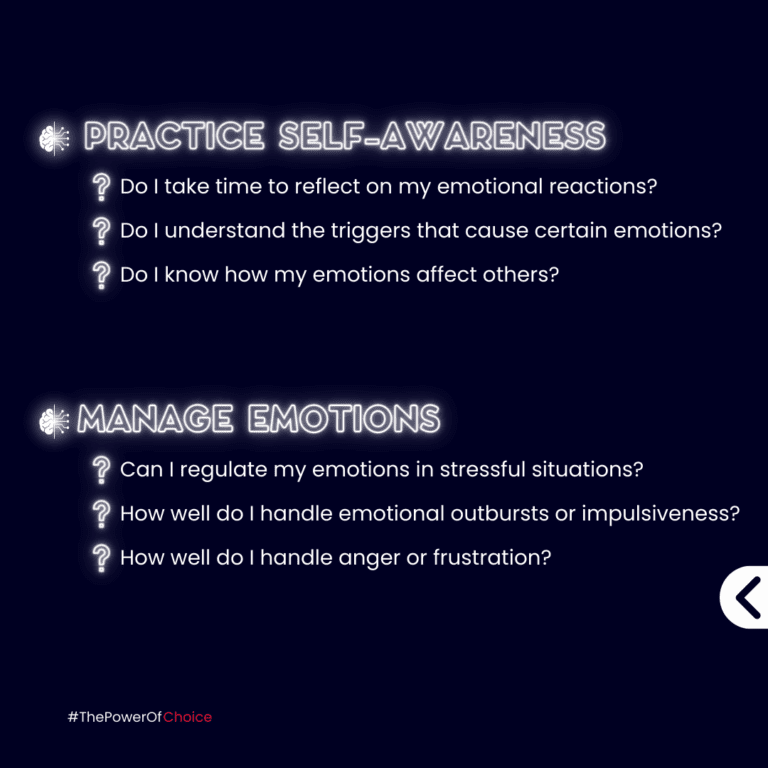
011. Practice self-awareness
Everything else builds on this.
- Am I aware of my emotions and how they affect my thoughts and behavior?
- Do I take time to reflect on my emotional reactions?
- Can I accurately name the emotion I am feeling in a given moment?
- Do I understand what triggers certain emotions in me?
- How well do I handle negative emotions such as anger or frustration?
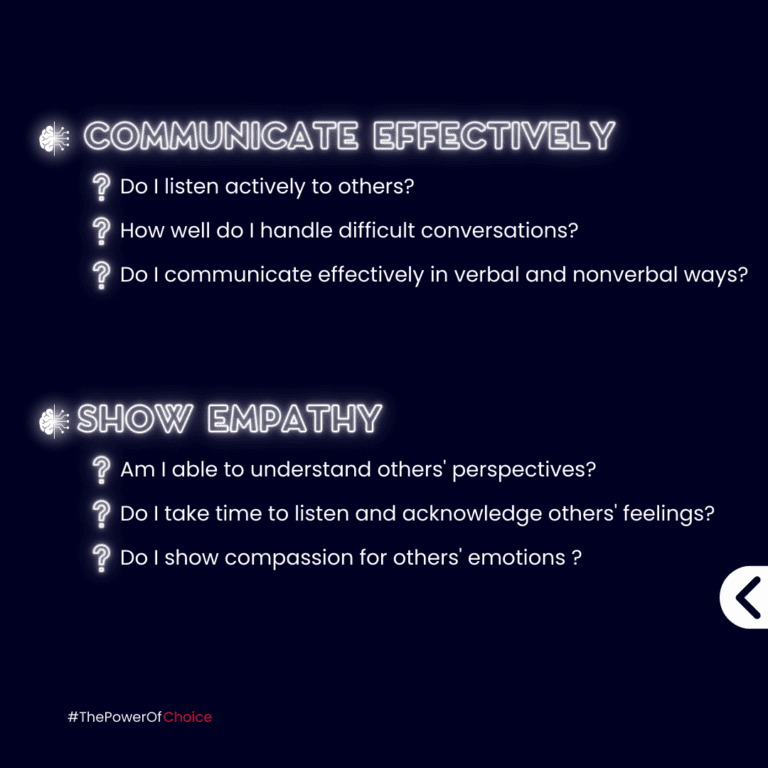
022. Embrace empathy
Understanding others starts with curiosity.
- Can I put myself in others’ shoes and understand their perspective?
- Do I take time to listen and acknowledge how others feel?
- Do I show compassion for other people’s emotions and experiences?
- Can I read and respond to emotional cues from others?
- Can I keep my empathy during a conflict?
033. Manage your emotions
Feelings are information. Reactions are choices.
- Can I regulate my emotions in stressful or challenging situations?
- Do I have strategies for handling intense emotions?
- Can I stay calm and composed in the face of adversity?
- How well do I handle my own emotional outbursts or impulses?
044. Communicate effectively
What you say matters, and so does what they hear.
- Can I express my feelings assertively and clearly?
- Do I listen actively and understand other perspectives?
- Can I handle conflict and disagreement constructively and respectfully?
- How well do I handle difficult conversations or emotionally charged situations?
- Do I communicate well, both verbally and non-verbally?
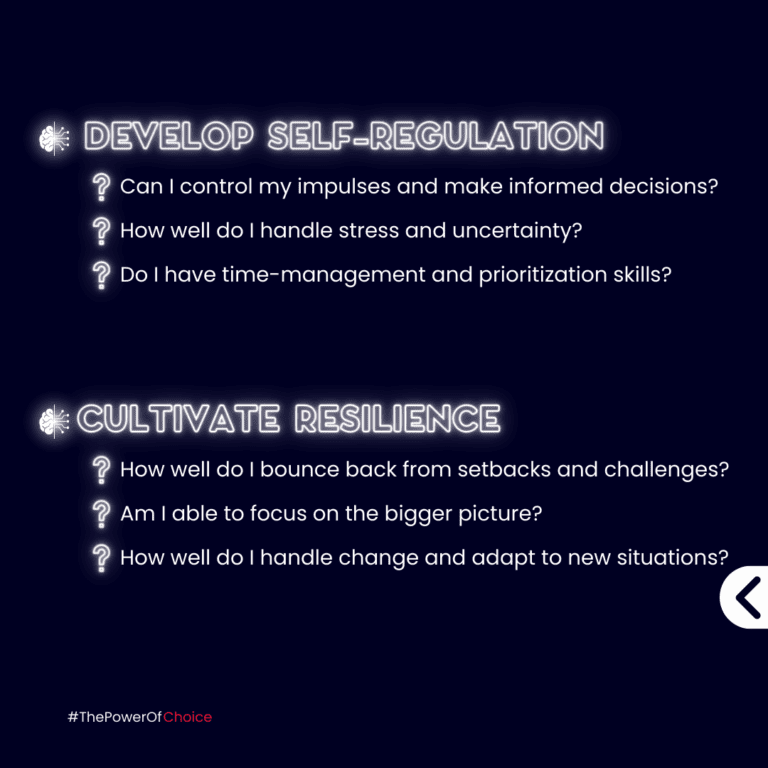
055. Develop self-regulation
The pause between impulse and action is where emotional intelligence lives.
- Can I control my impulses and make informed decisions?
- Do I think things through before I decide?
- How well do I handle stress and uncertainty?
- Can I stay calm and focused in challenging situations?
- Do I manage my time and priorities well?
066. Cultivate resilience
Setbacks are guaranteed. Staying down is optional.
- How well do I bounce back from setbacks and challenges?
- Do I keep a positive outlook and take care of myself?
- Can I manage stress and keep a healthy work-life balance?
- Can I keep perspective and focus on the bigger picture?
- How well do I adapt to change and new situations?
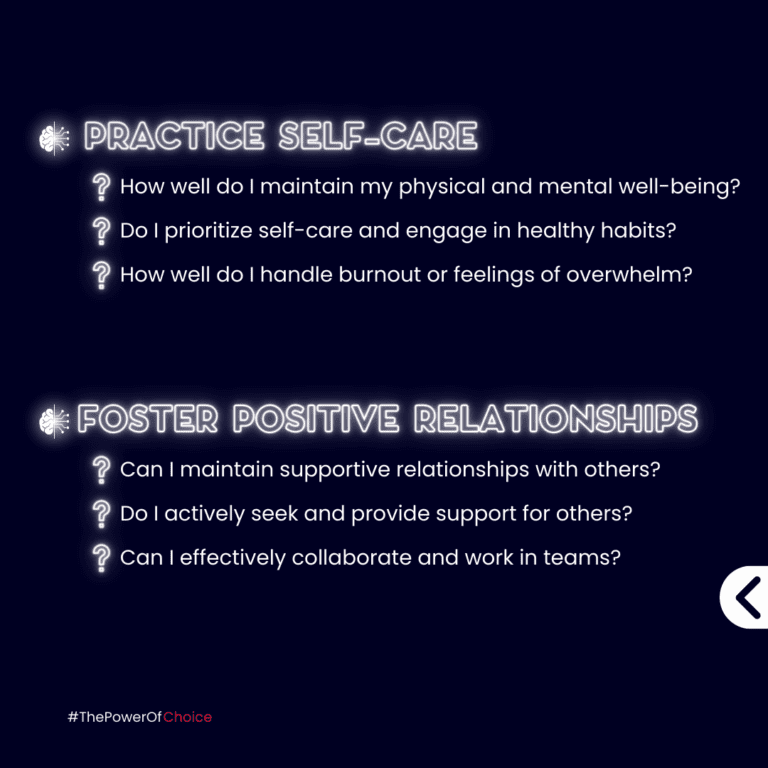
077. Practice self-care
An exhausted brain is not an emotionally intelligent one.
- How well do I maintain my physical and mental well-being?
- Do I prioritize healthy habits?
- Do I make time for hobbies, interests and rest?
- How well do I handle burnout or feeling overwhelmed?
088. Build positive relationships
Relationships are where emotional intelligence gets tested.
- Can I build and keep supportive, respectful relationships?
- How well do I handle conflict without damaging the relationship?
- Do I seek support, and do I offer it?
- How well do I handle criticism or negativity from others?
- Can I collaborate well in teams?
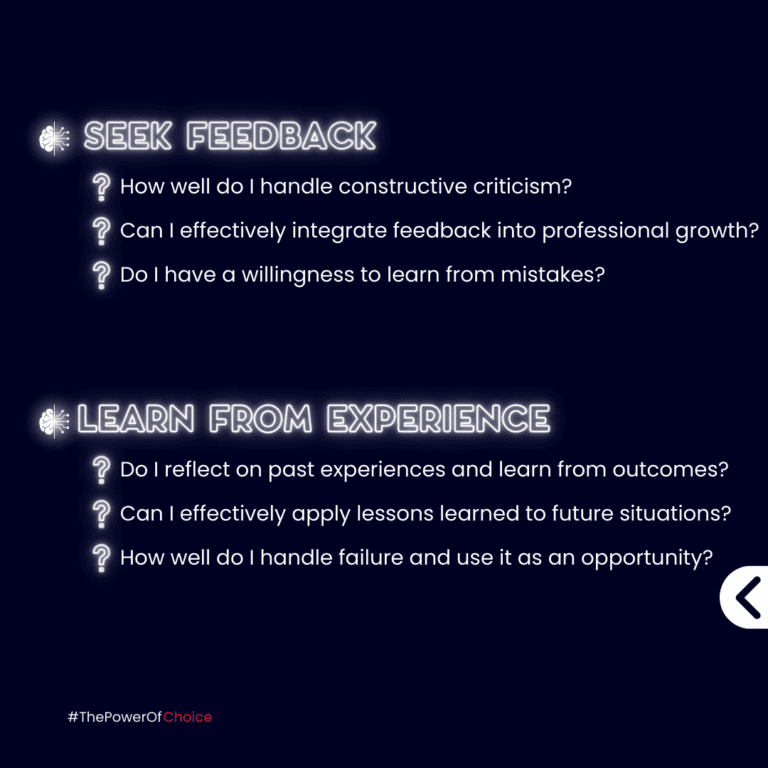
099. Seek feedback
Others see what you cannot.
- Am I open to feedback, and do I learn from it?
- How well do I handle constructive criticism?
- Do I turn feedback into personal and professional growth?
- Do I actively ask for feedback to keep improving?
1010. Learn from experience
Every outcome teaches you something, if you ask.
- Do I reflect on past experiences, positive and negative?
- Can I apply lessons learned to future situations?
- Do I have a growth mindset and keep developing?
- Do I treat failure as an opportunity to grow and learn?
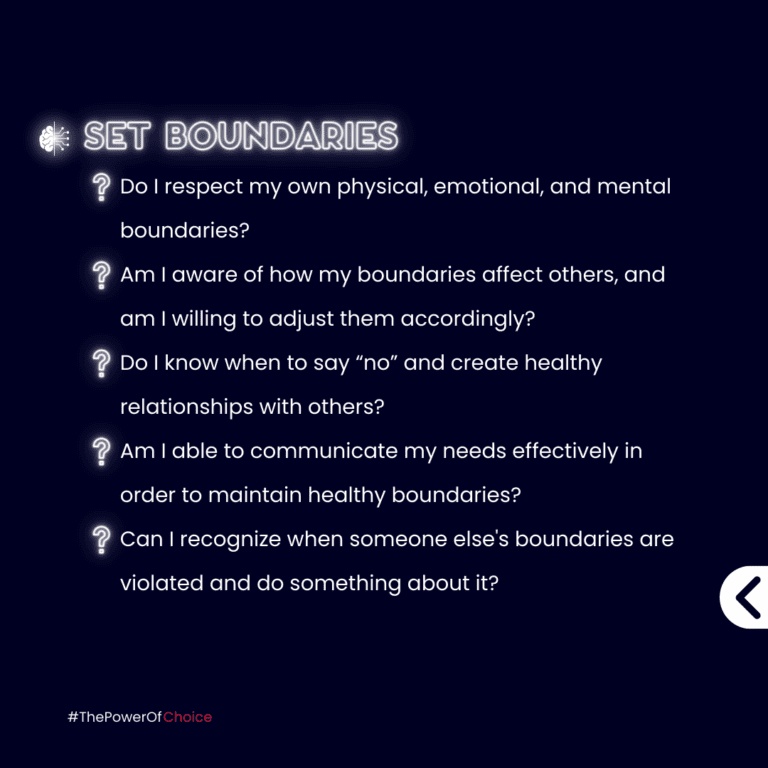
1111. Set boundaries
Emotional intelligence includes knowing where you end and others begin.
- Do I respect my own physical, emotional and mental boundaries?
- Am I aware of how my boundaries affect others, and willing to adjust them?
- Do I know when to say “no”?
- Can I communicate my needs clearly enough to keep healthy boundaries?
- Do I notice when someone else’s boundaries are violated, and do something about it?
Pick the practice where your answers made you squirm the most. That is where the fastest growth is. And if you want to see how better emotional awareness changes your choices, read how emotional intelligence leads to better decisions at work.
Can emotional intelligence be learned, in a nutshell


How You Intervene
Many of the questions above come down to one moment: the conversation you would rather avoid. My online course How You Intervene trains exactly that, so you stay calm, clear and empathetic when emotions run high.
Frequently asked questions
Can emotional intelligence be learned as an adult?
Yes. Emotional intelligence is built from skills such as self-awareness, self-regulation, empathy and communication, and adults can practice all of them. Reflection, feedback from people you trust and deliberate practice in real situations improve EQ at any age. Many people develop it most during their working years.
Is emotional intelligence innate or learned?
Both play a role. Some people are naturally more attuned to emotions, but emotional intelligence is not a fixed trait. The behaviors that make it up, like noticing your feelings, pausing before you react and listening to understand, can be learned and strengthened through practice.
How long does it take to improve emotional intelligence?
There is no fixed timeline. Small changes, like pausing before responding or naming your emotions, can show results within weeks. Deeper shifts in how you handle stress, conflict and relationships take longer, because they depend on practicing new habits consistently until they become automatic.
What is the fastest way to improve emotional intelligence?
Start with self-awareness. Notice and name your emotions several times a day, and observe what triggers them. Then ask for honest feedback from people who work with you. Self-awareness makes every other part of emotional intelligence, from self-control to empathy, easier to develop.