Perception is the hidden engine of emotional intelligence
Perception in emotional intelligence is the way you interpret the emotions, behaviors and intentions of others, and of yourself. You gather it through observation, listening and non-verbal cues, and it quietly drives your judgments, decisions and interactions with colleagues, clients and decision-makers.
Building strong relationships at work takes more than technical skills. Emotional intelligence (EI) shapes how we perceive others and, in turn, how they perceive us.
It works in three directions: how you see yourself, how you see others, and how others see you. Get one wrong, and the other two wobble. Understand all three, and your professional interactions become clearer, kinder and far more effective.
KEY TAKEAWAYS
- Perception in emotional intelligence means reading emotions, behaviors and intentions accurately, your own and other people’s.
- Self-perception rests on self-awareness, a growth mindset, authenticity and confidence.
- Social perception rests on empathetic listening, perspective-taking and reading non-verbal cues.
- Your self-perception is easily skewed by your environment, in both directions, so check it against reality.
- Others judge you by everything you wear, say and do. Authenticity matters, and so does adjusting the signals you send.
What is perception in emotional intelligence?
Perception in emotional intelligence describes how we interpret and make sense of the emotions, behaviors and intentions of the people around us at work. We collect that information by watching, by listening and by picking up the cues nobody says out loud. And what we conclude heavily influences how we judge, decide and interact.
Perception goes well beyond surface-level observation. It means understanding the emotions and motivations that drive people’s actions. The sharper your perceptual abilities, the better you understand what the people around you think, feel and need.
Self-perception: the inner mirror
Self-perception is an essential part of emotional intelligence. It means understanding and interpreting your own emotions, strengths, weaknesses and values. Once you know how your emotions affect your thoughts, behavior and relationships at work, you can stop reacting and start choosing.
Improve your self-awareness
Self-awareness is the foundation of self-perception. When you are attuned to what goes on inside you, you manage your emotional responses better and make more conscious choices. It also shows you your strengths, which you can build on (in my book I call them your Fair Advantage), and the areas that need work. And it helps you align your actions with your values, which is where authenticity and integrity come from.
Embrace a growth mindset
Emotional intelligence and self-perception go hand in hand with a growth mindset: seeing challenges as opportunities to learn, treating failures as lessons and staying positive and resilient. With that mindset you adapt to change more easily, welcome feedback and step out of your comfort zone. Your self-perception improves, and so does your development, personally and professionally.
Build authenticity and confidence
Authenticity and confidence are integral to how you see yourself. When you embrace your own strengths, values and perspectives, you show up as yourself at work, and that builds trust, credibility and genuine connections.
Confidence paired with humility lets you express ideas and opinions with conviction. It allows you to take calculated risks and contribute meaningfully to your team. Nurture both, and you see yourself more clearly while making a positive impact on the people around you.
Social perception: cracking the code of others
Social perception in emotional intelligence means accurately perceiving the emotions, needs and intentions of others. It helps you understand their perspective, communicate effectively and build meaningful connections.
Listen with empathy
Empathetic listening means listening actively and attentively to understand someone’s emotions and perspective. It creates a safe space for open communication and proves you are genuinely interested in what the other person experiences. For practical techniques, I recommend Heather R. Younger’s book on listening.
Practice perspective-taking
Perspective-taking is the ability to step into someone else’s shoes. It requires setting aside your biases and preconceptions and seriously considering how the other person sees the situation. It builds empathy, makes teams more inclusive and strengthens relationships.
Read non-verbal communication
Non-verbal communication plays a big role in social perception: body language, facial expressions, tone of voice. Paying attention to these cues helps you understand the emotions and intentions behind the words, and that builds trust.
Strong social perception leads to better collaboration, conflict resolved more effectively and a more inclusive workplace. Combined with self-perception, it lets you understand and connect with colleagues, clients and decision-makers. Emotional intelligence is a lifelong practice. Every bit you develop benefits you, and the dynamics of your entire workplace.
How can emotional intelligence improve how you perceive yourself?
Controlling your perception starts with understanding yourself. Take time to reflect on your strengths and weaknesses. It builds self-awareness and confidence. Be honest about the areas where you need to improve, so you know which steps lead to growth.
The challenge: your self-perception is heavily influenced by your environment and the reactions of the people around you. If a colleague or client makes negative comments, you may start doubting your abilities. Constant praise, on the other hand, can inflate your confidence beyond what is justified. So stay mindful of your own thoughts and feelings, and of other people’s, to keep your self-image realistic.
Questions to ask yourself to find out how you really see yourself
- What are my values?
- How do I rate my abilities in different areas of my work?
- Am I confident enough to take on a leadership role?
- What are my strengths and weaknesses in communication?
- Am I open to constructive criticism?
- What is my attitude toward failure?
- Do I have destructive habits I need to change?
- What unique skills do I have?
- How do I stay motivated in difficult situations?
- Can I manage stress effectively?
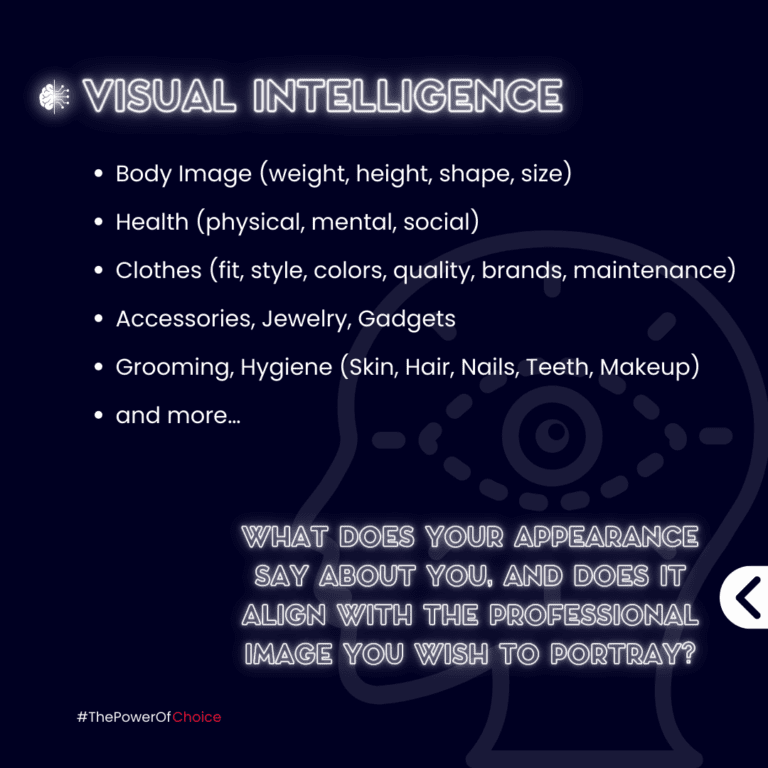
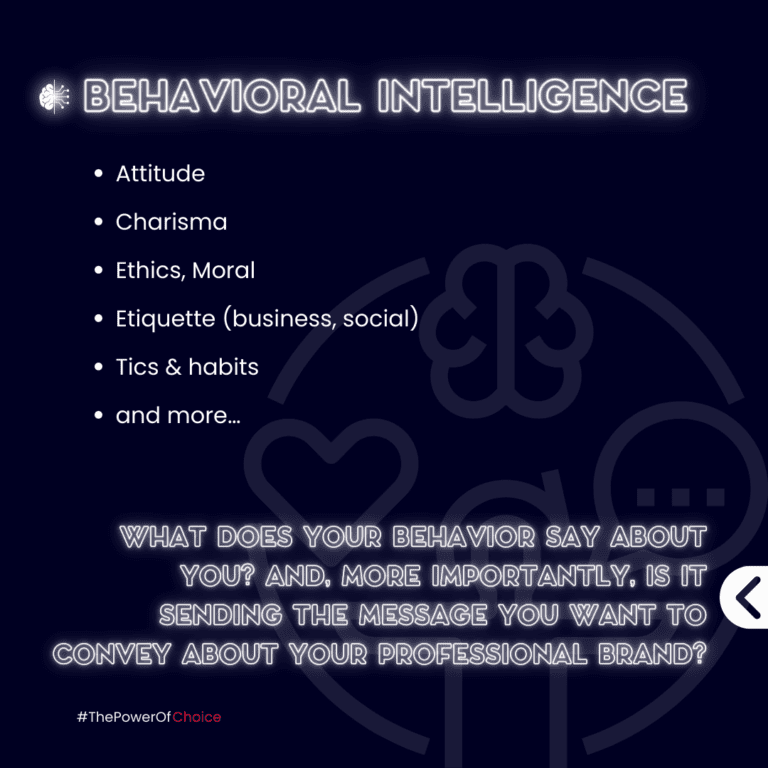
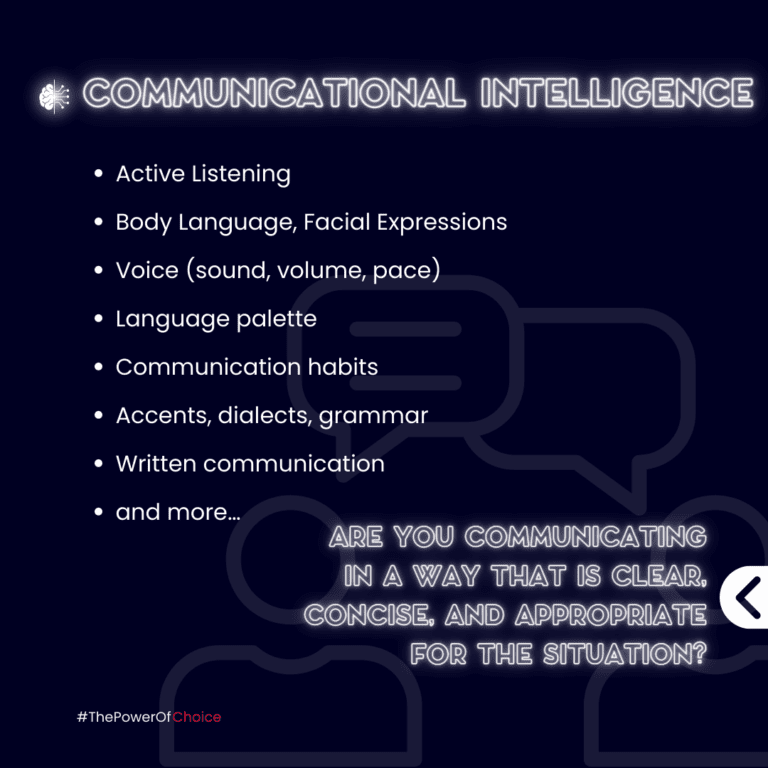
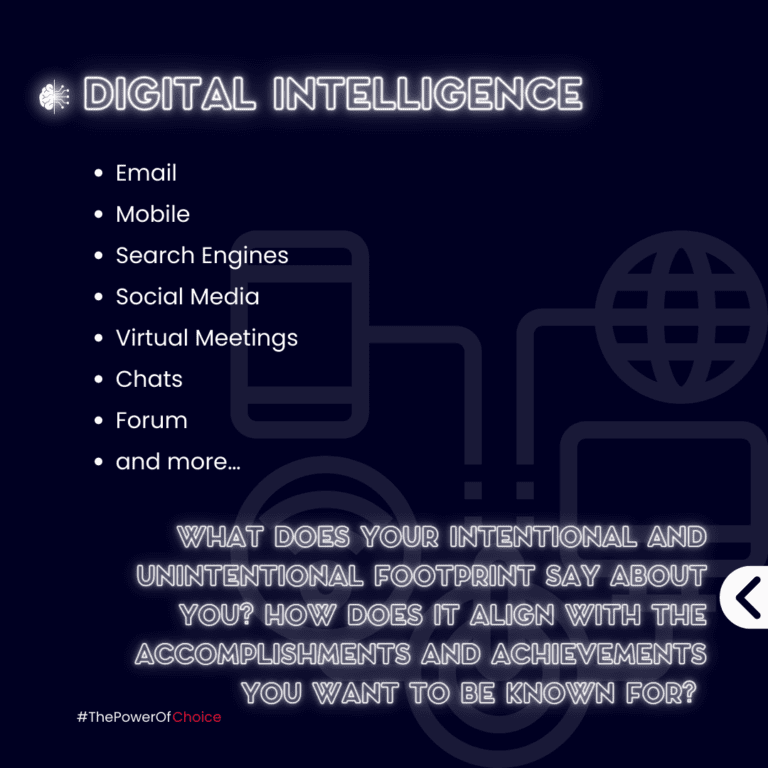
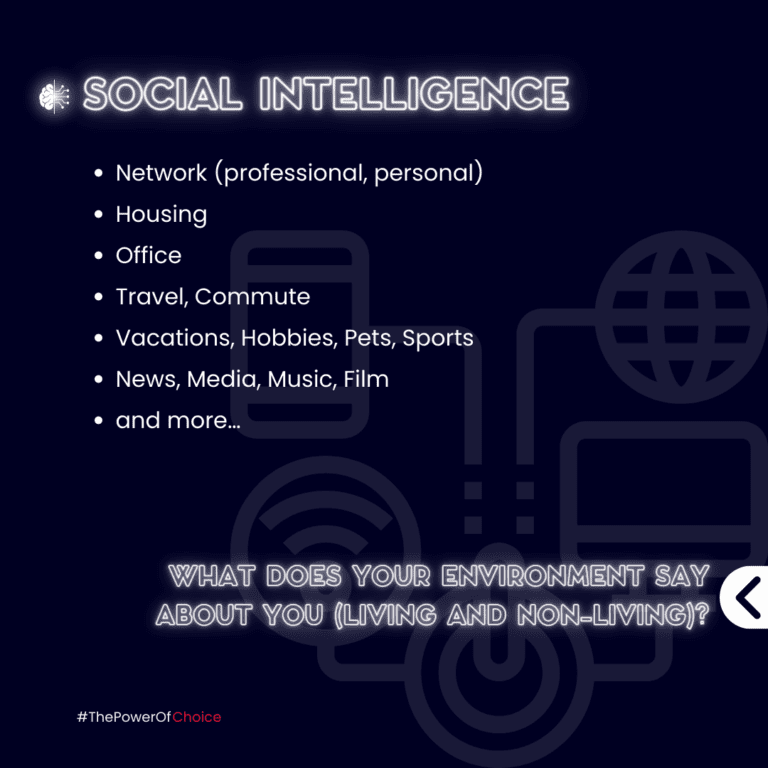
The conscious choices you make with your visual, behavioral, verbal, digital and social intelligence shape the impression you project, and they shape how you feel about yourself:
- Confidence: positive choices that match your values and strengths raise your confidence and self-esteem.
- Personal growth: choosing development and continuous learning strengthens your sense of competence and self-worth.
- Work-life balance: deciding how to manage competing demands and priorities improves your well-being and lowers stress.
- Attitude: choosing a positive attitude and staying optimistic in difficult situations leaves lasting impressions.
- Career advancement: handling challenging situations with emotional intelligence pays off in your career.
How can emotional intelligence improve how you perceive others?
Every day you meet people with different personalities, cultural backgrounds and preferences. Understanding those differences helps you manage your relationships at work. Everyone has a unique perspective, so stay open-minded with colleagues and clients.
Do not let prejudice cloud your judgment, and remember that everyone comes from a different place. Keep your emotions, history, background and assumptions from steering your interactions. Take a step back and think before you respond, act or decide.
Questions to ask yourself to find out how you really see others
- What do I know about the people I interact with?
- Do I understand their values and beliefs?
- Can I see things from their perspective?
- How can I respect their opinions while disagreeing with them?
- How do I handle situations when someone makes me uncomfortable?
- How can I respond calmly and effectively to difficult people?
- Can I find common ground with others?
- Am I aware of cultural differences in communication?
- How can I use empathy to encourage collaboration?
- Do I approach people with an open and positive attitude?
When you consciously control those same choices, you bring out your best in every interaction, and you demonstrate:
- Cultural sensitivity: respect for cultural differences builds relationships and supports diversity.
- Empathy: understanding how others feel helps you connect with them.
- Conflict resolution skills: resolving conflict respectfully keeps relationships healthy.
- Active listening: paying attention to words, body language and tone of voice shows you what others need.
- Respect: honoring different opinions and values strengthens your relationships.
- Leadership potential: stepping up, leading by example and motivating others shows your leadership capability.
How can emotional intelligence shape how others perceive you?
Everything you wear, say and do shapes how others see you. They make assumptions about you, just as you do about them. So be aware of the messages your words and actions send, and adjust them when needed.
Adjust? Isn’t it all about being authentic and true to yourself? Yes, authenticity is essential. But if you are too rigid about how you want others to see you, you stand in the way of meaningful relationships and of your own progress.
Authenticity is essential. Rigidity is not the same thing.
Questions to ask yourself to find out how others see you
- Do I come across as confident or insecure?
- Do I appear open-minded and respectful?
- What do I do to build trust with the people around me?
- Do I listen before I speak?
- Am I too controlling or opinionated?
- How do my words and behavior affect other people’s feelings?
- Am I setting a positive example?
- What can I do to improve the way people think of me?
- Where do I need to be more flexible?
- What image am I projecting to the outside world?
When you shape your visual presence, your actions, your conversations and your digital and social presence on purpose, you create an impression that shows the best version of yourself, and demonstrates:
- Professionalism: following dress codes, using the right tone and keeping ethical standards strengthens your reputation and image.
- Competence: showing your skills and expertise through your work, your feedback and your development proves your value.
- Reliability: well-considered decisions, results on time and commitments kept build trust.
- Authenticity: showing your personal brand and unique skill set sets you apart from others at work.
- Compassion: caring for colleagues, customers and the community shows understanding.
Want to go further? Read whether emotional intelligence can be learned and how emotional intelligence leads to better decisions at work. These five dimensions are also the backbone of my keynote The Power of Choice.
5 emotional intelligence tools in a nutshell


How You Resonate
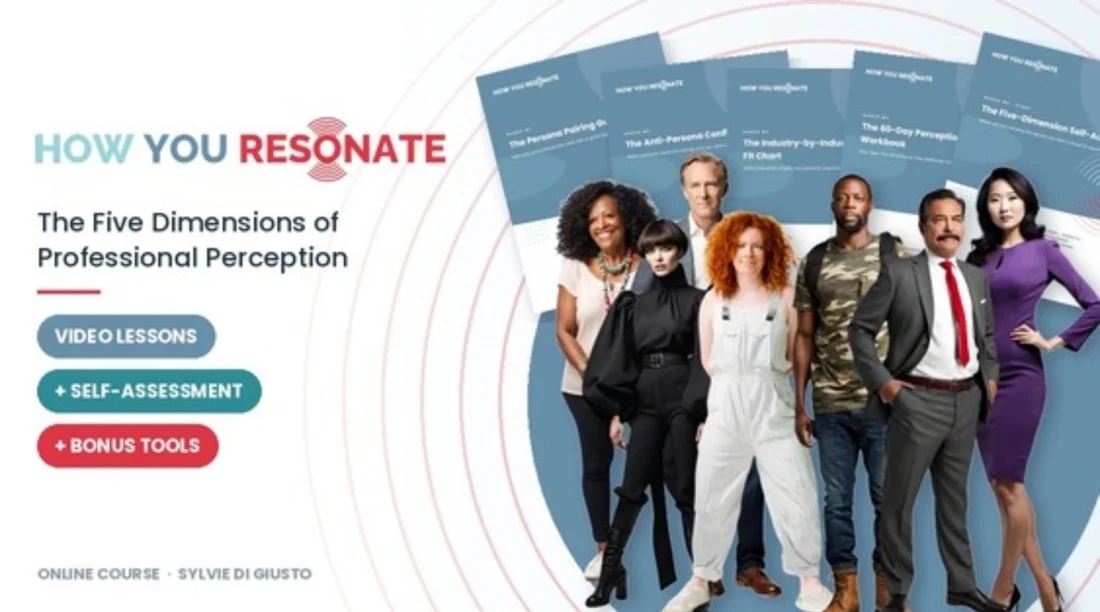
Perception in emotional intelligence becomes practical in my online course How You Resonate. You work through the five dimensions of perception and all seven personas, so you can read others more accurately and close the gap between who you are and how you come across.
Frequently asked questions
What is perception in emotional intelligence?
It is the ability to interpret emotions, behaviors and intentions accurately, both your own and other people’s. You build it through observation, listening and attention to non-verbal cues. Because perception drives judgments and decisions, improving it makes your interactions with colleagues, clients and decision-makers more effective.
What is the difference between self-perception and social perception?
Self-perception is how you understand your own emotions, strengths, weaknesses and values. Social perception is how accurately you read the emotions, needs and intentions of others. Emotional intelligence needs both: self-perception keeps your reactions in check, and social perception helps you respond to people as they really are.
How can I improve my perception of others at work?
Listen with empathy, practice taking the other person’s perspective and pay attention to body language, facial expressions and tone of voice. Above all, notice your own assumptions, cultural or personal, and pause before you judge, respond or decide. Curiosity beats certainty when you read people.
Why does it matter how others perceive me at work?
Because people make decisions about you based on what they see, hear and experience, from the way you dress to the way you listen. Those perceptions influence trust, opportunities and career progress. Being aware of the signals you send lets you stay authentic while making sure your strengths are actually seen.