Positive emotions in the workplace build your reputation
Positive emotions in the workplace, such as admiration, confidence, curiosity, gratitude and kindness, do more than make the day pleasant. They sharpen your focus and decisions, fuel motivation and creativity, and shape how colleagues, managers and customers see you. Over time, the emotions you show become your reputation.
Work is not an emotion-free zone, no matter how many spreadsheets we hide behind. You connect with colleagues, managers and customers on an emotional level every day, and certain emotions strengthen those connections more than others.
They benefit you and your organization alike. They improve decisions by sharpening perception and focus. They motivate people. They invite creativity and new ideas. And they decide, quietly, what people say about you when you leave the room.
KEY TAKEAWAYS
- Positive emotions improve decisions, motivation, creativity and collaboration, for individuals and organizations.
- In sales they build team spirit and productivity, in leadership they drive innovation and communication, in service they improve problem-solving and engagement.
- Some emotions replace harmful ones: admiration is the healthy alternative to jealousy and envy.
- Confidence works best paired with humility, and courage with common sense.
- Each emotion shows in concrete behavior, which is exactly what others read and remember.
What do positive emotions do for you at work?
It depends a little on where you sit.
In sales, positive emotions lead to stronger collaboration and team spirit, which builds trust among coworkers and drives results. They raise motivation and productivity, so people reach their goals. And they improve decisions, helping you respond quickly to changing circumstances.
In leadership, they boost creativity, so leaders find new answers to old challenges. They fuel innovation, which keeps an organization ahead of the competition with new or better offerings. And they improve communication, which keeps teams close and everyone on the same page.
In customer service, they make problem-solving more effective, so customer issues are resolved quickly and well. They strengthen emotional intelligence, so representatives understand needs and respond with empathy and speed. And they raise engagement, which makes the experience feel personal instead of scripted.
Once you are aware of these emotions, you build rapport more easily, become a better decision-maker and collaborator, and help your team succeed. Here are the thirty that matter most.
People rarely remember what you said in a meeting. They remember how it felt to be in the room with you.
Which positive emotions in the workplace shape your reputation?
011. Admiration
Admiration is the healthy replacement for negative emotions like jealousy and envy. Instead of resenting someone’s success, study it and ask what you can learn from it. Admiration also boosts your own confidence and motivates you to work harder. Envy just gives you wrinkles.
How it shows at work
- You recognize other people’s accomplishments and efforts.
- You are open to new ideas and suggestions from others.
- You help others succeed, even if it means sharing credit.
022. Anticipation
Anticipation works on two levels. It makes you look forward to what is ahead, and it helps you foresee difficult situations so you are ready for them. It also sharpens your focus and motivation, so you stay on task.
How it shows at work
- You look for new opportunities and challenges in your career.
- You plan ahead for projects and deadlines, including obstacles and how to handle them.
- You think strategically about improving your own or your team’s performance.
03 to 053 to 5. Empathy, sympathy and compassion
These three let you step into other people’s shoes and understand what they want and need. That leads to better service and better solutions. When you are attuned to others’ emotional needs and show compassion for their struggles, you build relationships based on trust, collaboration and mutual respect.
How it shows at work
- You listen actively when colleagues, managers or customers share their thoughts and feelings, even when you disagree or do not fully understand.
- You consider the emotional impact of workplace decisions and explore every option before deciding.
- You offer encouragement and support in hard times, such as conflicts, layoffs or major changes, which create stress and anxiety for everyone involved.
066. Confidence
Confidence is one of the most important traits for success in business. If you do not believe in yourself, nobody else will. It helps you take risks, speak up and stand your ground when challenges arrive. It also affects others: when you radiate confidence, colleagues and customers feel more comfortable sharing their own thoughts.
How it shows at work
- You believe in your abilities and take calculated risks without excessive fear of failure.
- You speak up in meetings, share your thoughts and offer constructive feedback or new ideas.
- You are not afraid to disagree, especially when you have a strong rationale.
077. Courage
You will not move forward in business without taking risks, and risk takes courage. Pair it with common sense, and the two together lead to smart decisions.
How it shows at work
- You step out of your comfort zone and try something new, even when you are nervous about the outcome.
- You put your own needs aside to make tough decisions in the best interest of the team or company, even when they do not feel good.
- You speak up when you disagree or see things differently, regardless of potential backlash.
088. Creativity
Creativity fuels out-of-the-box thinking and the unique ideas that set you apart from the competition. It also invites collaboration, because many creative ideas are born together. It drives innovation and positive change in your organization.
How it shows at work
- You are open to new ideas, perspectives and approaches to problem-solving.
- You look at things from several angles, which helps you see them in new ways.
- Your curiosity keeps you asking questions, even when the answer seems out of reach.
099. Curiosity
Curiosity makes you explore different solutions and methods, which improves your service and keeps you innovating. It also encourages collaboration, because curious people share ideas and learn from others.
How it shows at work
- You have a real thirst for learning and new ways of doing things.
- You ask questions and seek answers, even when they are not immediately available.
- You share what you learn with others, through tips, articles or tutorials.
1010. Desire
Every professional should want to improve and do better. Desire encourages hard work, perseverance, ambition and a drive for success, and it helps you reach your goals.
How it shows at work
- You set ambitious goals and work hard toward them.
- You stay focused on success and keep your motivation when setbacks happen.
- You bounce back quickly from failure, learn from it and move forward with renewed purpose.
1111. Determination
You can have all the desire and creativity in the world. Without determination, it means nothing. Determination gets you out of bed in the morning, pushes your ideas forward and helps you overcome whatever stands in the way.
How it shows at work
- You believe you can overcome any challenge, and you put in the work.
- You push beyond your limits to reach your full potential.
- You stay resilient, positive and motivated when things get difficult or frustrating.
12 and 1312 and 13. Enthusiasm and excitement
Be enthusiastic and excited about your ideas, and about other people’s. It creates optimism, and optimism helps you succeed in almost any situation. It also attracts and keeps top talent and makes the workplace more positive and inclusive.
How it shows at work
- You believe ideas can change things, and you keep exploring new ways of thinking and working.
- You are eager to learn new knowledge, skills and experiences that make you a better leader.
- You experiment and take risks, knowing it helps you overcome challenges in new ways.
1414. Generosity
Generosity builds a positive reputation. Be generous with your time when clients need help. It comes in many forms: emotional support, tangible actions, even your ideas, when you help develop someone else’s. It also encourages collaboration and teamwork.
How it shows at work
- You are eager to serve clients and customers and go above and beyond.
- You give back to the community through donations and volunteering, out of a sense of social responsibility.
- You lead by example, stay humble about your accomplishments and show kindness and compassion.
15 and 1615 and 16. Gratification and satisfaction
These make you feel good about your accomplishments and encourage you to keep going, grow your business and enjoy what you do. They keep you motivated, productive and focused.
How it shows at work
- You feel a sense of well-being that keeps your mindset positive, even in tough times.
- You appreciate the progress you have made and the successes behind you.
- You feel deeply fulfilled, knowing your work is meaningful and makes a real difference for others.
1717. Gratitude
Be grateful for what you have achieved and for the people who helped you get there. Acknowledge their help, and your relationships grow stronger. Gratitude keeps your attitude positive, and a positive attitude inspires success.
How it shows at work
- You express appreciation to colleagues, clients and customers and recognize how they supported your success.
- You give back through volunteer or charitable work, out of gratitude for your own opportunities.
- You value diversity and the unique perspectives, skills and experiences of others.
18 and 1918 and 19. Happiness and joy
Stay positive and upbeat, and people will enjoy being around you. Your optimism spreads. Relationships with colleagues, clients and customers come more easily when you are happy, and happy professionals deliver better results, more efficiently.
How it shows at work
- You appreciate the joy and satisfaction your accomplishments bring, and look forward to each workday.
- You express your emotions openly, in words and actions, and build bonds of trust.
- You celebrate success with others and recognize everyone’s contribution.
2020. Honesty
Honesty is non-negotiable in business. If you are not straightforward about your pricing, your services or anything else, your reputation suffers and people stop wanting to work with you. Stay honest in every dealing, and your relationships will last.
How it shows at work
- You speak up about mistakes or issues as soon as they arise and share information openly.
- You behave ethically and do what is right, not what is convenient.
- You contribute your ideas and opinions openly in decisions and problem-solving.
2121. Hope
Hopelessness breeds negativity and a lack of confidence. However bad things get, never give up hope. It gives you the motivation to keep moving, and when you stay hopeful in adversity, relationships with colleagues, clients and customers become easier to build.
How it shows at work
- You stay optimistic in uncertain or challenging situations, even when problems seem insurmountable.
- You trust your skills and strengths to find a way forward.
- You appreciate the support of colleagues, managers, clients and customers as a source of strength.
2222. Humility
Confidence is essential, and it needs humility next to it. Humility keeps your ego in check, makes your decisions more transparent and keeps you open to learning.
How it shows at work
- You admit mistakes and see them as chances to grow, not as a verdict on your abilities.
- You give and receive constructive feedback, knowing criticism improves performance.
- You seek out learning opportunities and new challenges that help you grow.
2323. Inner peace
Inner peace carries you through frustration and anxiety. When stress rises, know how to reach it, whether through meditation, deep breathing or whatever works for you. When you can relax and trust yourself, you handle emotional situations with colleagues, clients and customers far better.
How it shows at work
- You stay calm and clear in tense or chaotic situations and make rational decisions.
- You forgive yourself for mistakes without dwelling on them or letting them dent your self-worth.
- You set emotional boundaries and know when to step away from unhealthy or toxic interactions.
2424. Inspiration
Inspiration keeps you motivated and creative. It does not always show up on command, so try different routes out of a rut: travel, exercise, time in nature. Surrounding yourself with inspiring people helps you stay focused on your goals when times are hard.
How it shows at work
- You keep looking for new ideas and strategies to improve performance or productivity.
- You experiment and take risks, treating failures as lessons and experiences.
- You draw on your own experiences and intuition to inspire others through mentoring or coaching.
2525. Kindness
Stress and inflated egos get in the way of kindness at work. But being unkind to many people, or to the wrong person, can damage your reputation. Kindness, on the other hand, opens doors.
How it shows at work
- You notice when someone is struggling and take steps to support them.
- You treat others with respect and courtesy, even in stressful situations.
- You do not take things personally, knowing that people’s reactions often have more to do with their own stress or insecurities than with you.
2626. Loyalty
Stay loyal to the people who helped you along the way. They will support you for years. Loyalty at work also asks you to be honest, decisive and adaptable.
How it shows at work
- You feel a strong commitment to colleagues, clients and customers, knowing success depends on everyone working toward a common goal.
- You stay dedicated to your company’s or project’s goals when things get hard, and stay positive through setbacks.
- You protect other people’s privacy and confidentiality, knowing trust is the basis of every healthy work relationship.
2727. Passion
Your passion shows in everything you do. It makes you happier, more motivated and more pleasant to work with, and it is what sets you apart from others.
How it shows at work
- You are committed to your work beyond the paycheck or a sense of obligation.
- You channel your energy and excitement into productive work instead of letting it run away with you.
- You set challenging goals and strive for excellence, even through adversity.
2828. Pride
Take pride in what you do. It drives you to produce high-quality work, and it makes others see your work as more important. Pride gives you confidence and a sense of self-worth in your career.
How it shows at work
- You hold your work to your own high standards.
- You take on responsibilities beyond your job description and go above and beyond.
- You stay current with industry trends, because pride in your work includes a commitment to learning.
2929. Respect
Respect yourself and those around you, and they will respect you in return. It makes you look trustworthy and consistent.
How it shows at work
- You recognize and respect boundaries, in your personal life and in professional relationships.
- You adapt your communication style to different audiences and changing circumstances.
- You work collaboratively and appreciate group dynamics.
3030. Positivity
The thirtieth emotion ties all the others together. A positive outlook helps you face challenges, stay motivated and productive, and persevere through difficult times.
How it shows at work
- You see the glass as half full and trust that positivity drives success and happiness.
- You notice and celebrate small wins.
- You build healthy habits such as meditation, exercise or time with friends.
- You seek support from colleagues, managers or coaches when you need it.
- You are willing to be vulnerable and share your experiences with others.
Why positive emotions are a choice, not a mood
Respect and pride in your work sit at the heart of emotional intelligence. Whether you are striving for excellence or keeping relationships healthy, awareness of your emotions, and of yourself, is essential. You will not feel all thirty every day. Nobody does. But you can choose which ones you lead with, and those choices are what people remember.
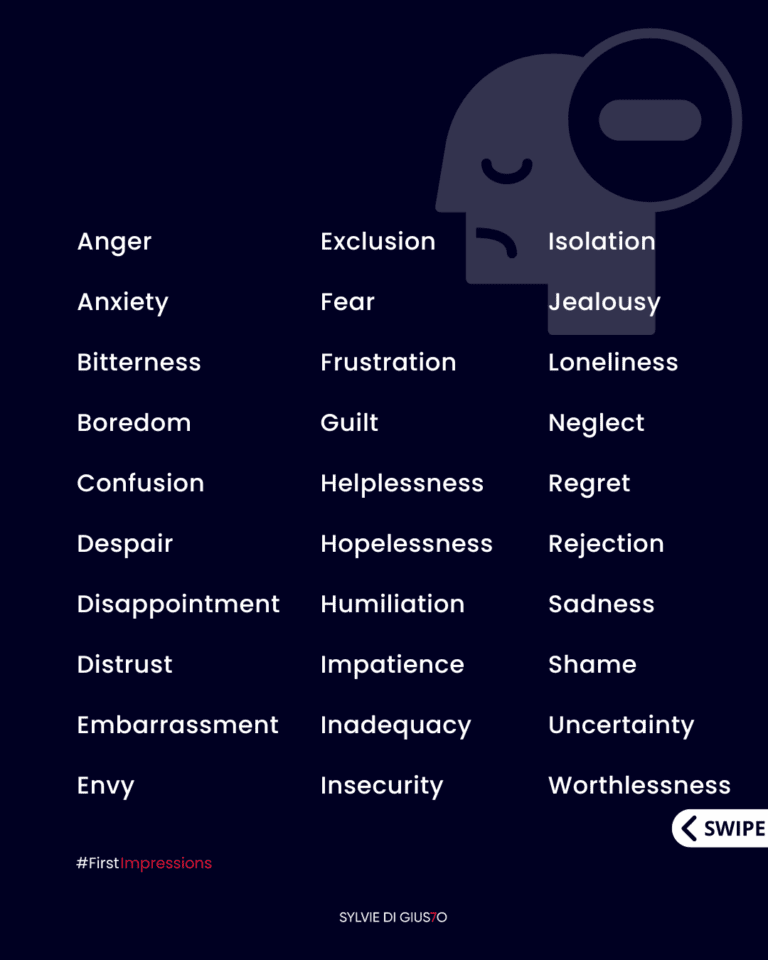
Of course, there is another side. Read about the 30 negative emotions at work that can harm your reputation, and start with what emotional intelligence is and how it applies at work.
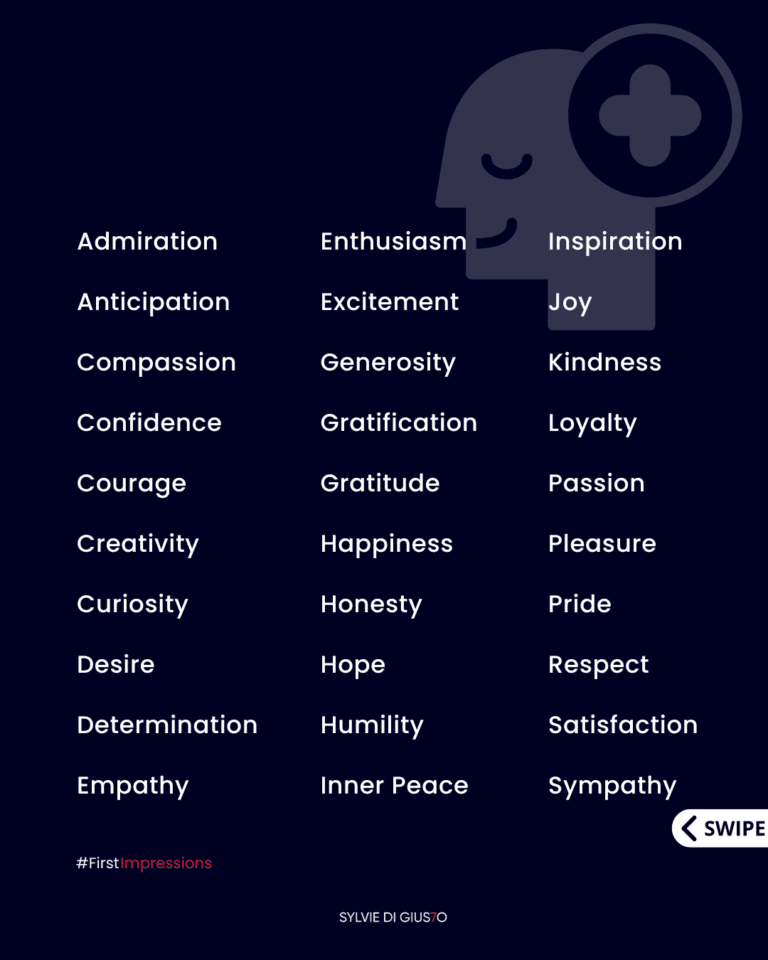
Positive emotions in the workplace in a nutshell


The Image of Leadership
The emotions you show at work become behavior, and behavior is one of the five dimensions people judge you by. In The Image of Leadership, I show how to make sure the signals you send match the professional you are.
Frequently asked questions
What are positive emotions in the workplace?
They are emotional states such as admiration, confidence, curiosity, enthusiasm, gratitude, hope, kindness and pride that people experience and express at work. They improve focus, decisions, motivation and creativity, strengthen relationships with colleagues and customers, and shape the reputation you build over time.
Why are positive emotions important at work?
They make individuals and teams more effective. Positive emotions sharpen perception and decision-making, raise motivation and productivity, support creativity and innovation and build trust. In sales, leadership and customer service, they directly affect results, and they shape how colleagues and clients perceive you.
How can I show more positive emotions at work?
Start with small, visible behaviors: recognize other people’s work, express gratitude, ask curious questions, celebrate small wins and stay calm under pressure. Take care of your own well-being, because exhaustion crowds out positivity. Choose one or two emotions to focus on, and practice them deliberately.
Can positive emotions improve your reputation?
Yes. People judge you by how you behave and how you make them feel. Consistently showing respect, honesty, kindness and confidence builds trust, while negative emotions like envy or impatience erode it. Over time, the emotions you express become part of what others say about you.