Running for office? Voters decide before you speak
If you are running for office, voters judge you long before they read your platform. They read five signals: your appearance, your behavior, your communication, your digital footprint and your environment, including your family and campaign team. Get all five right, consistently and on purpose, because one careless moment can outweigh months of good work.
I sat down with my friend Jay Townsend, political consultant and campaign strategist, to talk about exactly that. Jay has worked as a speechwriter, debate coach, poll taker, scriptwriter, strategist and advertising specialist in four presidential campaigns, scores of US Senate, gubernatorial and congressional races, and a long list of county executive, mayoral, legislative and judicial contests. We are close to a decade of friendship, and he has been my first call for any question about politics for years.
Our conversation was recorded for Jay’s YouTube channel, which holds more than 250 free videos on the art of political campaigning. Watch it below, or read on for everything we covered.
KEY TAKEAWAYS
- Voters decide about you in their unconscious mind, the same way for a small local office or a nationwide one.
- The ABCDE framework covers what they judge: appearance, behavior, communication, digital footprint and environment.
- There is no dress code for candidates anymore. Dress for your confidence and for the voters you want to represent.
- One public blow-up, one careless post, one distracted family member can undo months of work.
- Own your name on every platform and your URL, then build your digital footprint on purpose.
- Think about the last office you want to run for, not just the next one.
How do voters make decisions about candidates so fast?
I help leaders and professionals understand how the world perceives them and how people instantly make major decisions about them. Before we get to any framework, one thing matters: those decisions have nothing to do with whether we are good or bad people, or whether we even want to make them. Our brains make them automatically, in a huge unconscious mind filled with past experiences, emotions and plenty of unconscious biases.
It happens in the back of our minds without us really noticing. But once you know that it happens, and why, you can work with it. That is where the ABCDE comes in. And whether you are running for a small local office or an important national one, the principles are always the same.
The ABCDE: what voters judge when you are running for office
A for appearance
Like it or not, people look at you. We think in pictures. Our brain is actually quite lazy and does not like to work, so it takes a shortcut through our eyes.
The visual picture you give voters starts with the suit you were born in: your body. Are you tall or short, heavier or lighter, do you take care of yourself? Then comes your clothing: style, fit, quality, the brands you wear. Then accessories, hair, makeup, shoes, the whole picture.
There is no one-size-fits-all formula. Politics has shown us again and again that the old rule, “a suit is a suit, and a politician wears one,” no longer applies. Take the outside perspective instead. Who are my potential voters, and what would they like to see on me?
And to be very clear: looking good is great, but it is not enough. Politics is full of examples where looking good alone did not work. It is a beginning, the start of the road you take voters down.
B for behavior
Sooner or later, you have to behave. Is your attitude positive or negative? How do you approach voters? Your attitude speaks louder than anything you say. It leaves the room before your words do, and people react to it emotionally.
Then there is emotional intelligence. How self-aware are you? Are you in control of your emotions, and how do you react when something triggers you? Can you read a room, and read the emotions of the voters in it? And there is simple etiquette. Do you shake hands at events? Do you look people in the eye, or down at your phone? Do you let them leave the elevator first or last?
C for communication
At some point, you are going to say something. Communication is what you say and how you say it.
Your voice is a powerful instrument you play at every single event, and almost nobody ever learns to play it. What are you doing to improve yours? We also know the first eleven words of any conversation matter most. How do you open your speeches? How do you greet voters? Your first words set the tone.
But communication is not only speaking. We constantly speak without words, through body language and facial expressions. When those signals contradict what you say, voters feel uncomfortable. And the most important part of communication is not speaking at all. It is listening. Are you an active listener? Or do you show up with your message, which matters, and never really hear the questions voters ask?
D for digital footprint
The ABC is the basic formula. I added the D because, especially in politics, most first impressions no longer happen in person. They happen digitally.
Yes, you may still knock on doors and talk with voters face to face. Most of the time, you do not get that chance. You send emails, and those emails do not stay with the people you sent them to. They get forwarded and forwarded again, landing in inboxes you will never know about, quite possibly your opponent’s. What does your website say about you? What else comes up when people google your name? What do they find on social media?
And make no mistake: voters do not separate the private person from the politician. If two things do not belong together, it is the internet and privacy.
E for environment
Last but not least, the E for environment. It might as well stand for everything, because it is everything that surrounds you. Voters look at who you spend time with. Who is on your campaign team? Your family, who are part of that team too. What do they post, how do they look, how do they behave? Your campaign office, the car you drive, the vacation you took.
We have seen it many times: voters or the press pick up one piece of information, completely out of context, and make it a big story. And it did not happen in your control. It happened in the control of someone around you.
As Jay summed it up: a candidate does not get to choose one of these. They have to get all five right.
Do you still need a suit when running for office?
Jay started his career 40 years ago. Back then, every candidate, most of them men, wore a suit everywhere: at the plant gate, on stage, going door to door. The few women candidates dressed up too. Not anymore.
His starkest example came from the 2022 Senate race in Pennsylvania. The Democratic candidate showed up at many campaign events in shorts and a sweatshirt. The Republican candidate always wore a suit and a red tie. The suit lost. The man who looked a little disheveled won. So why did it work?
First, the rules of 40 years ago no longer apply. Politicians and organizations face the same challenge: we used to have strict guidelines for looking professional, and now nobody tells us what professional casual looks like. We make those choices ourselves.
When it comes to your appearance, I always want you to consider two groups. The first is you. How does your choice affect your own confidence? Stay true to yourself. If wearing a suit all the time sounds horrible to you, do not do it. It will dent your self-confidence, and voters feel that instantly. If you do not feel confident, why should they feel confident that you can solve the issues they care about?
The second group is your audience, your potential voters. What do they want? They want to feel that you are one of them, that you understand their lives, their issues and their circumstances. There is no statistic on how people dress in Pennsylvania. But follow your gut: will you see more people there in a suit every day, or in something casual?
He did something very smart, which may change as his responsibilities and his audience change. For that campaign, he signaled visually: I am one of you. I understand your issues. I am not putting myself on a pedestal, and I am not dressing up to look better than you. He made himself one of them, and it worked.
Jay added that the outfit fit the rest of his story: a working-class background, time in tough areas, and campaign stops in counties he did not expect to win. His look became his brand, the everyday guy who had more in common with voters than the opponent who had moved from New Jersey to run for the Senate in Pennsylvania. The race was not even close.
Here is the mistake we often make. We assume a look like that is an unconscious choice, that he simply has more important things to do than care about clothes. I believe it was a very conscious choice. The corporate world has its own example. We all know Mark Zuckerberg for his sweaters, flip-flops and casual style. But whenever Mark Zuckerberg needs money, he seems to think a suit is a very good idea. He is very conscious about his choices, and they led him to success.
Looking good is great, but it is not enough. It is the beginning, not the campaign.
Why can’t you lose your temper on the campaign trail?
Jay counsels every candidate to watch their temper. Everyone has bad days, including candidates: frustrated with staff, let down by someone who did not deliver, running late. His advice is to find a way to let off steam in the right place, whether that is exercise, church on Sunday or simply enough rest, and to stay calm on every occasion. Everybody carries a phone. The minute you are in public, someone is recording.
In his words, it takes forever to convince people you are a decent person, and one fatal blow-up in front of a staff member, on stage or at a reporter can wreck it in a minute. His example: a 2022 candidate for governor in Arizona who made a habit of picking fights with reporters at public appearances, even telling the press their lives would be hell once she was elected. She was expected to win. She lost. Jay believes some of that behavior was off-putting, if not scary, to the people who saw it.
I would add another perspective. Your voters are emotional too. We like to believe they decide rationally, comparing candidates fact by fact. In reality, the conscious part of the mind takes up only about five percent. The other ninety-five percent is subconscious, and there we follow our gut. We would love voters to behave like Spock. They behave like Homer Simpson.
So emotional balance between you and your voters matters enormously, and you will harvest what you plant. If you plant emotional imbalance, some people will value it, and you will find voters. But which ones? People who are emotionally imbalanced too, because they understand your language, both your words and the way you say them. Do you really want to be carried by that group? Probably not.
That is why you must control your own emotions, walk into every situation with empathy, and not react the way others react toward you. We want to be led by someone who is in control of their emotions. Most of us also do not really understand what our representatives do once they are in office. We give them our voice and our vote, and how they do the job afterwards stays largely unknown to us. So we trust our gut and pick the candidate we feel we can trust.
What is leakage, and how does it distract voters?
Jay spends a lot of time helping candidates craft their words. Words that appeal to empathy, compassion and a forward-looking view, rather than spewing hate, make all the difference. But as he pointed out, communication is more than words. When what a candidate says does not match how they behave while saying it, voters get confused.
We call that leakage. People cannot name what is off. Nobody thinks, “his body language says one thing and his words another.” They just sense that something is not right, and it makes them unconsciously nervous.
Why does it matter? Because you want to avoid distraction at any price. The moment voters are distracted, they stop listening to your message, and their subconscious is busy with whatever feels off. Be so clear, concise, short and simple that people understand what you stand for, and do not let your body language, facial expressions or any other leakage get in the way.
Jay has worked on words with roughly 350 candidates, and every conversation starts the same way: what do you hope to accomplish if you get the job? What difference do you want to make? It goes against the grain of consultants who hand candidates a script and tell them to say it. His problem with that approach: a candidate who only halfheartedly believes what they say can never say it with passion or authenticity. Voters will figure it out, and it will ruin the campaign.
Exactly. If the words are not yours, you have to memorize them. Memorizing words somebody else gave you is something we notice subconsciously. We might not pin it down as memorization, but we feel that something is off. It is a textbook example of leakage.
How should you manage your digital footprint when running for office?
Jay brought a horror story. About a year and a half before our conversation, he was working on a US Senate campaign that was just getting off the ground. The candidate had handed social media to a couple of people at headquarters and asked Jay to check in on them once a week or so. One day he noticed Facebook posts with grainy pictures and badly placed graphics. Who was doing them? A volunteer. Jay’s advice to the staff: “You need to fire this volunteer, because this volunteer is making your candidate look like doodoo.” When the digital footprint looks like slop, people assume the candidate is slop. The staff objected. Not long after, the candidate replaced his staff and insisted on good-looking graphics. This is not the place to cut corners, because it may be the only impression you ever make on some voters.
Facebook, X (formerly Twitter), TikTok, YouTube, Instagram, and there will be many more. So here is my first piece of advice.
Own your name, everywhere
Even if you do not plan to be active on every platform, you need to own your name on all of them. Sign up now, ideally with the same handle everywhere, even on channels you will never use. If you do not own your name, someone else can. Any day, I could create a “Jay Townsend” account, and you would not even find out who is behind it. If an opponent, someone who wishes you harm, or someone who simply has no idea you exist grabs your name and a horror story unfolds on their end, you are in trouble.
The same goes for your website. Own your URL, even if you are not ready to build a site yet. Otherwise someone else could grab it and build one.
Build your footprint on purpose
Second, create your online footprint deliberately. People will google your name every single day, and you cannot stop them. What you can control is what they find. The more strategically you create content and put it in front of them, the less likely they are to find something you do not want them to see, which should not be out there in the first place anyway.
Maybe you have a long corporate career, and everything online is about that. Or you own a small business, and all people find is your business. Create content that lands on page one of Google, so voters searching for you instantly recognize you as the candidate.
And they will check you out the same way they would in person: by your appearance, behavior, communication and environment. What visuals are out there? What is the quality of your photos, a random selfie, or did you hire a professional photographer for a headshot and a few lifestyle shots, even at the start of your political career? What are you wearing in them? The principles apply offline and online alike.
The same goes for behavior. Are you emotionally balanced online? If someone attacks you on your Facebook page, how do you respond? What does your attitude look like on social media, positive or negative? Which words do you use? We may not hear your voice in a text post, but we hear it between the lines.
Remember that the internet does not forget
There is one big difference between online and offline. Online, everything is accessible all the time. In a room, you might say something without thinking it through and know the moment it leaves your mouth that it was not your smartest line. Unless someone captured it on a phone or the press was there, it evaporates. Not online. Delete a post ten minutes later, and chances are someone already took a screenshot or can retrieve it. It does not happen in the moment. It happens for eternity.
Why is consistency so important across platforms?
Jay has seen more careers ruined in the last ten years by something someone tweeted or retweeted than by anything else. He has never seen a candidate lose because of something they did not post. He has seen plenty lose because of something they did, and they can never escape it, because the minute you post something, somebody has a copy.
He also reminded us that today’s platforms may not exist in ten years. A few years ago, TikTok was nowhere. Today, if you want to reach young voters, you have to be there. Be where your target voters are. And keep your branding consistent: the same headshot everywhere, so you look like the same person. If you look 30 in one photo and 55 in another, voters do not get a proper picture of you. Your logo, your branding and your slogan belong on everything you use.
Remember that our brains are lazy. That is exactly why consistency matters to voters. They do not want to stop and compare. Is that the same person? Didn’t I just see them at an event looking twenty years older? Our brains love patterns, so give them one, online too. Your brand needs to be consistent across every platform.
Once your brand is defined, you can still adjust your message to the audience on each platform. Not as a different person, but in a different style:
- TikTok: simple, straightforward videos, talking into the camera, with encouraging and motivating language, because that is what the audience there wants.
- LinkedIn: position yourself as the in-depth expert. These are the issues I will handle for you, these are the problems I have identified, and these are my solutions.
- YouTube: more conversational. Explain a complex topic to the camera, or invite someone and discuss an issue together, like Jay and I did.
How can your environment ruin a campaign?
Around the time we recorded, the papers were full of stories about Donald Trump having dinner with a couple of unsavory guests in Florida, and the controversy was still running on day five. Jay’s point: voters judge you by the company you keep, by how you interact with your spouse, your children and your campaign staff, by how you treat people. The camera is always on, and in politics nothing stays secret for long, including who you had dinner with last night.
You are on stage 365 days a year, 24 hours a day. And in an example like that, two things come together. Yes, the environment matters. But you also face something called negativity bias, especially with the press. Every human carries it to some degree: we notice what is wrong before what is right, and we get so caught up in negative information that we ignore everything else around us.
Picture yourself on stage at an event. You will not walk off saying everybody sat up so straight today, with such great body language. But one person slouching in their seat? Your eyes and your brain go straight to them, and you remember that one person more than the 200, 300 or 1,000 who sat up straight. The press loves bad news, so they pick up exactly that and make it the story.
Another example. Years ago, a governor won his second term and gave a beautiful speech that evening, emotional and driven. Behind him, on camera, stood his wife. She was distracted. She looked around, chatted with people, fiddled with her hair, and at one point adjusted her bra. All eyes were supposedly on him. The next morning, the coverage was about her, not about what he said or promised his state. Some even went three steps further and asked whether she would make a good first lady if he ever ran for president.
So make sure everybody on your campaign team, and I always count the family as part of it, understands that they are on stage 365 days a year too. Your campaign can be ruined not only by you, but by the person you hired for social media, the person you married or the child you raised. They do not even have to do it on purpose. They just need to understand that they are part of the campaign, and that a lot of media coverage is driven by negativity bias. Whatever the press wants to find, it will find.
Jay remembered Rudy Giuliani’s first inaugural speech as mayor of New York, after his election in 1993. Nobody remembers a word of it, because his young son stood next to him on stage and made faces the entire time. Jay’s advice: “If your young son can’t behave himself, don’t put him in a place where everybody’s going to see it.”
And the responsibility runs both ways. Your actions shape how the world sees the people around you. Jay and I both studied a politician who also ran for mayor of New York City and, for whatever reason, posted half-naked photos of himself, not once, but twice, three times. He ended up in prison for a while. That is social media 101: not a good idea, not ethical, just don’t. But look beyond it. Look at what those posts did to his wife and her career, to an entire campaign team that lost their jobs, and to his son, about two years old at the time, who had no idea what was happening. For the rest of his life, that boy has to live with his father’s digital footprint. Every time classmates, teachers, neighbors or friends google his name, they will find his father’s footprint before they find his own.
You carry responsibility for your environment, and for the people you invite into it.
Where should a young candidate start?
Jay’s last question: what would I tell someone in their twenties or early thirties who wants to make sure they leave a good impression?
In the corporate world, I say: if you want to become CEO one day, start to look, behave and communicate like a CEO today. In politics, it is tempting to think only about the next office, and the next, and the next. Instead, ask yourself what the last office is that you want to run for. President of the United States? Then keep that goal in mind today, even at the very beginning. All along the way, you need to leave hints that you are capable of holding that office one day. If you only think one step ahead, you limit yourself, and you limit voters’ chance to see a future president in you.
To everyone running for office: thank you for your service. I know it is hard work. We need passionate people like you to represent people like me.
Want to work with Jay Townsend?
Jay offers political consulting and candidate training: developing a compelling campaign message, crafting slogans voters remember, producing videos and TV and radio ads, designing persuasion mail voters want to read, preparing for TV, radio and newspaper interviews, debate preparation and smart campaign strategy. Find him on his YouTube channel.
For more on the first impressions voters form, read how candidates influence voters in seconds, the myths and truths about branding, image and reputation, and my conversation on politics and social media with Brad Weisman. If you want to work on your own presence one-on-one, have a look at executive coaching.
The Image of Leadership
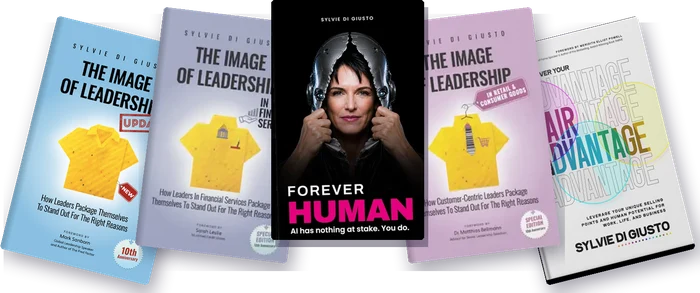
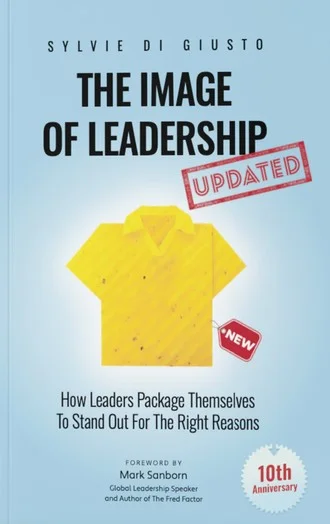
Everything Jay and I discussed comes back to the five dimensions in The Image of Leadership. There is even a Public Sector special edition, written for leaders who serve the public and live with the camera always on.
Frequently asked questions
What should I focus on first when running for office?
Start with how voters will first meet you, which today is mostly online. Secure your name on every social platform and your website URL, get professional photos, and define a consistent brand. Then work on the five signals voters read: appearance, behavior, communication, digital footprint and environment.
Do political candidates need to wear a suit?
Not necessarily. The old rule that every candidate wears a suit no longer applies. Choose what keeps you confident and what signals to your voters that you understand their lives. In the 2022 Pennsylvania Senate race, the candidate in shorts and a sweatshirt beat the one in a suit.
How can a candidate’s family affect a campaign?
Voters and the press see your family as part of your campaign. A distracted spouse behind you on stage, a child making faces during a speech or a careless social media post can become the story instead of your message. Agree with your family early on what being in the public eye requires.
Why is consistency important for political candidates online?
Because voters’ brains look for patterns and do not want to work hard. Use the same headshot, logo and slogan across every platform so people instantly recognize you. Within that consistent brand, adapt your style to each platform’s audience, from short videos on TikTok to in-depth posts on LinkedIn.